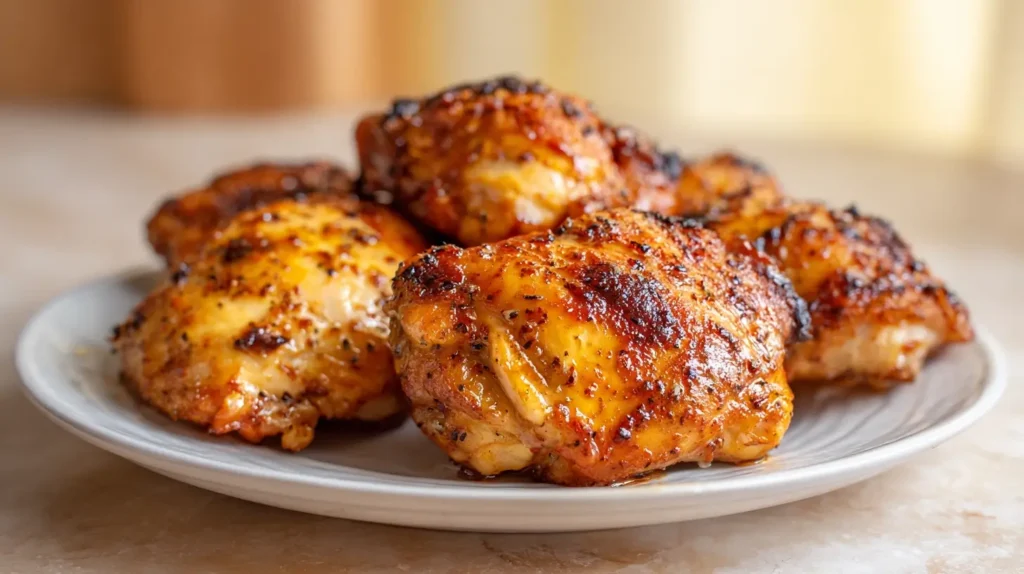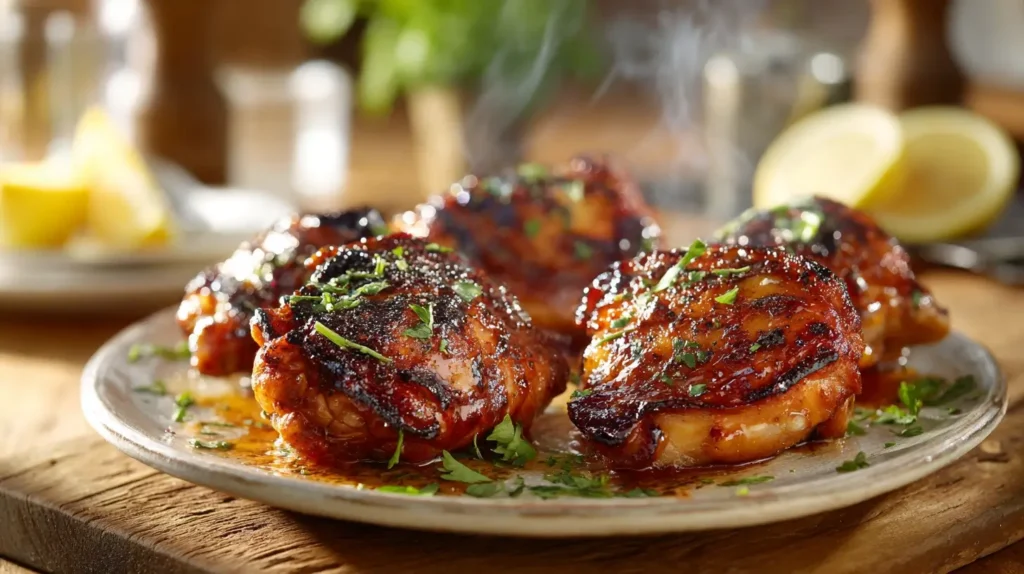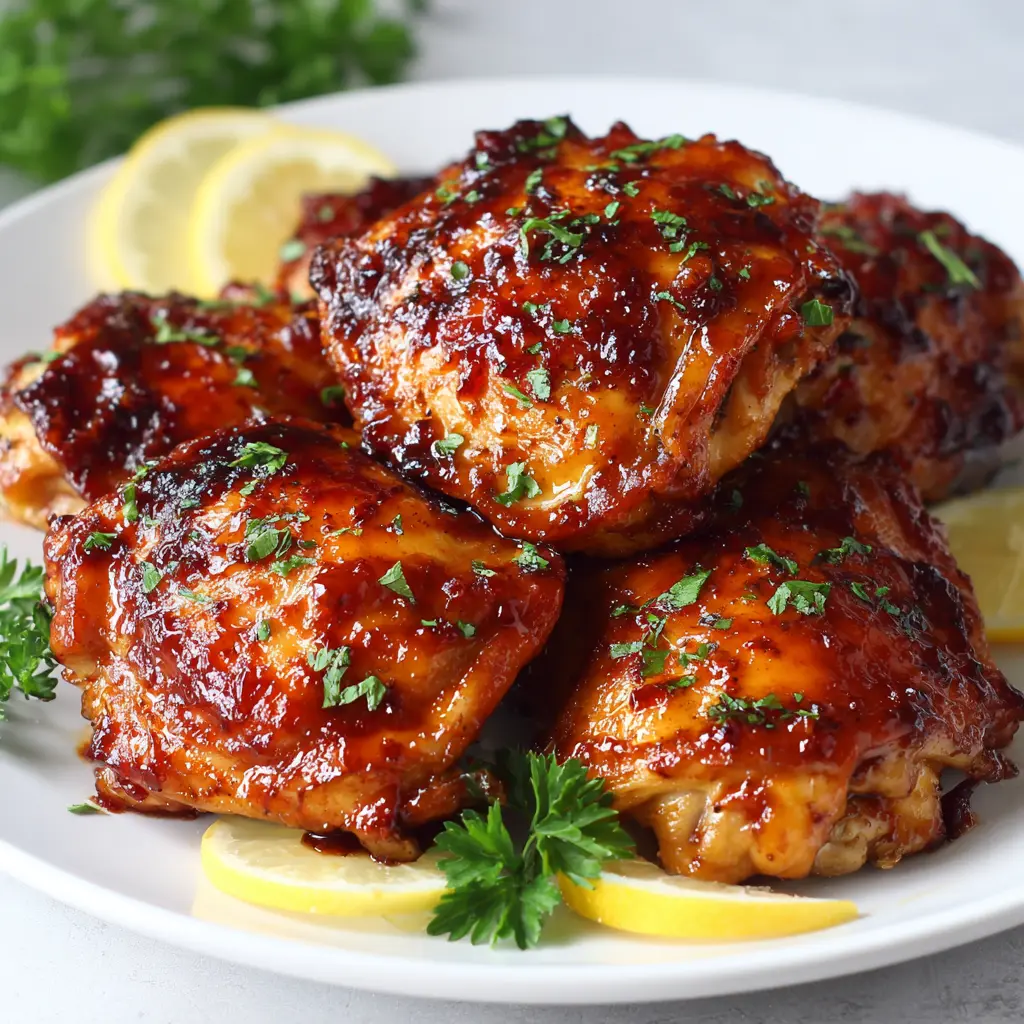
Irresistible Skillet Chicken Thighs You’ll Crave Every Week
- One-Pan & Sheet Pan Meals
 Elizabeth
- 0
- 42 minutes read
There’s something deeply comforting about Skillet Chicken Thighs sizzling away on the stove—the little pops, the waft of hot oil and herbs, and that first crackle when the skin hits the pan. As a professionally trained chef who learned to cook at my dad’s side, I reach for chicken thighs on busy weeknights because they are forgiving, flavorful, and fast. This skillet method gives you golden, crispy skin and juicy meat every time, with an optional pan sauce that turns dinner into a moment to savor. Let’s get into why this is my go-to weeknight dinner and how you can make it your family’s favorite too.
Why You’ll Love This Skillet Chicken Thighs
Skillet Chicken Thighs deliver crisp, savory skin and tender, juicy meat with minimal hands-on time—perfect for busy evenings or meal prep.
You’ll love this version because:
- Flavor: The skin caramelizes and renders its fat, layering savory richness; a simple pan sauce brightens everything with garlic, lemon, or wine.
- Texture: Crispy exterior, succulent interior—thighs handle high heat beautifully.
- Convenience: One skillet, short sear-and-finish technique; no complicated steps.
- Family appeal: Even picky eaters are drawn to the crispy skin and hearty flavor.
- Seasonal fit: Works year-round—lighter with lemon and herbs in spring, deeper with thyme and chicken stock in fall.
- Meal-prep value: Cools well, stores easily, and reheats without drying out much.
- Dietary flexibility: Naturally gluten-free; easy to adapt for low-carb or dairy-free diets.
What Is Skillet Chicken Thighs?
Skillet Chicken Thighs are bone-in or boneless chicken thighs cooked in a hot skillet until the skin is crisp and the meat reaches safe doneness; they can be finished on the stove or in the oven and often served with a quick pan sauce.
This dish shows off the dark meat of chicken thighs—rich, forgiving, and ideal for high-heat cooking. You can serve it any night of the week, from casual family dinners to company nights when paired with a simple salad and roasted potatoes. This version balances a long, confident sear with a gentle finish to ensure the inside stays juicy while the skin becomes deeply browned.
Ingredients You’ll Need
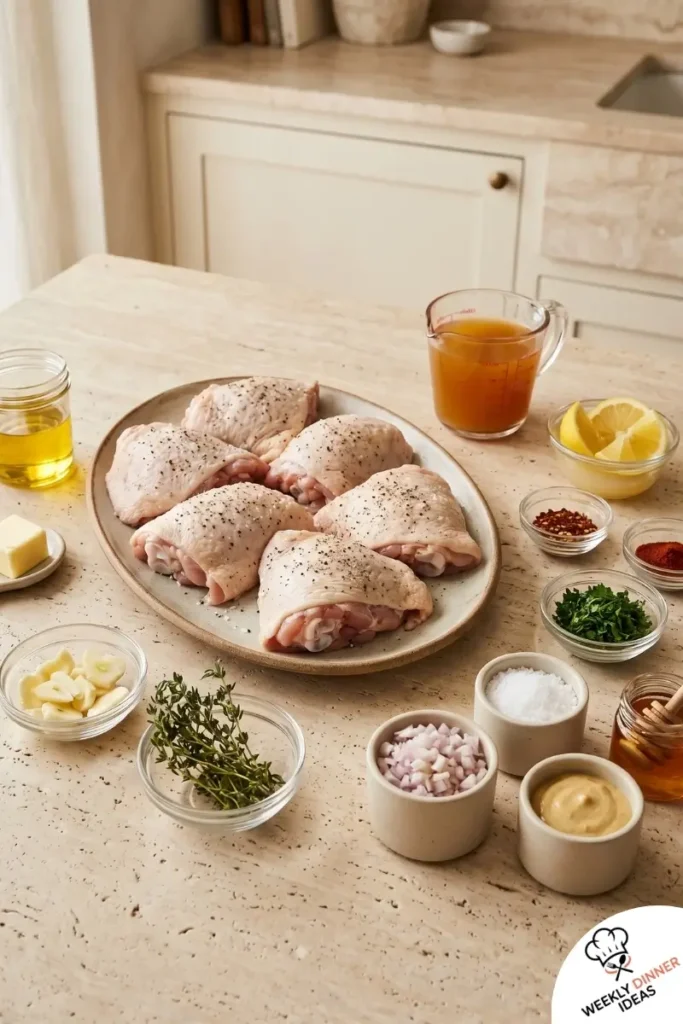
- 6 bone-in, skin-on chicken thighs (about 3–3.5 pounds total), or 8 smaller thighs
- Kosher salt (about 1½ teaspoons per pound chicken)
- Freshly ground black pepper
- 1–2 tablespoons neutral oil with a high smoke point (vegetable, canola, or grapeseed)
- 2 tablespoons unsalted butter (optional for richer flavor)
- 4 garlic cloves, smashed or thinly sliced
- 3–4 sprigs fresh thyme or 2 teaspoons dried thyme (or rosemary)
- ½ cup low-sodium chicken stock or dry white wine (for pan sauce)
- 1 tablespoon lemon juice (optional, for finishing)
- Red pepper flakes or smoked paprika (optional, for seasoning)
- Chopped parsley for garnish (optional)
Optional add-ins:
- 1 small shallot, finely chopped (in the pan with garlic)
- 1 tablespoon Dijon mustard (for pan sauce)
- 2 teaspoons honey (for a touch of sweetness)
A quick note on ingredients: I recommend skin-on, bone-in thighs because the bone helps keep the meat juicy and the skin crisps beautifully. Use a neutral oil with a high smoke point to get a good sear without burning. If you prefer boneless thighs, reduce the finishing cook time slightly and keep a close eye on internal temperature.
Tools You Need
- Heavy skillet (cast-iron or stainless steel, 10–12 inches) (paid link)
- Tongs (paid link)
- Instant-read meat thermometer (paid link)
- Kitchen paper towels (paid link)
- Small ladle or measuring cup (for deglazing) (paid link)
- Oven mitt or towel (if finishing in the oven) (paid link)
- Cutting board and chef’s knife (paid link)
- Small bowl for resting and seasoning (paid link)
Ingredient Substitutions and Additions
Best substitutions
- Boneless, skin-on thighs: Use the same searing technique but shorten finish time by 5–8 minutes.
- Skinless thighs: Sear quickly for color, then braise with stock or sauce to prevent drying.
- Chicken breasts: Not ideal for this method—use lower heat and shorter cooking time to avoid dryness.
Flavor additions
- Add a splash of balsamic vinegar to the pan sauce for a tangy finish.
- Toss in sliced mushrooms during the last few minutes of cooking for an earthy element.
- Sprinkle smoked paprika or ground cumin with salt and pepper for a warmer spice profile.
Dietary swaps
- Dairy-free: Omit butter and finish the sauce with a little extra oil and stock.
- Low-sodium: Use low-sodium stock and adjust the salt to taste after cooking.
- Gluten-free: This recipe is naturally gluten-free if you use gluten-free stock or wine.
How to Make Skillet Chicken Thighs

Start with a brief summary: Pat the thighs dry, season well, sear skin-side down until deeply golden, flip to brown the other side, then finish in the oven or on the stovetop until internal temperature reaches 165°F. Deglaze the pan to make a quick sauce, spoon over the chicken, and serve.
Step 1: Prep the chicken
Lay the thighs on a cutting board and pat both sides very dry with paper towels—moisture is the enemy of crisp skin. Sprinkle kosher salt evenly over the skin and the underside, then grind fresh black pepper on top. Let the seasoned chicken sit at room temperature for 15–20 minutes while you heat your skillet. This short rest helps the meat cook more evenly.
What to look for: The chicken should feel dry to the touch on the skin; if it’s still damp, pat again. Seasoning early gives the salt time to start penetrating for better seasoning inside the meat.
Kitchen tip: I sometimes season early in the morning and keep the thighs uncovered in the fridge until dinner; this dry-brines the chicken and tightens the skin for extra crispness.
Step 2: Heat the skillet and sear skin-side down
Place a heavy skillet (preferably cast iron) over medium-high heat and add the neutral oil. When the oil shimmers but isn’t smoking, gently lay the thighs into the pan, skin-side down, in a single layer. Press them lightly with tongs so the skin makes full contact. Don’t crowd the pan—work in batches if needed.
Sear for 6–9 minutes without moving them. You want a deep golden-brown crust and rendered fat pooling in the pan. Use the tongs to peek underneath—if the skin lifts easily and is richly colored, it’s ready.
Sensory cues: Look for a deep bronze color and listen for sustained, even crackling. If the pan is smoking heavily or the skin is blackening, reduce the heat slightly.
Step 3: Brown the other side
Flip each thigh and brown the meat side for 2–4 minutes. This step adds flavor and helps finish the skin’s edges. Add the butter, smashed garlic, and thyme to the pan during this stage; spoon the melted butter over the chicken to baste for extra gloss and flavor.
What to watch for: The browned meat side will be less glossy than the skin but should have a caramelized surface. The garlic should become fragrant but not burn—if it browns too quickly, lift it out and let it finish with the pan sauce.
Step 4: Finish in the oven or on the stovetop
Option A — Oven finish (recommended for even cooking): Preheat your oven to 400°F. After searing, transfer the skillet directly to the oven and roast for 12–18 minutes, depending on thigh size, until an instant-read thermometer reads 165°F at the thickest part without touching bone.
Option B — Stovetop finish (no oven): Reduce the heat to low, cover the skillet, and let the thighs cook gently for about 15–20 minutes. Turn once halfway through. This method works if your skillet has a tight-fitting lid, but it can soften the skin a bit.
Sensible rule: Always rely on temperature, not time alone. Thighs are done at 165°F; remove them a few degrees earlier if you plan to rest them, as carryover heat will finish the cooking.
Step 5: Rest the chicken and make the pan sauce
Transfer the cooked thighs to a plate and loosely tent with foil to rest 5–8 minutes. While they rest, deglaze the skillet over medium heat with the chicken stock or wine, scraping the browned bits from the bottom with a wooden spoon. Add any pan juices from the resting plate, a squeeze of lemon, and finish with a knob of butter or a teaspoon of Dijon for shine and balance. Taste and season.
Practical advice: If your skillet is very fatty, pour off some fat before deglazing to avoid a greasy sauce. If you want a thicker sauce, simmer a minute longer or whisk in a small slurry of cornstarch and water.
Step 6: Serve
Spoon the warm sauce over the thighs, sprinkle with chopped parsley, and serve with your chosen sides.
Serving cue: The skin should remain crisp; if it has softened due to sauce, spoon sauce mainly on the meat side. A final squeeze of lemon brightens the whole plate.
Pro Tips for the Best Skillet Chicken Thighs
For consistently excellent results, follow these quick, tested tips.
- Season early and dry-brine: Salt the thighs at least 15–20 minutes before cooking; for best texture, leave uncovered in the fridge for several hours to tighten the skin.
- Pat dry and don’t overcrowd: Moisture and crowding steam the skin instead of crisping it. Cook in batches if your skillet is small.
- Use the right fat: A high-smoke-point oil plus a bit of butter delivers browning and flavor. Add butter late to avoid burning.
- Trust a thermometer: Visual cues can lie—aim for 165°F internal temp. Insert the probe into the thickest part, avoiding the bone.
- Deglaze for flavor: Those browned fond bits hold concentrated flavor—don’t skip the quick pan sauce.
- Make-ahead: Cook and cool completely, then refrigerate for up to 3 days. Reheat gently in a 350°F oven to refresh the skin—avoid microwaving, which makes the skin rubbery.
- Doubling the batch: Sear in multiple batches to keep contact with the pan. Keep cooked thighs warm in a low oven (200–225°F) while finishing the rest.
What to Serve with Skillet Chicken Thighs
Skillet chicken thighs pair with so many sides—it’s one of the reasons they’re a weeknight favorite. For easy weeknight pairings, try mashed potatoes, simple roasted vegetables, or a bright green salad. If you want grain-based sides, fluffy rice or couscous soak up the pan sauce nicely.
- For cozy comfort, serve with creamy mashed potatoes or a quick garlic mashed cauliflower.
- For lighter fare, pair with a crisp green salad or steamed green beans.
- For sheet-pan simplicity, serve alongside roasted vegetables from a one pan meal to keep cleanup minimal.
- If you’re building a chicken-focused week, explore other dishes in my chicken recipes collection for side ideas or themed dinners.
- Looking for healthy choices? Check my healthy dinner recipes for vegetable-forward sides and lighter accompaniments.
- Need something quick for school nights? Pair this with easy sides from my quick weeknight dinners for an efficient, tasty meal.
Storage, Freezing, and Reheating
Store leftovers in the fridge for 3–4 days or freeze for up to 3 months; reheat gently to retain moisture and skin texture.
Fridge storage: Cool the chicken to room temperature (no more than 2 hours out), then place in an airtight container. Store the pan sauce separately if possible to preserve skin crispness.
Freezer storage: Wrap thighs individually in plastic wrap and place in a freezer-safe container or bag with some sauce stored separately. Label with date.
Reheating: For best texture, reheat in a 350°F oven for 12–18 minutes until warmed through; cover loosely with foil to avoid over-browning if needed. For crisp skin, remove foil for the last 5 minutes. Avoid microwaving unless you’re just reheating a bite—microwaves soften the skin.
Reality check: The skin won’t be quite as crispy after refrigeration, but a quick oven re-crisping restores much of the texture. The meat remains juicy because thighs have more fat and connective tissue than breasts.
About This Recipe and Why It Works
I developed this skillet method after years of cooking for friends and a small catering gig in California. Thighs were my go-to when I needed something that would tolerate a range of hands-on attention—sometimes I had time to tend to every pan; other nights I needed a “set it and gently watch” approach.
What makes it work is simple kitchen physics: the high heat renders and browns the skin, creating a flavor-packed crust, while finishing at moderate heat (either in the oven or covered on the stovetop) allows the interior to reach a safe, juicy temperature without drying. The bone contributes flavor and a gentle heat sink, which prevents the meat from overcooking too fast.
I also like to keep this recipe flexible. A pan sauce can be as simple as stock and lemon, or richer with butter and mustard—both bring out different sides of the chicken without adding fuss. This aligns with my cooking philosophy at Weekly Dinner Ideas: make real-food meals that are straightforward, adaptable, and worth repeating.
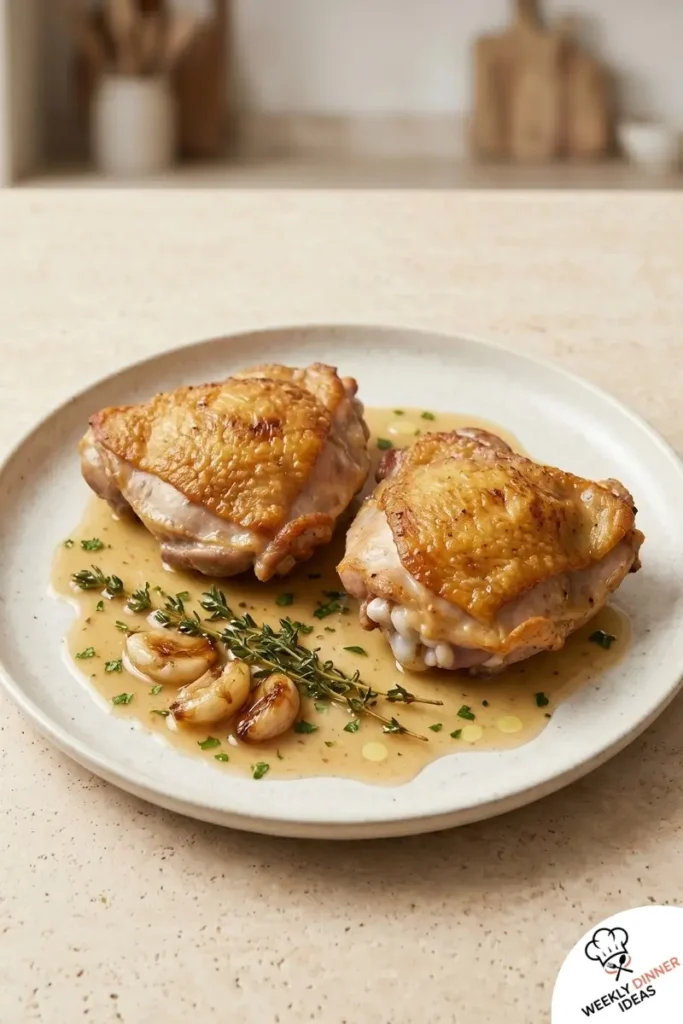
Frequently Asked Questions
Can I use boneless chicken thighs instead of bone-in?
Yes. Boneless, skin-on thighs work well with the same searing technique, but reduce the oven time by 5–8 minutes and check internal temperature early. Boneless thighs cook faster because there’s no bone to slow heat transfer. If using skinless boneless thighs, consider finishing them with a quick braise in stock or sauce to keep them from drying out.
How do I get extra-crispy skin?
Dry the skin thoroughly before seasoning and let it sit uncovered in the fridge for a few hours or overnight to dry out the surface. Use a hot skillet and avoid moving the thighs during the first sear so the skin makes even contact. A quick finish under a hot broiler for 1–2 minutes can add extra crunch—watch carefully so it doesn’t burn.
What’s the best temperature to finish chicken thighs?
Cook until the internal temperature reaches 165°F at the thickest part of the thigh without touching bone. Use an instant-read thermometer for accuracy. Removing the thighs when they reach 160–162°F and letting them rest will also yield a juicy result due to carryover cooking.
Can I make this ahead for guests?
Yes. Fully cook the thighs, cool, then refrigerate. To reheat, warm in a 350°F oven for 12–18 minutes; finish under the broiler for 1–2 minutes if you want to re-crisp the skin. You can also reheat gently in a skillet with a splash of broth to refresh the sauce.
Is this recipe suitable for a low-carb or gluten-free diet?
Absolutely. The basic recipe is naturally gluten-free and low-carb. Avoid adding flour-based thickeners to the pan sauce; use a cornstarch slurry or simply reduce the liquid for a thicker sauce without gluten.
My pan sauce is greasy—how do I fix it?
Skim off excess fat with a spoon after deglazing, or absorb some with a paper towel. You can also refrigerate the sauce briefly—the fat will solidify on top and be easy to remove. Balance the flavor with an acid such as lemon or a splash of vinegar to cut through richness.
Can I cook this entirely on the stovetop if I don’t have an oven?
Yes. After searing, reduce heat to low, cover, and cook for 15–20 minutes, turning once halfway through. This method is convenient but tends to soften the skin because of the trapped steam. If crisp skin is a priority, use the oven finish.
Final Thoughts
Skillet chicken thighs are one of those recipes I return to again and again: they’re forgiving, wildly flavorful, and adaptable to whatever mood or schedule I have that day. Whether you finish them with a bright lemon-garlic pan sauce or a heartier mustard-butter glaze, the process is straightforward and satisfying. For easy weeknight pairing ideas, browse my quick weeknight dinners and one pan meals for efficient side dishes. If you’re building a chicken rotation, check out more in my chicken recipes collection.
If you make this recipe, I’d love to hear how it went—leave a comment, rate the recipe, and pin it to save for later on my Pinterest board: Chicken by Elizabeth. Your feedback helps me refine recipes and bring more real-weeknight solutions to the site.
Quick Recipe Summary
15–25 minutes (longer if dry-brining in fridge)
20–30 minutes (sear + finish)
35–55 minutes
4–6 (dependent on appetite and thigh size)
Easy
Weeknight dinners, meal prep, family meals
Savory, rich, slightly citrusy if finished with lemon, herbaceous if thyme or rosemary is used
Nutrition Information
| Nutrient | Per Serving |
|---|---|
| Calories | Approx. 420 |
| Protein | Approx. 28 g |
| Carbohydrates | Approx. 2 g |
| Dietary Fiber | Approx. 0.2 g |
| Fat | Approx. 32 g |
These values are estimates and will vary based on thigh size, whether you use butter, and how much pan sauce you consume.
—
Thanks for cooking along—I’m Elizabeth Morgan, and I hope this skillet method becomes a trusty meal in your weeknight repertoire. If you’d like more chicken-centric ideas or weeknight-friendly meals, explore my chicken recipes and healthy dinner recipes. Don’t forget to pin your favorite version on Pinterest: Chicken by Elizabeth. Leave a comment below to tell me what side you paired it with—I read every one.
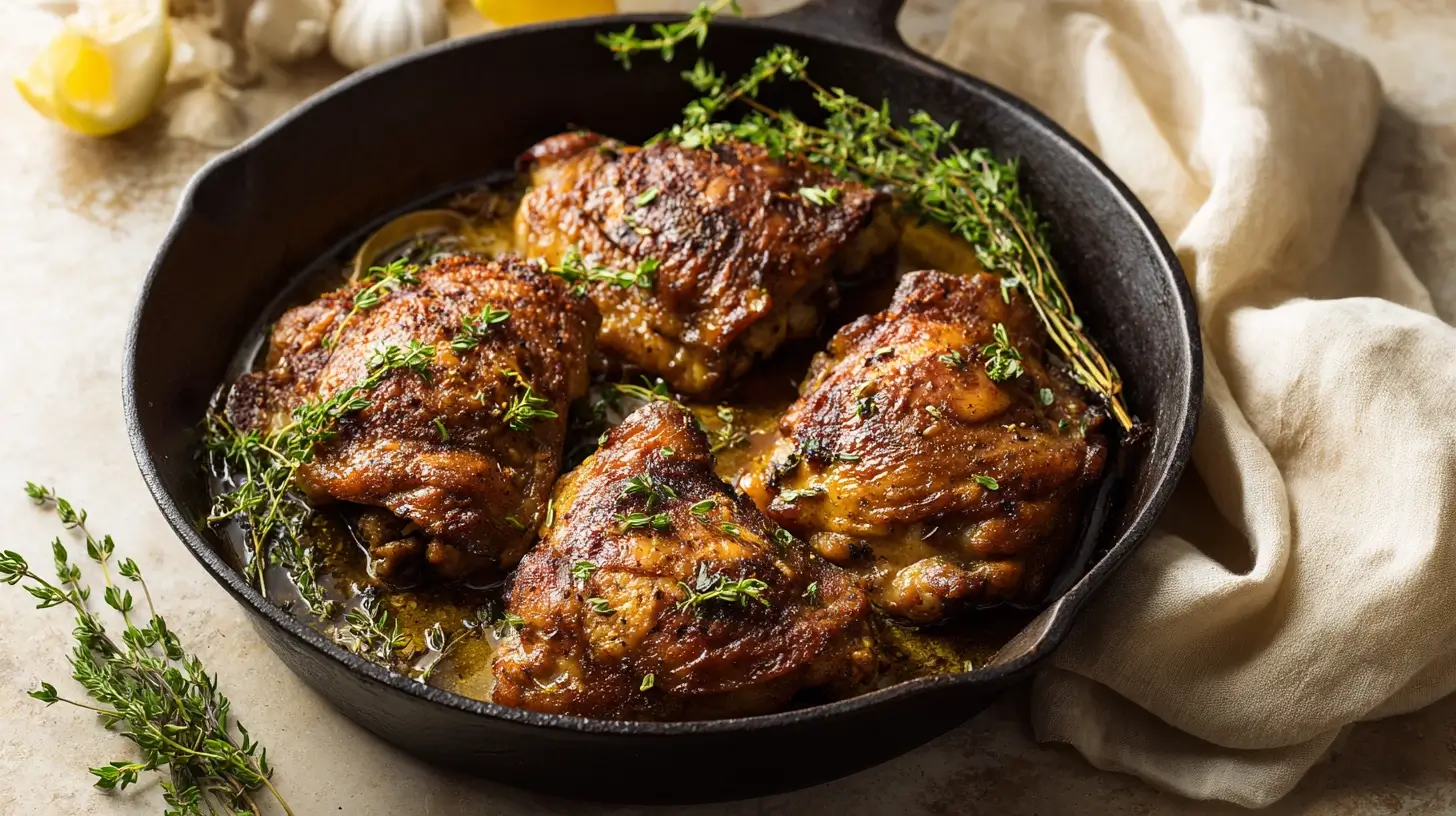

Skillet Chicken Thighs
Ingredients
Equipment
Method
- Pat the chicken thighs very dry with paper towels. Season both sides with kosher salt and black pepper.
- Let the seasoned chicken rest at room temperature for 15-20 minutes while heating the skillet.
- Heat neutral oil in a heavy skillet over medium-high heat until shimmering.
- Place chicken thighs skin-side down in a single layer. Press lightly with tongs so the skin makes full contact with the pan.
- Sear for 6-9 minutes without moving, until the skin is deeply golden brown and crisp.
- Flip the chicken and brown the other side for 2-4 minutes.
- Add butter, garlic, and thyme if using. Spoon the melted butter over the chicken for extra flavor.
- To finish in the oven, transfer the skillet to a 400°F oven and roast for 12-18 minutes, until the internal temperature reaches 165°F.
- To finish on the stovetop, reduce heat to low, cover, and cook gently for 15-20 minutes, turning once halfway through, until the internal temperature reaches 165°F.
- Transfer chicken to a plate and rest loosely covered for 5-8 minutes.
- Deglaze the skillet with chicken stock or white wine, scraping up browned bits from the bottom of the pan.
- Add resting juices and lemon juice if using. Simmer briefly, then taste and adjust seasoning.
- Spoon the pan sauce around or over the chicken and garnish with parsley before serving.
Notes

Elizabeth Morgan
Easy & Delicious Recipes
Follow for quick family-friendly recipes, baking inspiration, and comfort food favorites.
Follow on Pinterest