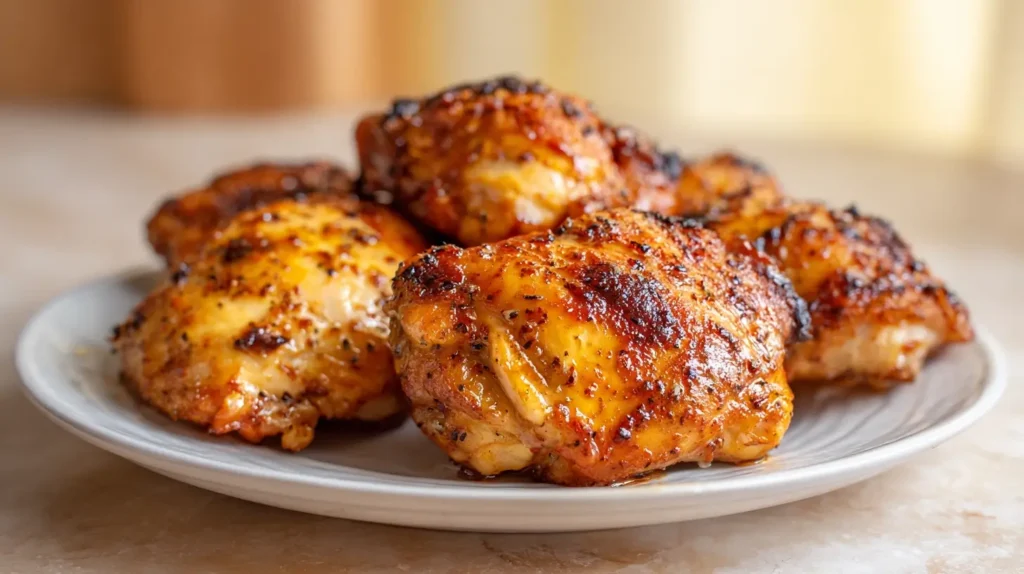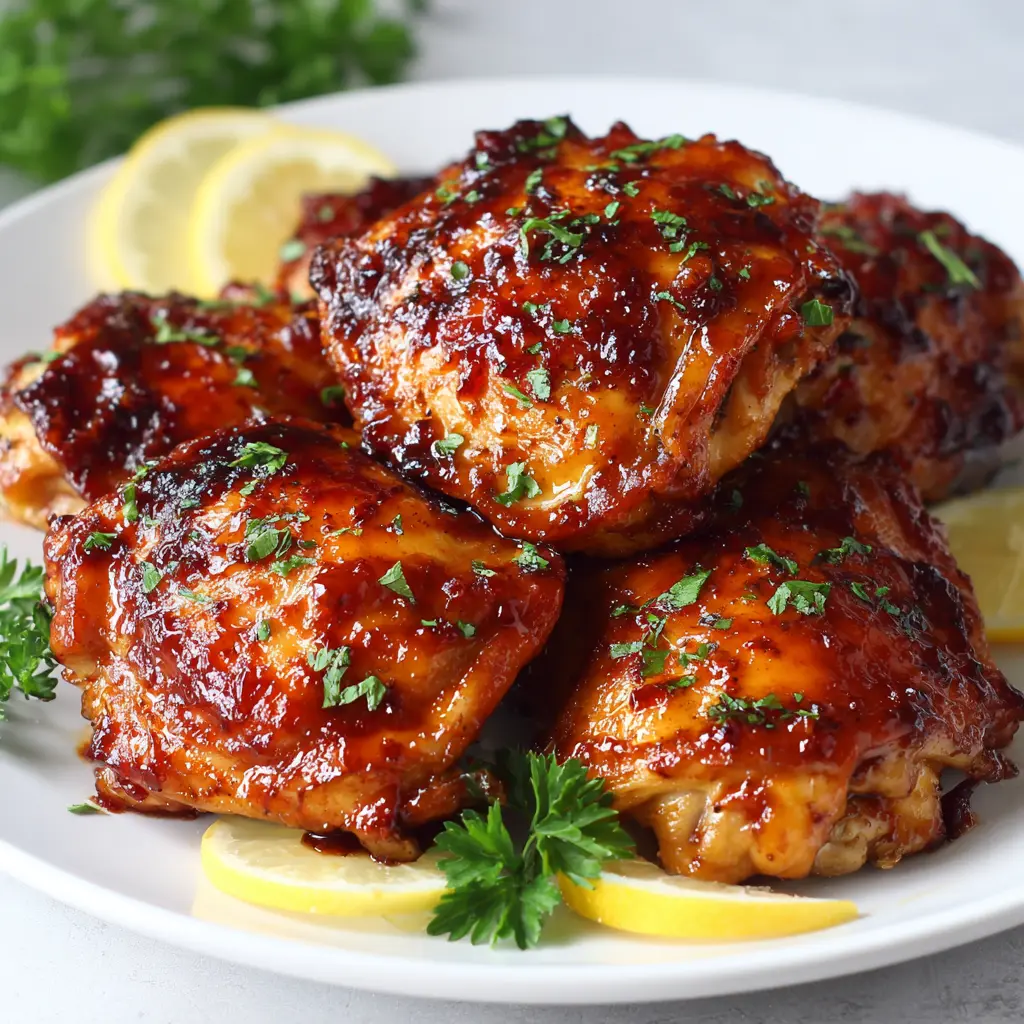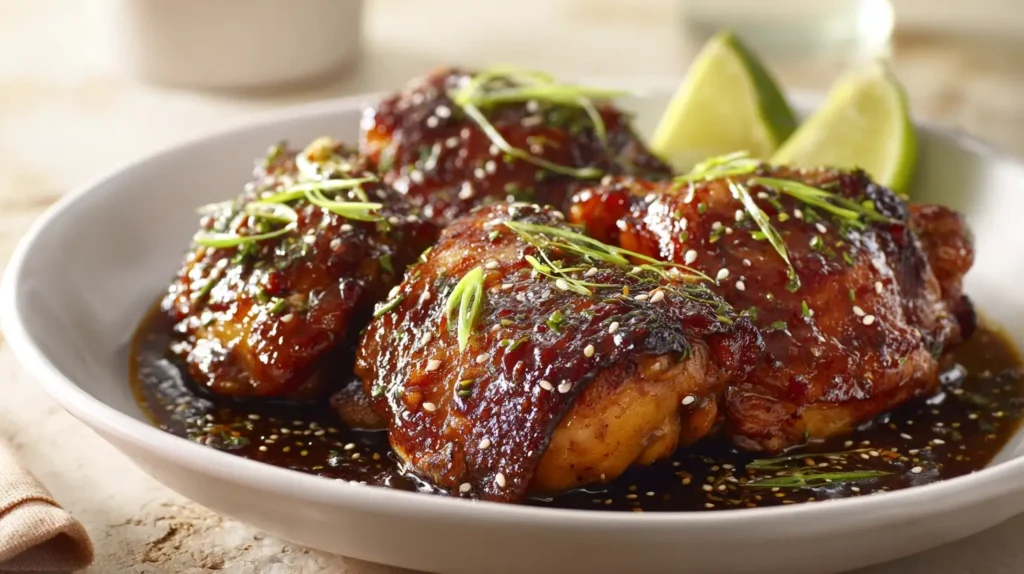
Easy and Irresistible Soy Garlic Chicken Thighs Ready in 30 Minutes
- Chicken Recipes
 Elizabeth
- 0
- 41 minutes read
I love weeknight cooking that tastes like I spent hours on it but actually fits into a busy evening schedule — and these Soy Garlic Chicken Thighs do exactly that. Soy Garlic Chicken Thighs pack salty, sweet, and garlicky flavor into juicy, caramelized chicken in about half an hour, so they’ve become a go-to for dinners when time is tight but I still want something impressive on the table. I first developed this version after testing a few pan‑sear-and-glaze techniques in my small home kitchen; the result is a glossy, sticky sauce that clings to crisped skin and tender meat. Below I’ll walk you through everything — ingredients, steps, smart swaps, and storage tips — so you can make this reliably every week.
Why You’ll Love This Soy Garlic Chicken Thighs
These soy garlic chicken thighs deliver big flavor with minimal fuss.
You’ll love the contrast between caramelized, slightly crisp edges and a silky, umami-forward glaze; the dish comes together quickly, reheats well for lunches, and pleases picky and adventurous palates alike.
Flavor: deep soy and brown-sugar sweetness balanced by bright rice vinegar and fresh garlic.
Texture: crisped exterior with juicy meat and a sticky finish.
Convenience: pan-to-plate in about 30 minutes, no long marinade required.
Family appeal: kids and adults both usually ask for seconds.
Seasonal fit: year-round comfort — especially great with quick spring vegetables or cozy winter grains.
Meal-prep value: makes excellent leftovers and freezes well if you want to batch-cook.
Dietary flexibility: use low-sodium soy or tamari for lower sodium; swap honey for brown sugar for a different sweetness profile.
What Is Soy Garlic Chicken Thighs?
Soy Garlic Chicken Thighs are pan-seared chicken thighs finished in a savory-sweet soy and garlic glaze.
This dish features chicken thighs cooked until browned, then simmered briefly in a sauce made from soy, garlic, a sweetener, and a touch of acid. It’s commonly served over rice or noodles and garnished with scallions and sesame seeds. This version leans American-friendly (no heavy chili paste) and focuses on a glossy, sticky finish that clings to each bite.
Ingredients You’ll Need
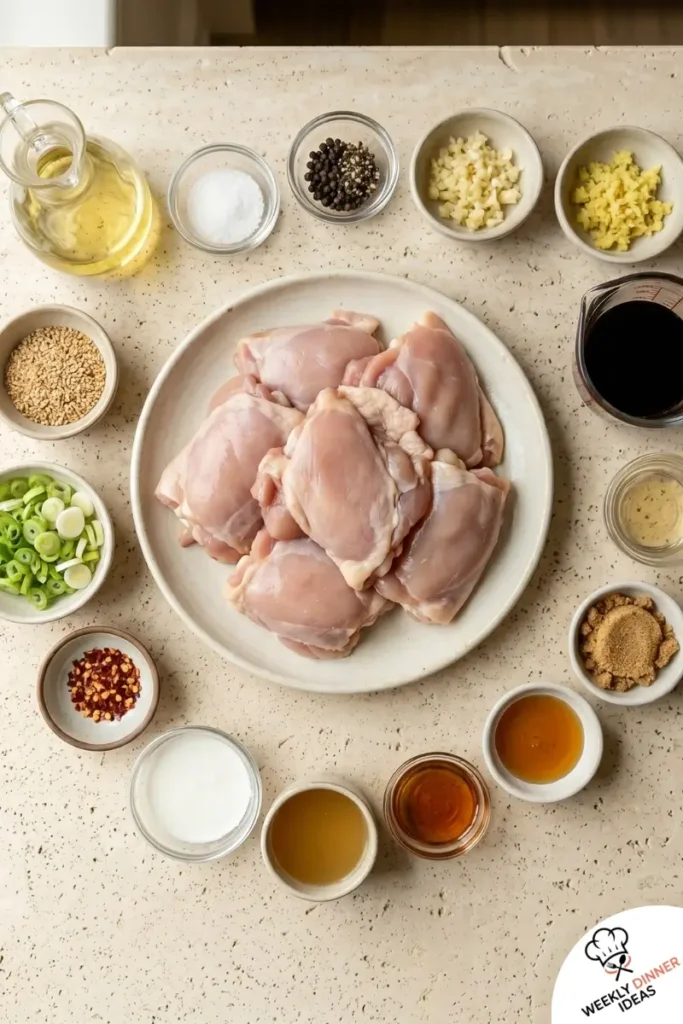
- 1 1/2 to 2 pounds boneless, skin-on chicken thighs (about 6 thighs)
- Kosher salt and freshly ground black pepper
- 1 tablespoon neutral oil (vegetable or canola)
- 4 cloves garlic, finely minced (about 2 tablespoons)
- 1 tablespoon fresh ginger, grated (optional but recommended)
- 1/3 cup low-sodium soy sauce (or tamari for gluten-free)
- 2 tablespoons rice vinegar (or apple cider vinegar)
- 2 tablespoons brown sugar (light or dark) or 2 tablespoons honey
- 1 tablespoon sesame oil
- 1/2 cup low-sodium chicken broth or water
- 1 teaspoon cornstarch mixed with 1 tablespoon cold water (slurry)
- 1/4 teaspoon red pepper flakes (optional)
- 2 scallions, thinly sliced for garnish
- 1 to 2 teaspoons toasted sesame seeds for garnish
Notes on key ingredients and quality:
- Chicken thighs: boneless, skin-on thighs cook faster than bone-in and give that crisp skin I aim for. If you prefer bone-in, add roughly 5–10 minutes to cook time.
- Soy sauce: low-sodium keeps the glaze balanced; if you use full-salt soy, reduce added salt and taste the sauce as it reduces.
- Sweetener: brown sugar produces a richer caramel flavor, honey gives a floral lift — both work.
- Cornstarch slurry: a small amount thickens the glaze so it clings to the chicken without becoming syrupy.
Tools You Need
- Heavy skillet (10–12 inch) — cast iron or stainless steel recommended (paid link)
- Tongs or a spatula with good grip (paid link)
- Small mixing bowl for sauce (paid link)
- Whisk or fork (to combine sauce and slurry) (paid link)
- Measuring cups and spoons (paid link)
- Spoon for basting (paid link)
- Instant-read thermometer (highly recommended) (paid link)
- Plate lined with paper towels (for resting cooked chicken) (paid link)
Ingredient Substitutions and Additions
best substitutions
- Tamari for soy sauce if you need gluten-free.
- Bone-in thighs can replace boneless; expect longer cook time.
- Maple syrup instead of honey for a deeper sweetness.
- Coconut aminos for a lower-sodium, soy-free alternative (note: slightly different flavor).
flavor additions
- Add 1 tablespoon gochujang (Korean chili paste) for a spicy-sweet Korean-style twist.
- Stir in 1 teaspoon toasted sesame oil at the end for a fragrant finish (if you didn’t already use it).
- Add a squeeze of fresh lime or lemon right before serving for brightness.
- Toss in 1 cup thinly sliced bell pepper or snap peas in the last 2–3 minutes for a quick vegetable boost.
dietary swaps
- For low-carb, serve over cauliflower rice or roasted vegetables.
- For paleo, swap soy for coconut aminos and use honey as the sweetener.
- For a dairy-free version, this recipe is already dairy-free by default.
How to Make Soy Garlic Chicken Thighs
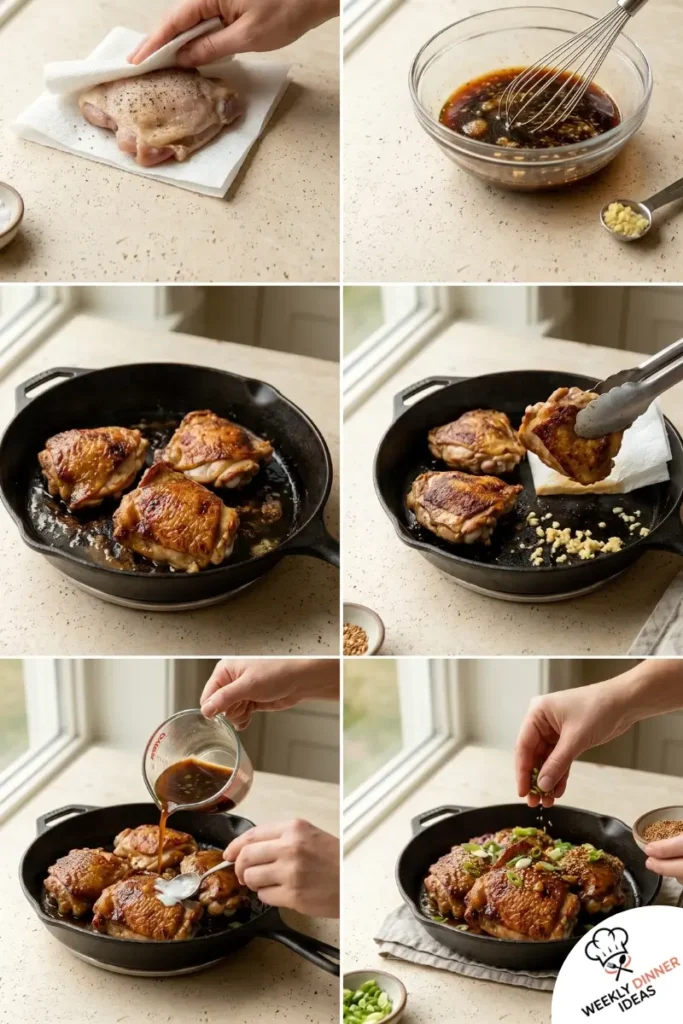
Start: This recipe is quick — pat the chicken dry, sear to develop color, then finish in a soy-garlic glaze that reduces until glossy. Aim for 165°F internal temperature and a sticky coating.
Step 1: Prep and season
Pat the chicken thighs thoroughly dry with paper towels — moisture prevents browning. Season both sides lightly with kosher salt and a few grinds of black pepper. Let them sit at room temperature for 10 minutes while you gather and mix the sauce; this helps the thighs cook more evenly.
What to look for: Completely dry skin improves browning. If your thighs are cold from the fridge, give them about 10 minutes to come up slightly; they sear better than stone-cold meat.
Kitchen note: I often truss myself into prepping the garlic and ginger while the pan heats so everything moves smoothly once the chicken hits the skillet.
Step 2: Make the sauce
In a small bowl combine the soy sauce, rice vinegar, brown sugar (or honey), sesame oil, grated ginger, and half the minced garlic. Whisk until the sugar dissolves. Set the cornstarch slurry aside.
What to look for: The sauce should taste balanced — salty, a touch tangy, and noticeably sweet. Adjust now: if it tastes too salty, add a splash more vinegar or a little water.
Step 3: Sear the chicken
Heat a heavy skillet over medium-high heat and add the neutral oil. When the oil shimmers, place the thighs skin-side down in a single layer. Press gently for even contact. Sear without moving for about 6–8 minutes, until the skin is deeply golden and releases easily from the pan.
Flip the thighs and cook the other side 3–4 minutes until it begins to brown; an instant-read thermometer inserted into the thickest part should read around 150–155°F at this point (it will finish during the glaze).
What to look for: A rich, mahogany color on the skin — don’t be afraid of dark browning; that’s where flavor lives. If the pan smokes excessively, lower the heat slightly.
Practical tip: If you have crowded the pan, the skin steams rather than browns. Cook in batches if necessary and keep finished thighs on a warm plate.
Step 4: Remove fat, add aromatics
If there’s excess rendered fat in the pan (more than a tablespoon), pour off most, leaving just a coating to sauté the aromatics. Reduce heat to medium-low, add the remaining garlic to the pan and quickly stir for 20–30 seconds until fragrant — don’t let it burn.
What to look for: Garlic should smell sweet and fragrant. Burnt garlic tastes bitter, so move quickly.
Step 5: Glaze and reduce
Pour the prepared sauce and chicken broth into the skillet, scraping up any fond (those browned bits) with a wooden spoon. Bring to a gentle simmer. Return the chicken to the pan, skin-side up, and spoon sauce over each piece.
What to look for: The sauce should begin to bubble and coat the back of a spoon. If it looks too thin after 2–3 minutes, stir in the cornstarch slurry and cook until the sauce thickens and becomes glossy — about 1 minute.
Timing note: Simmer just long enough for the chicken to reach an internal temp of 165°F. If the sauce reduces too quickly and threatens to burn, add a splash more water or broth.
Step 6: Finish and rest
Once the internal temperature hits 165°F and the glaze is thick and shiny, remove the chicken to a plate and let it rest for 5 minutes. The glaze will cling even better after a short rest.
What to look for: The glaze should be sticky but not clumping into a hard candy; it should coat the chicken in a thin, shiny layer. Resting ensures juices redistribute and the meat stays tender.
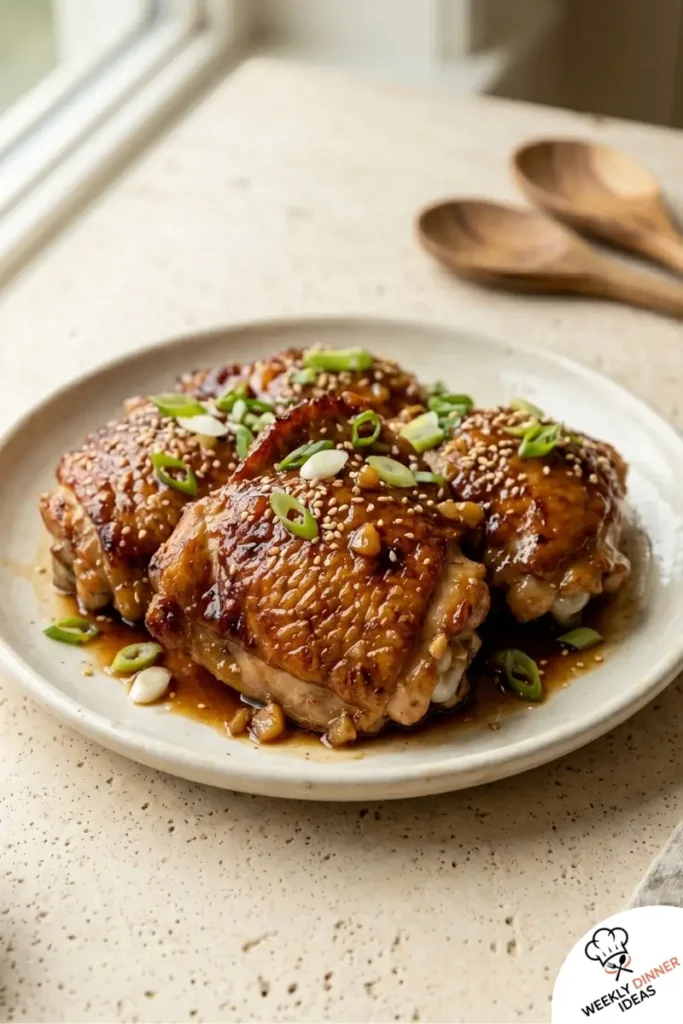
Serving tip: Spoon any remaining pan sauce over the thighs and garnish with sliced scallions and sesame seeds. A little extra raw scallion on top adds freshness and crunch.
Pro Tips for the Best Soy Garlic Chicken Thighs
A quick, direct tip: dry the skin, get a proper sear, and finish with a reduced glaze — that’s the trifecta.
- Avoid crowding the skillet: give thighs room to brown. Crowding traps steam and prevents crisping. If necessary, work in batches and keep finished pieces warm in a 250°F oven.
- Dry thoroughly: moisture on the skin is the enemy of crispness. Pat until paper towels come away relatively dry.
- Use an instant-read thermometer: aim for 165°F internal temperature. Guessing by time alone can lead to under- or overcooked thighs.
- Control the sugar: high heat + sugar = fast browning. Reduce to medium when the sauce is added to prevent burning and bitterness.
- Make-ahead shortcut: mix the sauce and store in the fridge up to 48 hours. When ready to cook, sear the chicken and finish with the pre-made sauce.
- Doubling the recipe: cook in two skillets or in batches to keep searing quality. Sauces scale easily — taste and adjust seasoning before reducing.
- Leftover refresh: to prevent soggy reheating, rewarm in a hot skillet for a few minutes skin-side up to re-crisp before saucing.
What to Serve with Soy Garlic Chicken Thighs
This chicken plays well with simple, comforting sides. I often serve it with steamed jasmine rice and a crisp cucumber salad or quick-blanched broccolini. It also pairs nicely with buttery mashed potatoes or garlic noodles for a richer meal.
If you want recipe ideas from the site, try pairing it with a few favorites: a light green side from our healthy dinner recipes, or serve it alongside other family-friendly options in the chicken recipes collection. For especially busy nights, pair it with a sheet-pan vegetable from our onepan sheet pan meals or tuck it into a quick weeknight rotation from the quick weeknight dinners page.
Storage, Freezing, and Reheating
Store in the fridge for up to 3–4 days; freeze for up to 2–3 months.
Fridge storage: Cool to room temperature, then place in an airtight container with some of the glaze to keep the meat moist. Freezer storage: Freeze portions in freezer-safe containers or vacuum bags with sauce on the side to prevent ice crystals. Reheating: For best texture, reheat in a skillet over medium heat, skin-side down briefly to re-crisp, then spoon sauce over. Microwave works for convenience but softens skin; use low power and check frequently. Expect a slight change in texture — reheated thighs will be tender but may lose some crispness.
About This Recipe and Why It Works
I developed this recipe the way I cook at home: by testing small tweaks until the technique felt undeniable. My food philosophy is simple — prioritize technique (dry skin, hot pan, honest seasoning) and keep flavors balanced. Using thighs gives you forgiving meat that stays juicy under high heat; a quick pan sear creates those deep caramel notes I crave, and finishing in a compact, stir‑friendly glaze delivers intense flavor without fuss.
This recipe fits Weekly Dinner Ideas because it’s accessible for busy weeknights yet feels special enough for company. It’s flexible, approachable for beginners, and easy to adapt if you want spicier, sweeter, or gluten-free. If you like recipes that translate well from dinner to lunchboxes and still taste great the next day, this is one to keep in your rotation.
Frequently Asked Questions
Can I use bone-in chicken thighs?
Yes. Bone-in thighs have great flavor but take longer to cook. Expect an additional 8–12 minutes depending on size; always use an instant-read thermometer and aim for 165°F at the thickest point (avoiding bone contact). Further note: brown as usual, then lower heat or finish in a 375°F oven for even cooking if the exterior gets too dark.
Can I make this in an air fryer?
Yes, you can adapt this to an air fryer. Air-fry skin-on thighs at 380°F for about 12–15 minutes, flipping halfway, then toss with a slightly warmed glaze. Because air-fryers vary, check for doneness with a thermometer. Air-fryer tip: brush a little oil on the skin before cooking for extra crispness, and apply the glaze at the very end to avoid burning the sugars.
How long does the sauce keep?
If separated from chicken, the sauce keeps in the fridge for up to 5 days in an airtight container. Reheat gently and whisk before using. If stored with chicken, follow fridge storage guidance (3–4 days).
My glaze became grainy or burnt — what went wrong?
Brown sugar or honey can burn if the pan is too hot. Reduce heat before adding the sauce and stir constantly as it reduces. If you see black flecks, discard and start again — burnt sugar tastes bitter and won’t recover. Practical fix: lower heat, add a splash of water or broth to loosen, then thicken with a cornstarch slurry.
Can I make this gluten-free?
Yes. Use tamari or a certified gluten-free soy sauce. Double-check any add-ins like broth or chili paste for hidden wheat.
How do I keep the skin crispy when serving later?
To preserve crispness, rest cooked thighs briefly on a wire rack rather than a plate. If storing, keep sauce separate and re-crisp in a hot skillet or 425°F oven for 5–7 minutes before saucing.
Is this recipe suitable for meal prep?
Yes. Cook, cool, and refrigerate in portioned containers with sauce on the side. Reheat in a skillet and add sauce at the end to maintain texture. It’s a reliable make-ahead for lunches.
Final Thoughts
If you want a dependable weeknight recipe that tastes restaurant-worthy without complicated steps, these Soy Garlic Chicken Thighs are a winner. The combination of a well-browned exterior and a glossy, garlicky glaze makes dinner feel elevated, even on a tight schedule. Try serving it with a quick grain and a green vegetable from our healthy dinner recipes or add it to a rotation with other protein ideas on the chicken recipes page. For busy evenings, check our quick weeknight dinners for complementary sides, or pair it with easy roasted veggies from onepan sheet pan meals.
I’d love to hear how your version turned out — leave a comment, rate the recipe, and if you save it to try later, pin it to your boards on Pinterest for easy access: My Pinterest boards. Happy cooking!
Quick Recipe Summary
10 minutes
18–20 minutes
28–30 minutes
4 (about 6 thighs)
Easy — a beginner-friendly sear-and-glaze
Quick weeknights, meal prep, casual dinner guests
Savory-sweet with garlicky umami and a hint of toasty sesame
Nutrition Information
| Nutrient | Per Serving |
|---|---|
| Calories | Approx. 420 |
| Protein | Approx. 28 g |
| Carbohydrates | Approx. 12 g |
| Dietary Fiber | Approx. 0.5 g |
| Fat | Approx. 28 g |
These nutrition values are estimates based on common ingredient amounts and typical chicken thigh nutrition; exact values will vary with portion size, specific ingredients used, and whether you use bone-in thighs.
—
If you want variations — a sticky, spicier Korean-inspired version or an air-fryer method — tell me which direction you’d like and I’ll share precise adjustments. And if you’re looking for side ideas to round out the meal, explore the healthy dinner recipes or the onepan sheet pan meals categories for fast, compatible choices.

Soy Garlic Chicken Thighs
Ingredients
Equipment
Method
- Pat the chicken thighs thoroughly dry with paper towels. Season both sides lightly with kosher salt and black pepper.
- In a small bowl, whisk together soy sauce, rice vinegar, brown sugar or honey, sesame oil, grated ginger if using, and half of the minced garlic until the sugar dissolves.
- Heat neutral oil in a heavy skillet over medium-high heat until shimmering.
- Place the chicken thighs skin-side down in a single layer. Press gently for even contact and sear for 6-8 minutes, until the skin is deeply golden and releases easily from the pan.
- Flip the chicken and cook the other side for 3-4 minutes, until lightly browned.
- If there is excess rendered fat in the skillet, pour off most of it, leaving about 1 tablespoon behind.
- Reduce heat to medium-low. Add the remaining minced garlic and cook for 20-30 seconds, until fragrant but not burned.
- Pour the prepared soy garlic sauce and chicken broth into the skillet, scraping up browned bits from the bottom of the pan.
- Return the chicken to the pan skin-side up and spoon the sauce over each piece.
- Simmer gently until the chicken reaches 165°F (74°C) in the thickest part.
- Stir the cornstarch slurry again, then add it to the sauce. Cook for about 1 minute, until the glaze thickens and becomes glossy.
- Remove chicken from the skillet and let it rest for 5 minutes.
- Spoon remaining glaze over the chicken and garnish with sliced scallions and toasted sesame seeds.
Notes

Elizabeth Morgan
Easy & Delicious Recipes
Follow for quick family-friendly recipes, baking inspiration, and comfort food favorites.
Follow on Pinterest