Satisfy Your Cravings: The Best Chimichurri Chicken Thighs Recipe
- Healthy Dinner Recipes
 Elizabeth
- 0
- 39 minutes read
There’s something about the smell of garlic and fresh parsley sizzling on a hot pan that takes me right back to my father’s backyard cookouts. Chimichurri Chicken Thighs are one of those recipes I make when I want bold flavor without fuss—bright, herbaceous chimichurri meets juicy, caramelized chicken thighs. As a professionally trained chef, I love how this dish balances simple technique with big personality. In the next few pages I’ll walk you through a dependable recipe for marinated and grilled or roasted chicken thighs topped with a vibrant chimichurri that doubles as a sauce and a condiment. Whether you’re feeding hungry kids on a weeknight or entertaining friends, this chimichurri chicken thighs recipe is flexible, forgiving, and downright addictive.
Why You’ll Love This Chimichurri Chicken Thighs
Chimichurri Chicken Thighs are flavorful, easy to make, and great for weeknight dinners or weekend gatherings.
You’ll love this recipe because the chimichurri delivers bright, herb-forward zip that cuts through the richness of the chicken thighs. The skin caramelizes beautifully when seared or roasted, giving you a satisfying contrast between crispy exterior and tender, juicy meat inside. It marinates quickly (30 minutes to overnight), freezes well, and scales up easily for a crowd. This dish also adapts to dietary needs—gluten-free and low-carb friendly—and works equally well with grilled or baked preparations depending on your kitchen setup.
What Is Chimichurri Chicken Thighs?
Chimichurri Chicken Thighs pair marinated, roasted or grilled chicken thighs with a vibrant, uncooked herb sauce called chimichurri.
Chimichurri is a South American (Argentinian/Uruguayan) sauce traditionally made with parsley, garlic, vinegar, olive oil, and oregano. When spooned over chicken thighs, it brightens the dish and adds layers of fresh, tangy flavor. This version focuses on classic chimichurri elements with a touch of modern flexibility—cilantro optional, red pepper flakes for heat, and the choice to marinate or simply dress the cooked chicken. The result is an everyday dinner that tastes elevated but comes together without drama.
Ingredients You’ll Need
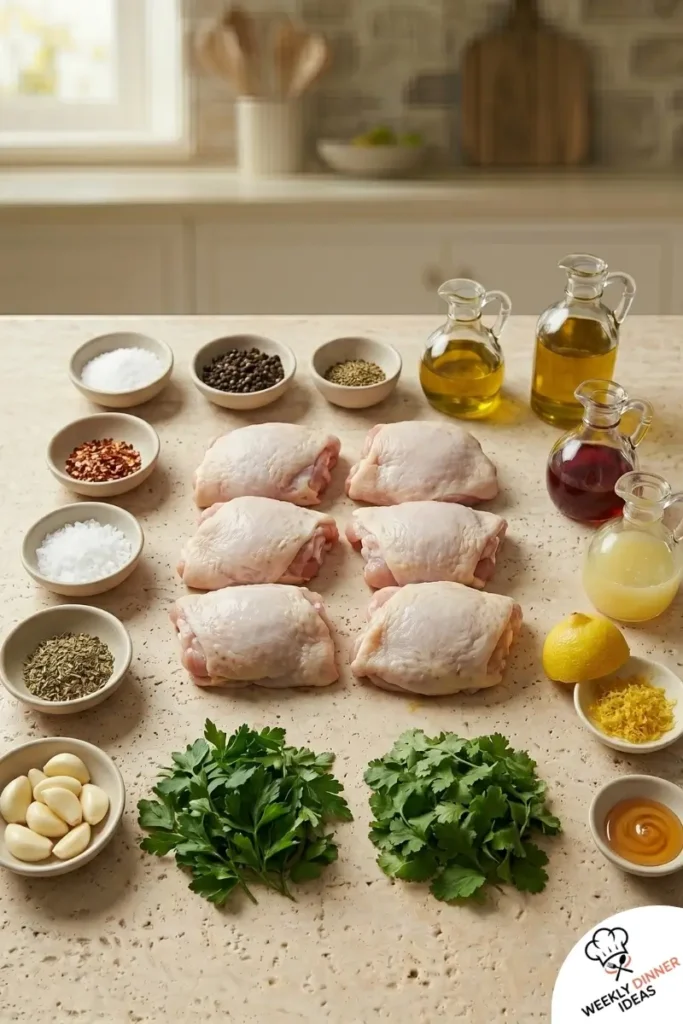
- 6 bone-in, skin-on chicken thighs (about 2 to 2½ pounds) — you can use boneless if preferred
- Kosher salt and freshly ground black pepper
- 1 tablespoon olive oil (for the chicken)
- 1 cup packed flat-leaf parsley leaves, stems removed and roughly chopped
- 1/4 to 1/3 cup cilantro leaves (optional, but recommended for brightness)
- 4 garlic cloves, peeled
- 2 tablespoons red wine vinegar
- 1 tablespoon fresh lemon juice (optional)
- 1/2 to 3/4 cup extra-virgin olive oil
- 1 teaspoon dried oregano (or 1 tablespoon fresh oregano)
- 1/2 teaspoon red pepper flakes (adjust to taste)
- 1/2 teaspoon coarse salt, plus more to taste
- Freshly ground black pepper to taste
Optional for marinating or finishing:
- 1 small shallot, finely minced (optional)
- Zest of 1 lemon for extra brightness (optional)
- 1 tablespoon honey or a pinch of sugar if you prefer a touch of sweetness (optional)
Notes: If you choose boneless, skinless thighs, reduce the cook time. For 4–6 servings, this quantity of chimichurri is generous and makes extra for serving on the side.
Why these ingredients: Parsley is the backbone of authentic chimichurri and gives that fresh green flavor. Garlic and acid (red wine vinegar and optional lemon) give bite and brightness. Olive oil binds the sauce and mellows the vinegar. Oregano and red pepper flakes introduce savory and spicy depth. Chicken thighs are forgiving: they remain juicy even if slightly overcooked, which is why they’re my go-to for a flavorful weeknight meal.
Tools You Need
- Grill (gas or charcoal) or oven with a baking sheet and wire rack (paid link)
- Instant-read meat thermometer (paid link)
- Food processor or blender (or a chef’s knife if you prefer finely chopped chimichurri) (paid link)
- Mixing bowls (paid link)
- Measuring cups and spoons (paid link)
- Tongs (paid link)
- Cutting board (paid link)
- Sharp chef’s knife (paid link)
- Baking sheet (if roasting) (paid link)
- Wire rack (to place on baking sheet for even heat circulation) (paid link)
Ingredient Substitutions and Additions
Best substitutions
- Parsley: If you’re out of flat-leaf parsley, curly parsley will work, though it’s less tender. For a different herb profile, use all cilantro (for a greener, citrusy flavor) but reduce to 1/2 cup if you don’t like cilantro’s intensity.
- Red wine vinegar: Substitute sherry vinegar or apple cider vinegar if needed. White wine vinegar is also fine—avoid balsamic (too sweet).
- Olive oil: Use a neutral oil like avocado oil if you need a milder finish; you’ll lose some flavor, but it still works.
- Oregano: If fresh oregano is unavailable, thyme is an acceptable substitute in small amounts.
Flavor additions
- Chipotle in adobo: A teaspoon minced chipotle adds smoky heat.
- Fresh basil: Add a handful for a summer-fresh twist.
- Roasted red pepper: Finely chopped and folded in for color and sweetness.
- Anchovy paste: A small pinch deepens savory umami in the chimichurri without tasting fishy.
Dietary swaps
- Make it dairy-free: This recipe is naturally dairy-free.
- Lower fat: Use boneless, skinless thighs and reduce oil in the chimichurri slightly, though the olive oil helps carry flavor.
- Gluten-free: Naturally gluten-free—just confirm any store-bought seasonings are gluten-free.
How to Make Chimichurri Chicken Thighs

Start with a short summary: Make the chimichurri first so flavors meld, then season the chicken and either marinate briefly or cook immediately. Sear or roast until skin is golden and an instant-read thermometer reads 165°F, then spoon chimichurri over the hot chicken. Serve extra on the side.
Step 1: Make the chimichurri
Place parsley, cilantro (if using), garlic, red wine vinegar, lemon juice (if using), dried oregano, red pepper flakes, 1/2 teaspoon salt, and a few grinds of black pepper into a food processor. Pulse a few times until the herbs are finely chopped but not puréed. With the processor running, slowly stream in 1/2 cup olive oil until the sauce emulsifies and looks bright and glossy. Taste and adjust salt, acidity, or pepper. If you prefer chunky chimichurri, mince everything by hand and stir with the oil.
What to look for: Chimichurri should be vibrant green, slightly loose but not watery. It should taste herb-forward with a sharp garlic hit and balanced acid from the vinegar or lemon.
Practical tip: Make chimichurri several hours ahead or the night before. It mellows and deepens in flavor as it rests.
Step 2: Prepare the chicken
Pat the chicken thighs dry with paper towels—this helps the skin crisp. Season both sides liberally with kosher salt and black pepper. Rub the tablespoon of olive oil over the skin to promote browning.
What to look for: Dry skin will brown and crisp. If the skin is damp, it will steam instead of sear.
Practical tip: If you have time, salt the thighs and let them sit uncovered in the refrigerator for 30–60 minutes to dry the skin further; this step is a simple trick to boost crispness.
Step 3: Marinate (optional)
If you want deeper flavor, place the chicken and 1/3 cup chimichurri into a zip-top bag or bowl, toss to combine, and refrigerate 30 minutes to overnight. For quick dinner, skip marinating—finish with chimichurri after cooking.
What to look for: Don’t marinate bone-in skin-on thighs with full chimichurri for days—acid can change texture if left too long. Up to 12 hours is safe and flavorful.
Practical tip: Reserve extra chimichurri to spoon over the cooked chicken so you get fresh bright sauce plus the marinated flavor.
Step 4: Cook—Grill method
Preheat your grill to medium-high (about 400–450°F). Oil the grates. Place thighs skin-side down and cook 6–8 minutes to crisp the skin, then flip and cook 6–10 more minutes, moving away from direct heat if using charcoal to avoid flare-ups. Use an instant-read thermometer to check for 165°F at the thickest part, avoiding bone contact.
What to look for: The skin should be deeply golden and blistered; juices should run clear or the thermometer should read 165°F.
Practical tip: If the thighs brown too quickly, move to indirect heat and close the lid to finish cooking.
Step 5: Cook—Oven/roast method
Preheat oven to 425°F. Place thighs skin-side up on a wire rack set over a baking sheet (this lets heat circulate for even crisping). Roast bone-in skin-on thighs for 30–40 minutes, checking around 30 minutes; boneless thighs will take 18–25 minutes. Remove when internal temp reads 165°F. If skin isn’t as crisp as you’d like, broil 1–2 minutes while watching closely.
What to look for: Golden brown, crisp skin; chicken juices clear; internal temp 165°F.
Practical tip: Use a wire rack so heat reaches the skin and fat renders away from the meat for crisper results.
Step 6: Rest and finish
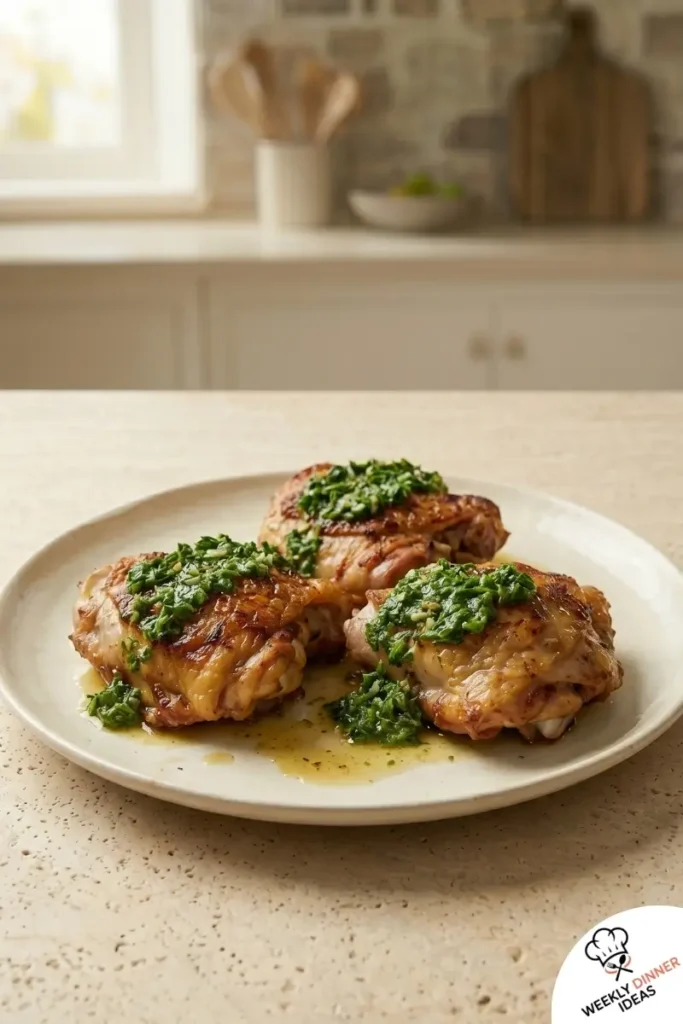
Let the chicken rest 5–10 minutes after cooking. This is crucial—resting allows juices to redistribute. Spoon chimichurri generously over each thigh and serve extra on the side.
What to look for: A glossy sauce coating without overwhelming the texture of the skin. The aroma should be herbaceous and garlicky.
Practical tip: If serving to a crowd, pass extra chimichurri in a small bowl; guests love adding more. Garnish with a lemon wedge if you like an extra citrus finish.
Pro Tips for the Best Chimichurri Chicken Thighs
Make the chimichurri first to let the flavors rest, and always check internal temperature with a thermometer.
- Don’t skip drying the skin: Patting chicken dry and a brief refrigerator rest improves crispness dramatically.
- Give chimichurri time: If you can, make it several hours ahead. The flavors knit together and taste brighter.
- Use an instant-read thermometer: Look for 165°F in the thickest part without touching bone. Visual cues can mislead you.
- Manage flare-ups on the grill: If fat causes flames, move thighs to indirect heat and close the lid—don’t constantly flip.
- Broil at the end for extra crispness: When roasting, a quick 1–2 minute broil (watch closely) makes skin blister and crisp.
- Make ahead: Chimichurri keeps in the fridge up to 5 days. Store cooked chicken and sauce separately for best texture when reheating.
- Double the sauce: Chimichurri is great on salads, grain bowls, or roasted vegetables. It freezes well for up to 3 months in an airtight container.
What to Serve with Chimichurri Chicken Thighs
This dish pairs beautifully with simple sides that let the chimichurri shine. For a weeknight, serve over rice, quinoa, or a big green salad. For more hands-on sides, try grilled vegetables or roasted potatoes.
- Try a bright salad or a handful of roasted veggies to balance the richness—see our collection of healthy dinner recipes for ideas.
- Serve with a grain like rice or quinoa for a satisfying bowl (our one-pan sheet pan meals often include complementary roasted vegetables).
- For a quick weeknight pick, plate the thighs with a simple cucumber-tomato salad and crusty bread from the pantry—browse quick weeknight dinners for easy accompaniments.
- Want more chicken ideas? Explore other family-friendly options in our chicken recipes category.
Storage, Freezing, and Reheating
Cooked chimichurri chicken stores well and reheats without losing too much texture if handled correctly.
Store cooked chicken in an airtight container in the refrigerator for up to 3–4 days. Keep chimichurri sauce in a separate sealed container for up to 5 days—the oil can solidify in the fridge, so bring it to room temperature before serving and whisk to recombine. For freezing, place cooked chicken in a freezer-safe container or bag for up to 3 months; chimichurri freezes well too in a small container or ice cube tray for up to 3 months. Reheat chicken gently in a 325°F oven until warmed through (about 10–15 minutes for pieces), or reheat slices in a skillet over medium heat with a splash of oil to revive the skin. Avoid microwaving for long periods—microwaves can make the skin rubbery and dry the meat.
About This Recipe and Why It Works
I developed this chimichurri chicken thighs recipe because I wanted an everyday dinner that felt special without requiring a lot of fuss. Chicken thighs are forgiving—juicy even if you’re distracted by homework help or a last-minute call—and chimichurri brings fresh, punchy flavor without any heavy sauce-making. My approach is rooted in the practical techniques I learned in culinary school: dry the protein for better browning, balance acid and fat in the sauce, and always taste and adjust. This recipe fits my philosophy at Weekly Dinner Ideas: accessible techniques, bold flavors, and food you can make any night of the week and be proud to serve.
Frequently Asked Questions
Can I use boneless, skinless chicken thighs instead?
Yes. Boneless, skinless thighs are a great option if you prefer less fat or quicker cooking. Boneless thighs cook faster—plan on about 18–25 minutes at 425°F in the oven or 6–8 minutes per side on a hot grill. They won’t have the same crisp skin, so be generous with finishing chimichurri to add moisture and flavor.
How long should I marinate the chicken?
Marinate anywhere from 30 minutes up to 12 hours for best results. Acidic marinades can start to change the meat texture if left too long; for bone-in skin-on thighs, 30 minutes to 12 hours is ideal. If marinating overnight, keep the chimichurri amount used for marinating to a smaller portion and reserve fresh chimichurri for finishing.
What internal temperature should the chicken reach?
Cook chicken thighs until the internal temperature reaches 165°F in the thickest part. Use an instant-read thermometer and avoid touching bone for an accurate read. Once it hits 165°F, remove from heat and rest 5–10 minutes so juices redistribute and the meat stays moist.
Can I make chimichurri without a food processor?
Absolutely—hand chopping works beautifully and gives a chunkier texture. Finely mince the herbs and garlic with a chef’s knife, then mix with vinegar, oil, and seasonings in a bowl. The result is rustic and very flavorful.
Is chimichurri safe to freeze?
Yes, chimichurri freezes well and retains flavor. Freeze in an airtight container or portion into an ice cube tray for easy single-serving thawing. Thaw in the refrigerator and whisk before serving.
My chimichurri tastes bitter—what happened?
Bitterness can come from over-processed herbs or using a bitter olive oil. If the sauce tastes bitter, add a small pinch of sugar or extra acid (a splash more vinegar or lemon), or balance with a bit more oil. Fresh, tender parsley and a mild extra-virgin olive oil help keep the flavor bright rather than bitter.
Can I grill these on a charcoal grill?
Yes—charcoal adds great smoky flavor but watch for flare-ups. Start over direct heat to crisp the skin, then move to indirect heat to finish cooking without burning. Keep the lid closed when possible to maintain steady temperature.
Final Thoughts
Chimichurri Chicken Thighs are one of those recipes that reliably delivers vibrant flavor with minimal stress. They’re perfect for a busy weeknight and elegant enough for friends—especially when you double the chimichurri and let guests spoon more over grains or roasted veggies. If you’re looking for more family-friendly chicken ideas, check my chicken recipes or round out the meal with ideas from my quick weeknight dinners and healthy dinner recipes collections. If you try this recipe, I’d love to know how it turned out—leave a comment and a star rating, and don’t forget to save it to Pinterest for your next meal plan at my Pinterest page.
Quick Recipe Summary
15–20 minutes (plus optional marinating time)
20–40 minutes (depending on bone-in vs boneless and method)
35 minutes–12 hours (if marinating)
4–6
Easy
Weeknight dinners, casual entertaining, meal prep
Herbaceous, garlicky, tangy, mildly spicy
Nutrition Information
| Nutrient | Per Serving |
|---|---|
| Calories | Approx. 420 |
| Protein | Approx. 28 g |
| Carbohydrates | Approx. 3 g |
| Dietary Fiber | Approx. 0.5 g |
| Fat | Approx. 32 g |
These values are estimates based on common ingredient amounts and preparation methods. Exact nutrition will vary depending on portion size, whether skin is eaten, and the specific olive oil and chicken cut used.
—
If you want a printable card or a version scaled for two or a crowd, let me know and I’ll add it. Happy cooking—there’s nothing quite like tearing into a piece of chicken that’s juicy on the inside, crisp on the outside, and kissed with a bright herb sauce.

Chimichurri Chicken Thighs
Ingredients
Equipment
Method
- Blend parsley, cilantro, garlic, vinegar, lemon juice, oregano, red pepper flakes, salt, and pepper. Slowly add olive oil to make chimichurri.
- Pat chicken thighs dry and season with salt, pepper, and olive oil.
- Optional: Marinate chicken with some chimichurri for 30 minutes to 12 hours.
- Preheat oven to 425°F or grill to medium-high heat.
- Cook chicken until internal temperature reaches 165°F.
- Optional: Broil briefly for extra crispiness.
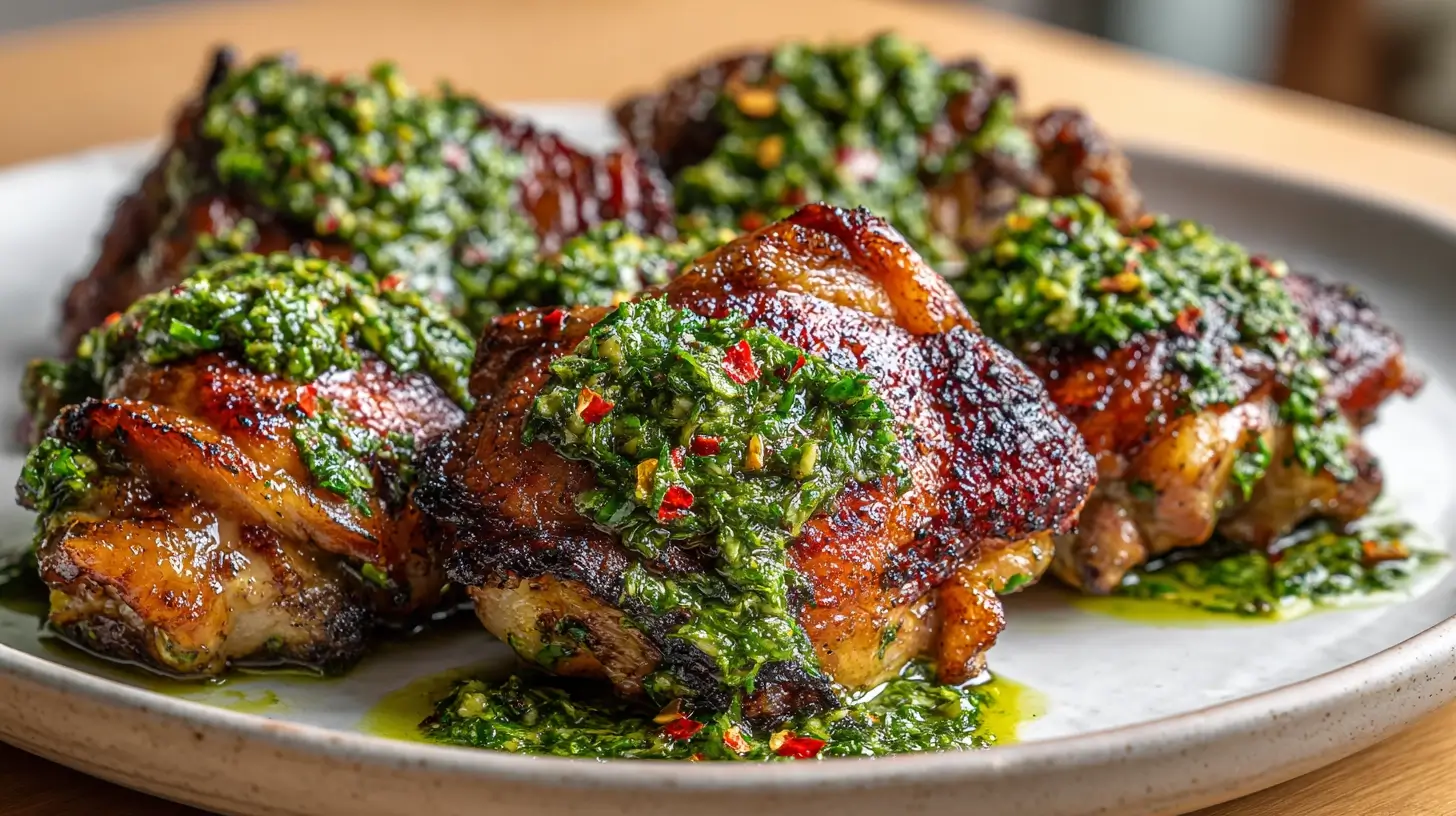
- Rest 5–10 minutes, then serve topped with chimichurri.
Notes

Elizabeth Morgan
Easy & Delicious Recipes
Follow for quick family-friendly recipes, baking inspiration, and comfort food favorites.
Follow on Pinterest