Discover the Irresistible Honey Mustard Chicken Thighs Recipe!
- One-Pan & Sheet Pan Meals
 Elizabeth
- 0
- 40 minutes read
I love a dish that feels cozy and a little bit celebratory at the same time—this Honey Mustard Chicken Thighs recipe does exactly that. As someone who grew up in a kitchen where quick meals needed to taste like they took longer than they did, I’ve learned how to coax big flavor from handfuls of pantry staples. Honey Mustard Chicken Thighs show up on my weekly rotation when I want something sticky, sweet, and tangy without a lot of fuss. They’re forgiving, family-friendly, and great for busy weeknights or an easy Sunday dinner.
Let’s walk through the recipe together so you can get the skin crispy, the interior juicy, and the glaze glossy every time.
Why You’ll Love This Honey Mustard Chicken Thighs
These Honey Mustard Chicken Thighs are flavorful, simple, and flexible—great for busy homes and cooks who like dependable results.
You’ll love this recipe because:
- The flavor balances sweet honey with bright mustard tang.
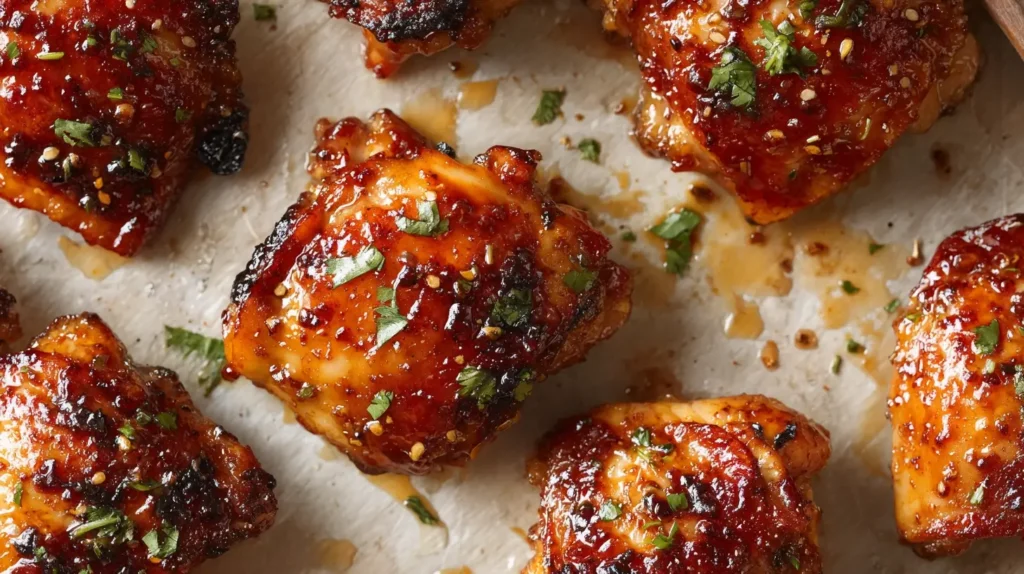
- A caramelized glaze gives the thighs a slightly crisp, sticky exterior while the meat stays tender.
- It’s fast to throw together and works well for meal prep or dinner guests.
- Kids and adults alike usually reach for seconds.
- Easily adapted to low-carb or gluten-free diets by swapping simple ingredients.
What Is Honey Mustard Chicken Thighs?
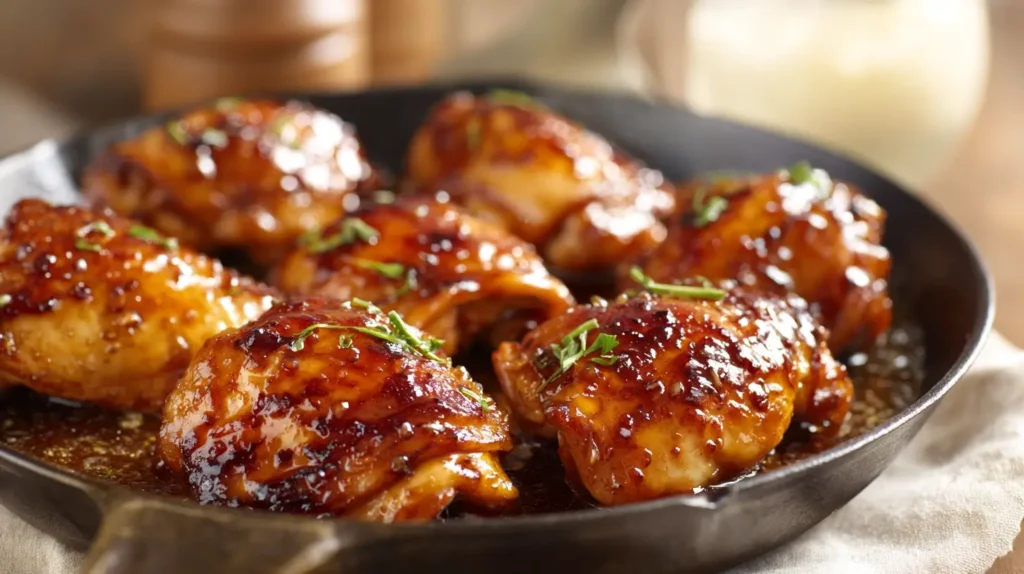
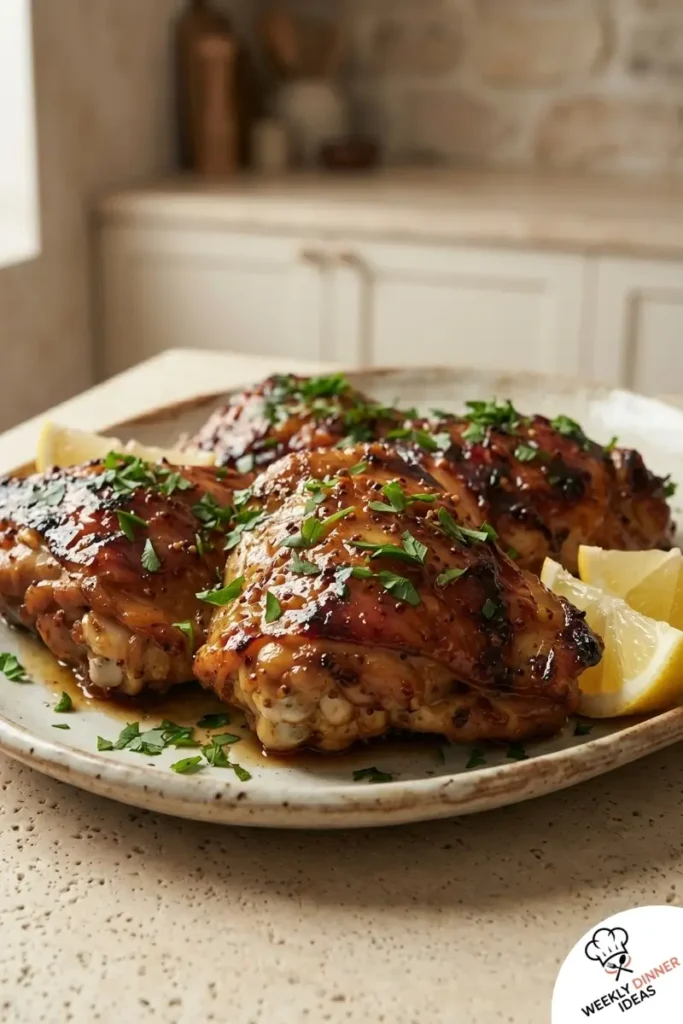
Honey Mustard Chicken Thighs are chicken thighs (bone-in or boneless) roasted or baked with a glaze or sauce made from honey and mustard, often brightened with vinegar and aromatics.
This version focuses on a glossy baked glaze that clings to the skin and edges of the thighs, creating sweet, tangy bites with crisp edges. It’s the kind of dish you serve with mashed potatoes, roasted vegetables, or a crisp green salad for a complete, satisfying meal.
Ingredients You’ll Need
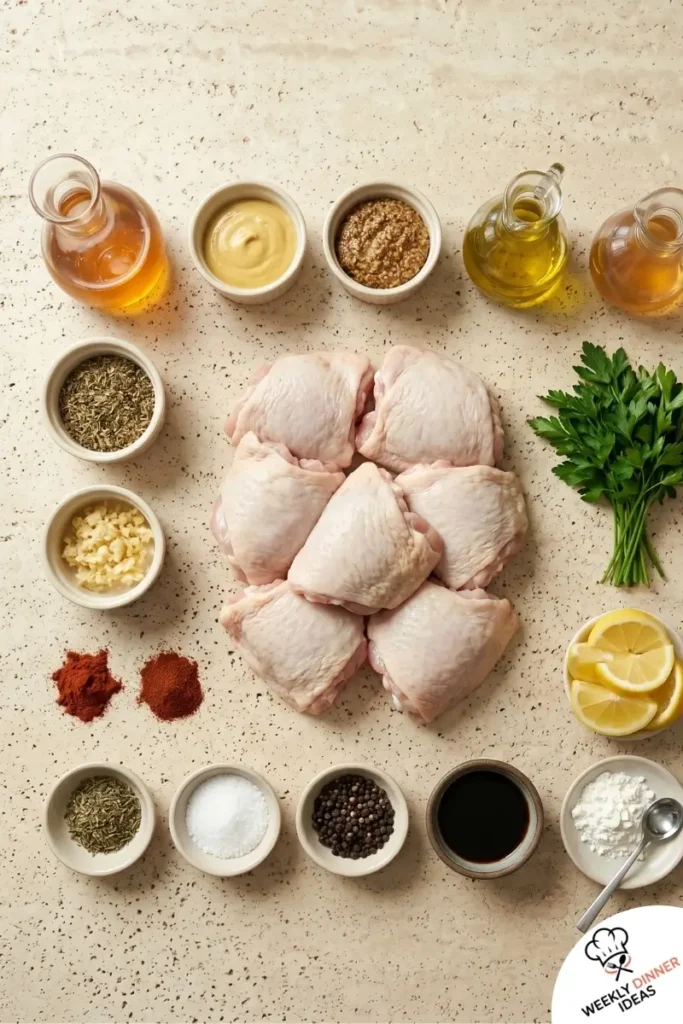
- 4–6 bone-in, skin-on chicken thighs (about 2 to 2½ pounds) — or 6–8 boneless skinless thighs
- 1/3 cup honey (mild-flavored)
- 1/4 cup Dijon mustard
- 1 tablespoon whole-grain mustard (optional for texture)
- 2 tablespoons olive oil
- 1 tablespoon apple cider vinegar or white wine vinegar
- 2 garlic cloves, minced
- 1 teaspoon smoked paprika (or sweet paprika)
- 1/2 teaspoon dried thyme (or 1 teaspoon fresh, chopped)
- 1 teaspoon kosher salt (adjust to taste)
- 1/2 teaspoon freshly ground black pepper
- 1 tablespoon soy sauce or tamari (optional; adds depth)
- 1–2 teaspoons cornstarch mixed with 1 tablespoon water (optional, for thicker sauce)
- Fresh parsley or chives, chopped for garnish (optional)
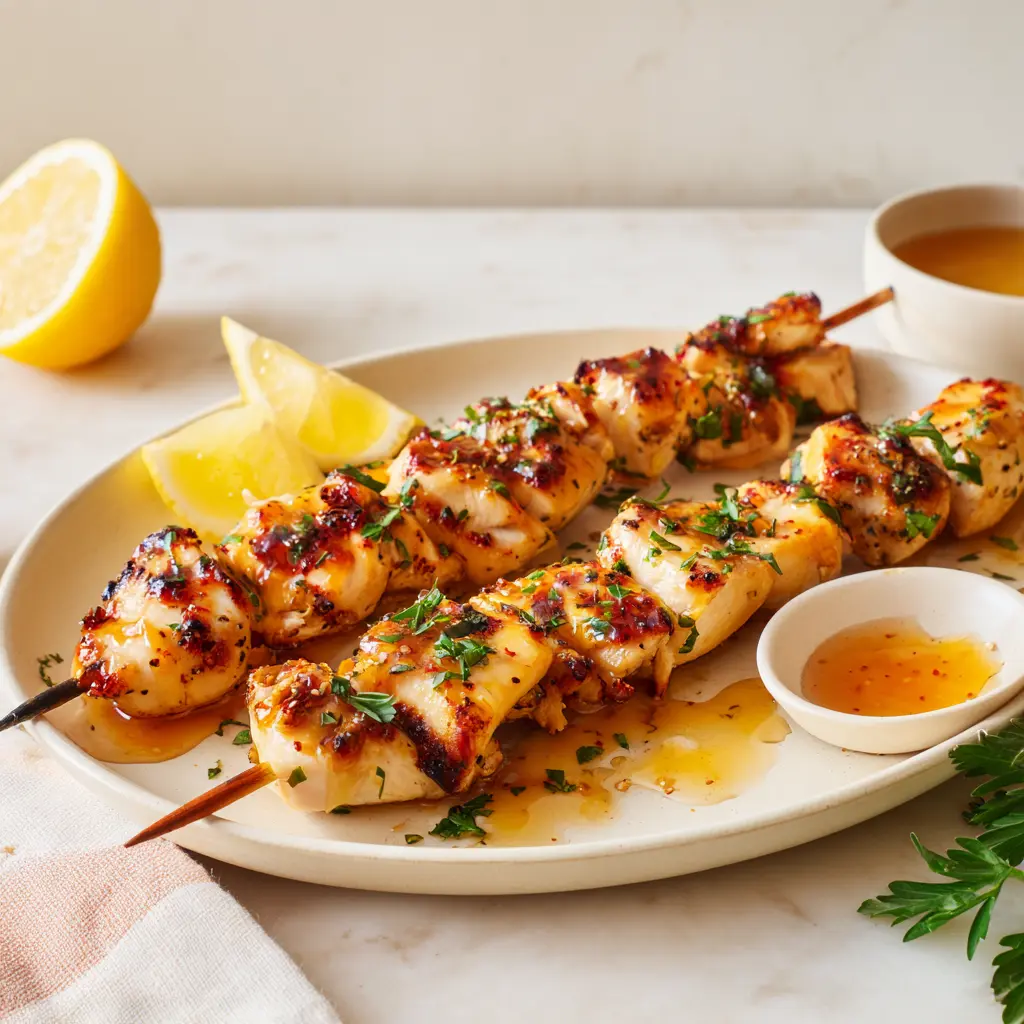
- Lemon wedges for serving (optional)
Key ingredient notes: Good-quality Dijon gives that clean mustard tang, while whole-grain mustard adds a pretty speckled texture in the glaze. Honey should be mild-flavored so it doesn’t overpower the mustard; darker honeys work but will add deeper flavor. Bone-in, skin-on thighs give the best texture and flavor, but boneless thighs shorten cook time and still turn out juicy.
Tools You Need
- Baking dish or rimmed baking sheet (paid link)
- Mixing bowl (paid link)
- Whisk or fork (paid link)
- Measuring cups and spoons (paid link)
- Instant-read thermometer (paid link)
- Small saucepan (if you want to reduce the sauce) (paid link)
- Silicone brush (for glazing) (paid link)
- Tongs or spatula (paid link)
- Aluminum foil or a tent for resting (paid link)
Ingredient Substitutions and Additions
Best substitutions
- Chicken: Use boneless, skinless thighs if you prefer less fat or faster cooking; reduce bake time by 5–12 minutes. Bone-in, skin-on thighs are recommended for best flavor and texture.
- Dijon mustard: Substitute yellow mustard in a pinch, but reduce the quantity slightly and add 1 teaspoon apple cider vinegar for acidity.
- Honey: Maple syrup works for a different, woodsy sweetness; use slightly less if it tastes strong.
Flavor additions
- Add a teaspoon of mustard seeds or a tablespoon of grainy mustard for texture.
- Stir in 1–2 tablespoons of finely chopped fresh herbs (thyme, rosemary, or tarragon) to the glaze before baking.
- For a smoky kick, add 1/2 teaspoon chipotle chili powder or smoked paprika.
Dietary swaps
- Gluten-free: Use tamari instead of soy sauce or omit it entirely.
- Lower-sugar: Reduce honey by half and increase vinegar slightly; add a touch of brown sugar substitute if you want body.
- Dairy-free: This recipe is naturally dairy-free unless you add a creamy finishing sauce.
How to Make Honey Mustard Chicken Thighs

This recipe is a simple marinade-plus-bake method: a quick marinade of honey, mustards, vinegar, and aromatics flavors the thighs, which bake until the glaze caramelizes and the meat reaches a safe internal temperature.
Step 1: Pat, season, and prep
Pat the chicken thighs dry with paper towels—this is the little step that helps the skin crisp. Season both sides lightly with salt and pepper. Dry skin browns much better; if you skip this, the glaze can steam the skin instead of crisping it.
What to look for: The skin should be mostly dry to the touch before the glaze goes on. If the thighs are wet, blot them again.
Kitchen tip: If you’re short on time, you can skip a long marinade; the glaze will still flavor the outside well. If you have 30 minutes or more, let them sit in the fridge with some of the glaze to deepen the flavor.
Step 2: Make the honey mustard glaze
Combine the honey, Dijon mustard, whole-grain mustard, olive oil, apple cider vinegar, minced garlic, smoked paprika, dried thyme, soy sauce (if using), and a pinch of salt and pepper in a bowl. Whisk until smooth.
What to look for: The glaze should be pourable but thick enough to coat the back of a spoon. If it seems thin, whisk in another teaspoon of mustard or reduce briefly over low heat in a small saucepan.
Kitchen tip: Taste the glaze—adjust for brightness with a squeeze of lemon or more vinegar, and adjust sweetness if needed. Remember most of the glaze will concentrate during baking, so it should be slightly balanced but not overly sharp.
Step 3: Marinate (optional) and arrange
Place the chicken thighs in a shallow dish or zip-top bag. Pour about half the glaze over the thighs, turning to coat well. Reserve the other half for basting during cooking and finishing. Marinate in the fridge 30 minutes to overnight, or proceed immediately if short on time.
What to look for: If marinating longer than 4–6 hours, the acid can start to change the texture of the exterior—overnight is fine for most applications but don’t go much longer.
Kitchen tip: If you marinate overnight, bring the thighs close to room temperature for 20 minutes before baking to promote even cooking.
Step 4: Bake the thighs
Preheat oven to 425°F (220°C). Arrange the thighs skin-side up on a rimmed baking sheet or in a shallow baking dish lined with foil for easier cleanup. Spoon any extra glaze over the skin. Bake bone-in, skin-on thighs 35–40 minutes, or boneless thighs 20–25 minutes. When there are 8–10 minutes left, brush on another thin layer of glaze to build a sticky finish.
What to look for: Skin should be browned and sticky, and an instant-read thermometer inserted into the thickest part of the thigh (not touching bone) should read 165°F (74°C). If the skin begins to darken too quickly, tent loosely with foil.
Kitchen tip: For an extra glossy finish, broil 1–2 minutes at the end, watching very closely so the sugars don’t burn.
Step 5: Rest, finish, and serve
Remove the thighs from the oven and tent loosely with foil for 5–7 minutes to let juices redistribute. If you’d like thicker sauce, pour the pan drippings into a small saucepan, add the reserved glaze, and simmer for 2–3 minutes. Stir in a cornstarch slurry (1–2 teaspoons mixed with water) to thicken if desired. Spoon over chicken and garnish with chopped parsley or chives and a squeeze of lemon.
What to look for: The meat should feel tender but firm, and juices should run clear. The glaze should be glossy and cling to the skin.
Kitchen tip: Letting the chicken rest is not optional—cutting immediately will let the juices run out and make the meat dryer.
Pro Tips for the Best Honey Mustard Chicken Thighs
Use these practical tips to improve texture, flavor, and reliability.
These tips will keep your chicken juicy and flavorful while avoiding common pitfalls.
- Dry thoroughly: Pat the skin as dry as possible before applying glaze to ensure crisping instead of sogginess.
- Mind your sugar: Honey caramelizes quickly. Bake at 425°F for a nicely balanced glaze, but watch for fast darkening near the end and tent with foil if needed.
- Use an instant-read thermometer: The safest and most reliable way to know doneness is 165°F (74°C) in the thickest part of the thigh.
- Reserve glaze for finishing: Don’t pour all the glaze on before cooking; save some for basting halfway through and finishing for maximum gloss.
- Make ahead: Marinate the thighs and refrigerate up to 24 hours. Alternatively, make the glaze up to 3 days ahead and brush it on when ready to bake.
- Double the batch: This sauce scales well—double everything for a larger crowd and roast on a sheet pan in a single layer.
- For crispier skin: Start the thighs skin-side down in a hot skillet for 3–4 minutes to render fat before transferring to the oven. This is optional but gives excellent texture.
What to Serve with Honey Mustard Chicken Thighs
This dish is versatile—pair it with simple sides that soak up the glaze.
- Roasted or mashed potatoes are classic; the sauce is great on mashed potatoes. You can find similar weeknight potato pairings in the quick weeknight dinners category.
- For a lighter plate, serve with a crisp green salad or steamed green beans; the vinegar in the glaze balances bright vegetables.
- Sheet-pan roasted vegetables are an easy one-pan companion—see inspiration at one pan / sheet pan meals.
- Serve over a bed of cauliflower rice or quinoa to make it a balanced meal; explore other healthy options at healthy dinner recipes.
- If you want more chicken ideas, check the chicken recipes category.
Storage, Freezing, and Reheating
Store cooked chicken thighs in an airtight container in the refrigerator for 3–4 days; freeze up to 3 months.
To reheat, thaw overnight if frozen. Warm in a 350°F oven for 12–16 minutes covered with foil until heated through, then uncover for 3–5 minutes to revive the glaze. Reheating in a skillet over medium-low heat works too—add a few tablespoons of water or chicken stock and cover to steam, then uncover to reduce and re-glaze.
Expect texture changes: reheated chicken will be slightly drier than fresh, but reheating gently and adding a little sauce helps maintain juiciness.
About This Recipe and Why It Works
I developed this recipe to be the kind of weekday meal I’d happily serve to guests without fuss. Trained in a professional kitchen, I appreciate techniques that amplify simple ingredients—here, a little heat, a dry skin, and a layered glaze create a dish that tastes special but comes together quickly.
This recipe reflects my cooking philosophy: trustworthy methods, pantry-forward flavors, and small techniques (drying the skin, baste and rest) that yield big improvements. Honey and mustard are a timeless pairing: honey softens the bite of mustard while mustard keeps the sweetness bright. The acid in the vinegar rounds the profile so each bite is balanced.
I often make a double batch of glaze to have on hand for salads or roasted veggies during the week. The leftovers keep well and punch up simple sides.
Frequently Asked Questions
Can I use boneless chicken thighs instead of bone-in?
Yes—boneless thighs work well and cook faster. Bake at 425°F for about 20–25 minutes, or until an instant-read thermometer reads 165°F. Keep a close eye starting around 18 minutes to avoid overcooking. Expanding: Boneless thighs are leaner and easier to slice for sandwiches. You may miss some flavor that comes from bones, but the glaze still creates great texture.
How long should I marinate the chicken?
Marinate 30 minutes to overnight for best flavor; 30–60 minutes adds good flavor, while 4–12 hours deepens it. Avoid marinating more than 24 hours, especially if the glaze is highly acidic. Expanding: Short marinating is fine because the glaze is applied before and during cooking. If pressed for time, proceed without marinating—glaze right before baking.
Is this recipe gluten-free?
It can be. Omit the soy sauce or use tamari, and check labels on mustard (most are gluten-free). The rest of the ingredients are naturally gluten-free. Expanding: If you’re serving someone with celiac disease, verify all packaged ingredients like mustard and vinegar for cross-contamination risk.
How can I thicken the sauce?
Simmer pan drippings and reserved glaze in a small saucepan for 2–3 minutes. For a thicker sauce, whisk in 1–2 teaspoons cornstarch mixed with a tablespoon of cold water and simmer 30–60 seconds until thickened. Expanding: Thickening concentrates the flavors—taste and adjust with a splash of vinegar or a pinch of salt if needed.
What internal temperature should I look for?
Cook chicken to an internal temperature of 165°F (74°C) measured at the thickest part of the thigh, not touching bone. Expanding: Remove from oven at 165°F and rest 5–7 minutes to reach stable juiciness. If you prefer slightly more tender fall-apart thighs, some chefs take dark meat to 170–175°F, but 165°F is safe and juicy.
Can I make this in an air fryer or on the stovetop?
Yes. Air fry thighs at 400°F for 18–20 minutes for boneless or 20–25 minutes for bone-in, flipping halfway and brushing with glaze near the end. On the stovetop, sear skin-side down in a skillet to render fat, then finish in a 400°F oven or cover and cook in the skillet with a lid on low until done. Expanding: The air fryer gives great crisping; reduce glaze application time to prevent burning. On stovetop, be mindful of flare-ups if glaze contains sugar.
Can I double the recipe for a crowd?
Absolutely—double the glaze and arrange thighs in a single layer on a sheet pan or in two pans. Watch cooking times closely and rotate pans mid-bake for even browning. Expanding: Avoid overcrowding the pan or the thighs will steam rather than roast. Use two pans if needed.
Final Thoughts
Honey Mustard Chicken Thighs are one of those simple recipes that deliver consistently—sticky, fragrant, and satisfying every time. It’s the kind of meal I make when I want something that feels homemade but not fussy. Pair it with roasted potatoes or a fresh salad, and you’ve got a family-friendly dinner that travels well to leftovers.
If you enjoyed this recipe, explore other weeknight ideas in the quick weeknight dinners category or find more chicken inspiration at chicken recipes. For one-pan convenience, check the one pan / sheet pan meals, and for lighter options look through healthy dinner recipes.
Save the recipe to your Pinterest boards and follow along on my profile for more weekly inspiration: Elizabeth on Pinterest. Please leave a comment below to tell me how your batch turned out, rate the recipe, and share any tweaks that worked for you.
Quick Recipe Summary
10–20 minutes (plus optional marinating)
20–40 minutes (depends on boneless vs bone-in)
30 minutes–1 hour (including optional marinating)
4–6
Easy
Weeknight dinners, meal prep, easy entertaining
Sweet, tangy, slightly savory with a caramelized finish
Nutrition Information
| Nutrient | Per Serving |
|---|---|
| Calories | Approx. 420 |
| Protein | Approx. 28 g |
| Carbohydrates | Approx. 18 g |
| Dietary Fiber | Approx. 0.5 g |
| Fat | Approx. 26 g |
These values are estimates based on typical ingredient quantities and may vary depending on exact ingredient brands, portion sizes, and whether bone-in or boneless thighs are used.
—
If you try these Honey Mustard Chicken Thighs, I’d love to hear how you adjusted the glaze or which sides you paired them with—drop a note below. Happy cooking!
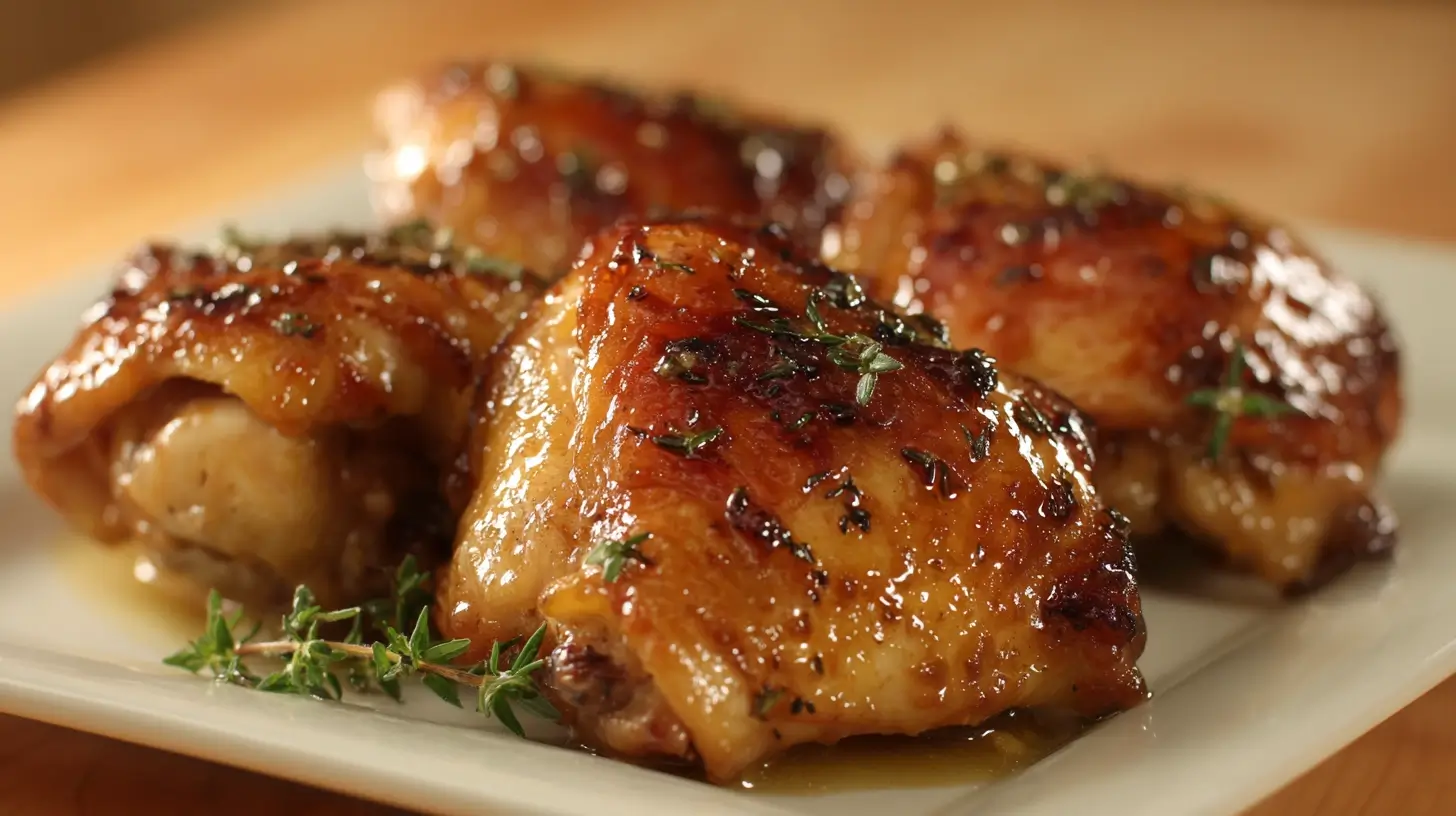

Honey Mustard Chicken Thighs
Ingredients
Equipment
Method
- Preheat oven to 425°F (220°C).
- Pat the chicken thighs dry with paper towels and season lightly with salt and pepper.
- In a mixing bowl, whisk together honey, Dijon mustard, whole-grain mustard, olive oil, vinegar, garlic, paprika, thyme, soy sauce if using, salt, and pepper until smooth.
- Arrange the chicken thighs skin-side up in a baking dish or on a rimmed baking sheet.
- Brush or spoon about half of the honey mustard glaze over the chicken. Reserve the remaining glaze for basting.
- Optional: Marinate the chicken for 30 minutes or up to overnight for deeper flavor.
- Bake bone-in chicken thighs for 35-40 minutes, until the internal temperature reaches 165°F (74°C).
- Brush with more glaze during the last 8-10 minutes of baking to build a sticky finish.
- Optional: Broil for 1-2 minutes at the end for a glossy caramelized finish, watching carefully so the honey does not burn.
- Rest the chicken for 5-7 minutes before serving. Garnish with parsley or chives and lemon wedges if desired.
- Optional: Simmer pan drippings with reserved glaze in a small saucepan. Add cornstarch slurry if desired and cook until thickened.
Notes

Elizabeth Morgan
Easy & Delicious Recipes
Follow for quick family-friendly recipes, baking inspiration, and comfort food favorites.
Follow on Pinterest