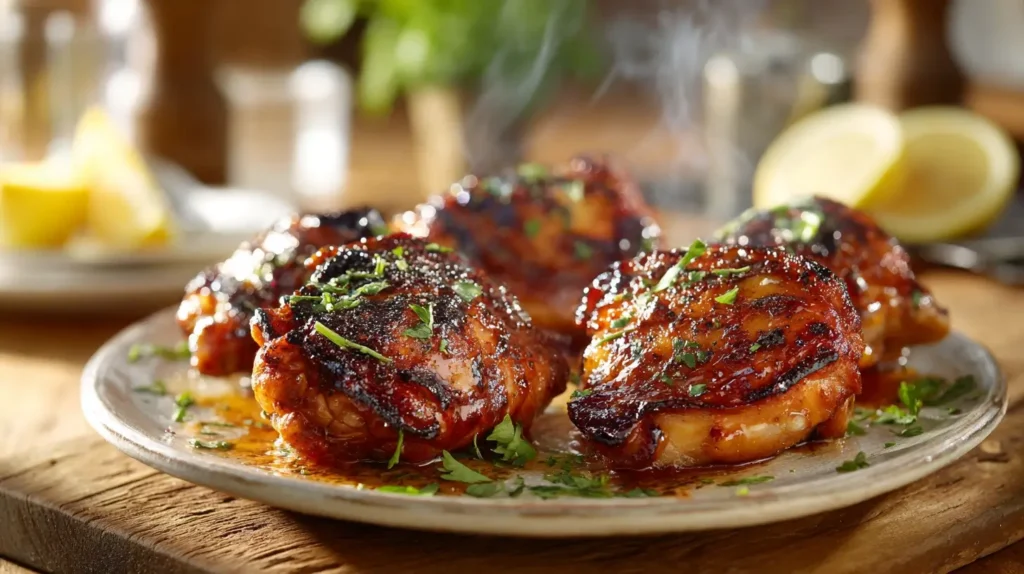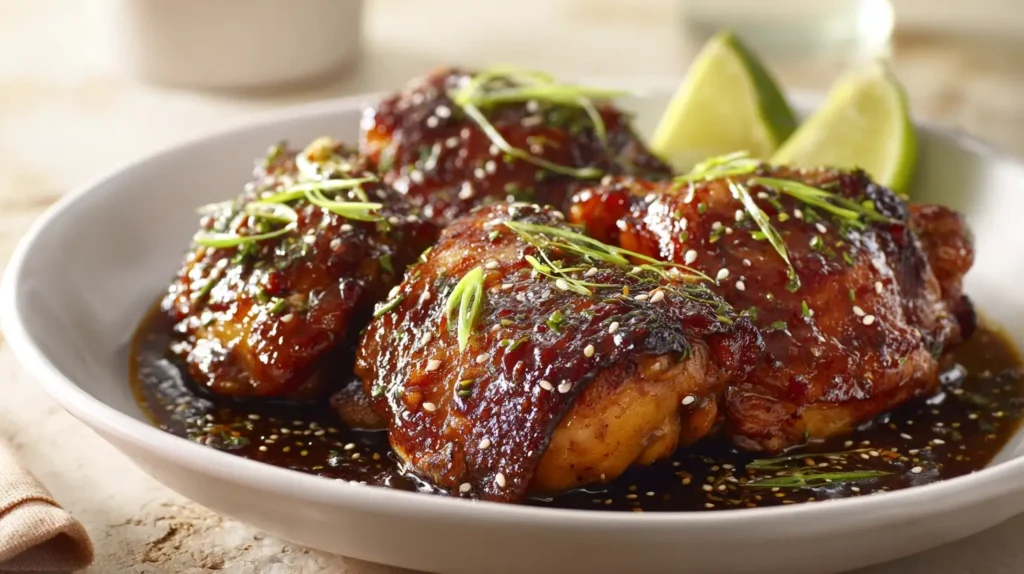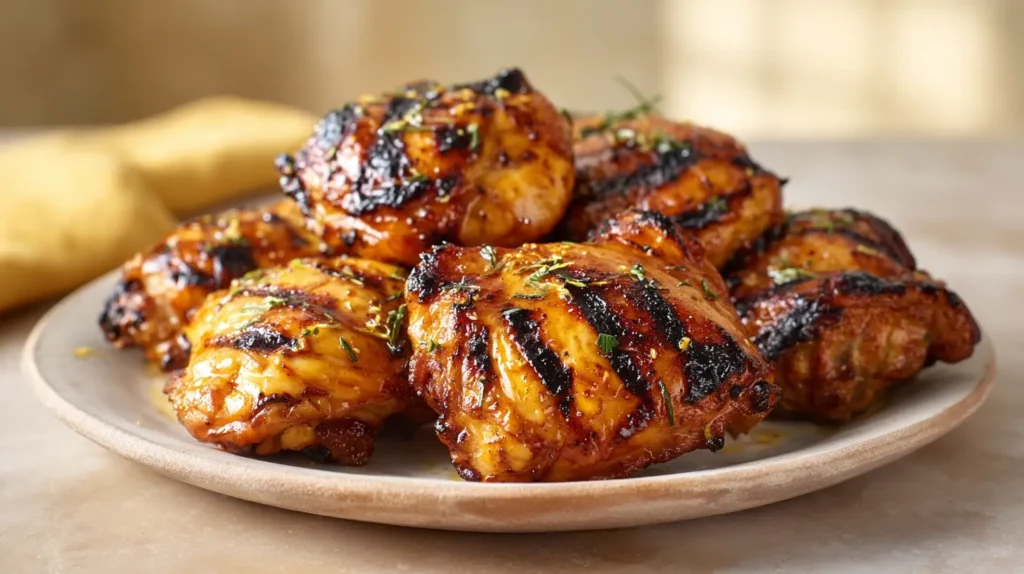
Irresistible Hawaiian Chicken Thighs: A Delicious Taste of Paradise!
- Chicken Recipes
 Elizabeth
- 0
- 45 minutes read
I love recipes that feel like a little escape—flavors that transport you to sunshine and salt air, even on an ordinary Tuesday. These Hawaiian Chicken Thighs do exactly that: bright pineapple, caramelized brown sugar, savory soy, and a touch of ginger come together in a sticky, irresistible glaze. Hawaiian Chicken Thighs are one of those dinners I turn to when I want something family-friendly, fast enough for weeknights, but special enough for company. I’m Elizabeth, a professionally trained chef who cooks and tweaks recipes at home all the time, and this version balances tropical sweetness with savory depth so the thighs stay juicy and the glaze sings. Let’s dive in.
Why You’ll Love This Hawaiian Chicken Thighs
Hawaiian Chicken Thighs are a sweet-savory, sticky-glazed chicken that tastes like summer but works year-round.
You’ll love this recipe because it layers tangy pineapple with umami-rich soy and warm brown sugar to create a glaze that caramelizes beautifully on the chicken. The thighs stay tender and juicy, with a slightly charred edge if you grill them. It’s straightforward to make, scales easily for meal prep, and kids and adults usually both love the tropical flavors. This dish is flexible—great for quick weeknight dinners, backyard grilling, or even a casual sheet-pan meal.
- Flavor: bright, sweet-tangy, deeply savory
- Texture: sticky glaze, tender interior, caramelized edges
- Convenience: quick marinade, simple pan or grill method
- Family appeal: familiar flavors kids enjoy, adult-friendly with a little heat
- Seasonal fit: perfect for summer grilling, but cozy enough for winter oven baking
- Meal-prep value: reheats well and pairs with rice or salad
- Dietary flexibility: easy to adapt to gluten-free or lower-sugar versions
What Is Hawaiian Chicken Thighs?
Hawaiian Chicken Thighs are chicken pieces—often thighs—marinated and cooked with a pineapple-based sweet-savory glaze.
This dish blends tropical pineapple juice or chunks with soy, brown sugar, garlic, and ginger to create a sticky coating that caramelizes on the chicken. People serve it at backyard barbecues, weeknight dinners, or potlucks. It tastes bright and sweet with a salty backbone and caramel notes; this version emphasizes a quick marinade and a reduced glaze for a glossy finish and tender meat.
Ingredients You’ll Need
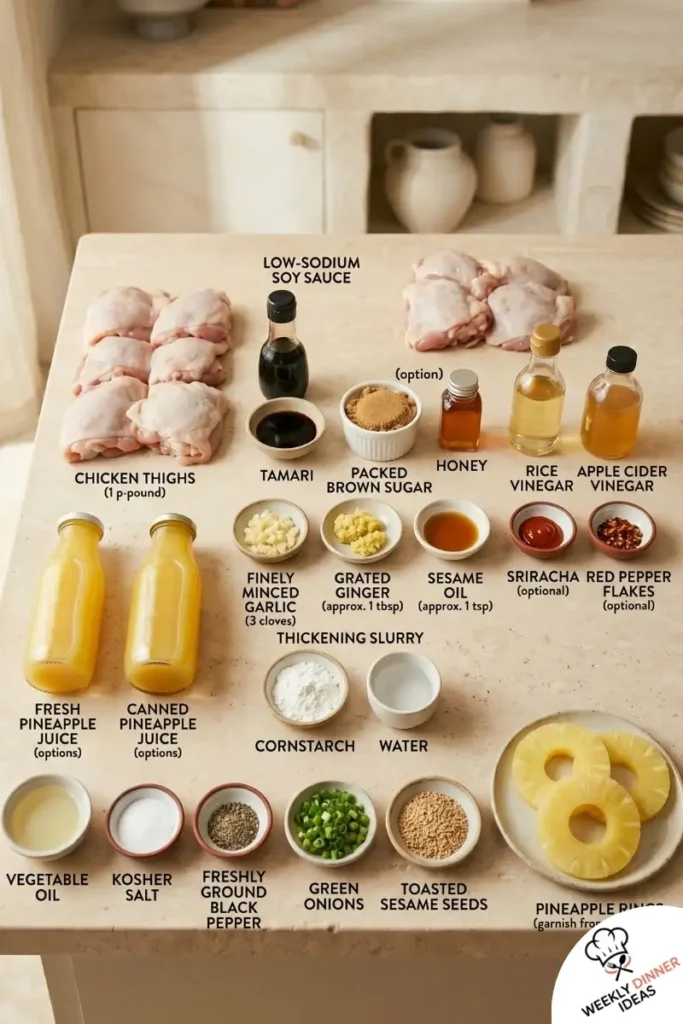
- 2 pounds boneless, skin-on chicken thighs (about 6–8 thighs)
- 3/4 cup pineapple juice (from fresh or canned, not cocktail)
- 1/4 cup low-sodium soy sauce (or tamari for gluten-free)
- 1/4 cup brown sugar (packed; substitute honey if needed)
- 2 tablespoons rice vinegar or apple cider vinegar
- 3 cloves garlic, finely minced
- 1 tablespoon fresh ginger, grated
- 1 tablespoon sesame oil (optional, for depth)
- 1-2 teaspoons Sriracha or red pepper flakes (optional, for heat)
- 1 tablespoon cornstarch + 2 tablespoons water (slurry to thicken glaze)
- 1 tablespoon vegetable oil (for searing/grilling)
- Salt and freshly ground black pepper, to taste
- Optional garnish: chopped green onions, toasted sesame seeds, grilled pineapple rings or chunks
Role of key ingredients and quality notes:
- Pineapple juice provides acidity and natural sugars that help tenderize and caramelize; use unsweetened juice for more control.
- Soy sauce gives the savory backbone—choose low-sodium to avoid oversalting.
- Brown sugar creates the sticky caramel; honey works but will alter flavor slightly.
- Cornstarch slurry is used to thicken reserved marinade into a safe, cooked glaze—never brush raw marinade on finished chicken without cooking it first.
Tools You Need
- Instant-read thermometer (paid link)
- Mixing bowl or resealable plastic bag (for marinating) (paid link)
- Measuring cups and spoons (paid link)
- Whisk (paid link)
- Skillet (cast-iron preferred) or grill (paid link)
- Tongs (paid link)
- Small saucepan (to reduce and thicken glaze) (paid link)
- Baking sheet and wire rack (for oven method) (paid link)
- Cutting board and chef’s knife (paid link)
Ingredient Substitutions and Additions
Best substitutions
- Soy sauce → Tamari or coconut aminos for gluten-free options.
- Brown sugar → Honey, maple syrup, or coconut sugar (use a little less liquid if swapping for honey).
- Pineapple juice → Fresh pineapple blended and strained; or a mix of orange juice + a splash of vinegar for less sweetness.
- Chicken thighs → Boneless skinless thighs will cook faster; bone-in thighs take longer but stay juicy.
Flavor additions
- Add 1/4 cup grated fresh pineapple to the glaze for a more intense fruit profile.
- Stir in 1–2 teaspoons toasted sesame oil at the end for aroma.
- Add a splash of dark rum to the glaze (optional, simmer so alcohol cooks off) for a Caribbean touch.
- Mix in chopped cilantro or fresh basil as a finishing herb for brightness.
Dietary swaps
- Lower-sugar: reduce brown sugar by half and add a squeeze of lime to balance acidity.
- Paleo/keto: replace brown sugar with a keto-friendly sweetener and use coconut aminos.
- Vegetarian: swap chicken for firm tofu or large roasted portobellos; marinate and reduce the glaze the same way.
How to Make Hawaiian Chicken Thighs
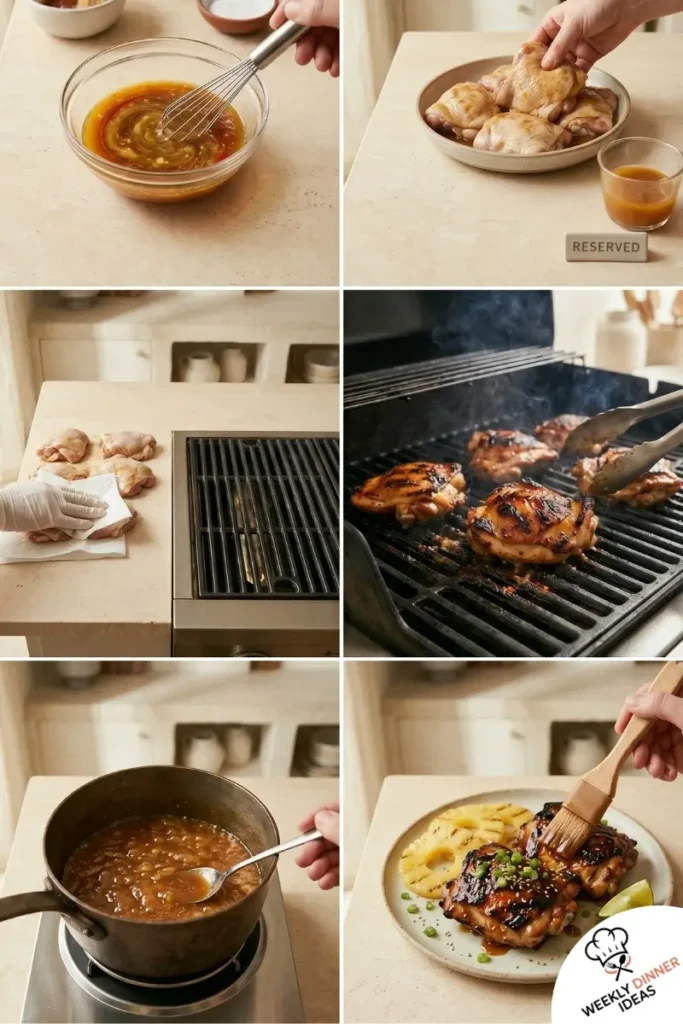
This recipe starts with a short, flavor-packed marinade, then sears or grills the thighs until nicely caramelized. Finish by reducing reserved marinade into a thick, glossy glaze and brush it on the hot chicken for that classic sticky finish.
Step 1: Marinate the chicken
Place the pineapple juice, soy sauce, brown sugar, rice vinegar, minced garlic, grated ginger, sesame oil (if using), and Sriracha (if using) in a bowl. Whisk until the sugar dissolves. Put the chicken thighs in a resealable bag or shallow dish and pour the marinade over them. Press out excess air and refrigerate for at least 30 minutes and up to 8 hours.
What to look for: The marinade should coat each piece lightly. If you’re short on time, even 30 minutes adds flavor—an hour or two is better. Don’t exceed 12 hours, as pineapple’s enzymes can start to break down texture too much.
Practical advice: Reserve 1/3 cup of the marinade before adding raw chicken; you’ll cook this down into the glaze. Never use raw marinade as a sauce without heating it to a boil.
Step 2: Preheat and prep for cooking
If grilling: Preheat grill to medium-high (about 400–450°F). Oil the grill grates lightly to prevent sticking. If baking: Preheat oven to 425°F and set a wire rack on a baking sheet; pat the thighs dry with paper towels to help them brown.
What to look for: The pan or grill should be hot enough that the thighs sizzle on contact. Dry skin or surface helps caramelization; a light oil rub prevents sticking. Season lightly with salt and pepper just before cooking.
Practical advice: Leaving the chicken to come close to room temperature for 20 minutes helps it cook evenly. If the marinade is wet, pat thighs dry to avoid steaming instead of searing.
Step 3: Sear or grill the chicken
Grill method: Place thighs skin-side down (if using skin-on) and cook 6–8 minutes per side until golden and slightly charred, flipping once. Total time usually 12–16 minutes depending on thickness.
Skillet method: Heat 1 tablespoon vegetable oil in a cast-iron skillet over medium-high. Add thighs skin-side down and press gently to ensure full contact. Cook 5–7 minutes per side until well-browned and nearly cooked through.
Oven method: Arrange thighs on the wire rack and bake 20–25 minutes at 425°F, finishing under the broiler for 2–3 minutes if you want extra color.
What to look for: The outer glaze should be caramelizing, edges should show golden-brown spots, and juices should run clear. Use an instant-read thermometer to check for 165°F in the thickest part.
Practical advice: Avoid flipping too often; one confident flip yields a better sear. If pieces vary in size, remove smaller ones earlier to prevent overcooking.
Step 4: Make and apply the glaze
While the chicken cooks, pour the reserved marinade into a small saucepan. Bring to a simmer over medium heat, whisk in the cornstarch slurry (1 tablespoon cornstarch mixed with 2 tablespoons water), and simmer for 2–4 minutes until thickened and glossy.
What to look for: The glaze should coat the back of a spoon and have a syrupy sheen. If it’s too thin, simmer a little longer; if too thick, thin with a teaspoon or two of water.
Practical advice: Taste the glaze—if it’s too salty, add a squeeze of pineapple juice or a teaspoon of brown sugar; if it’s too sweet, add a splash of vinegar.
Once the chicken reaches 165°F, brush the hot glaze over each piece and allow it to rest for 3–5 minutes so the sugars set into a shiny coating. If desired, return to the grill or broiler for 1 minute to caramelize the glaze further—watch carefully to avoid burning.
Step 5: Rest, garnish, and serve
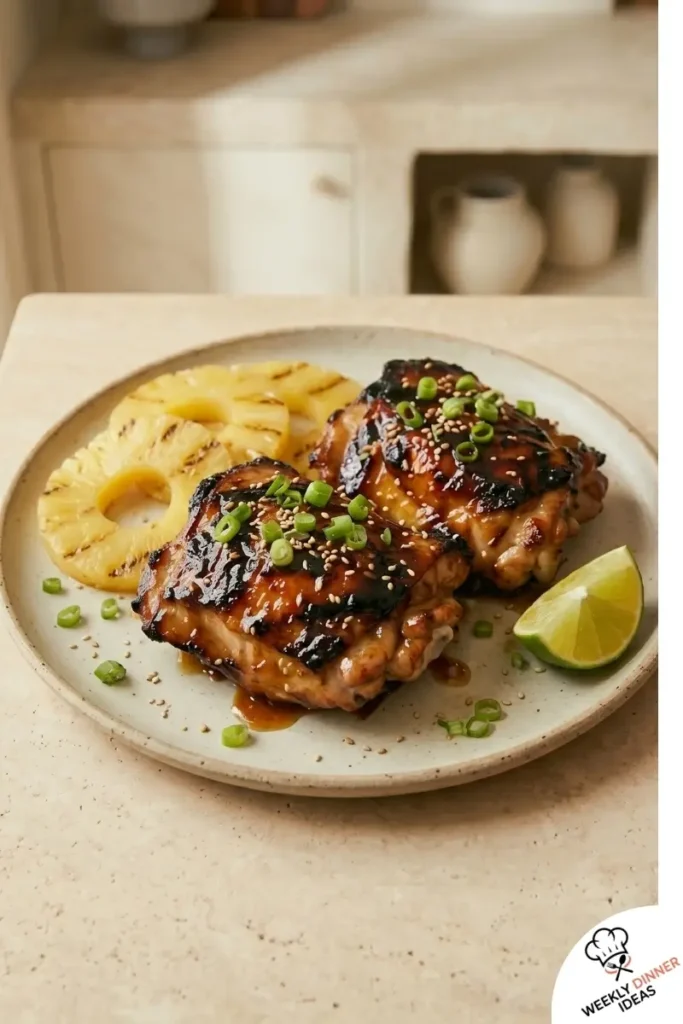
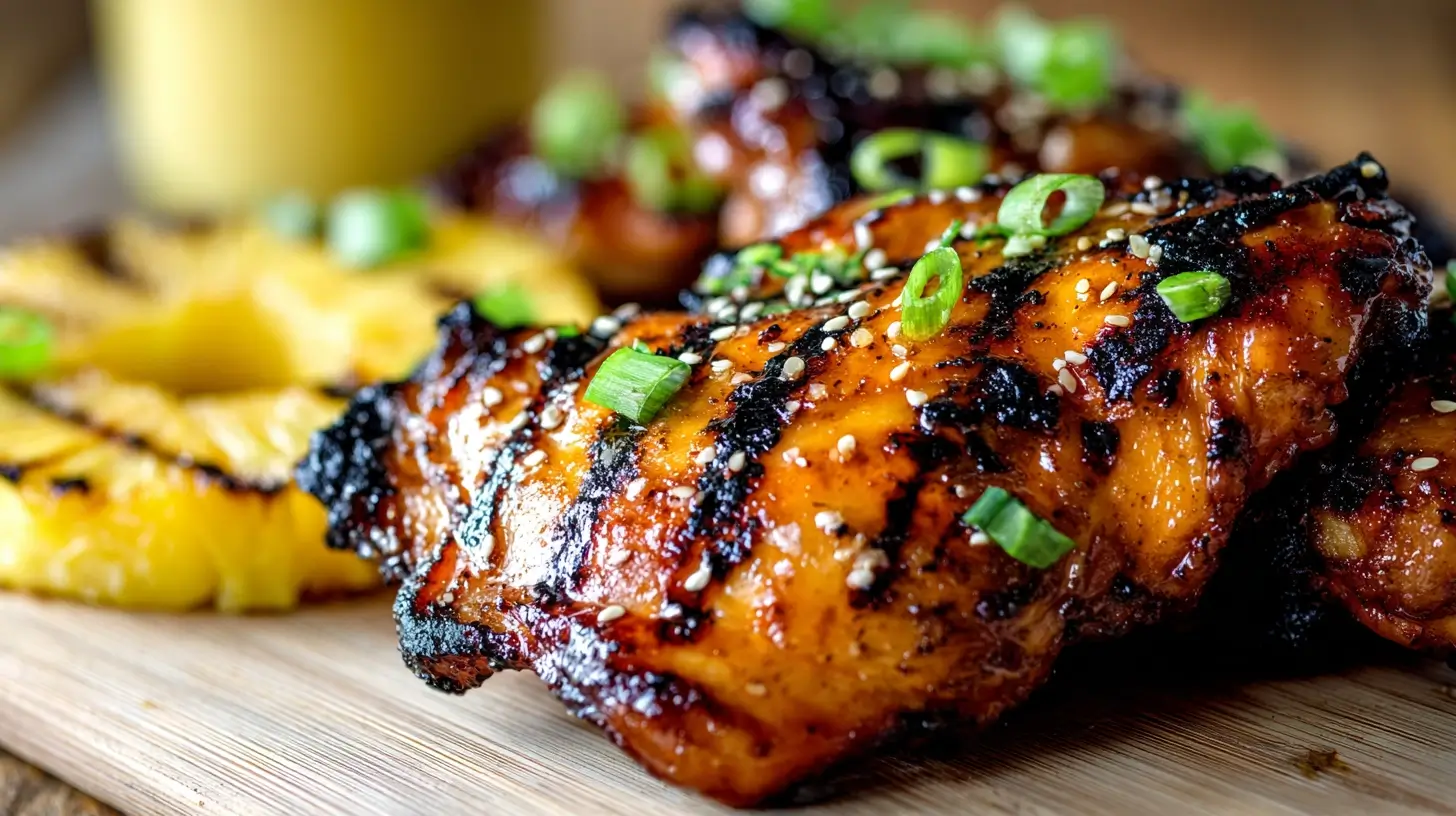
Let the chicken rest 3–5 minutes after glazing. Garnish with chopped green onions, toasted sesame seeds, and grilled pineapple slices or chunks. Serve over steamed white rice, coconut rice, or a bright cabbage slaw.
What to look for: The glaze should be glossy and slightly sticky, not syrupy and pooled. The chicken should feel juicy when pressed and register 165°F internally.
Practical advice: Resting locks in juices. Slice against the grain for the best texture if serving sliced. Don’t skip the fresh garnish; the green onions and sesame seeds add aroma and texture.
Pro Tips for the Best Hawaiian Chicken Thighs
If you want the clearest route to success, start with this: marinate, sear or grill over moderate heat, and don’t skip cooking the reserved marinade into a glaze. That’s the secret to safety and glossy, flavorful coating.
- Don’t marinate too long with fresh pineapple: the bromelain enzyme can make meat mushy if left overnight (keep to under 12 hours).
- Pat chicken dry before cooking to encourage proper caramelization; moisture is the enemy of browning.
- Use an instant-read thermometer to avoid overcooking. Thighs are forgiving, but once they pass 165°F by a lot, they dry out.
- To double the batch, keep an even layer on the grill or use two pans. Cook in batches so pieces don’t steam.
- For a sticky finish, glaze right at the end and let the sugars set during a short rest. If you broil to caramelize, watch intensely for the last 30–60 seconds.
- Make-ahead: Marinate the chicken up to the day before. You can also cook the thighs fully, cool, and refrigerate; reheat gently and brush with fresh glaze.
- If you prefer less sugar, reduce the brown sugar by half and add an extra splash of vinegar and a pinch of salt to maintain balance.
What to Serve with Hawaiian Chicken Thighs
This chicken sings with simple, bright sides that complement the tropical glaze. Pair it with steamed jasmine rice or coconut rice for soaking up the sauce, or choose a crisp slaw to contrast the sticky thighs. For easy, well-rounded meals, check recipes in our chicken section or browse weeknight options.
- Serve over steamed jasmine or coconut rice for classic pairing (see the chicken recipes category for more ideas).
- A crunchy cabbage slaw with lime and cilantro cuts through the sweetness—perfect for lighter meals and found under healthy dinner recipes.
- For a sheet-pan twist, roast thighs with pineapple and bell peppers on a single tray—see similar ideas in onepan_sheet_pan_meals.
- If you’re short on time, make this alongside other quick mains from our quick_weeknight_dinners collection.
I often serve these thighs with grilled corn, a simple cucumber salad, or sautéed green beans—anything bright to balance the glaze’s richness.
Storage, Freezing, and Reheating
Store cooked Hawaiian Chicken Thighs in the fridge in an airtight container for up to 3–4 days; freeze for up to 3 months. Reheat gently to preserve moisture and the glaze.
Fridge storage: Place cooled chicken in an airtight container and refrigerate within two hours of cooking. For best texture, keep glaze and chicken together so the flavors meld.
Freezer storage: Cool completely, then wrap tightly or use freezer-safe containers. Label with date and use within 3 months for best flavor.
Reheating: Defrost overnight in the fridge. Reheat in a 325°F oven for 10–15 minutes until warmed through, or gently reheat in a skillet with a splash of water and a lid to steam briefly, then uncover and brush with fresh glaze. Microwaving works in a pinch but can soften the skin and glaze.
Texture changes: Frozen and reheated thighs are still tasty but will lose a little crispness in the skin or char. A quick broil or skillet sear after reheating can revive the exterior.
About This Recipe and Why It Works
I developed this Hawaiian Chicken Thighs recipe after years of playing with marinades and grilling techniques. Thighs are forgiving—they stay juicy even when you misjudge timing—and they soak up flavors well. I aim to create recipes that fit busy lives but still deliver on taste and technique. This version balances sweetness and acidity so the pineapple doesn’t overpower the savory backbone. Choosing to reduce and thicken the reserved marinade into a glaze gives you that glossy, restaurant-style finish safely—raw marinade is never used straight on finished chicken. Simple swaps, like using tamari or reducing sugar, make the dish flexible for different diets. I cook this often when I want something both comforting and a little festive; kids love the sweetness, and adults can add a kick if they want.
Frequently Asked Questions
Can I use bone-in chicken thighs instead?
Yes. Bone-in thighs will be juicier and more forgiving but take longer to cook—plan for roughly 35–45 minutes in a 400–425°F oven or 8–10 minutes per side on the grill over medium heat. Always check internal temperature (165°F). Allow a bit more cooking time and keep an eye on the glaze so it doesn’t burn. If grilling bone-in, use indirect heat to avoid charring the glaze before the center is done. Finish over direct heat for color.
How long should I marinate the chicken?
Marinate between 30 minutes and 8 hours for best flavor; avoid more than 12 hours when using fresh pineapple juice due to its tenderizing enzymes. Short marinades (30–90 minutes) still infuse good flavor, while 4–8 hours gives deeper penetration. If you’re short on time, up to 30 minutes still helps; for hands-off prep, marinate overnight but use canned pineapple juice if you’re worried about texture breakdown.
Can I use pineapple chunks with the chicken?
Absolutely. Add fresh pineapple chunks to the grill or sheet pan in the last few minutes of cooking so they caramelize without falling apart. Grilled pineapple shows nice char and adds texture and acidity that cuts the glaze’s sweetness. Avoid placing raw pineapple under the chicken where juices could prevent proper browning.
What if I don’t have pineapple juice?
You can substitute a mix of orange juice and a splash of vinegar (about 3:1 orange juice to vinegar) to mimic the sweet-acid balance. The flavor changes slightly but remains bright. For less sweetness, use half pineapple/half water or reduce the sugar in the marinade. Keep in mind the tenderizing effect of pineapple juice is unique; without it, marinating longer helps flavors penetrate.
How do I prevent the glaze from burning?
Cook the chicken over moderate heat to allow the glaze’s sugars to caramelize without burning. If grilling, use indirect heat for most of the cook, finishing over direct heat for color. If broiling, watch constantly during the final minute. In the pan, reduce the flame if the glaze darkens too quickly. Making a thicker glaze in a saucepan concentrates sugars; apply it at the end, not during the entire cook, to minimize burning.
Can I make this gluten-free or low-sugar?
Yes. Use tamari or coconut aminos in place of soy sauce to be gluten-free. Replace brown sugar with a keto-friendly sweetener or reduce sugar by half and add extra vinegar or citrus to keep balance. Taste and adjust the glaze before applying. Note that sugar substitutes won’t caramelize the same way—expect a slightly different finish.
Is it safe to use marinade as a sauce?
Only if you reserve some before adding raw chicken. The marinade that has touched raw chicken must be boiled for several minutes to kill bacteria before using as a sauce. My method reserves a small portion, then cooks it down into a glaze. Never use leftover raw marinade directly on finished chicken.
Final Thoughts
If you want a single recipe that’s easy enough for a weekday but tastes like a mini-vacation, these Hawaiian Chicken Thighs are a winner. They’re forgiving, flavorful, and adaptable, and they play nicely with quick sides and make-ahead plans. Try serving them with coconut rice and a crisp slaw from the healthy dinner recipes page, or use them in a lazy sheet-pan dinner for fewer dishes—ideas like that live in our onepan sheet pan meals collection. For more simple chicken dinners, head to our chicken recipes hub or check out other quick options in quick weeknight dinners.
I’d love to know how yours turns out—leave a comment, rate the recipe, and save it to Pinterest for later at my profile: follow me on Pinterest. Happy cooking—and if you try a variation, tell me what you changed!
Quick Recipe Summary
15–20 minutes (plus 30 minutes–8 hours marinating)
12–25 minutes (grill/skillet 12–16 min; oven 20–25 min)
45 minutes–8 hours (including marinating)
4–6
Easy
Weeknight dinners, backyard BBQs, potlucks
Sweet-tangy, savory, slightly caramelized
Nutrition Information
For the Nutrition Information section, the values below are estimates based on typical ingredient amounts and may vary.
| Nutrient | Per Serving |
|---|---|
| Calories | Approx. 420 |
| Protein | Approx. 32 g |
| Carbohydrates | Approx. 18 g |
| Dietary Fiber | Approx. 0.5 g |
| Fat | Approx. 24 g |
These are estimates and will change depending on the exact cut of chicken, amount of glaze used, and substitutions (e.g., swapping brown sugar for honey). Use a nutrition calculator with your exact ingredients for precise numbers.
—
Thanks for cooking with me here at Weekly Dinner Ideas. If you loved this Hawaiian Chicken Thighs recipe, try pairing it with other family-friendly meals from the site and don’t forget to pin your favorite version on Pinterest at my profile. Leave a note below with your tweaks—I read every comment and love hearing your kitchen stories.

Hawaiian Chicken Thighs
Ingredients
Equipment
Method
- In a mixing bowl, whisk together pineapple juice, low-sodium soy sauce or tamari, brown sugar, rice vinegar or apple cider vinegar, minced garlic, grated ginger, sesame oil if using, and Sriracha or red pepper flakes if using.
- Reserve about 1/3 cup of the marinade before adding raw chicken. This reserved portion will be cooked into the glaze later.
- Place the chicken thighs in a resealable plastic bag or shallow dish and pour the remaining marinade over the chicken.
- Press out excess air, seal, and refrigerate for at least 30 minutes, or up to 8 hours for deeper flavor.
- Do not marinate longer than 12 hours when using fresh pineapple juice because the enzymes can make the chicken texture too soft.
- Remove the chicken from the marinade and pat it dry with paper towels so it caramelizes instead of steaming. Season lightly with salt and black pepper.
- For skillet cooking, heat vegetable oil in a cast-iron skillet over medium-high heat. Add chicken thighs in a single layer and cook for 5-7 minutes per side, until browned and nearly cooked through.
- For grilling, preheat grill to medium-high heat, about 400-450°F. Grill chicken for 6-8 minutes per side, flipping once, until caramelized and cooked through.
- For oven baking, preheat oven to 425°F. Arrange chicken on a wire rack set over a baking sheet and bake for 20-25 minutes, finishing under the broiler for 2-3 minutes if extra color is desired.
- Cook chicken until an instant-read thermometer inserted into the thickest part reaches 165°F (74°C).
- While the chicken cooks, pour the reserved marinade into a small saucepan and bring it to a simmer over medium heat.
- Whisk cornstarch with water to make a slurry, then whisk it into the simmering marinade. Cook for 2-4 minutes, until thick, glossy, and able to coat the back of a spoon.
- Brush the hot Hawaiian glaze over the cooked chicken. If desired, return chicken to the grill or broiler for 1 minute to caramelize the glaze, watching carefully so it does not burn.
- Let the chicken rest for 3-5 minutes so the juices redistribute and the glaze sets.
- Garnish with chopped green onions, toasted sesame seeds, and grilled pineapple rings or chunks if desired.
Notes

Elizabeth Morgan
Easy & Delicious Recipes
Follow for quick family-friendly recipes, baking inspiration, and comfort food favorites.
Follow on Pinterest