
Easy Jerk Chicken Thighs: A Delicious Meal in Just 30 Minutes!
I love a weeknight recipe that feels a little special without demanding the whole evening—and these Jerk Chicken Thighs do exactly that. Jerk Chicken Thighs bring bright citrus, warm allspice, and a heat that wakes up the senses, all while staying forgiving and family-friendly. As a professionally trained chef who lives for practical flavor, I’ve tested this a few ways until it became reliable: bold, smoky, and ready in about 30 minutes from prep to table. Let’s get cooking.
Why You’ll Love This Jerk Chicken Thighs
Jerk Chicken Thighs deliver big flavor fast.
You’ll love this recipe because the marinade is fragrant and layered—tangy lime, aromatic allspice, fresh herbs, and real heat from Scotch bonnet or a milder substitute. Thighs stay juicy under the spicy crust, the skin crisps beautifully when seared, and everything comes together quickly for a weeknight dinner. This dish travels well for meal prep, adapts to different spice levels, and pairs perfectly with rice, salad, or roasted veggies.
- Flavor: Bright, spicy, slightly sweet, and peppery
- Texture: Crispy skin and tender, juicy meat
- Convenience: Quick paste, short marinating or immediate cooking
- Family appeal: Spice adjustable; kids often enjoy milder versions
- Seasonal fit: Great year-round—summer grill or winter oven roast
- Meal-prep value: Reheats well and tastes even better after a day
- Dietary flexibility: Naturally gluten-free when you use tamari or coconut aminos
What Is Jerk Chicken Thighs?
Jerk Chicken Thighs are bone-in, skin-on chicken thighs coated in a spicy, herb-forward Jamaican-style seasoning or paste and cooked until the exterior caramelizes and the interior remains juicy.
This dish originates from Jamaican jerk cooking—traditionally a slow-cooked, smoky method over pimento wood. In home kitchens, a vibrant jerk paste or dry rub with allspice, thyme, scotch bonnet pepper, garlic, and lime recreates those flavors. This version focuses on a quick paste and a fast sear-to-oven finish so you can enjoy classic taste without the long cook time.
Ingredients You’ll Need
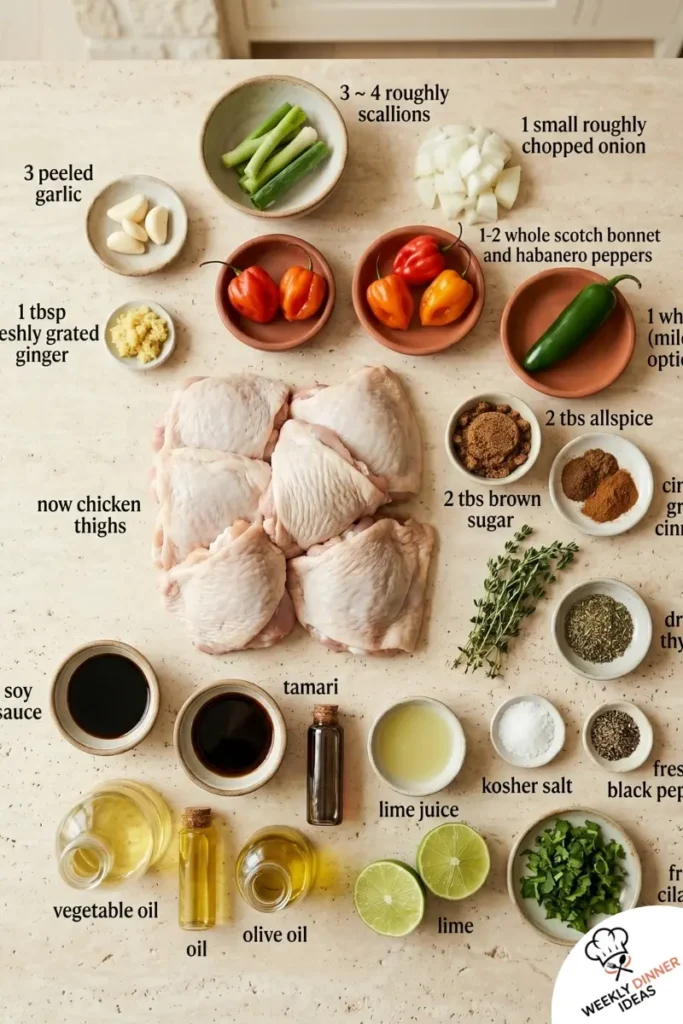
- 6 bone-in, skin-on chicken thighs (about 2 to 2.5 pounds)
- 3–4 scallions (green onions), roughly chopped
- 3 garlic cloves
- 1 small onion, roughly chopped
- 1 to 2 Scotch bonnet or habanero peppers, stemmed and seeded (use 1 for medium heat)
- 1 tablespoon fresh grated ginger
- 2 tablespoons dark brown sugar
- 1 tablespoon ground allspice (or 1½ teaspoons whole allspice ground)
- 2 teaspoons dried thyme (or 1 tablespoon fresh thyme leaves)
- 1 teaspoon ground cinnamon (optional)
- 2 tablespoons soy sauce or tamari (tamari for gluten-free)
- 2 tablespoons lime juice (from 1 lime)
- 2 tablespoons vegetable oil or olive oil
- 1 teaspoon kosher salt, plus more to taste
- ½ teaspoon freshly ground black pepper
- Lime wedges and chopped cilantro for serving (optional)
Note on quantities: This amount of paste will generously coat 6 thighs. If you prefer less heat, use a milder pepper like jalapeño and reduce the brown sugar slightly to balance flavors.
Short ingredient notes: The backbone of a jerk paste is allspice, thyme, and fresh aromatics—scallions, garlic, and ginger. Scotch bonnet gives authentic heat and fruity notes; if unavailable, habanero is similar, and jalapeño or serrano will tone down fire. Brown sugar adds caramelization and balances acidity from lime and soy.
Tools You Need
- Blender or food processor (paid link)
- Large bowl or zip-top bag for marinating (paid link)
- Heavy ovenproof skillet (cast iron preferred) (paid link)
- Baking sheet (for oven-only finish) (paid link)
- Tongs (paid link)
- Instant-read thermometer (paid link)
- Measuring cups and spoons (paid link)
- Cutting board and sharp knife (paid link)
Ingredient Substitutions and Additions
Best substitutions
- Scotch bonnet/habanero: Use jalapeño or serrano if you want less heat; remove seeds and membranes for milder flavor.
- Soy sauce: Swap with tamari or coconut aminos to make it gluten-free.
- Brown sugar: Maple syrup or honey works as a sweetener, but reduce liquid slightly if using syrupy sweeteners.
- Bone-in thighs: Boneless, skinless thighs can be used—reduce oven time by several minutes and watch for internal temperature.
Flavor additions
- Pineapple or orange juice (1–2 tablespoons) adds a tropical tang and tenderizing enzyme—use sparingly.
- A splash (1 tablespoon) of dark rum or molasses for deeper caramel notes.
- Smoked paprika or a teaspoon of liquid smoke if you want a stronger smoky layer without grilling.
Dietary swaps
- Lower-sodium: Use low-sodium soy or tamari and reduce added salt.
- Lower-sugar: Cut brown sugar to 1 tablespoon or omit; add a touch of extra lime to balance.
- Paleo/keto: Use coconut aminos instead of soy sauce and a low-carb sweetener like erythritol if needed.
How to Make Jerk Chicken Thighs
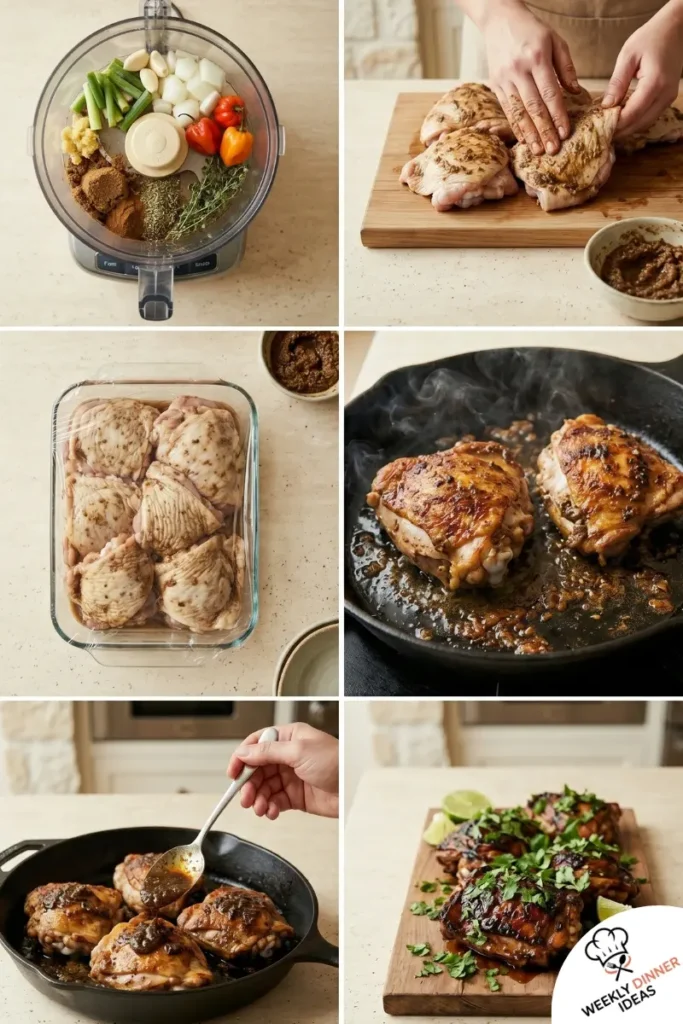
This recipe uses a quick blended jerk paste, a short soak (or immediate cooking), a hot sear to crisp the skin, and a brief oven finish for juicy thighs with a caramelized crust.
Step 1: Make the jerk paste
Place scallions, onion, garlic, Scotch bonnet (or substitute), grated ginger, brown sugar, ground allspice, thyme, cinnamon (if using), soy sauce, lime juice, oil, salt, and pepper into a blender or food processor. Pulse until it becomes a coarse, saucy paste—stop before it becomes too smooth; tiny bits of scallion add texture and flavor.
What to look for: The mixture should be saucy enough to coat the chicken but not watery. The aroma at this point should be bright with lime and warm with allspice.
Practical advice: Use gloves when handling hot peppers to avoid skin irritation. If you’re sensitive to heat, remove the seeds and membranes before blending.
Step 2: Coat and marinate the thighs
Pat the chicken thighs dry with paper towels. Rub about two-thirds of the paste evenly over the thighs, getting under the skin where possible for maximum flavor. Reserve the remaining paste for brushing during and after cooking. Marinate at room temperature for 15–30 minutes if you’re short on time, or refrigerate for up to 24 hours for deeper flavor.
What to look for: The thighs should be evenly coated and slightly tacky. A short marinate will still impart a lot of flavor because of the paste’s strong aromatics.
Practical advice: If you’re marinating overnight, keep the chicken in the fridge and bring it back to room temperature for 20 minutes before cooking to promote even cooking.
Step 3: Sear the thighs for crisp skin
Heat a heavy ovenproof skillet over medium-high heat with 1 tablespoon of oil until shimmering. Place the thighs skin-side down into the hot skillet—press gently so the skin lays flat. Sear without moving for 4–6 minutes until the skin is deep golden brown and releases easily from the pan.
What to look for: Look for a deep, even brown on the skin and fragrant, caramelized notes. If it’s browning too quickly, lower the heat slightly to avoid burning the paste.
Practical advice: Don’t overcrowd the pan; work in two batches if needed. If the paste begins to smoke heavily, reduce heat and briefly spoon off excess paste from the pan.
Step 4: Finish in the oven
After searing, turn the thighs skin-side up and spoon any reserved paste over the tops. Transfer the skillet to a preheated 400°F (205°C) oven and roast for 10–14 minutes, or until an instant-read thermometer inserted into the thickest part reads 165°F (74°C).
What to look for: Juices should run clear and the meat should feel firm but springy. The skin should be crisp and the edges slightly caramelized.
Practical advice: If you don’t have an ovenproof skillet, transfer the seared thighs to a baking sheet lined with foil and bake. Keep an eye on the internal temperature to avoid overcooking, which makes thighs dry.
Step 5: Rest and serve
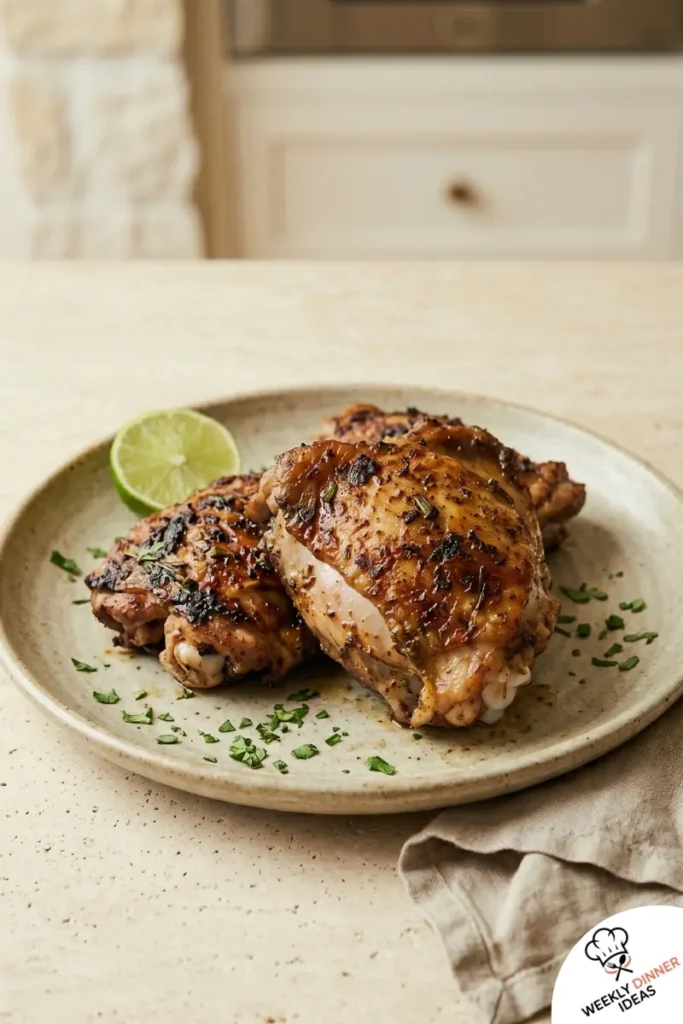
Remove the chicken from the oven and let it rest for 5 minutes. Resting allows juices to redistribute and yields juicier meat. Serve with lime wedges and a sprinkle of chopped cilantro if you like.
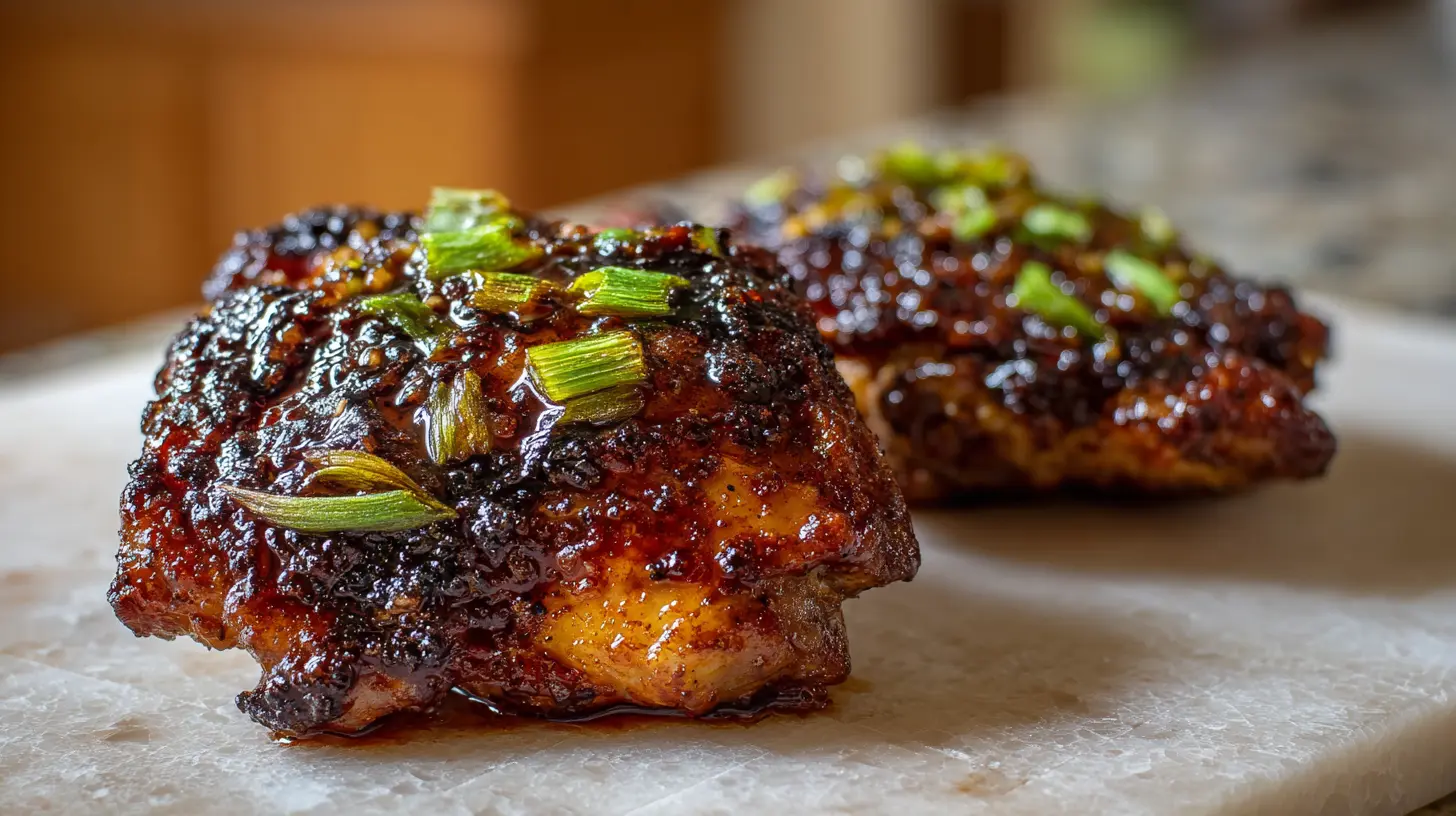
What to look for: The meat should be juicy and tender, with a vibrant, slightly sticky glaze on the outside that delivers heat and aromatic spice.
Practical advice: Use the pan juices as a quick drizzle over the thighs or warm them briefly and serve on the side as a finishing sauce.
Pro Tips for the Best Jerk Chicken Thighs
Use a quick summary: Keep the paste balanced, protect your hands from hot peppers, sear well for texture, and never skip the resting time.
1. Control the heat by starting with one small pepper and tasting the paste before adding more—remember the heat concentrates during cooking.
2. For crispiest skin, pat the thighs very dry and don’t move them during the sear; pressing with the back of a spatula helps ensure even contact.
3. Use an instant-read thermometer to avoid overcooking; thighs are forgiving but aim for 165°F (74°C).
4. Make the paste ahead and freeze in ice cube trays—one cube equals about enough for 2–3 thighs, perfect for quick weeknights.
5. Double the paste and reserve half in the fridge for up to 3 days—it saves time and deepens flavor after a day.
6. If grilling, sear over direct heat to get char and finish over indirect heat until done. Rotate to prevent flare-ups from the oil in the paste.
7. If you accidentally add too much pepper heat, balance with an acid (more lime) or a touch of brown sugar to mellow the spice.
8. For extra smokiness, add a teaspoon of smoked paprika to the paste or finish on a very hot grill for a few minutes.
What to Serve with Jerk Chicken Thighs
Jerk chicken thrives with simple, cooling sides and starches that soak up the sauce. Serve it over coconut rice with black beans, with a crisp cabbage slaw, or alongside roasted sweet potatoes for a comforting plate. For quick weeknights, scoop the chicken onto a bed of steamed rice and top with sliced scallions and a squeeze of lime.
- Try it with coconut rice and peas for an island vibe.
- A crunchy mango or pineapple salsa brightens the spice and adds juicy contrast.
- Toss a quick cabbage and carrot slaw with lime and a touch of honey to cut through richness.
- If you want something lighter, a green salad with avocado and citrus pairs well.
If you’re looking for more chicken ideas, check out these chicken recipes on Weekly Dinner Ideas: chicken recipes and for quick pairing inspiration, these quick weeknight dinners are great. If you want one-pan meals to minimize cleanup, my one-pan sheet pan meals collection has options that pair nicely with a side of jerk chicken. For lower-calorie sides, browse healthy dinner recipes.
Storage, Freezing, and Reheating
Store leftovers in an airtight container in the fridge for up to 3–4 days; freeze for up to 3 months.
For best results: cool the chicken to room temperature (no more than 2 hours at room temp), then refrigerate. To reheat, warm gently at 350°F (175°C) for 10–12 minutes, or re-crisp in a skillet over medium heat. Microwave in short bursts if needed, but this will soften the skin.
Fridge storage: Keeps well and develops flavor; the paste will continue to penetrate the meat slightly.
Freezer storage: Wrap tightly or place in freezer-safe containers; thaw overnight in the fridge before reheating for even heating.
Reheating: Use the oven or skillet to maintain texture; a low oven prevents drying. Expect a slight change in skin crispness, but the flavor holds up very well.
About This Recipe and Why It Works
I came to this recipe out of a need for bold flavor midweek—something that felt adventurous, not fussy. Growing up in California and training professionally taught me to rely on strong condiments and quick techniques. Jerk is aromatic and assertive, so a concentrated paste is all you need to transform humble thighs into something memorable.
This version focuses on technique: drying the skin, searing for texture, and finishing in the oven for even doneness. The balance of sweet, acidic, and spicy keeps it approachable for family dinners while being authentic in spirit. I like to keep extra paste in the fridge—it’s a tiny flavor shortcut that brightens roasted vegetables, shrimp, or even tofu.
This recipe lives on Weekly Dinner Ideas because it matches my kitchen philosophy: practical flavor, fewer steps, and results that impress without stress. If you enjoy recipes that are fast but thoughtful, you’ll find similar weeknight-friendly meals in the quick weeknight dinners and the one-pan sheet pan meals sections—both of which pair naturally with this chicken.
Frequently Asked Questions
Can I use boneless, skinless chicken thighs instead?
Yes. Boneless, skinless thighs cook faster and won’t produce crisp skin, but the paste still creates great flavor. Cook time drops—sear 3–4 minutes per side then bake 8–10 minutes until the internal temperature reads 165°F (74°C). Watch closely to avoid drying out. If you prefer breasts, lower the heat and monitor internal temp carefully; breasts dry out faster than thighs.
How do I reduce the heat for kids or spice-sensitive eaters?
Remove seeds and membranes from peppers, or substitute jalapeño. Use one small pepper or even a pinch of cayenne for mild warmth. Increase the brown sugar or add a dollop of Greek yogurt on the side to cool bites when serving. Tasting the paste before applying helps you control the level; if it’s too hot, add more lime, brown sugar, or a tablespoon of oil to mellow.
Can I grill these instead of using the oven?
Yes—grillin g adds great char and smoky flavor. Sear over direct medium-high heat skin-side down for 4–6 minutes, flip and move to indirect heat to finish, or reduce heat to medium and cook until 165°F. Monitor for flare-ups because the paste contains oil and sugars. If you want more smoke, add wood chips to your grill or briefly finish over high heat for char.
How long should I marinate the chicken?
You can marinate for as little as 15–30 minutes for immediate cooking. For deeper flavor, marinate 6–24 hours in the fridge. Avoid marinating longer than 24 hours with lots of citrus in the paste, as acidity can alter texture. If marinating overnight, bring the thighs to room temperature for about 20 minutes before cooking to help them cook evenly.
Is this recipe gluten-free?
It can be. Use tamari or coconut aminos instead of soy sauce to make the paste gluten-free. Check any packaged ingredients for hidden gluten. The rest of the ingredients are naturally gluten-free.
Can I make the jerk paste ahead of time?
Absolutely. Make the paste and store it in an airtight container in the fridge for up to 3 days, or freeze in portions (ice cube tray method) for up to 3 months. Thaw an individual portion in the fridge overnight or at room temperature for 20–30 minutes to blend easily with chicken.
Why did my skin not get crispy?
If the skin doesn’t crisp, it was likely damp or crowded in the pan. Pat thighs very dry before searing and don’t overcrowd—give each piece room to brown. Ensure the pan is hot before adding chicken. Using a cast-iron skillet helps develop color. After searing, finish in a hot oven to render fat and crisp skin.
Final Thoughts
This version of Jerk Chicken Thighs is one of those recipes I return to when I want dinner to feel lively but doable. The paste is vibrant and forgiving, the thighs stay juicy, and the method works whether you’re cooking on the stovetop, in the oven, or on the grill. If you make the paste ahead, dinnertime becomes even simpler—perfect for busy nights.
If you’re exploring more chicken dinners, you might like the other ideas in my chicken recipes collection or the one-pan sheet pan meals page for minimal cleanup options. For health-conscious side pairings, check out healthy dinner recipes.
If you try this, I’d love to hear how you adjusted the heat or what sides you served. Save it to your Pinterest boards here: Chicken by Elizabeth on Pinterest, leave a comment, and rate the recipe so other readers can find it too.
Quick Recipe Summary
10 minutes (plus 15–30 minutes marinating recommended)
20 minutes
30 minutes
4–6 (6 thighs)
Easy–Medium
Quick weeknight dinners, meal prep, family meals
Spicy, citrusy, aromatic with warm allspice and herb notes
Nutrition Information
| Nutrient | Per Serving |
|---|---|
| Calories | Approx. 380 |
| Protein | Approx. 24 g |
| Carbohydrates | Approx. 6 g |
| Dietary Fiber | Approx. 1 g |
| Fat | Approx. 28 g |
These nutrition values are estimates. Exact values will vary based on the size of your thighs, exact ingredients, and portioning.
—
Thanks for cooking with me—Elizabeth (Weekly Dinner Ideas). Don’t forget to drop a star rating and let me know how you liked the spice level or what side you paired with your Jerk Chicken Thighs.

Jerk Chicken Thighs
Ingredients
Equipment
Method
- Place scallions, onion, garlic, Scotch bonnet or habanero pepper, grated ginger, brown sugar, ground allspice, thyme, cinnamon if using, soy sauce or tamari, lime juice, oil, kosher salt, and black pepper in a blender or food processor.
- Pulse until the mixture becomes a coarse, saucy jerk paste. It should be thick enough to coat the chicken but not watery.
- Pat the chicken thighs very dry with paper towels so the skin can crisp properly.
- Rub about two-thirds of the jerk paste evenly over the chicken thighs, getting some under the skin where possible.
- Reserve the remaining jerk paste for brushing during or after cooking.
- Marinate at room temperature for 15-30 minutes if short on time, or refrigerate for up to 24 hours for deeper flavor.
- Preheat oven to 400°F (205°C).
- Heat a heavy ovenproof skillet over medium-high heat with a little oil until shimmering.
- Place the chicken thighs skin-side down in the hot skillet. Press gently so the skin makes full contact with the pan.
- Sear for 4-6 minutes without moving, until the skin is deep golden brown, crisp, and releases easily from the pan.
- Flip the chicken thighs skin-side up and spoon a little reserved jerk paste over the tops.
- Transfer the skillet to the oven and roast for 10-14 minutes, until the thickest part of the chicken reaches 165°F (74°C).
- Remove from the oven and rest the chicken for 5 minutes so the juices redistribute.
- Serve with lime wedges and chopped cilantro if desired. Spoon pan juices over the chicken before serving.
Notes

Elizabeth Morgan
Easy & Delicious Recipes
Follow for quick family-friendly recipes, baking inspiration, and comfort food favorites.
Follow on Pinterest