Easy Honey Balsamic Chicken Thighs with Peaches Ready in 30 Minutes!
- Healthy Dinner Recipes
 Elizabeth
- 0
- 40 minutes read
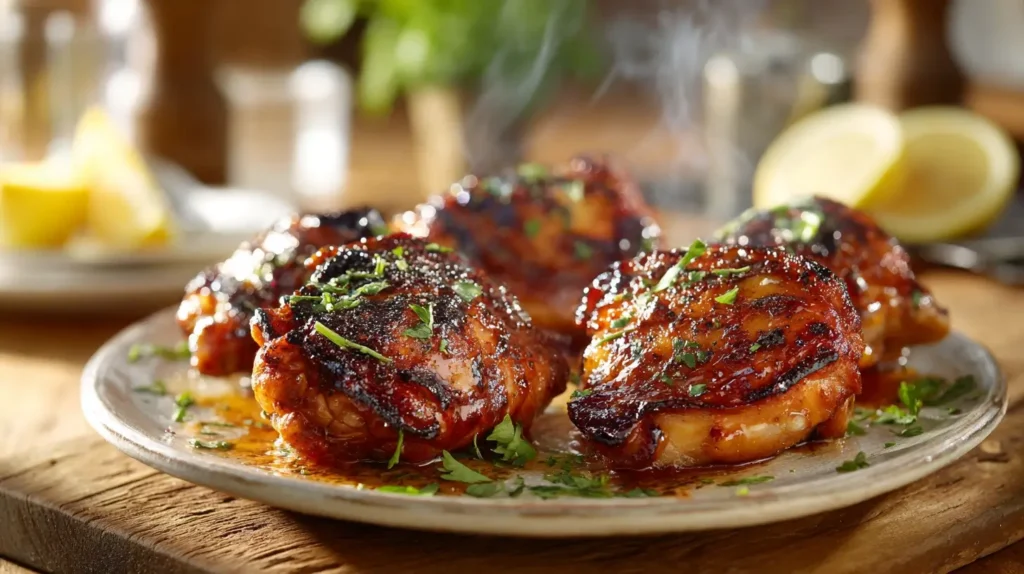
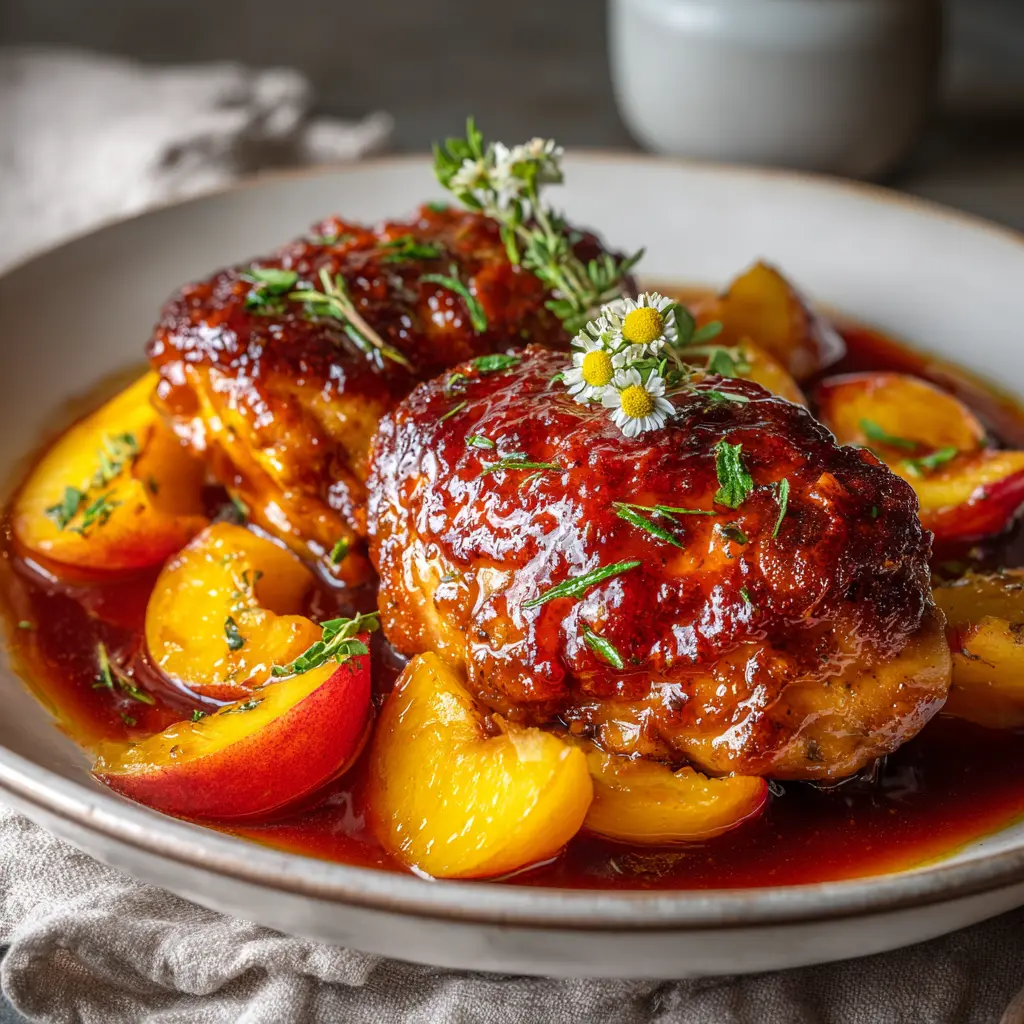
There’s something about the combination of sweet summer peaches and tangy balsamic that feels like sunshine on a plate—that’s why I love this Honey Balsamic Chicken Thighs with Peaches recipe. It’s one of those dinners I turn to when I want something that feels a little special but doesn’t demand a lot of fuss. The peaches caramelize, the sauce glazes the chicken, and in about 30 minutes you have a dinner that looks and tastes like you spent hours in the kitchen. As a professionally trained chef who cooks for a busy family, I aim for bold flavor with sensible steps—and this recipe delivers both. Let’s get into it.
Why You’ll Love This Honey Balsamic Chicken Thighs with Peaches
This dish balances sweet, bright, and savory in one skillet—a real weeknight win.
You’ll love this recipe because the sauce is glossy and syrupy, the chicken develops a golden crust, and the peaches add juicy, sun-warmed sweetness. It’s fast enough for a weeknight, impressive enough for guests, and flexible for dietary swaps or doubling for meal prep. The textures—crispy edges, tender meat, and softened fruit—make each bite interesting and comforting.
What Is Honey Balsamic Chicken Thighs with Peaches?
Honey Balsamic Chicken Thighs with Peaches is a quick skillet-to-oven chicken dish where bone-in or boneless thighs are seared, then finished in a honey-and-balsamic glaze with fresh peach slices. It’s commonly served warm with simple sides and showcases a bright, slightly sweet sauce with caramelized fruit. This version keeps things quick (about 30 minutes) and emphasizes a glossy reduction rather than a heavy gravy.
Ingredients You’ll Need
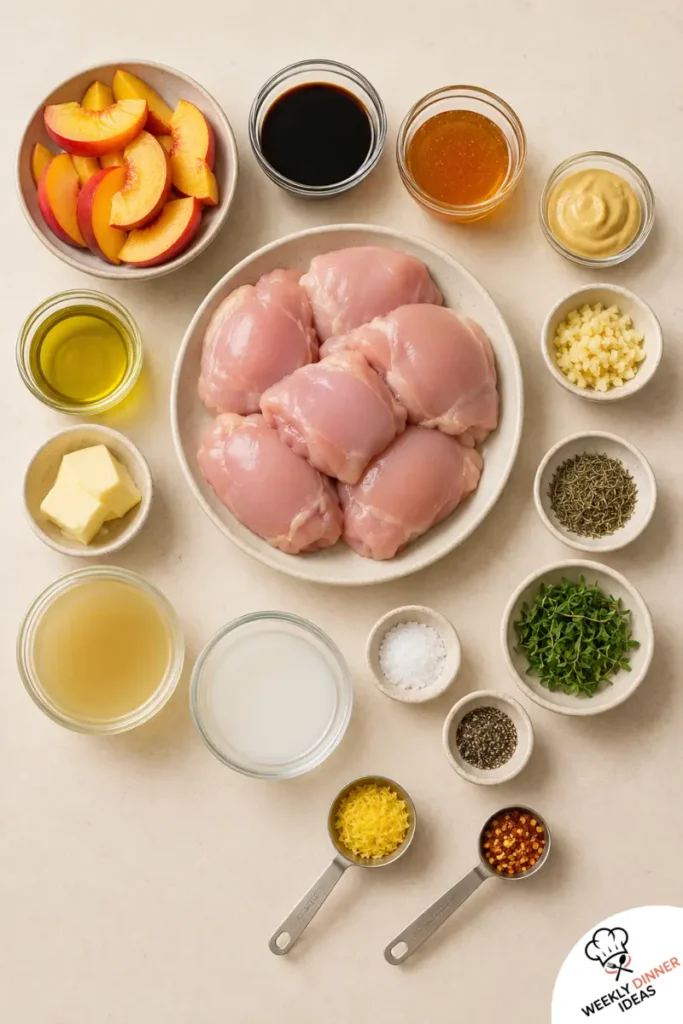
- 1½ pounds boneless skin-on chicken thighs (about 6 thighs) — or boneless skinless if preferred
- Kosher salt and freshly ground black pepper
- 1 tablespoon olive oil
- 1 tablespoon unsalted butter (optional, for extra gloss)
- 2 ripe peaches, halved, pitted, and sliced into wedges
- 3 tablespoons balsamic vinegar
- 3 tablespoons honey
- 1 teaspoon Dijon mustard
- 2 garlic cloves, minced
- 1 teaspoon fresh thyme leaves (or ½ teaspoon dried thyme)
- 2 tablespoons low-sodium chicken broth or water
- 1 teaspoon cornstarch mixed with 1 tablespoon cold water (optional, for thicker sauce)
- Fresh basil or additional thyme for garnish
- Lemon zest (optional, for brightness)
- Crushed red pepper flakes (optional, if you like heat)
Notes on key ingredients and quality:
- Choose ripe but firm peaches so they hold their shape during cooking. Too soft and they’ll fall apart in the pan.
- Balsamic varies in sweetness and acidity; a good-quality balsamic gives complexity without needing extra sugar.
- Skin-on thighs give a nice crisp edge and deeper flavor; use skinless if you prefer lower fat—just watch timing so they don’t dry out.
Tools You Need
- Cast iron skillet or heavy oven-safe skillet (paid link)
- Tongs (paid link)
- Instant-read thermometer (paid link)
- Small bowl for sauce mix (paid link)
- Wooden spoon or heatproof spatula (paid link)
- Cutting board and chef’s knife (paid link)
- Measuring spoons and cups (paid link)
- Aluminum foil (for resting) (paid link)
Ingredient Substitutions and Additions
Best substitutions
- Chicken: Use bone-in thighs if you have more time—cook a bit longer (add about 10 minutes). If you only have breasts, use thin-cut breasts and reduce oven time.
- Honey: Maple syrup can replace honey for a different floral note.
- Balsamic: If you only have plain vinegar, add a pinch of brown sugar to mimic sweet depth—though balsamic is recommended.
Flavor additions
- Fresh rosemary or sage can replace thyme for a woodier aroma.
- A splash of white wine instead of chicken broth adds another acidic layer.
- A spoonful of butter whisked at the end yields a glossy, silky sauce.
Dietary swaps
- Gluten-free: This recipe is naturally gluten-free if you use cornstarch or omit thickener. Double-check that your mustard is GF.
- Low-carb: Reduce or omit honey; replace with a sugar-free syrup or a touch of stevia and extra lemon.
- Dairy-free: Skip the butter; olive oil alone will work.
How to Make Honey Balsamic Chicken Thighs with Peaches
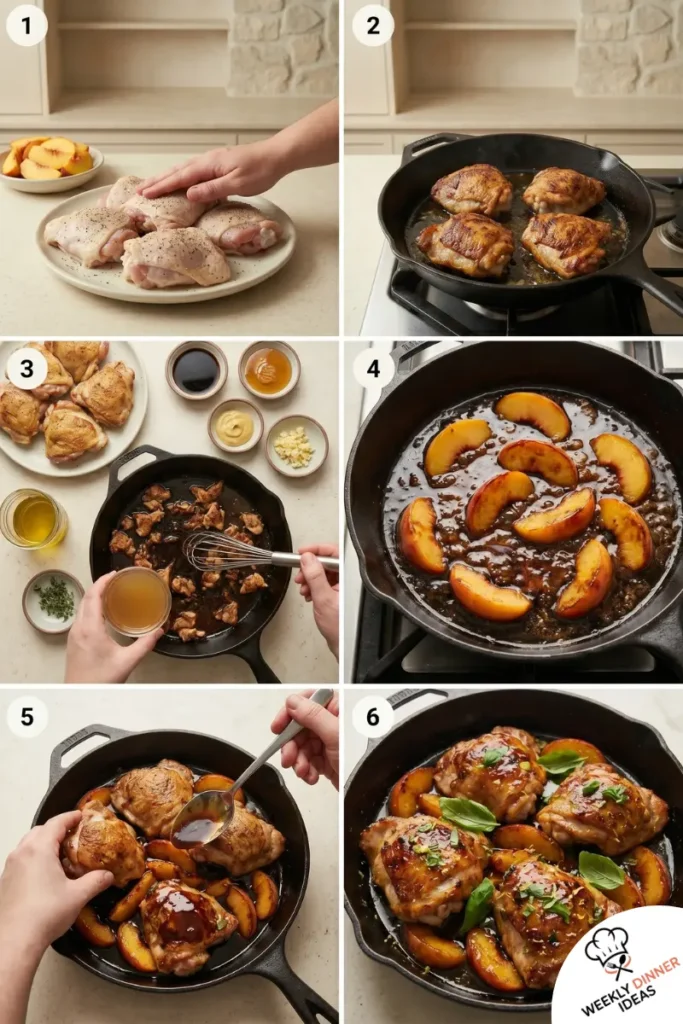
Start by searing the chicken to develop color, then make a quick glaze with balsamic and honey; finish in the oven with peaches so the fruit softens and the sauce becomes syrupy.
Step 1: Prep the chicken and peaches
Pat the chicken thighs dry with paper towels—this is crucial for good browning. Season both sides generously with kosher salt and pepper. Halve, pit, and slice the peaches into wedges that are roughly the same thickness so they cook evenly. Mix the balsamic, honey, Dijon, minced garlic, and thyme in a small bowl and set aside.
What to look for: Dry chicken sears better; peaches should be ripe but not mushy. If your peaches are very firm, add an extra minute in the pan later.
Step 2: Sear the chicken
Heat a cast-iron skillet over medium-high heat and add the olive oil. When the oil shimmers, place the chicken thighs skin-side down in a single layer, leaving space between pieces. Let them cook undisturbed for 6–8 minutes until the skin is deeply golden and releases easily from the pan. Flip and sear the other side for 2–3 minutes.
What to look for: You want audible sizzle and a deep mahogany color on the skin—not black. If the pan smokes too much, lower the heat slightly.
Step 3: Deglaze and build the sauce
Remove the chicken to a plate briefly. If there’s more than a tablespoon of fat in the pan, spoon some out, leaving a thin film. Add the butter (optional) and the balsamic-honey mixture to the hot pan to deglaze, scraping up browned bits with a wooden spoon. Add the chicken broth to loosen the sauce.
What to look for: The liquid should bubble and reduce to a glossy, slightly thickened glaze. If it seems too thin, stir in the cornstarch slurry and simmer for a minute.
Step 4: Add peaches and return chicken
Nestle peach wedges into the glaze and spoon the sauce over them. Return the seared chicken thighs to the skillet, skin-side up, spooning a little glaze over each piece.
What to look for: Peaches should begin to soften and take on a little color along the edges. The sauce should coat the spoon in a ribbon.
Step 5: Finish in the oven
Transfer the skillet to a preheated 400°F oven and roast for 8–10 minutes, until the chicken reaches an internal temperature of 165°F. If using skinless thighs, check early—around 7 minutes—so they don’t dry out.
What to look for: The chicken juices should run clear, the peach slices will be tender, and the glaze will be slightly sticky.
Step 6: Rest and serve
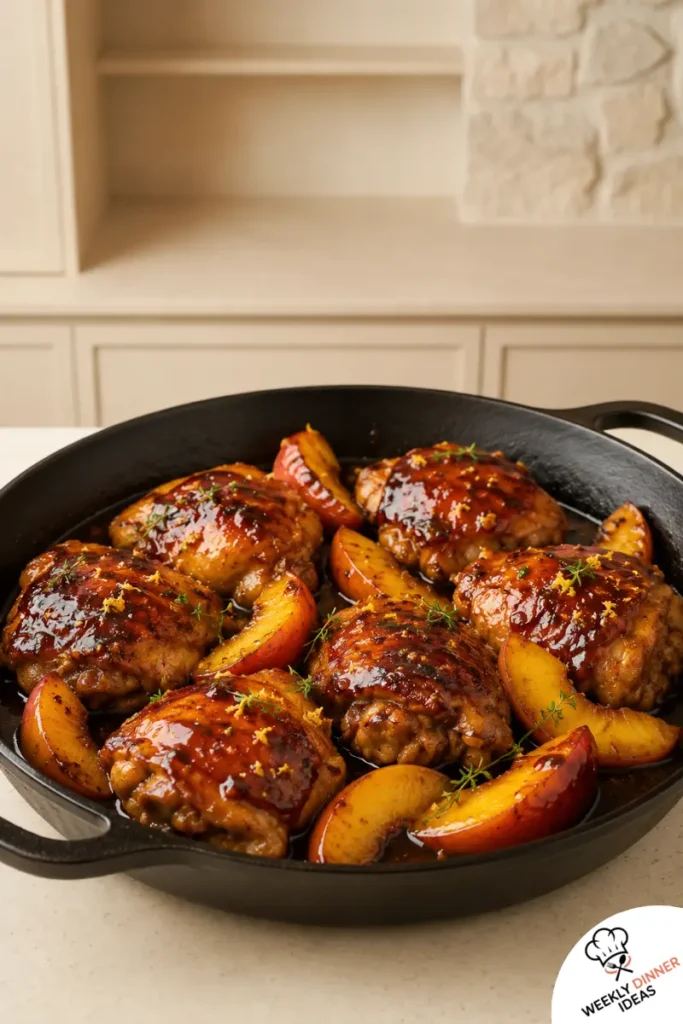
Remove the skillet from the oven and let the chicken rest 5 minutes. Spoon the glaze and peaches over each thigh, garnish with fresh basil or thyme and a light grating of lemon zest if desired.
What to look for: Resting lets the juices redistribute for moist meat. The sauce should thicken slightly on the rested chicken but still be glossy.
Pro Tips for the Best Honey Balsamic Chicken Thighs with Peaches
Use a hot skillet, pat things dry, and don’t rush the sear—those browned bits are flavor gold.
- Don’t overcrowd the pan: cook in batches if needed. Crowding causes steaming and prevents browning.
- Use an instant-read thermometer: pull the chicken at 165°F to avoid dryness.
- Sear skin-side down first for crispness; that texture makes the dish more satisfying.
- If your peaches are underripe, toss them briefly in a hot dry skillet alone for 1–2 minutes before adding to the sauce to help soften and sweeten them.
- Make-ahead: you can mix the balsamic-honey sauce a day ahead and refrigerate; bring to room temperature before using.
- Doubling: use two skillets or sear in batches and finish everything in a 400°F oven on a sheet pan.
- To keep sauce glossy when reheating, add a teaspoon of water or broth and rewarm gently on low.
What to Serve with Honey Balsamic Chicken Thighs with Peaches
I like simple sides that soak up the glaze. Try roasted or mashed fingerling potatoes, a lemony couscous, or a green salad with a sharp vinaigrette. For a throw-together weeknight plate, pair it with roasted asparagus or a warm grain salad.
- For hearty sides, browse my chicken recipes category for roasted potatoes and vegetable pairings at chicken recipes.
- If you want easy sides under 20 minutes, check my quick weeknight ideas at quick weeknight dinners.
- A sheet-pan roasted vegetable side pairs well—see more ideas in my one-pan meals collection at one-pan sheet pan meals.
- For lighter pairings and balanced plates, my healthy dinner recipes are a good place to look: healthy dinner recipes.
Storage, Freezing, and Reheating
This dish keeps well—store leftovers in an airtight container for up to 3–4 days in the fridge. Freeze cooked chicken and peaches in a freezer-safe container for up to 3 months; thaw overnight before reheating.
For reheating, gently warm in a 325°F oven covered with foil for 10–15 minutes, or reheat on the stovetop in a skillet over low heat with a splash of water or chicken broth to loosen the glaze. Texture may soften—the peaches will be softer after refrigeration and freezing, but the flavors remain lovely.
About This Recipe and Why It Works
I created this recipe because peaches show up every summer in bags from the farmer’s market, and I wanted a way to spotlight their juicy sweetness with a quick, reliable cooking method. As someone who learned to cook beside my dad and then studied in culinary school, I’m always looking for techniques that yield maximum flavor with minimum fuss. Searing the thighs builds Maillard flavor; deglazing with balsamic and honey pulls up those fond bits and turns them into sauce; finishing in the oven lets the chicken cook through while the peaches gently caramelize.
This recipe fits my kitchen philosophy: use seasonal produce, balance textures, and keep weeknight dinner doable. It’s the kind of dish I make when I want to feel like I’m serving something elevated without a long recipe or fancy equipment. If you like one-pan trust-me dinners and approachable flavor, you’ll find a lot to love on this site and in my recipe library at Weekly Dinner Ideas.
Frequently Asked Questions
Can I use chicken breasts instead of thighs?
Yes. Use thin-cut boneless chicken breasts or pound regular breasts to an even thickness so they cook quickly. Sear 2–3 minutes per side, then finish in the oven 6–8 minutes until 165°F. Because breasts are leaner, watch the temperature closely to avoid dryness. You may prefer to reduce the honey slightly for breasts because they don’t have the same fat content to balance sweetness.
Are canned or frozen peaches okay to use?
Fresh peaches are best for texture and bright flavor, but canned or thawed frozen peaches can work in a pinch. Use peaches packed in juice (not syrup) and drain them; add them near the end to avoid turning them mushy. If using frozen, thaw and pat dry—too much added liquid will prevent the sauce from concentrating properly.
How do I thicken the sauce if it’s too thin?
A cornstarch slurry (1 teaspoon cornstarch mixed with 1 tablespoon cold water) stirred into the simmering glaze will thicken quickly. Alternatively, simmer a little longer over medium heat until it reduces and coats the back of a spoon. Avoid adding too much cornstarch; a little goes a long way and can make the sauce gluey.
Can I make this dairy-free or low-carb?
Yes. Omit the butter to keep it dairy-free—olive oil provides enough fat for browning. For a low-carb version, reduce or omit the honey and increase balsamic slightly, or use a sugar-free syrup alternative and brighten with extra lemon juice. Adjust seasoning after changes—balsamic and sweeteners affect salt balance.
What internal temperature should the chicken reach?
Cook chicken until the thickest part reaches 165°F with an instant-read thermometer. At this temperature the meat is safe and juicy. If you prefer to carry over-cooking less, remove at 160°F and rest—carryover heat will bring it to 165°F. Checking temperature in the thickest part (not touching bone) gives the most accurate reading.
Can I prepare parts of this recipe ahead of time?
Yes. You can mix the balsamic-honey glaze a day ahead and keep it refrigerated. You can also season the chicken and keep it covered in the fridge for several hours. For best texture, do the searing and finish with peaches just before serving. If you fully cook ahead, reheat gently to preserve juiciness and spoon fresh sauce over before serving.
My sauce is bitter—what happened?
Bitter sauce usually comes from burning the sugar in the honey or burning the balsamic when the pan is too hot. If that happens, wipe out the pan and start the sauce again on medium heat; add the fond back if it isn’t charred. Watch closely when reducing sweet sauces—they can go from caramelized to bitter quickly. A splash of chicken broth or a squeeze of lemon can help balance overly sweet-or-bitter notes.
Final Thoughts
This Honey Balsamic Chicken Thighs with Peaches recipe is a summer favorite in my kitchen because it’s straightforward to make, full of layered flavors, and comforting without being heavy. It shows how a few quality ingredients—ripe peaches, good balsamic, and a precise sear—can turn simple chicken into something special. If you’re short on time, this recipe fits easily into a weeknight routine, and if you have guests, it looks and tastes like you went the extra mile.
Try it with a side from my one-pan sheet pan meals collection or something lighter from healthy dinner recipes. If you want more quick ideas, I’ve gathered plenty of easy dishes under quick weeknight dinners. If you make this, please leave a comment, give the recipe a rating, and save it to Pinterest at my profile here. I love hearing how you adapt these meals for your family.
Quick Recipe Summary
10 minutes
20 minutes
30 minutes
4
Easy
Weeknight dinners, summer produce, casual dinner with friends
Sweet-tangy, caramelized, savory with bright herbal notes
Nutrition Information
| Nutrient | Per Serving |
|---|---|
| Calories | Approx. 420 |
| Protein | Approx. 32 g |
| Carbohydrates | Approx. 18 g |
| Dietary Fiber | Approx. 2 g |
| Fat | Approx. 24 g |
These values are estimates based on typical ingredient portions and standard nutrition databases. Exact nutrition will vary with ingredient brands and portion sizes.
—
I hope this recipe brings a little summer sweetness to your dinner table. If you try it, tell me how your peaches turned out and any tweaks you loved—I test these recipes in a busy home kitchen, so practical feedback is always welcome.
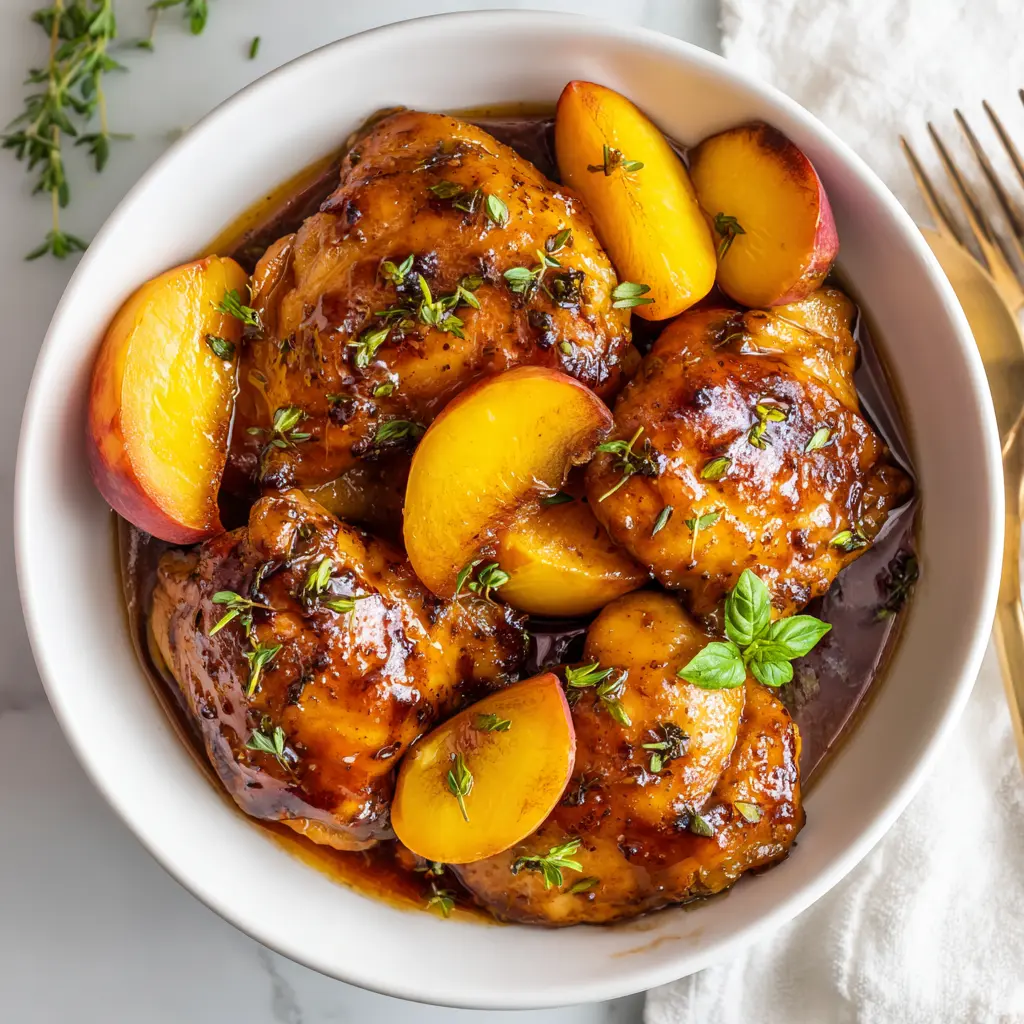

Honey Balsamic Chicken Thighs with Peaches
Ingredients
Equipment
Method
- Prep the chicken and peaches. Preheat the oven to 400°F. Pat the chicken thighs dry with paper towels and season both sides generously with kosher salt and black pepper. Halve, pit, and slice the peaches into even wedges. In a small bowl, mix the balsamic vinegar, honey, Dijon mustard, garlic, and thyme.
- Sear the chicken. Heat a cast iron skillet over medium-high heat and add the olive oil. When the oil shimmers, place the chicken thighs skin-side down in a single layer without crowding. Sear undisturbed for 6–8 minutes, until deeply golden and the skin releases easily. Flip and sear the other side for 2–3 minutes.
- Deglaze and build the sauce. Remove the chicken to a plate. If there is more than 1 tablespoon of fat in the pan, spoon some out. Add the butter if using, then pour in the balsamic-honey mixture. Scrape up the browned bits with a wooden spoon and add the chicken broth or water.
- Reduce the glaze. Simmer the sauce until glossy and slightly reduced. If a thicker sauce is desired, stir in the cornstarch slurry and simmer for about 1 minute, until the sauce coats the back of a spoon.
- Add peaches and return chicken. Nestle the peach wedges into the glaze. Return the chicken thighs to the skillet, skin-side up, and spoon a little glaze over each piece.
- Finish in the oven. Transfer the skillet to the oven and roast for 8–10 minutes, until the chicken reaches 165°F internally and the peaches are tender. If using skinless thighs, check around 7 minutes to avoid drying.
- Rest and serve. Remove the skillet from the oven and let the chicken rest for 5 minutes. Spoon the glaze and peaches over each thigh, then garnish with fresh basil or thyme and lemon zest if desired.
Notes

Elizabeth Morgan
Easy & Delicious Recipes
Follow for quick family-friendly recipes, baking inspiration, and comfort food favorites.
Follow on Pinterest