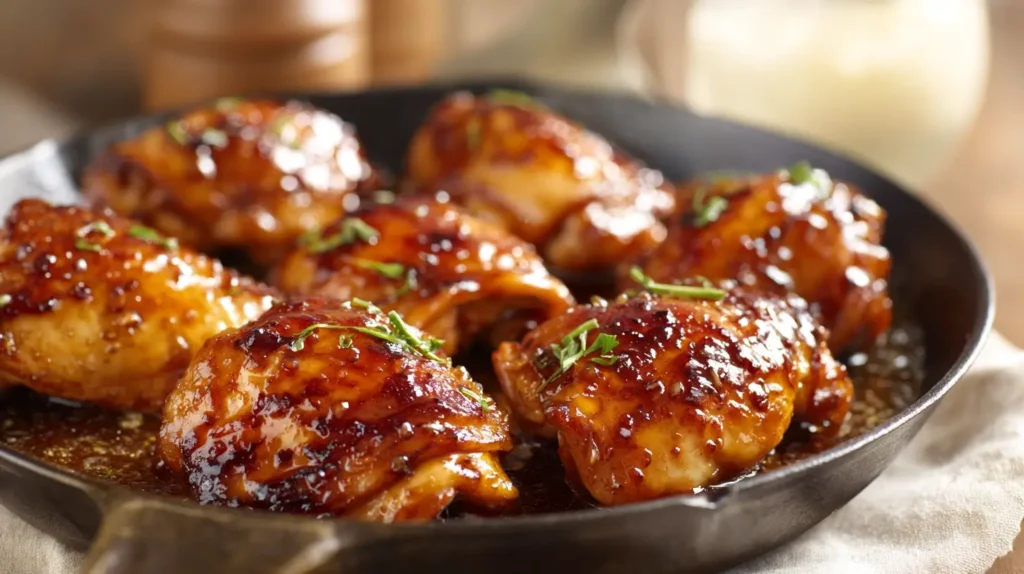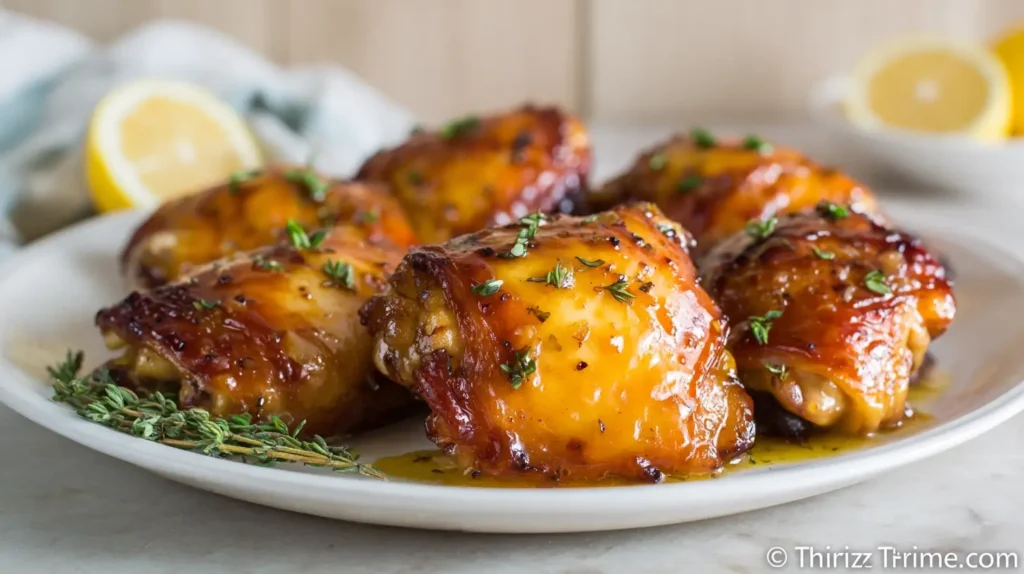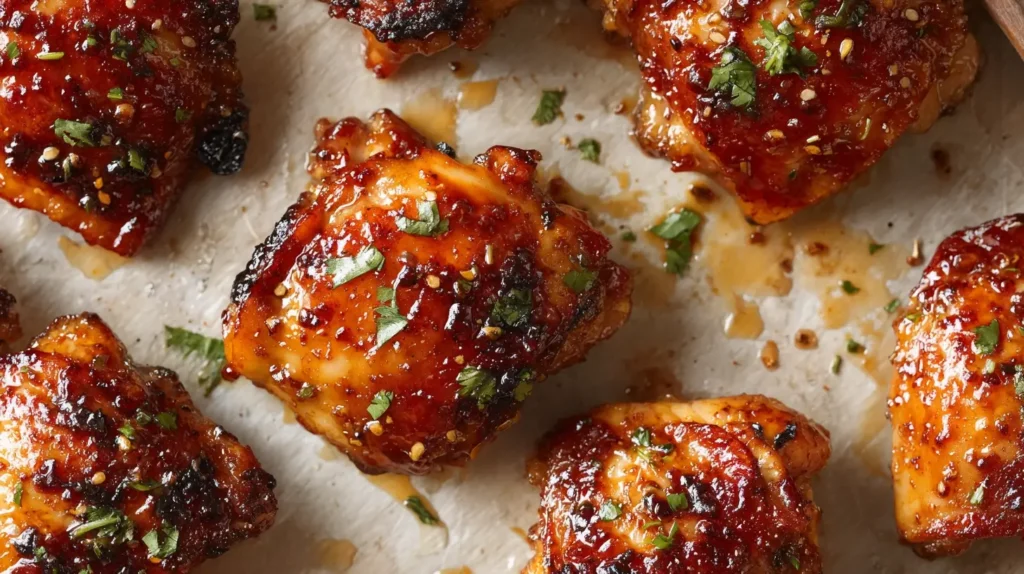
Sweet and Spicy Glazed Chicken Thighs in 30 Minutes!
- Chicken Recipes
 Elizabeth
- 0
- 45 minutes read
I love a weeknight dish that delivers big flavor with minimal fuss — and these Sweet and Spicy Glazed Chicken Thighs do exactly that. Sweet and Spicy Glazed Chicken Thighs show up on my table when I need something that feels a little indulgent but still comes together fast. In the first 100 words: this version uses boneless chicken thighs, a honey-soy-sriracha glaze, and quick pan-searing so you can have a sticky, caramelized dinner on the table in about 30 minutes.
As a professionally trained chef who cooks for a busy household, I built this recipe to be forgiving, flavor-forward, and approachable. Read on for step-by-step instructions, technique notes, smart substitutions, and pantry-friendly tips so you can make the best juicy, sticky glazed thighs tonight.
Why You’ll Love This Sweet and Spicy Glazed Chicken Thighs
This dish gives you crisped edges and a sticky, balanced glaze in under 30 minutes — perfect for busy weeknights or a quick weekend dinner with friends.
You’ll love this recipe because:
- Flavor: It balances honey’s mellow sweetness with bright rice vinegar and a measured heat from sriracha or chili paste.
- Texture: Boneless thighs stay tender and juicy; searing creates caramelized edges that contrast the glossy glaze.
- Convenience: One skillet, minimal prep, and most ingredients are pantry staples.
- Family appeal: Kids often love the sweet glaze; adults can adjust spice to taste.
- Meal-prep value: Leftovers make excellent sandwiches, bowls, or salads for the week.
- Dietary flexibility: Swap tamari for gluten-free, use maple syrup to avoid refined sugar, or choose less spicy condiments.
What Is Sweet and Spicy Glazed Chicken Thighs?
Sweet and Spicy Glazed Chicken Thighs are boneless chicken thighs cooked until tender and coated in a sticky sauce that combines sweet, savory, tangy, and spicy elements for a balanced, bold bite.
This version is a quick skillet method where chicken thighs are seared to develop color, then simmered briefly in a honey-soy glaze that reduces to a shiny coating. It’s commonly served over rice or with steamed vegetables and works well any time you want a comforting, flavorful meal without fuss.
Ingredients You’ll Need
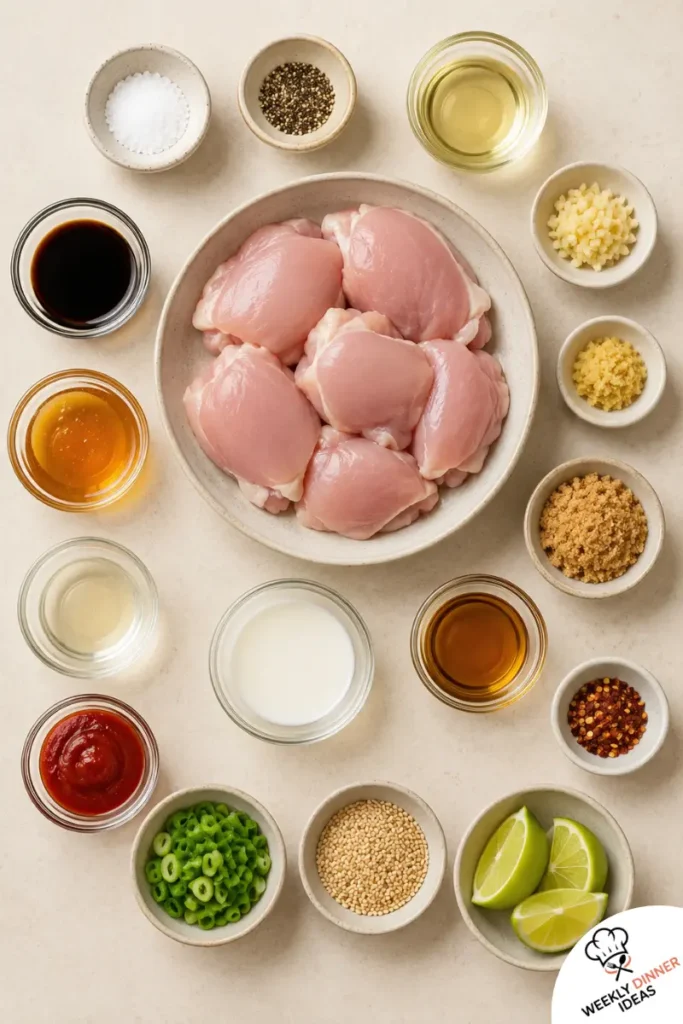
- 1 1/2 pounds boneless, skinless chicken thighs (about 6–8 thighs)
- Kosher salt and freshly ground black pepper
- 1–2 tablespoons neutral oil (vegetable, canola, or grapeseed)
- 3 garlic cloves, minced
- 1 tablespoon fresh ginger, grated (or 1 tsp ground ginger in a pinch)
- 1/3 cup low-sodium soy sauce (or tamari for gluten-free)
- 1/4 cup honey
- 2 tablespoons rice vinegar (or apple cider vinegar)
- 1–2 tablespoons sriracha (adjust for heat preference) or 1 tablespoon gochujang
- 1 tablespoon brown sugar (optional, for deeper caramel)
- 1 teaspoon sesame oil (optional, for finishing)
- 1/2 teaspoon red pepper flakes (optional)
- 1 tablespoon cornstarch mixed with 2 tablespoons cold water (slurry) for thickening
- 2 green onions, thinly sliced, for garnish
- 1 tablespoon sesame seeds, toasted, for garnish
- Lime wedges (optional, for serving)
Role of key ingredients and quality notes:
- Chicken thighs: Boneless thighs are forgiving and stay juicy under quick heat. Choose uniform size for even cooking.
- Soy/tamari: Provides umami and salt; low-sodium helps control final saltiness.
- Honey + brown sugar: Honey gives shine and floral sweetness; brown sugar adds deeper caramel notes. Use maple or agave if you prefer.
- Rice vinegar: Brightens the glaze and cuts the sweetness.
- Sriracha/gochujang: Adds heat and a bit of fermented depth—gochujang gives a richer, tangier profile.
- Cornstarch slurry: Thins into the glaze smoothly and helps it cling to the thighs; avoid adding cold slurry to a scorching pan to prevent clumping.
Tools You Need
- Large heavy skillet (cast iron or stainless steel recommended) (paid link)
- Tongs (paid link)
- Small bowl or measuring cup for glaze (paid link)
- Whisk or fork (paid link)
- Cutting board and chef’s knife (paid link)
- Instant-read thermometer (paid link)
- Small bowl for cornstarch slurry (paid link)
- Measuring spoons and cups (paid link)
- Plate or tray for resting cooked chicken (paid link)
Ingredient Substitutions and Additions
Best substitutions
- Soy sauce → Tamari for gluten-free cooking.
- Honey → Maple syrup or agave for a vegan option (texture will be slightly different).
- Sriracha → Sambal oelek or a teaspoon of crushed red pepper plus a splash of vinegar for a thinner heat.
- Cornstarch slurry → 1 tablespoon arrowroot mixed with 2 tablespoons water for a clearer glaze.
Flavor additions
- Add 1 tablespoon toasted sesame oil to the glaze at the end for nutty aroma.
- Stir in 1–2 teaspoons grated orange zest or a splash of orange juice for citrus brightness.
- Mix in a teaspoon of smoked paprika for a warm, smoky layer.
- Toss in diced bell peppers and sliced onions in the pan for a quick vegetable accompaniment.
Dietary swaps
- Lower-sodium: Use low-sodium soy sauce and reduce added sugar.
- Keto/low-carb: Replace honey and brown sugar with a tablespoon of erythritol or monk fruit sweetener and thicken with xanthan gum (use sparingly).
- Paleo: Use coconut aminos instead of soy and maple syrup instead of honey.
How to Make Sweet and Spicy Glazed Chicken Thighs
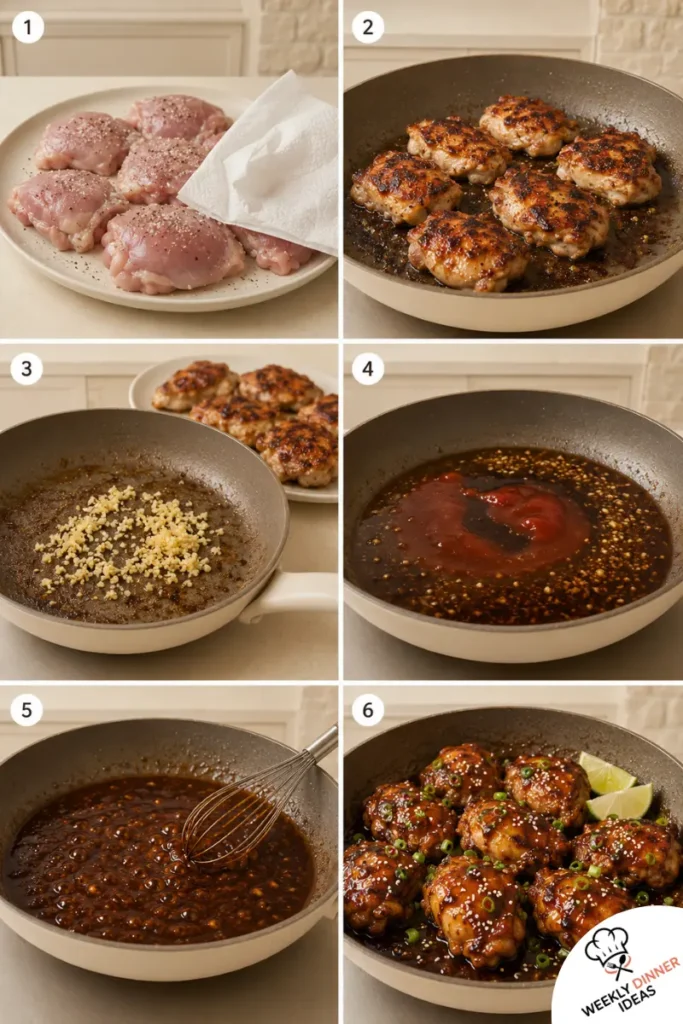
In short: sear seasoned boneless chicken thighs in a hot skillet until nicely browned, remove briefly, make a quick honey-soy-spice glaze in the same pan, return the chicken to the pan and spoon the glaze as it thickens until the thighs are cooked through and sticky, about 25–30 minutes total.
Step 1: Prep the chicken
Pat the chicken thighs very dry with paper towels, then season both sides generously with salt and a few grinds of black pepper. Dry chicken sears more efficiently, so this small step makes a big difference in color and flavor.
What to look for: Surface should feel dry to the touch before oiling the pan. If they’re damp, the chicken will steam instead of sear.
Practical tip: If your thighs vary a lot in size, cut larger pieces in half so they finish at the same time.
Step 2: Brown the thighs
Heat a large skillet over medium-high until hot. Add 1–2 tablespoons neutral oil and let it shimmer. Add the chicken thighs in a single layer — don’t crowd the pan — and sear 3–4 minutes on the first side without moving so a golden crust forms. Flip and sear the other side 2–3 minutes.
What to look for: A deep golden-brown crust on the first side is the goal; if it’s pale, the pan isn’t hot enough. If the pan smokes heavily, reduce heat slightly.
Practical advice: Use tongs to press a thigh gently into the pan for the first 15 seconds to ensure full contact for an even sear.
Step 3: Remove and make the glaze base
Transfer the seared chicken to a plate and keep warm. Reduce heat to medium. Add a touch more oil if the pan looks dry, then add the minced garlic and grated ginger. Sauté briefly — about 30 seconds — until fragrant but not browned.
Whisk in soy sauce, honey, rice vinegar, sriracha, and optional brown sugar. Bring the mixture to a gentle simmer, scraping up any browned bits from the pan — those bits carry flavor into the glaze.
Sensory cue: The pan should smell sweet, garlicky, and slightly tangy; you’ll notice the aroma change as the sugar begins to warm.
Step 4: Thicken the glaze
Stir the cornstarch slurry to recombine and slowly whisk it into the simmering sauce. Continue simmering for 1–2 minutes until the sauce thickens and becomes slightly glossy.
What to look for: The sauce should nap the back of a spoon — it will thicken more as it cools, so stop just shy of “pudding” thickness.
Practical note: Add the slurry slowly and keep whisking to avoid lumps. If it gets too thick, loosen with a splash of water.
Step 5: Return chicken to the pan and glaze
Nestle the chicken back into the pan, spooning the glaze over each piece. Simmer gently for 4–6 minutes, turning once, until the internal temperature reaches 165°F and the glaze clings to the thighs in a sticky coat.
Sensory cues: The glaze will begin to bubble and thicken around the edges; you’ll see the glaze darken slightly and become syrupy. The aroma will be rich and slightly caramelized.
Practical advice: Keep the heat moderate. Too high and the sugars will burn; too low and the chicken will stew rather than stay crisp at the edges.
Step 6: Finish and rest
Remove the pan from the heat. Stir in 1 teaspoon sesame oil if using. Let the thighs rest for 3–5 minutes in the pan to allow juices to redistribute and glaze to set lightly.
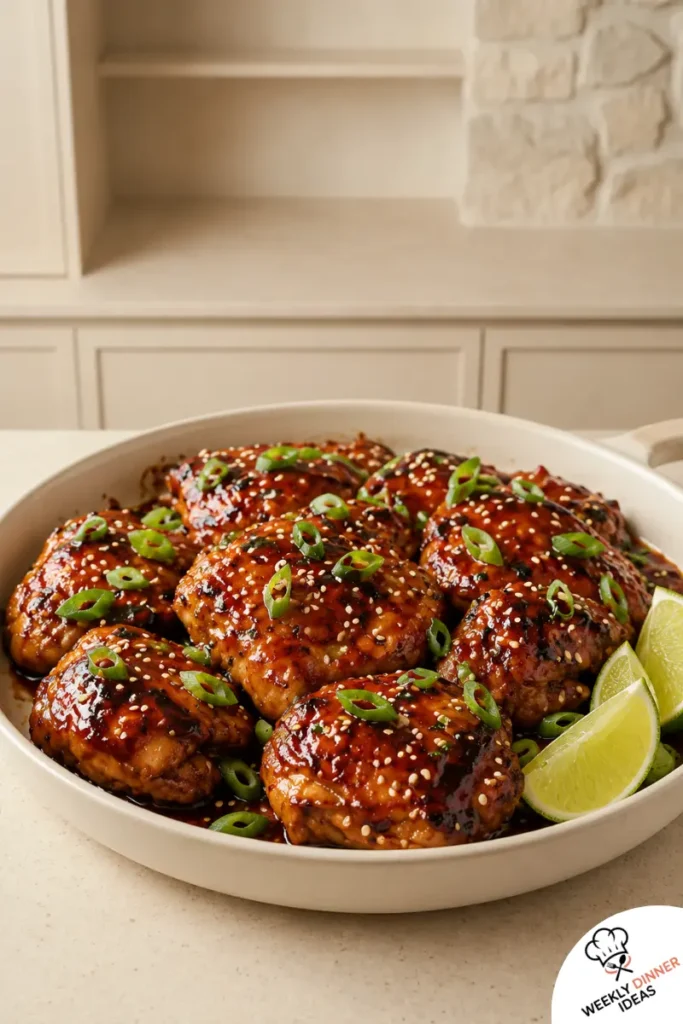
Garnish with sliced green onions, toasted sesame seeds, and an optional squeeze of lime. Serve over steamed rice, noodles, or with quick vegetables.
What to look for: Juices should run clear when pierced; the glaze should cling but not pool excessively.
Pro Tips for the Best Sweet and Spicy Glazed Chicken Thighs
Yes — a few small techniques make a big difference. Use them.
- Don’t skip drying the chicken: A dry surface equals a better sear and deeper flavor from caramelization.
- Control the heat for sugar: Start glaze at medium heat and finish at medium-low to avoid burning the honey and soy mixture.
- Use an instant-read thermometer: Aim for 165°F internal temp; chicken thighs stay moist when removed promptly and allowed to rest.
- Make the glaze ahead: You can make the sauce up to 48 hours ahead and reheat gently, adding cooked thighs when warming for faster weeknight prep.
- Double the batch carefully: If doubling, use two pans or bake in the oven at 400°F for 20–25 minutes after glazing for easier handling.
- Salvage a burnt glaze: If sugars darken too quickly, add a splash of water or vinegar and reduce heat; do not scrape off too aggressively — you’ll lose flavor.
- Texture control: If you like more caramelized edges, finish under the broiler for 1–2 minutes (watch closely).
- Resting matters: Rest the thighs briefly to let the glaze thicken and juices settle; immediate cutting will release moisture and thin the sauce.
What to Serve with Sweet and Spicy Glazed Chicken Thighs
This chicken pairs with simple sides that soak up the glaze. Serve it over steamed jasmine rice or cauliflower rice for a low-carb option. For a vegetable side, stir-fried broccoli or a quick cucumber salad balances the richness. Make it a sheet-pan meal by roasting carrots and snap peas on a separate tray while the chicken cooks; see more one-pan ideas at Weekly Dinner Ideas’ one-pan and sheet pan meals category: one-pan & sheet-pan meals.
If you want lighter pairings, try a green salad and a side of quinoa; for weeknight comfort, pair with mashed sweet potatoes or plain boiled potatoes. For more chicken inspiration, check the collection at chicken recipes. To round out a busy weeknight menu, you can find additional quick sides and quick dinner ideas in the quick weeknight dinners and healthy dinner recipes categories.
Storage, Freezing, and Reheating
Store cooled leftovers in an airtight container in the refrigerator for 3–4 days. For freezing, place portions in freezer-safe bags and remove excess air; they keep well for up to 3 months.
To reheat, thaw overnight if frozen, then rewarm gently in a skillet over medium-low heat, spooning extra glaze or a splash of water to rehydrate the sauce. Reheating in the oven at 325°F covered for 10–15 minutes also works. Avoid microwaving at high power, which can make the texture rubbery.
Texture note: The glaze will firm up slightly when chilled; reheat gently and finish with a quick toss in the pan to restore shine and stickiness.
About This Recipe and Why It Works
I developed this recipe because I wanted a reliable, weeknight chicken that felt special but didn’t require hours of hands-on time. In my kitchen that means using boneless thighs — forgiving, fast, and flavorful — and leaning on three balancing components in the glaze: sweet (honey), acid (rice vinegar), and heat (sriracha). Searing adds Maillard flavor, which gives the glaze its depth when you deglaze the pan and fold those browned bits back into the sauce.
This approach reflects my cooking philosophy: technique matters more than complexity. A hot pan, dry protein, and a properly reduced glaze produce restaurant-worthy results from home pantry basics. The recipes you’ll find here at Weekly Dinner Ideas aim to be approachable, tunable, and rooted in real kitchens — the kind where dinner is practical, delicious, and made from ingredients you already have.
Frequently Asked Questions
Can I use bone-in chicken thighs instead?
Yes. Bone-in thighs can be used but increase cook time. Sear as directed, then lower heat and cover to finish cooking for about 20–25 minutes, or roast in a 425°F oven for 20–25 minutes after initial sear. Always check for an internal temperature of 165°F near the bone. If using bone-in, allow extra time for the heat to penetrate the bone. The glaze timing is similar, but you may need to spoon more glaze over the thighs during the longer cook so the sauce reduces without burning.
How spicy is the glaze and can I make it milder?
The heat depends on the amount and type of hot sauce you use. Using 1 tablespoon of sriracha gives a noticeable but not overwhelming warmth. To make it milder, reduce sriracha to 1 teaspoon or omit entirely and add a pinch of black pepper. For increased heat, add red pepper flakes or a small amount of gochujang. Balancing tip: If you reduce the heat, you may want to increase a touch of vinegar or lime to keep the flavor bright.
What if I don’t have cornstarch? How else can I thicken the glaze?
Cornstarch is fast and reliable. If you don’t have cornstarch, use arrowroot (same ratio), reduce the sauce longer to concentrate, or whisk in a small knob of cold butter off the heat for sheen (this won’t thicken as much but adds gloss). For a gluten-free and paleo option, arrowroot is preferred. Avoid flour as it can leave a grainy texture if not cooked long enough; always mix flour into a roux or cold water before adding.
Is this recipe gluten-free?
It can be. Replace soy sauce with tamari or coconut aminos and check that any hot sauce you use is gluten-free. Honey and the rest of the ingredients are naturally gluten-free. Label everything if cooking for someone with celiac disease.
How do I know when the chicken is done without a thermometer?
Look for juices that run clear when you cut into the thickest part and no pink near the center. Thighs can remain slightly rosy but should not be raw. However, the best practice is to use an instant-read thermometer — 165°F at the thickest part is the safe target.
Can I make this ahead for a party?
Yes. Cook the thighs and cool completely, then refrigerate the chicken and the glaze separately for up to 48 hours. Rewarm gently in a skillet, adding the glaze slowly so it heats without burning. Spoon the warmed glaze over the chicken just before serving. Keep a little extra glaze warm in a small saucepan for topping.
How do I prevent the glaze from burning?
Keep the heat moderate once sugar is in the pan. If it begins to darken quickly, lower the heat and add a splash of water or vinegar to keep it moving. Stir frequently; sugars can go from glossy to bitter rapidly, so stay attentive during the reduction stage.
Final Thoughts
If you want a reliable, bold weeknight winner, these Sweet and Spicy Glazed Chicken Thighs are a great pick. They’re fast, customizable, and forgiving — everything I aim for on a busy weeknight. Serve them over rice with a bright vegetable or toss leftover slices into a salad for lunch the next day. For more quick chicken ideas and weekday inspiration, explore my chicken recipes and quick weeknight dinners. If you’re leaning toward lighter sides, check out healthy dinner recipes for balanced pairings.
If you make this, I’d love to hear how you tweaked the glaze — leave a comment, rate the recipe, and pin it to your board on Pinterest: Elizabeth’s Pinterest. Your feedback helps me refine recipes for real kitchens like yours.
Quick Recipe Summary
10 minutes
18–20 minutes
28–30 minutes
4
Easy
Weeknight dinners, meal prep, family meals
Sweet, savory, tangy, with a mild to medium heat (adjustable)
Nutrition Information
The values below are estimates.
| Nutrient | Per Serving |
|---|---|
| Calories | Approx. 420 |
| Protein | Approx. 32 g |
| Carbohydrates | Approx. 28 g |
| Dietary Fiber | Approx. 0.5 g |
| Fat | Approx. 18 g |
(These numbers are estimates and will vary with ingredient brands and portion sizes.)
—
I hope this recipe becomes one of your weeknight staples — it’s one I go back to when I want something that feels a little special without a lot of work. If you try it, snap a photo and pin it to your favorites on Pinterest at Elizabeth’s Pinterest. I can’t wait to hear how you make it your own.

Sweet and Spicy Glazed Chicken Thighs
Ingredients
Equipment
Method
- Prep the chicken. Pat the chicken thighs very dry with paper towels, then season both sides generously with kosher salt and black pepper. If the thighs vary in size, cut larger pieces in half so they finish cooking at the same time.
- Brown the thighs. Heat a large skillet over medium-high heat until hot. Add 1–2 tablespoons neutral oil and let it shimmer. Add the chicken thighs in a single layer without crowding. Sear for 3–4 minutes on the first side without moving, until a deep golden crust forms.
- Flip and remove. Flip the chicken and sear the other side for 2–3 minutes. Transfer the seared chicken to a plate and keep warm.
- Make the glaze base. Reduce the heat to medium. Add a little more oil if the pan looks dry, then add the minced garlic and grated ginger. Cook for about 30 seconds, stirring constantly, until fragrant but not browned.
- Add the sauce ingredients. Whisk in the soy sauce, honey, rice vinegar, sriracha, and brown sugar if using. Bring the mixture to a gentle simmer, scraping up any browned bits from the bottom of the pan.
- Thicken the glaze. Stir the cornstarch slurry to recombine, then slowly whisk it into the simmering sauce. Cook for 1–2 minutes, until the sauce becomes glossy and slightly thickened. It should coat the back of a spoon.
- Return chicken to the pan. Nestle the chicken thighs back into the pan and spoon the glaze over each piece. Simmer gently for 4–6 minutes, turning once, until the chicken reaches 165°F and the glaze clings to the meat.
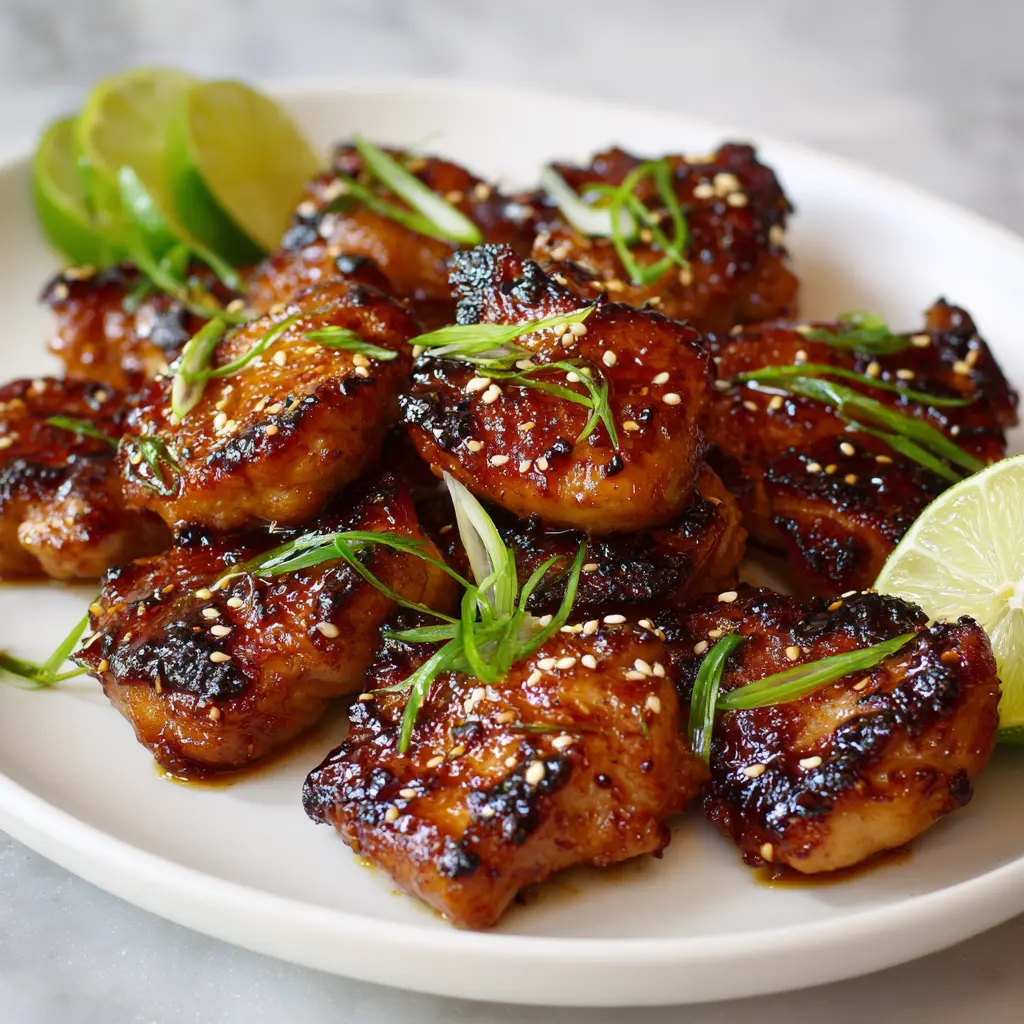
- Finish and serve. Remove from heat and stir in sesame oil if using. Let the chicken rest for 3–5 minutes so the juices redistribute and the glaze sets lightly. Garnish with sliced green onions, toasted sesame seeds, and lime wedges if desired.
Notes

Elizabeth Morgan
Easy & Delicious Recipes
Follow for quick family-friendly recipes, baking inspiration, and comfort food favorites.
Follow on Pinterest