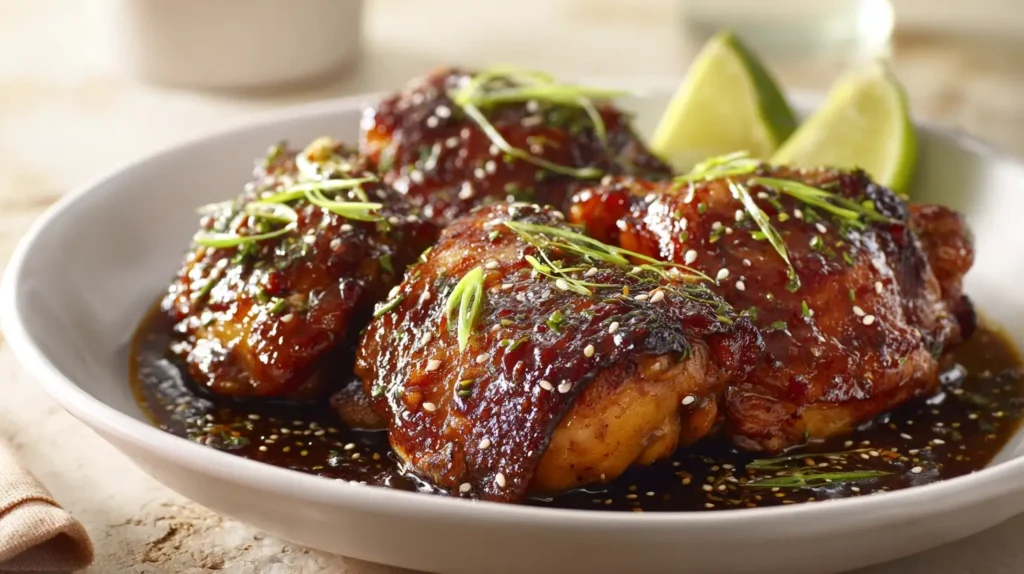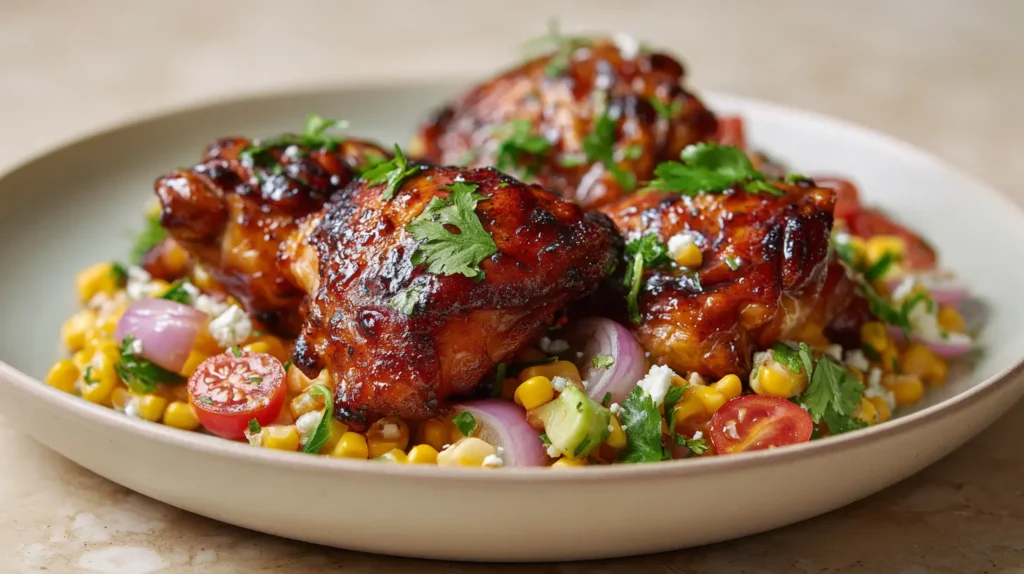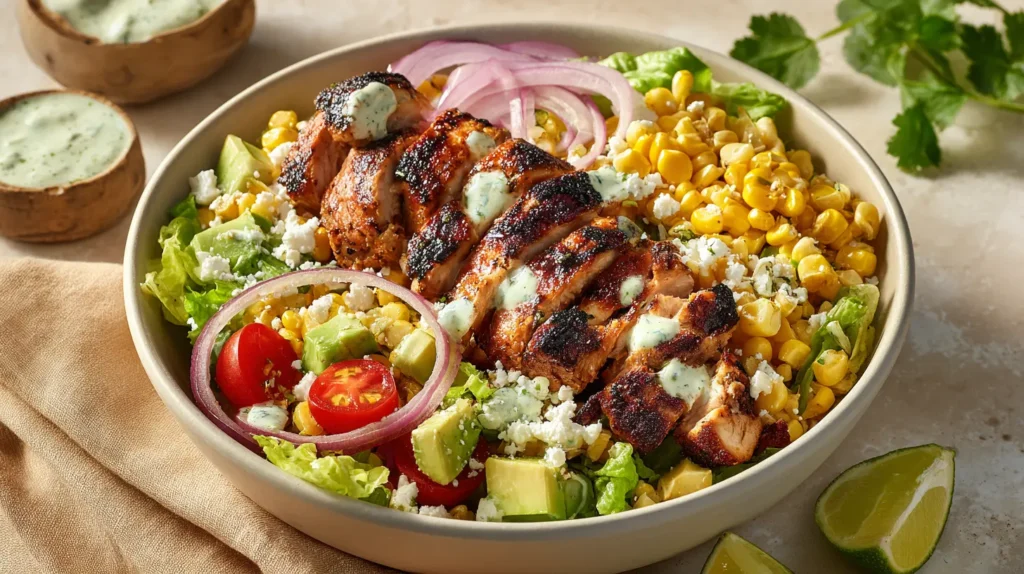
Discover the Ultimate Mediterranean Chicken Thighs: An Irresistible Delight!
- Healthy Dinner Recipes
 Elizabeth
- 0
- 39 minutes read
I get excited every time simple ingredients—lemon, garlic, olives, and a good chicken thigh—come together to make something that feels both elegant and entirely doable on a weeknight. Mediterranean Chicken Thighs are my go-to when I want bold, sunny flavors without fuss. The focus keyword Mediterranean Chicken Thighs sits right at the heart of this dish: bright lemon, briny olives, sweet roasted tomatoes, crisped skin, and tender, juicy meat. I first learned this combination in a busy restaurant kitchen where shortcuts mattered and flavors had to deliver every time. Over years of home testing, I’ve refined the timing, seasoning, and skillet-to-oven technique so you can get reliably delicious results in your kitchen. Let’s walk through it together.
Why You’ll Love This Mediterranean Chicken Thighs
Mediterranean Chicken Thighs are a family-friendly, flavor-forward meal that’s forgiving and fast.
You’ll love this recipe because it balances crispy, golden skin with a tangy, aromatic pan sauce. The textures—crisp skin, silky roasted tomatoes, snappy olives—play off each other, and the lemon-garlic-oregano combo hits classic Mediterranean notes. It’s convenient: a single skillet to stove and oven cuts cleanup, it doubles easily for guests, and leftovers keep beautifully for quick lunches across the week. This dish is flexible for dietary swaps, works for busy weeknights, and brightens seasonal menus from spring lemons to late-summer cherry tomatoes.
What Is Mediterranean Chicken Thighs?
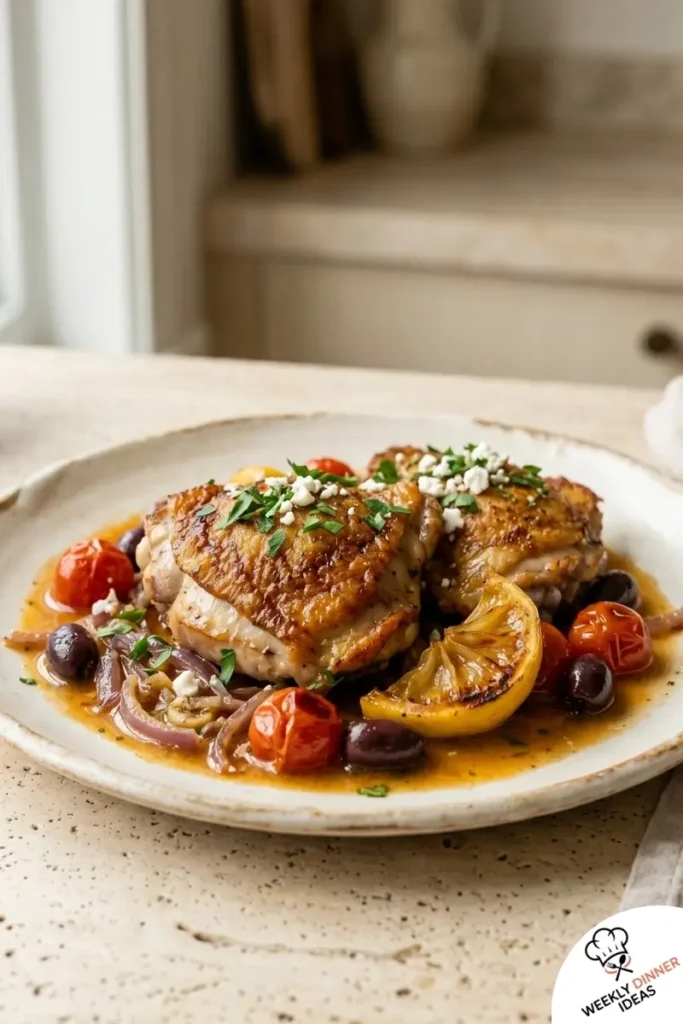
Mediterranean Chicken Thighs are bone-in, skin-on chicken thighs roasted with lemon, garlic, herbs, tomatoes, and olives to create a savory, bright skillet meal.
This dish brings together simple pantry staples—olive oil, citrus, dried oregano, and garlic—with fresh produce like cherry tomatoes and onions, plus briny Kalamata olives and optional feta. It’s commonly served as an easy family dinner, often alongside rice, a crisp salad, or crusty bread to soak up the pan juices. What makes this version special is the stovetop sear before roasting, which gives the skin a crunchy texture while locking in flavor, and a brief, bright finish of lemon and parsley that keeps it from feeling heavy.
Ingredients You’ll Need
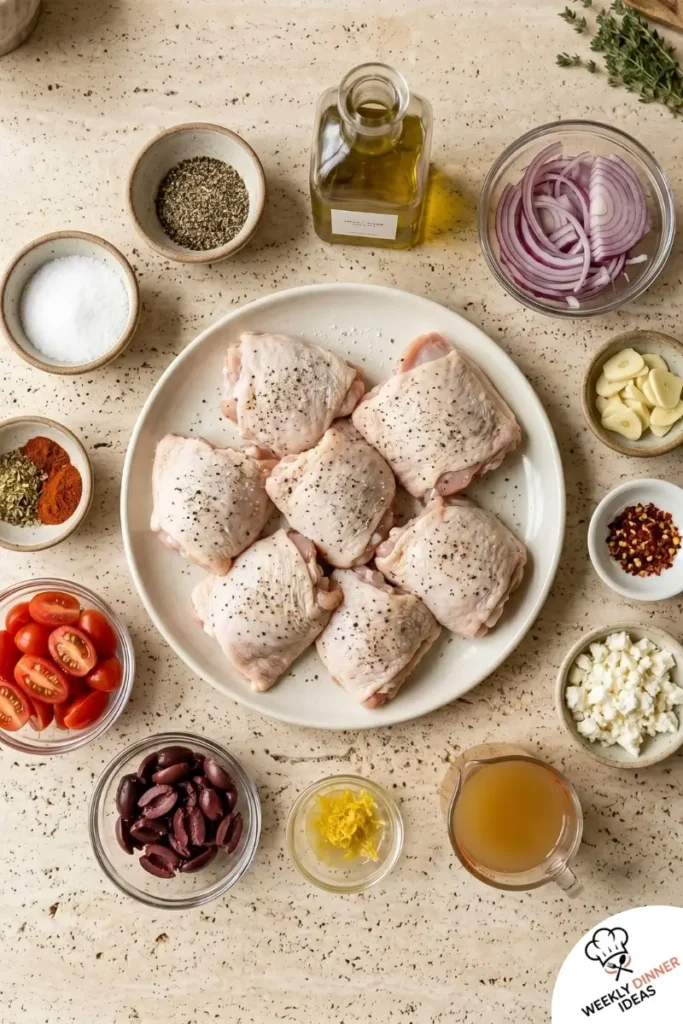
- 8 bone-in, skin-on chicken thighs (about 3 to 3½ pounds)
- 1½ teaspoons fine sea salt, divided
- 1 teaspoon freshly ground black pepper, divided
- 3 tablespoons extra-virgin olive oil
- 1 medium red onion, thinly sliced
- 4 cloves garlic, thinly sliced or minced
- 1 teaspoon dried oregano (or 1 tablespoon fresh, chopped)
- 1 teaspoon smoked paprika (optional, for warmth)
- 1 pint (about 2 cups) cherry tomatoes, halved
- 3/4 cup pitted Kalamata olives, halved
- Zest and juice of 1 lemon (about 2 tablespoons juice)
- 1/2 cup low-sodium chicken stock or dry white wine
- 1/3 cup crumbled feta cheese (optional)
- 2 tablespoons chopped fresh parsley for garnish
- Freshly cracked black pepper, to finish
- Red pepper flakes (optional, a pinch for heat)
Notes about quantities: This recipe serves 4 with hearty portions. Adjust salt and lemon to taste if you use low-sodium olives or very tart lemons.
The key players here are the bone-in, skin-on thighs for flavor and texture, olive oil for browning and sauce, lemon for brightness, and olives for briny contrast. Use ripe cherry tomatoes for sweetness that roasts down into a silky sauce; if tomatoes are out of season, a 14-ounce can of diced tomatoes (drained) will work as a substitute.
Tools You Need
- Oven-safe cast-iron skillet or stainless steel skillet (10–12 inch) (paid link)
- Tongs for turning the chicken (paid link)
- Instant-read meat thermometer (paid link)
- Cutting board and sharp chef’s knife (paid link)
- Measuring spoons and cups (paid link)
- Mixing bowl for the marinade (paid link)
- Wooden spoon or spatula (paid link)
- Aluminum foil (optional, for resting) (paid link)
Ingredient Substitutions and Additions
Best substitutions
- Bone-in, skin-on thighs → boneless skinless thighs if preferred (reduce cook time by about 10 minutes and watch internal temp).
- Kalamata olives → Castelvetrano or green olives for milder brine.
- Fresh lemon → 2 tablespoons bottled lemon juice in a pinch (fresh is best for zest and brightness).
- Chicken stock → dry white wine for a slightly sharper pan sauce.
Flavor additions
- Add 1 teaspoon capers with the olives for extra salty tang.
- Stir in 1 tablespoon honey or a pinch of sugar if your tomatoes are very tart.
- Finish with 1 tablespoon chopped fresh mint along with parsley for a more herbaceous lift.
- Crumble 1/4 cup of good-quality feta over the finished dish for creaminess.
Dietary swaps
- Gluten-free: This recipe is naturally gluten-free—just double-check any store-bought stock or olives for cross-contamination.
- Low-sodium: Use unsalted stock and rinse the olives briefly under water; reduce added salt.
- Low-carb/keto: Serve over cauliflower rice or a bed of sautéed greens instead of grains.
How to Make Mediterranean Chicken Thighs

Start with a short summary: Sear seasoned, skin-on chicken thighs until golden, sauté aromatics, add tomatoes and olives, finish in the oven until the thighs register 165°F. Stir in lemon and parsley, scatter with feta if using, and serve hot.
Step 1: Season and (optionally) marinate
Pat the chicken thighs dry with paper towels—this is vital for crisp skin. Season both sides with half the salt and pepper, the smoked paprika (if using), and dried oregano. If you have 30 minutes to spare, toss thighs with 1 tablespoon olive oil, lemon zest, and garlic in a bowl and let them sit at room temperature; for deeper flavor, refrigerate covered for up to 4 hours. Avoid marinating longer than overnight if using lemon—acid can change texture if overused.
What to look for: The skin should be dry to the touch before searing. Excess moisture prevents browning.
Practical advice: If you forget to dry the skin, blot it now. Always bring chicken closer to room temperature (15–20 minutes) before it hits a hot pan to ensure even cooking.
Step 2: Sear the chicken
Heat 2 tablespoons olive oil in an oven-safe 10–12 inch skillet over medium-high heat until shimmering but not smoking. Place the thighs skin-side down, pressing slightly so the skin contacts the pan. Sear without moving for 5–7 minutes until the skin is deeply golden and renders a good amount of fat. Flip and sear the other side for 2 minutes.
What to look for: The skin should release easily from the pan when it’s ready to flip. If it sticks, give it another 30–60 seconds.
Practical advice: Use tongs and the back of a spatula to avoid splashes. If your skillet is too small, sear in batches to avoid crowding, then set thighs aside and pour off excess fat if it seems excessive.
Step 3: Sauté aromatics and build the sauce
Reduce heat to medium. If there’s excessive fat, spoon out all but about 1 tablespoon. Add the sliced onion and a pinch of salt; sauté until the edges are soft and translucent, about 3–4 minutes. Add garlic and cook for 30 seconds until fragrant. Stir in cherry tomatoes, olives, remaining salt and pepper, and the chicken stock (or wine). Let the mixture bubble and soften the tomatoes for 2–3 minutes.
Sensory cues: The garlic should smell fragrant without browning; the tomatoes should start to swell and release juices.
Practical advice: If you like a thicker sauce, let the tomatoes simmer a couple of minutes longer on the stove before returning the chicken to the skillet.
Step 4: Return chicken to skillet and roast
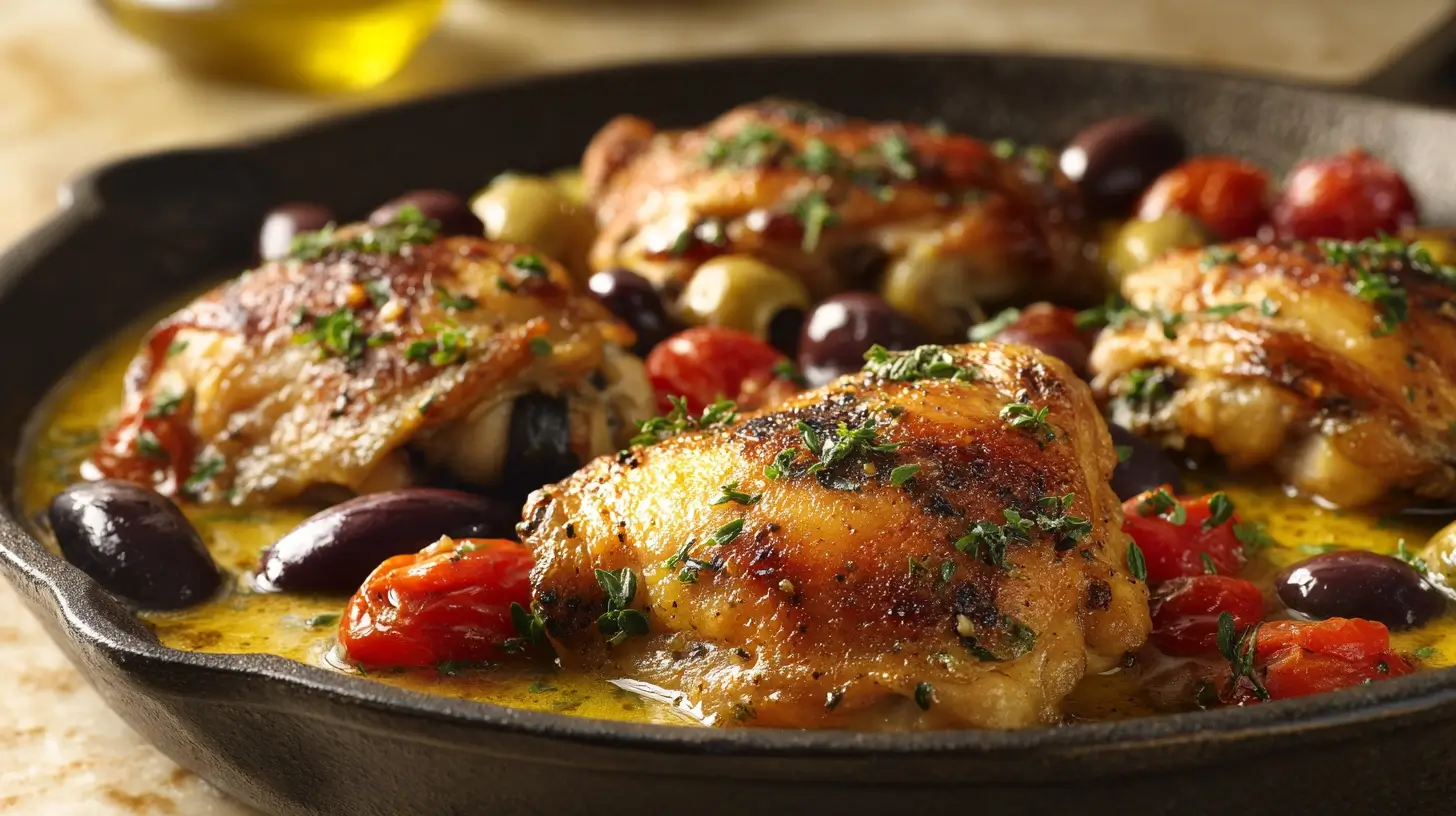
Nestle the seared chicken thighs skin-side up into the skillet among the tomatoes and olives. Spoon some of the tomato juices over the thighs (but keep the skin mostly exposed so it stays crisp). Transfer the skillet to a preheated oven at 400°F. Roast for 20–30 minutes, depending on thigh size, until the thickest part of the thigh reaches 165°F on an instant-read thermometer.
What to look for: The skin should look golden and the juices should run clear when pierced. Thermometer is your friend—internal temp is the most reliable indicator.
Practical advice: If the skin loses its crispness in the oven, place the skillet under a hot broiler for 1–2 minutes at the end—watch carefully to avoid burning.
Step 5: Finish with lemon, feta, and herbs
Remove the skillet from the oven. Spoon some pan juices onto the thighs, then squeeze lemon juice over everything and sprinkle with chopped parsley. Scatter crumbled feta if using and finish with a quick crack of fresh black pepper and a pinch of red pepper flakes if you want heat.
Sensory cues: The lemon will brighten the sauce; the parsley adds a fresh, green pop, and feta melts slightly into the warm juices for creaminess.
Practical advice: Taste and adjust—add another pinch of salt if olives were mellow or an extra squeeze of lemon if you like more brightness.
Step 6: Rest and serve
Let the chicken rest 5 minutes before serving to allow juices to settle. Serve with a spoonful of pan sauce over the chicken and alongside your chosen side dish.
What to look for: Juices should be held inside the meat; the skin should still be identifiable as crisp and golden.
Practical advice: Resting also makes the pan juices easier to skim and spoon without them running off the plate.
Pro Tips for the Best Mediterranean Chicken Thighs
Seared then roasted yields the best texture—crisp skin and juicy interior.
- Use bone-in, skin-on thighs for depth of flavor; boneless cook faster but lose some complexity.
- Dry skin thoroughly before searing to encourage browning; moisture is the enemy of crispness.
- Don’t overcrowd the pan when searing—crowding releases steam and prevents browning. Sear in batches if needed.
- Always use an instant-read thermometer; thighs are done at 165°F. Pull them at 160°F if you want carryover to finish more gently, and rest to reach 165°F.
- If your tomatoes aren’t very sweet, add a teaspoon of honey to balance acidity.
- Make-ahead tip: Fully assemble (except fresh herbs and feta) and refrigerate up to 24 hours; bring to room temp before roasting and add 5–10 minutes to oven time.
- Doubling: Use two skillets or a sheet pan for roasting if you double the recipe; maintain spacing so air circulates.
- To rescue soggy skin: After roasting, transfer thighs to a hot skillet skin-side down for 1–2 minutes, or broil briefly until crisp.
What to Serve with Mediterranean Chicken Thighs
This chicken sings alongside simple, hearty sides that soak up the juices. Serve it with fluffy couscous, herbed rice, or roasted potatoes. For lighter plates, a crisp Greek salad complements the briny olives and feta—see more salad ideas in my healthy dinner recipes collection. For easy weeknight pairings, serve the chicken over cauliflower rice or alongside garlic sautéed green beans from my quick weeknight dinners page. If you love one-pan dinners, this technique is similar to my one-pan sheet pan meals approach—swap in roasted potatoes on the sheet pan and roast everything together. For more chicken inspiration, check out my roundup of chicken recipes.
Storage, Freezing, and Reheating
Store leftovers in an airtight container in the fridge for up to 3–4 days. For longer storage, freeze portions in freezer-safe containers for up to 3 months.
When reheating, thaw in the fridge overnight if frozen. Reheat in a preheated 350°F oven for 15–20 minutes until warmed through, or reheat gently in a skillet with a splash of water and a lid to prevent drying. If you want to revive the skin, broil for 1–2 minutes at the end to crisp. Note that the texture of the vegetables will soften with refrigeration and freezing; the meat will retain most of its juiciness when reheated gently.
About This Recipe and Why It Works
I’m Elizabeth Morgan, and this recipe reflects the practical, flavor-forward cooking I learned in restaurant kitchens and have adapted for a busy home life. This Mediterranean Chicken Thighs recipe works because it leans on contrast: crisp skin versus tender meat, bright lemon versus briny olives, and sweet roasted tomatoes against savory herbs. The sear-then-roast method is a small technique that makes a big difference—sizzling the skin first gives you texture and flavor that a straight bake can miss.
My approach is simple: respect the ingredients, keep the technique approachable, and add small finishing touches—a quick lemon squeeze, a sprinkle of fresh parsley, a crumble of feta—that make the dish feel intentional. This dish fits the Weekly Dinner Ideas philosophy: recipes that are straightforward, family-friendly, and just elevated enough to be special without taking the evening hostage.
Frequently Asked Questions
What temperature should chicken thighs reach?
Chicken thighs are safe at an internal temperature of 165°F. Use an instant-read thermometer inserted into the thickest part without touching bone. Remove from the oven at 165°F or pull at 160°F and rest; carryover heat will finish the meat and keep it juicy. Additional note: bone-in thighs take longer than boneless; always check the thickest piece.
Can I make this recipe with boneless skinless thighs?
Yes. Boneless skinless thighs cook faster—expect 15–20 minutes in the oven after searing. Skip the initial long sear for crisp skin (there is no skin) and watch the internal temperature closely to avoid overcooking.
How long can I store leftovers in the fridge?
Store in an airtight container up to 3–4 days. Keep the pan sauce in the same container with the chicken so meat stays moist. Reheat gently in the oven or a skillet to retain juiciness.
Can I use canned tomatoes instead of cherry tomatoes?
Yes. Use a 14-ounce can of diced tomatoes drained, or 1 cup crushed tomatoes for a saucier finish. Fresh cherry tomatoes roast to a sweeter, silkier texture; canned tomatoes will yield a deeper, cooked tomato flavor.
Are Kalamata olives necessary?
Kalamata olives add a distinctive briny flavor but aren’t required. Substitute Castelvetrano or green olives for milder brininess, or add 1 tablespoon capers for a similar salty pop.
Can I prepare this ahead of time?
You can marinate and assemble the thighs and vegetables up to 24 hours ahead (cover and refrigerate). Bring to room temperature before roasting and add 5–10 minutes to the oven time. Finish with fresh herbs and lemon just before serving.
How do I keep the skin crispy if I’m serving later?
If serving later, roast the thighs as directed, then briefly re-crisp skin under a hot broiler for 1–2 minutes just before plating. Alternatively, transfer thighs to a hot skillet, skin-side down, for 1–2 minutes to sharpen the texture.
Final Thoughts
This Mediterranean Chicken Thighs recipe is one of those go-to dinners that looks like you spent more time than you did, tastes of sunlit afternoons, and is forgiving when life gets busy. It’s great for family dinners, easy to scale for guests, and stores and reheats well for weekday lunches. If you love recipes that bridge cozy and bright, you’ll find more approachable ideas in my chicken recipes and one-pan sheet pan meals collections.
I’d love to hear how it turns out—leave a comment, rate the recipe, and save it to your boards on Pinterest via my profile: Chicken by Elizabeth on Pinterest. If you try a swap or tweak, tell me what you did—I test things at home constantly, and I learn from your experiments too.
Quick Recipe Summary
15–25 minutes (plus optional marinating)
30–40 minutes (including searing and roasting)
45–65 minutes
4
Easy
Weeknight dinners, casual entertaining, meal prep
Bright, savory, briny, herbaceous
Nutrition Information
| Nutrient | Per Serving |
|---|---|
| Calories | Approx. 520 |
| Protein | Approx. 32 g |
| Carbohydrates | Approx. 6 g |
| Dietary Fiber | Approx. 1.5 g |
| Fat | Approx. 40 g |
These values are estimates based on typical ingredient amounts and may vary depending on specific products and portion sizes.
I hope this version of Mediterranean Chicken Thighs becomes a regular in your rotation. It’s hearty, quick-ish, and reliably delicious—exactly the kind of recipe I enjoy cooking the week I need comfort and brightness on the same plate.

Mediterranean Chicken Thighs
Ingredients
Equipment
Method
- Preheat oven to 400°F (204°C).
- Pat the chicken thighs very dry with paper towels. Season both sides with salt, pepper, dried oregano, and smoked paprika if using.
- Optional: Toss the chicken with 1 tablespoon olive oil, lemon zest, and garlic. Marinate for 30 minutes at room temperature or refrigerate for up to 4 hours.
- Heat 2 tablespoons olive oil in an oven-safe skillet over medium-high heat until shimmering.
- Place chicken thighs skin-side down and sear for 5-7 minutes, until the skin is deeply golden and releases easily from the pan.
- Flip the chicken and sear the other side for 2 minutes. Transfer chicken to a plate if needed.
- If there is excessive fat in the skillet, spoon out all but about 1 tablespoon.
- Add sliced red onion with a pinch of salt and sauté for 3-4 minutes, until softened.
- Add garlic and cook for 30 seconds, until fragrant but not browned.
- Stir in cherry tomatoes, Kalamata olives, remaining salt and pepper, and chicken stock or dry white wine. Simmer for 2-3 minutes.
- Nestle the seared chicken thighs back into the skillet skin-side up, keeping the skin mostly exposed so it stays crisp.
- Transfer skillet to the oven and roast for 20-30 minutes, until the thickest part of the chicken reaches 165°F (74°C).
- Optional: Broil for 1-2 minutes at the end if the skin needs extra crisping.
- Remove from oven. Finish with lemon juice, chopped parsley, feta if using, freshly cracked black pepper, and red pepper flakes if desired.
- Rest for 5 minutes before serving with pan sauce.
Notes

Elizabeth Morgan
Easy & Delicious Recipes
Follow for quick family-friendly recipes, baking inspiration, and comfort food favorites.
Follow on Pinterest