
20-Minute Sticky Apricot Chicken Thighs: A Satisfying Meal in No Time!
- Chicken Recipes
 Elizabeth
- 0
- 42 minutes read
I’m always chasing dinners that taste like I fussed for hours but come together in a snap — and these Sticky Apricot Chicken Thighs check that box every time. Sticky Apricot Chicken Thighs are sweet, tangy, and glossy, with just the right amount of caramelized char on the outside and tender, juicy meat inside. As someone who trained in a professional kitchen and now cooks for a busy family, I love recipes like this for weeknights: pantry-friendly, fast, and crowd-pleasing. Read on and I’ll walk you through how to make them reliably, plus the small tricks I learned after repeating this dish a few dozen times.
Why You’ll Love This Sticky Apricot Chicken Thighs
It’s a fast, flavor-forward weeknight dinner that combines caramelized apricot sweetness with savory depth and a sticky, finger-licking glaze.
There’s a lot to love here:
- Flavor: Apricot jam provides bright, fruity sweetness that pairs beautifully with soy and a hint of acid — think apricot preserves rounded by savory umami.
- Texture: The outside develops a glossy, slightly sticky crust while the meat stays juicy when you use thighs.
- Convenience: Most of the sauce comes from pantry staples; no special shopping required.
- Family appeal: Sweet plus savory wins with kids and adults alike.
- Seasonal fit: Light enough for spring and summer, comforting in cooler months.
- Meal-prep value: Make a double batch, freeze portions, or shred leftovers for sandwiches or salads.
What Is Sticky Apricot Chicken Thighs?
Sticky Apricot Chicken Thighs are pan-seared chicken thighs cooked in a glossy apricot-based glaze until the sauce thickens and clings to the meat.
This dish is typically served as a simple weeknight main over rice or alongside roasted vegetables. It tastes sweet, slightly tangy, and caramelized with savory notes from soy or tamari. What makes this version special is its speed — you’ll get that sticky, restaurant-style finish in about 20 minutes using apricot preserves, aromatics, and a quick cornstarch slurry to build body without long simmering.
Ingredients You’ll Need
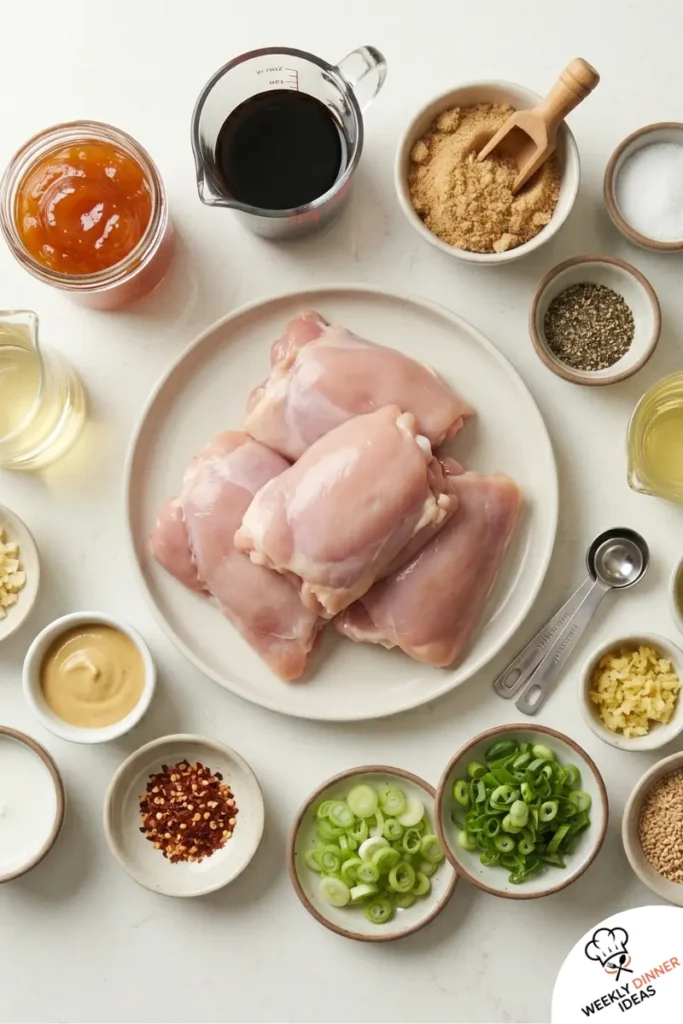
- 1 1/2 pounds boneless, skinless chicken thighs (about 6 small thighs)
- Kosher salt and freshly ground black pepper
- 1 tablespoon neutral oil (vegetable, canola, or light olive oil)
- 2 cloves garlic, minced
- 1 teaspoon fresh ginger, grated (optional but recommended)
- 1/2 cup apricot preserves or jam
- 2 tablespoons low-sodium soy sauce (use tamari for gluten-free)
- 1 tablespoon rice vinegar or fresh lemon juice
- 1 tablespoon Dijon mustard (optional, for depth)
- 1 tablespoon brown sugar or honey (optional; adjust to taste)
- 1/4 cup water (or low-sodium chicken broth)
- 1 teaspoon cornstarch mixed with 1 tablespoon cold water (slurry)
- 1/4 teaspoon red pepper flakes (optional, for heat)
- 2 green onions, thinly sliced (for garnish)
- Toasted sesame seeds (optional, for garnish)
Notes on key ingredients:
- Apricot preserves supply both sweetness and body; choose a smoother jam for a glossy sauce. If the jam has large fruit pieces, warm it and mash them before adding.
- Boneless thighs cook quickly and stay moist — this is my go-to for fast weeknight meals. Bone-in thighs can be used but require longer cooking.
- Soy sauce brings umami; switch to tamari to make the dish gluten-free. Rice vinegar adds a bright lift to balance the sweetness.
Tools You Need
- Heavy skillet (preferably 10–12-inch cast iron or stainless steel) (paid link)
- Tongs (paid link)
- Small bowl for mixing sauce (paid link)
- Measuring cups and spoons (paid link)
- Whisk or fork (for the cornstarch slurry) (paid link)
- Instant-read thermometer (helpful to check doneness) (paid link)
- Cutting board and sharp knife (paid link)
Ingredient Substitutions and Additions
Best substitutions
- Apricot preserves → peach or apricot marmalade, or 1/2 cup orange marmalade for a citrus note.
- Soy sauce → tamari for gluten-free, or coconut aminos for soy-free (slightly sweeter).
- Brown sugar/honey → omit for less-sweet glaze or replace with maple syrup.
Flavor additions
- 1 teaspoon toasted sesame oil stirred in at the end for nuttiness.
- 1 tablespoon sriracha or gochujang for a spicy-sweet kick.
- Fresh lime zest for a bright finish.
- Toss in sliced bell peppers or snap peas during the last minute for color and crunch.
Dietary swaps
- To make low-carb: skip the brown sugar and use a sugar-free apricot spread or reduce the jam and add a splash of lemon to balance.
- For paleo: use coconut aminos and a paleo-friendly jam.
- To make it vegetarian: substitute firm tofu or seitan and follow the same glaze method (adjust cook times).
How to Make Sticky Apricot Chicken Thighs
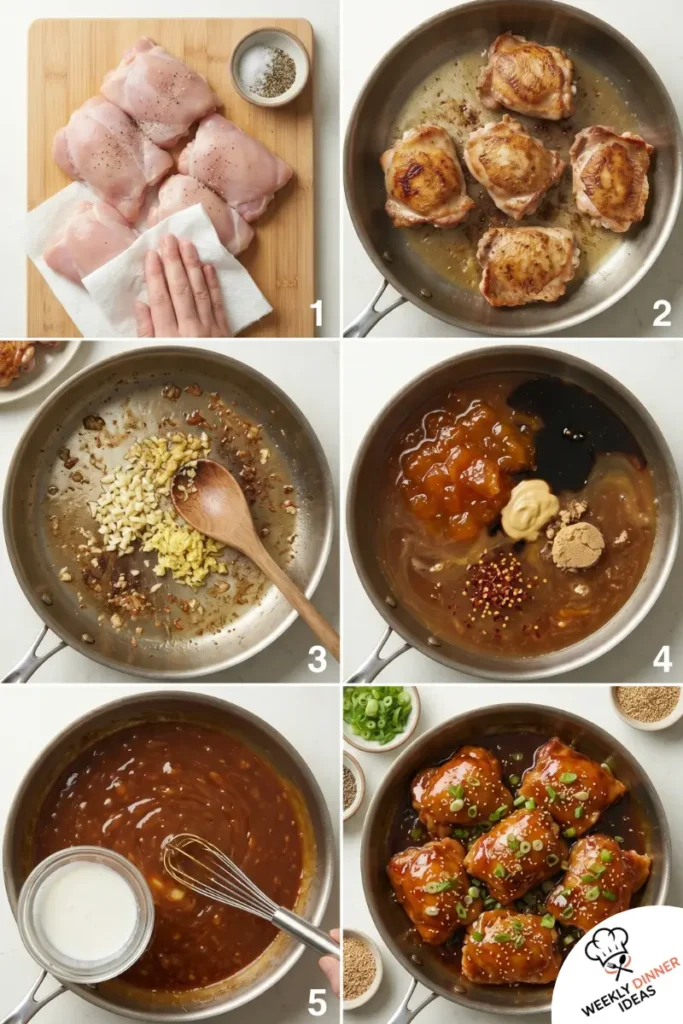
Sear seasoned chicken thighs in a hot skillet, remove them, whisk together an apricot-soy glaze in the same pan, thicken quickly with a cornstarch slurry, then return the chicken to coat and finish until glossy.
Step 1: Prep the chicken
Pat the chicken thighs very dry with paper towels. Season both sides generously with kosher salt and a few grinds of black pepper. Let them sit at room temperature for 10 minutes while you gather the sauce ingredients.
Why this matters: Dry skin (or exterior) browns better; room-temperature meat cooks evenly. If you skip drying, the thighs will steam instead of searing.
What to look for: The thighs should look matte and not wet before hitting the pan.
Step 2: Sear the thighs
Heat a 10–12 inch skillet over medium-high until hot, then add 1 tablespoon of oil and swirl. Add the thighs in a single layer without crowding (work in batches if needed). Sear until deeply golden, about 4–5 minutes per side for boneless thighs. Use tongs to press them gently so more surface makes contact with the pan.
Why this matters: A good sear creates Maillard browning, adding flavor and texture that the sauce clings to.
Sensory cues: You should hear a lively sizzle when the meat hits the pan and see a golden-brown crust develop. If your pan smokes heavily, lower the heat slightly.
Practical tip: Transfer the seared thighs to a plate when both sides are golden but not fully cooked through. Internal temp will finish cooking in the glaze.
Step 3: Build the glaze
Lower heat to medium. Add the minced garlic and grated ginger to the empty skillet and cook 20–30 seconds until fragrant — don’t let them burn. Add apricot preserves, soy sauce, rice vinegar, Dijon (if using), brown sugar or honey (if using), water or chicken broth, and red pepper flakes. Stir or whisk until smooth and combined, using a wooden spoon to scrape up any browned bits from the pan.
Why this matters: Those browned bits (fond) hold concentrated flavor that enriches the sauce.
Sensory cues: The mixture should smell sweet and savory; you’ll notice the apricot aroma bloom. If the preserves are thick, the mixture will be slightly chunky at first.
Step 4: Thicken and finish
Bring the sauce to a gentle simmer. Stir the cornstarch slurry and whisk it into the sauce; cook 1–2 minutes until thickened and glossy. Taste and adjust: more vinegar if too sweet, a pinch of salt if flat.
Return the chicken to the skillet, spoon sauce over each piece, and let everything simmer 1–3 minutes so the chicken reaches 165°F and the sauce clings to the meat. Spoon the glossy glaze over the thighs one final time.
What to look for: The sauce should coat the back of a spoon and cling to the chicken rather than running off.
Practical tips:
- If the sauce thickens too quickly, add a tablespoon or two of water and stir to loosen.
- If you prefer a thicker coating, reduce the sauce a minute longer before adding the slurry.
Step 5: Garnish and serve
Remove from heat. Sprinkle sliced green onions and toasted sesame seeds over the top. Serve immediately over steamed rice, quinoa, or a bed of wilted greens.
Sensory cues: The glaze should be tacky and shiny; the chicken should be juicy with no pink in the center. You’ll smell apricot and soy up front with a bread-crumbed caramelized edge.
Pro Tips for the Best Sticky Apricot Chicken Thighs
Focus on dry, hot searing, balanced glaze sweetness, and thickness control for the perfect sticky finish.
- Don’t skip drying the meat. Patting the thighs dry before seasoning is the single most important step for good browning.
- Preheat the pan well so you get an immediate sizzle and crisp exterior without overcooking the interior.
- Taste the sauce before returning the chicken. Adjust acidity (vinegar or lemon) and saltiness (soy sauce) to balance the jam’s sweetness.
- Use cornstarch sparingly. Start with a small slurry; you can always thicken more but you can’t thin an overly gummy glaze easily.
- If doubling the recipe, sear in batches and keep cooked thighs warm on a rimmed sheet pan in a 200°F oven so the pan remains hot for sauce work.
- Make-ahead: Prepare the sauce ahead and refrigerate. Reheat gently in a skillet and add pre-cooked chicken to warm through and glaze, finishing under the broiler for sticky caramelization—watch carefully.
- If you prefer crisp skin, use skin-on thighs and finish under the broiler for 2–3 minutes after glazing.
What to Serve with Sticky Apricot Chicken Thighs
This chicken pairs well with simple, textural sides that can soak up the glaze. Try serving it over steamed jasmine rice or cauliflower rice for a lighter option. For a complete plate, add quick roasted broccoli or a crisp cucumber salad.
- For a starch, serve with rice or garlic mashed potatoes for a cozy meal.
- For greens, pair with a simple Asian-style slaw or roasted Brussels sprouts.
- If you’d like other chicken ideas for weeknights, check out more recipes in my Chicken Recipes section and Quick Weeknight Dinners for inspiration. You can find hearty sides and easy vegetable recipes in the Healthy Dinner Recipes category or plan a full tray-baked meal from my One-Pan & Sheet Pan Meals collection.
(Internal links embedded: chicken recipes, quick weeknight dinners, healthy dinner recipes, one-pan & sheet pan meals.)
Storage, Freezing, and Reheating
Store in the fridge for 3–4 days or freeze for up to 2–3 months. Reheat gently to preserve texture.
Fridge storage: Cool to room temperature, then store in an airtight container. The sauce will firm up in the fridge — that’s normal.
Freezer storage: Place in a freezer-safe container with sauce and label with the date. Thaw overnight in the fridge before reheating.
Reheating: Reheat on low in a skillet with a splash of water or chicken broth to loosen the glaze, or reheat in a 325°F oven covered until warmed through. Microwaving works for convenience but may soften crust texture.
Texture note: Reheated thighs won’t have the exact same crispness on the exterior as freshly seared meat, but the flavors remain excellent — finish under a hot broiler for a minute to re-crisp if desired.
About This Recipe and Why It Works
I developed this quick apricot chicken recipe because, in my house, weeknights often mean balancing soccer practice, homework, and the desire for something delicious without fuss. As Elizabeth Morgan — a professionally trained chef from California — I look for recipes that rely on technique rather than complicated ingredient lists. This dish uses the Maillard reaction (that golden sear) and a simple glaze chemistry (apricot jam for sweetness and body, acid to balance, and a slurry to thicken) to create a glossy, complex sauce in minutes.
What I love most about making this is the sensory payoff: the smell of jam hitting a hot pan and then reducing into a shiny glaze, the satisfying sticky smear on the spoon, and the way leftovers become a whole new meal when shredded into wraps or tossed with greens. It’s the kind of recipe I turn to when I want dinner to feel thoughtful but still fit into a busy evening.
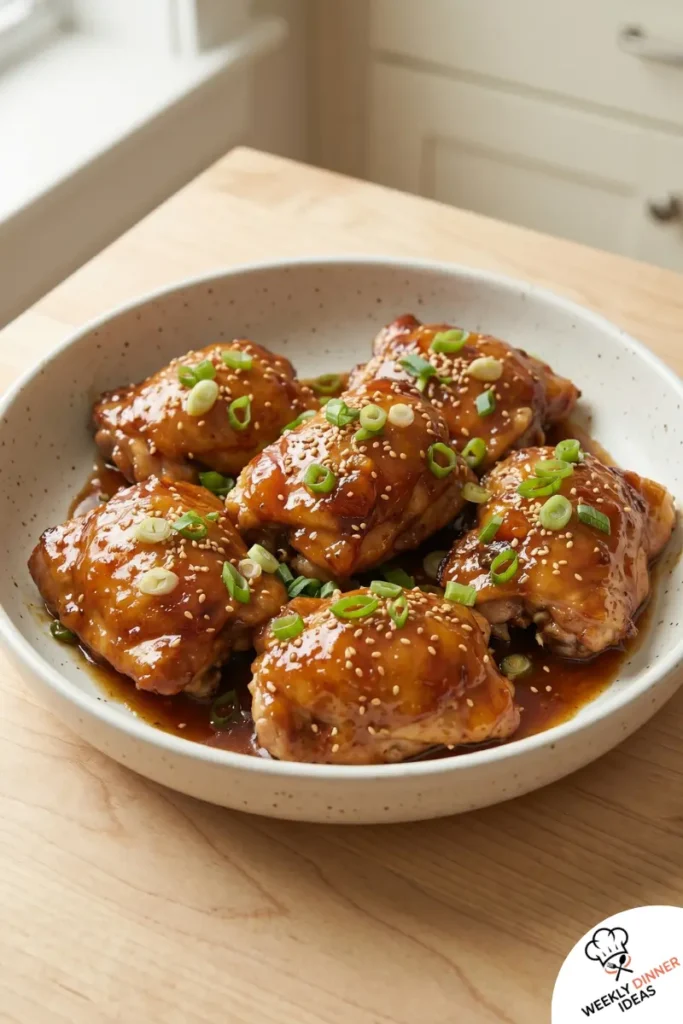
Frequently Asked Questions
Can I use bone-in, skin-on thighs instead?
Yes. Using bone-in skin-on thighs will add extra flavor but increase cook time to 30–40 minutes depending on size. Sear skin-side down longer to render fat and finish in the oven at 375°F until the internal temperature reaches 165°F. Glaze in the last 5 minutes of cooking so the skin stays crisp. Expanded tip: If glazing earlier, the sugar in the sauce can brown quickly and burn. Apply the glaze near the end and broil briefly if you want extra caramelization.
How do I make the sauce less sweet?
Reduce the apricot preserves by a few tablespoons and add an extra splash of rice vinegar or lemon juice. A teaspoon of soy sauce or a pinch of salt can also help balance sweetness without sacrificing flavor. Expanded tip: Taste before adding the cornstarch — sweetness concentrates as the sauce reduces, so err on the side of slightly under-sweet and adjust at the end.
Can I make this gluten-free?
Yes. Swap regular soy sauce for tamari or coconut aminos to make the glaze gluten-free. Most apricot preserves are naturally gluten-free, but check labels if you have strict dietary needs. Expanded tip: Coconut aminos are a touch sweeter and less salty than soy, so taste the sauce and reduce added sweeteners slightly if using them.
How can I tell when the chicken is done?
An instant-read thermometer is the most foolproof method — chicken thighs are done at 165°F. Visually, juices should run clear when pierced and there should be no pink near the bone (if using bone-in). Expanded tip: Because thighs retain moisture, they’re forgiving if you’re a little over by a few degrees; breasts dry out more quickly, so stick to thighs for the best weeknight results.
Can I prepare the sauce ahead of time?
Yes. The glaze can be made ahead and refrigerated for up to 3 days. Reheat gently, add a tablespoon of water if it’s too thick, then add freshly cooked or reheated chicken and heat until warmed through. Expanded tip: If you store glaze on its own, whisk it well when reheating — fruit preserves can separate after chilling.
Is there a low-carb or keto version?
Yes. Use a sugar-free apricot spread or reduce the preserves and add lemon juice and a sugar substitute to taste. Choose coconut aminos and skip the brown sugar. Expanded tip: Serve over cauliflower rice or sautéed greens to keep the plate low-carb while still enjoying the sticky glaze.
Can I use chicken breasts instead of thighs?
You can, but cooking times and technique change. Use thin-cut or butterflied breasts and sear briefly (2–3 minutes per side) to avoid drying. Alternatively, cook breasts in the sauce over medium-low heat and check often with a thermometer. Expanded tip: Because breasts lack the fat thighs have, finish with a spoonful of butter or a drizzle of sesame oil for richness.
Final Thoughts
These Sticky Apricot Chicken Thighs are the kind of recipe I keep in mind when the week gets busy but I still want dinner to feel special. The balance of sweet fruit and savory soy, the quick pan-sear, and the glossy glaze make it feel elevated without requiring a lot of time. If you like this flavor profile, you might also enjoy browsing more of my chicken ideas in the chicken recipes section, or find other fast dinners in quick weeknight dinners. For lighter sides and healthier swaps, check out healthy dinner recipes and for one-pan simplicity try the one-pan & sheet pan meals collection.
If you make this recipe, I’d love to hear how it turned out — leave a comment, rate the recipe, and save it to your boards. If you share photos, tag my Pinterest so I can see your versions and adaptations: follow me on Pinterest.
Quick Recipe Summary
8–10 minutes
10–12 minutes
18–22 minutes
4
Easy
Weeknight dinners, make-ahead weekday meals, family dinners
Sweet, tangy, savory, slightly sticky and caramelized
Nutrition Information
| Nutrient | Per Serving |
|---|---|
| Calories | Approx. 420 |
| Protein | Approx. 30 g |
| Carbohydrates | Approx. 28 g |
| Dietary Fiber | Approx. 1 g |
| Fat | Approx. 22 g |
These nutrition values are estimates based on typical ingredient amounts and are provided for general guidance only.
—
Thank you for cooking along — I hope these Sticky Apricot Chicken Thighs become a regular in your rotation. For more weeknight inspiration, swing by the Weekly Dinner Ideas homepage and look around. Don’t forget to pin this recipe to your boards on Pinterest: Elizabeth’s Pinterest. If you have a favorite twist on this glaze (I’m always experimenting), tell me in the comments — I love hearing reader variations and kitchen hacks.
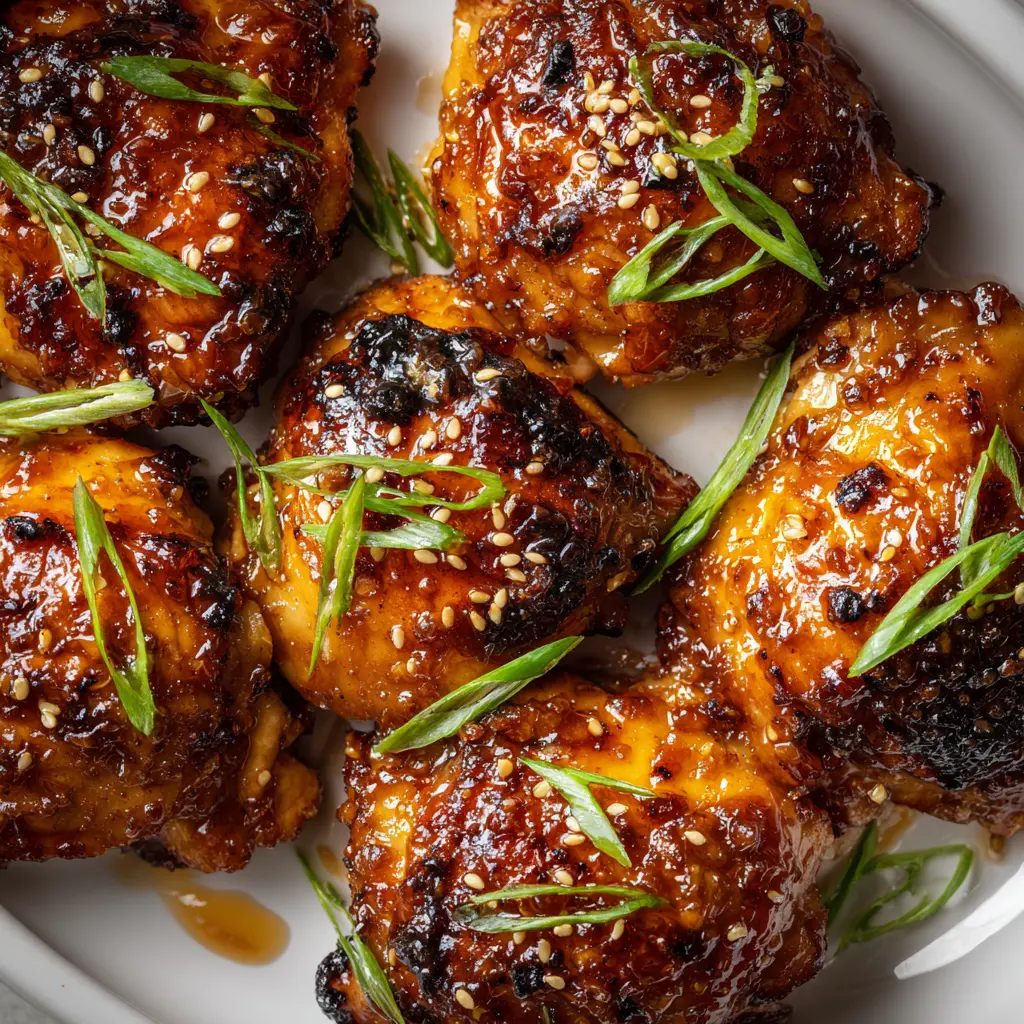

20-Minute Sticky Apricot Chicken Thighs
Ingredients
Equipment
Method
- Prep the chicken. Pat the chicken thighs very dry with paper towels. Season both sides with kosher salt and black pepper. Let them sit at room temperature for about 10 minutes while you prepare the sauce ingredients.
- Sear the thighs. Heat a 10–12-inch skillet over medium-high heat until hot. Add the oil and swirl to coat. Add the thighs in a single layer without crowding, working in batches if needed. Sear for 4–5 minutes per side, until deeply golden. Transfer the chicken to a plate.
- Build the glaze. Lower the heat to medium. Add the garlic and ginger to the skillet and cook for 20–30 seconds, until fragrant. Add the apricot preserves, soy sauce, rice vinegar or lemon juice, Dijon mustard if using, brown sugar or honey if using, water or broth, and red pepper flakes. Stir well and scrape up the browned bits from the pan.
- Thicken the sauce. Bring the sauce to a gentle simmer. Stir the cornstarch slurry, then whisk it into the sauce. Cook for 1–2 minutes, until the glaze becomes glossy and slightly thickened.
- Finish the chicken. Return the chicken thighs to the skillet. Spoon the glaze over each piece and simmer for 1–3 minutes, until the chicken reaches 165°F and the sauce clings to the meat.
- Garnish and serve. Remove from heat. Sprinkle with sliced green onions and toasted sesame seeds. Serve immediately over steamed rice, quinoa, cauliflower rice, or wilted greens.
Notes

Elizabeth Morgan
Easy & Delicious Recipes
Follow for quick family-friendly recipes, baking inspiration, and comfort food favorites.
Follow on Pinterest