Easy Balsamic Chicken Thighs: A Comforting Dinner in 30 Minutes!
- Recipes Healthy Dinner Recipes
 Elizabeth
- 0
- 41 minutes read
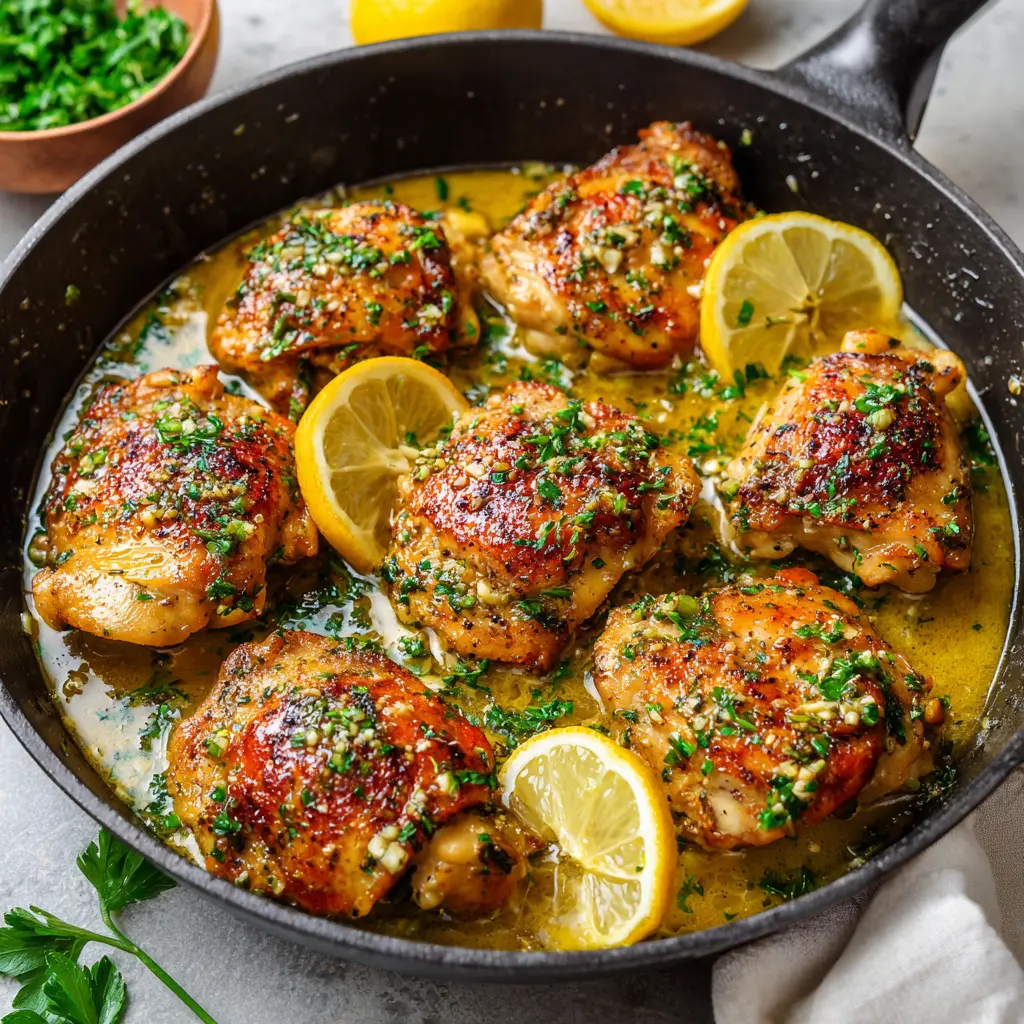
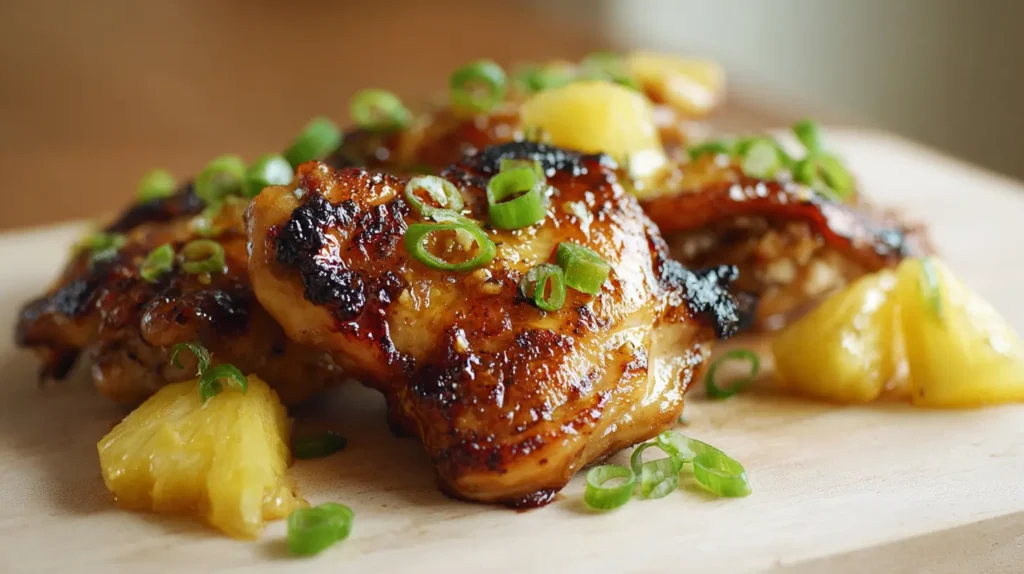
If you love a dinner that smells like a cozy restaurant and comes together fast, these Balsamic Chicken Thighs will become a weeknight favorite. I first started making this dish when I wanted something glossy, slightly sweet, and tangy that my family would actually eat on a school night—no fuss, big flavor. Balsamic Chicken Thighs build deep caramelized notes from a quick pan-sear and a simple balsamic glaze, and they can be on the table in about 30 minutes when you use boneless thighs. I’ll walk you through timing, texture cues, and little chef tricks I learned in culinary school to keep the skin crisp and the glaze perfectly sticky.
Why You’ll Love This Balsamic Chicken Thighs
These Balsamic Chicken Thighs offer a fast, flavorful dinner with wide appeal.
The dish delivers a sweet-tangy glaze that balances savory roasted chicken, crisp skin (if using skin-on), and a glossy sauce perfect for spooning over rice or mashed potatoes. It cooks quickly, cleans up easily in a single ovenproof skillet, and adapts to low-carb or family-friendly meals. Make a double batch for lunches, and you’ll appreciate how well the flavors hold up in the fridge.
- Flavor: bright balsamic acidity rounded by honey or brown sugar, garlic warmth, and a butter finish.
- Texture: crisp edges, tender juicy meat, and a slightly sticky glaze.
- Convenience: one-pan sear plus quick oven finish—minimal steps.
- Family appeal: simple ingredients most kids and adults like.
- Seasonal fit: works year-round; feels especially cozy in cooler months.
- Meal-prep value: stores well for 3–4 days and reheats without losing much flavor.
- Dietary flexibility: naturally gluten-free if you skip soy-based add-ins.
What Is Balsamic Chicken Thighs?
Balsamic Chicken Thighs are seasoned chicken thighs cooked until golden and finished in a sweet-and-tangy balsamic glaze.
People serve this dish for simple weeknight dinners or casual weekend meals. It tastes of rich, caramelized balsamic vinegar balanced by a hint of sweetness and fragrant garlic; the glaze clings to the chicken giving a glossy finish. This version is built for speed—searing to lock flavor, then finishing in the oven or simmering briefly—so you get bright, concentrated sauce without hours of braising.
Ingredients You’ll Need
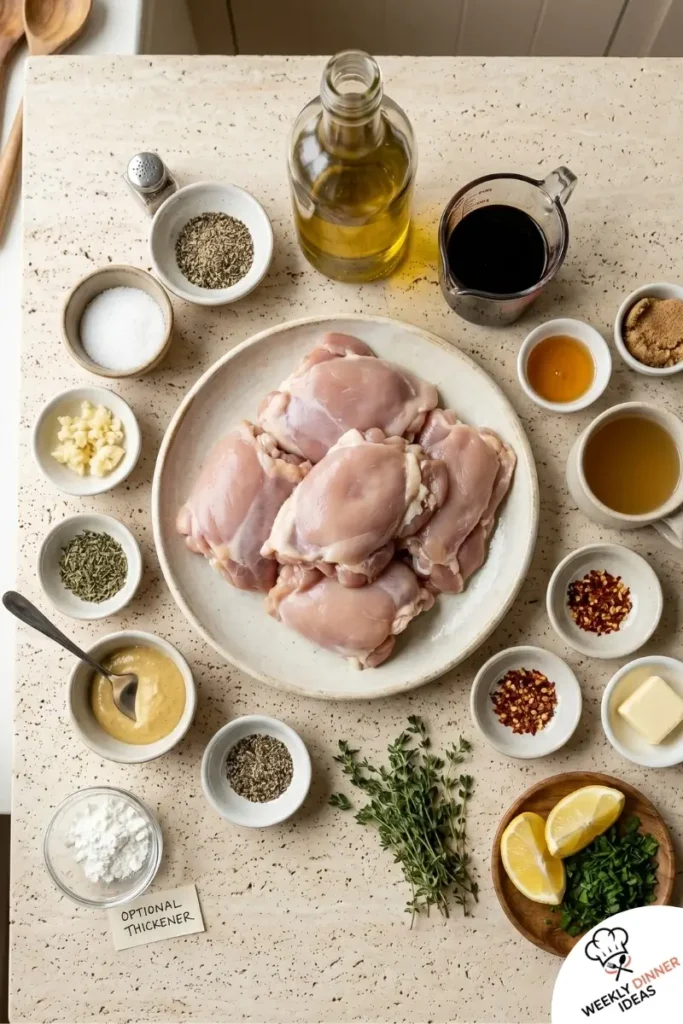
- 1 1/2 pounds boneless chicken thighs (about 6–8 thighs)
- Kosher salt and freshly ground black pepper
- 1–2 tablespoons olive oil (or avocado oil)
- 3 garlic cloves, minced
- 1/3 cup balsamic vinegar
- 2 tablespoons honey (or 2 tablespoons brown sugar)
- 1/4 cup low-sodium chicken broth (or water)
- 1 teaspoon Dijon mustard (optional, for brightness)
- 1 tablespoon unsalted butter (optional, for shine)
- 1/2 teaspoon dried thyme or a few sprigs fresh thyme (optional)
- Pinch of red pepper flakes (optional)
- 1 teaspoon cornstarch mixed with 1 tablespoon water (optional, for thicker glaze)
- Lemon wedges and chopped parsley for serving (optional)
A short note on key ingredients: choose a good-quality balsamic vinegar—it doesn’t need to be expensive, but a balanced bottle gives cleaner sweetness and acidity. Boneless thighs keep the cook time near 30 minutes, while bone-in will take longer; I’ll note timing alternatives below. Honey gives a warm sweetness and helps the glaze caramelize; brown sugar is a fine swap. Chicken broth adds a savory lift—if you use water, add an extra pinch of salt.
Tools You Need
- Ovenproof skillet (10–12 inch) or cast iron pan (paid link)
- Tongs (paid link)
- Instant-read meat thermometer (paid link)
- Small bowl and whisk (paid link)
- Measuring cups and spoons (paid link)
- Cutting board and sharp knife (paid link)
- Paper towels (paid link)
- Spoon or spatula for basting (paid link)
Ingredient Substitutions and Additions
Best substitutions
- Honey → Brown sugar (same amount) or maple syrup (slightly thinner glaze).
- Chicken broth → Water + 1/4 teaspoon better-than-bouillon or stock concentrate.
- Dijon mustard (optional) → 1/2 teaspoon whole-grain mustard or skip entirely.
Flavor additions
- Add 1 tablespoon balsamic reduction at the end for more concentrated sweetness.
- Stir in 1 teaspoon soy sauce or Worcestershire for extra umami (not gluten-free if using soy).
- Finish with a splash of lemon juice to brighten the glaze just before serving.
Dietary swaps
- To make this low-carb, use sugar-free sweetener like allulose or monk fruit sweetener in place of honey.
- Make dairy-free by omitting the butter at the end.
- Naturally gluten-free if ingredients like Dijon and broth are labeled gluten-free.
How to Make Balsamic Chicken Thighs
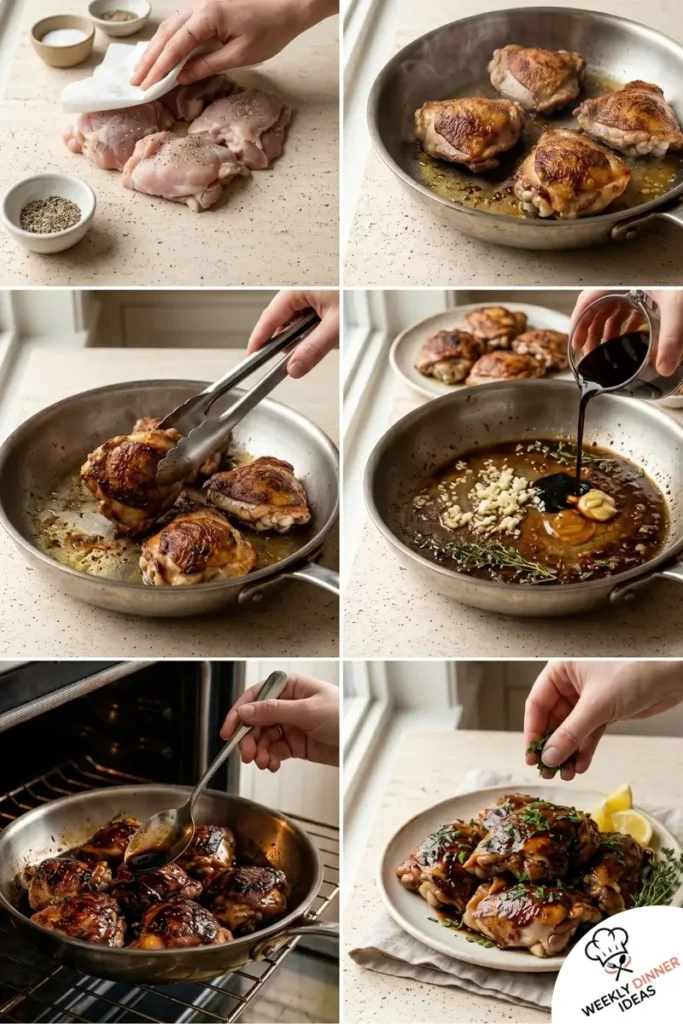
This recipe sears the thighs to develop caramelized flavor, then finishes them in a quick balsamic glaze so they stay juicy and get a sticky, glossy coating.
Step 1: Prep and season
Pat the chicken thighs dry with paper towels—this is the single best trick for crisp edges. Season both sides generously with kosher salt and black pepper. If you have time, let them sit at room temperature for 10–15 minutes; that helps them cook evenly.
What to look for: dry skin or surface will brown quickly; wet chicken will steam and won’t get that beautiful color.
Practical advice: If using skin-on thighs, remove excess fat with a paper towel but leave a thin layer—you want the fat to render and crisp.
Step 2: Sear for color
Heat the ovenproof skillet over medium-high heat and add the olive oil. When the oil shimmers, add the thighs skin-side down (or presentation side first if skinless). Press them gently into the pan so the whole surface touches. Sear 4–6 minutes without moving until the chicken releases easily and a deep golden crust forms. Flip and sear the other side for 2 minutes.
What to look for: a rich golden-brown crust and sizzling sound. If the pan smokes quickly, lower the heat a touch—smoke is not a necessary flavor here.
Practical advice: Don’t overcrowd the pan. Work in two batches if necessary to keep the sear strong. Use tongs to flip so you don’t pierce the meat and lose juices.
Step 3: Make the balsamic glaze
Reduce heat to medium. Push the chicken to one side or transfer briefly to a plate if your pan is small. Add the minced garlic to the pan and cook 30–45 seconds until fragrant (don’t brown it). Pour in the balsamic vinegar and chicken broth, scraping the brown bits from the bottom with a wooden spoon. Stir in honey and Dijon mustard, and add thyme or red pepper flakes if using. Allow the liquid to simmer 2–3 minutes until it reduces slightly.
What to look for: the mixture should bubble gently and smell tangy-sweet; small syrupy bubbles indicate it’s thickening.
Practical advice: If you want a thicker sauce, stir in the cornstarch slurry a little at a time until you reach the desired gloss. For a thinner pan sauce, omit the slurry and reduce less.
Step 4: Finish in the oven (or simmer)
Return the chicken to the skillet, spoon some glaze over each piece, and transfer the skillet to a preheated 400°F oven. Bake 10–12 minutes for boneless thighs, or 18–22 minutes for larger pieces, until an instant-read thermometer reads 165°F in the thickest part. If you prefer stovetop-only, cover the pan and simmer on low for 8–12 minutes, checking temperature.
What to look for: juices should run clear; the glaze will darken and cling to the chicken. Avoid overcooking—chicken thighs are forgiving, but they can dry if pushed too far.
Practical advice: If the glaze reduces too much while in the oven, add a splash of broth when you remove the skillet to loosen it before plating.
Step 5: Rest, finish, and serve
Remove the skillet from the oven and transfer the chicken to a plate to rest 5 minutes; this redistributes juices. While resting, stir a tablespoon of butter into the glaze in the pan (off heat) for sheen and smoothness, then spoon sauce over the chicken. Garnish with chopped parsley and lemon wedges.
What to look for: glaze should coat the back of a spoon and be glossy but not rock-hard. Rested meat will be juicier and easier to slice.
Practical advice: Taste the sauce before serving and adjust salt, pepper, or a squeeze of lemon to taste. Serve immediately over mashed potatoes, rice, or roasted vegetables.
Pro Tips for the Best Balsamic Chicken Thighs
Keep the following in mind for reliably delicious results.
These tips will help you avoid common pitfalls: dry chicken, thin sauce, or burned garlic.
- Dry the chicken: Patting thighs dry guarantees a better sear and less steaming in the pan.
- High-heat sear, medium oven finish: Start hot to brown, then finish in a moderate oven to cook through without burning the glaze.
- Don’t burn the garlic: Add garlic after initial sear and keep the heat moderate so it becomes aromatic—not bitter.
- Watch glaze thickness: Balsamic can reduce quickly. If it becomes too syrupy before the chicken is cooked, add broth or water to loosen it.
- Use an instant-read thermometer: Thighs are done at 165°F. Check at the thickest point to avoid overcooking.
- Make-ahead: You can cook the chicken through, cool, and store in the fridge. Reheat gently in a skillet with a splash of water or broth to revive the sauce.
- Double the batch: Use two skillets or sear in batches, then finish both in the oven on a sheet pan with the glaze spooned over.
- Texture control: For extra crisp skin, place the pan under the broiler for 1–2 minutes at the end—watch closely.
What to Serve with Balsamic Chicken Thighs
A glossy balsamic chicken benefits from simple, comforting sides that soak up the sauce. Try creamy mashed potatoes, herbed rice, or garlicky green beans.
- Spoon the glaze over mashed potatoes for a classic pairing.
- Serve on a bed of quick-cooked couscous or rice to catch every drop.
- Add a bright green like sautéed green beans or roasted broccoli to balance the sweetness.
- For a full weeknight plate that cooks together, pair this with sheet-pan roasted vegetables from the one-pan category like the recipes in the One-Pan & Sheet-Pan Meals section.
- Looking for lighter sides? Browse Healthy Dinner Recipes for salads and vegetable-forward options that complement the richness.
- If you want more chicken ideas, check out our Chicken Recipes collection for family-friendly mains.
- Need ideas for quick finishing touches? The Quick Weeknight Dinners page has simple sides and shortcuts that pair beautifully here.
Storage, Freezing, and Reheating
Store leftovers in the fridge for 3–4 days or freeze portions for up to 3 months.
Refrigeration: Cool the chicken to room temperature (no more than two hours out), then store in an airtight container with sauce tucked around the pieces. The glaze will firm up in the fridge.
Freezing: Place cooled, sauced chicken in freezer-safe containers or bags with a little sauce to prevent drying. Thaw overnight in the fridge before reheating.
Reheating best practices: Gently reheat in a 350°F oven for 10–15 minutes, or warm in a skillet with a tablespoon of broth to loosen the glaze. Avoid microwaving when possible—microwaves can dry the meat and make the glaze gummy.
Texture changes: The sauce will thicken and intensify as it cools; add a splash of water or broth when reheating to bring it back to a spoonable consistency. Skin crispness will diminish in the fridge but returns slightly with oven re-crisping.
About This Recipe and Why It Works
I remember learning this quick glaze technique from an instructor who insisted on two things: never rush color development, and always taste your sauce at the end. That stuck with me. Balsamic vinegar reduces to a sweet, almost tangy syrup without needing hours of simmering, and a bit of honey helps it caramelize and cling to the chicken. Searing builds Maillard reaction (that toasty, savory flavor), and finishing in the oven cooks the thighs evenly.
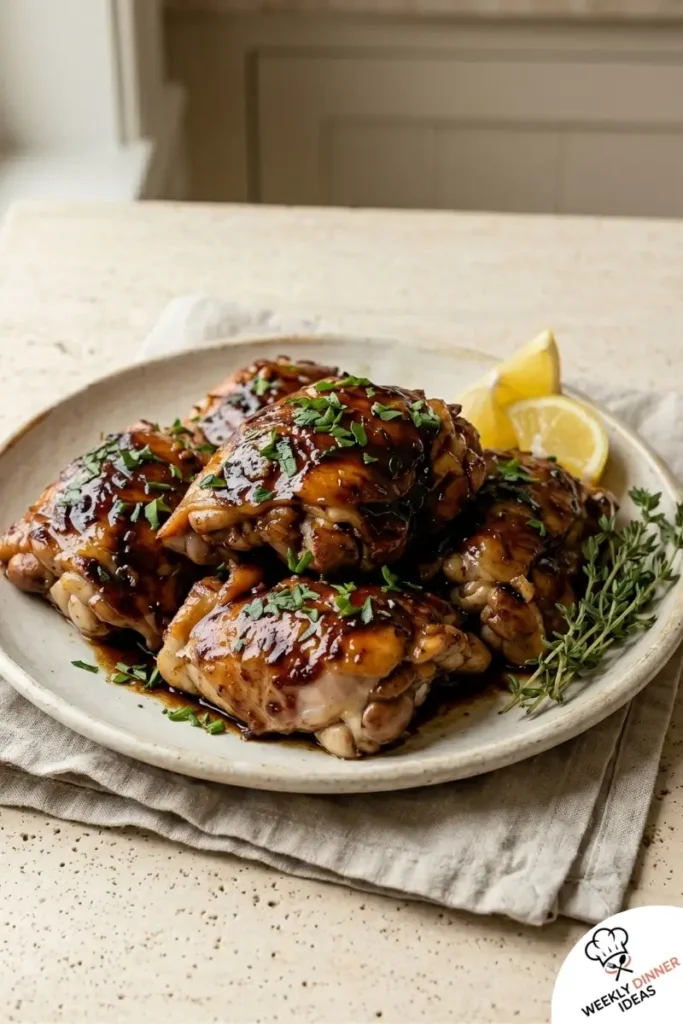
This recipe fits my cooking philosophy: simple techniques + quality ingredients = reliably delicious dinners. It’s the kind of recipe I turn to when I want something that feels a little special without an hour of hands-on time. The finished plate—glossy sauce pooling against a bed of starch and a spritz of lemon—feels homey and lifted at the same time. That’s what I aim for at Weekly Dinner Ideas: approachable meals with thoughtful, chef-tested touches.
Frequently Asked Questions
Can I use bone-in chicken thighs?
Yes. Bone-in thighs add flavor but require longer cooking—plan for 25–35 minutes in a 400°F oven after searing, depending on size. Use an instant-read thermometer and allow for 165°F at the thickest spot near the bone. Bone-in takes longer because heat must penetrate the bone; searing time stays similar but finishing time increases. If you prefer just a little longer cook, use bone-in but start checking at 20 minutes.
Can I make this with skinless thighs?
Yes. Skinless thighs cook faster and won’t get the same crispy exterior but will still be juicy and flavorful. Reduce oven finishing time by a few minutes; check temperature at 160–165°F to avoid overcooking. For a browner finish on skinless thighs, pat them very dry and sear a bit longer on the first side to develop color before finishing in the oven.
How do I thicken the balsamic glaze without burning it?
Make a small cornstarch slurry (1 teaspoon cornstarch + 1 tablespoon cold water) and whisk it into the pan sauce off the heat, then return to low simmer. This thickens the glaze without over-reducing and burning. Alternatively, reduce over low heat while stirring frequently and remove from direct high heat as soon as it coats the back of a spoon. Adding butter at the end also smooths the sauce.
What temperature should the chicken reach?
Chicken thighs are safe at 165°F internal temperature. Use an instant-read thermometer in the thickest part without touching bone. For juicier thighs, remove them at 160–162°F and let them rest—the residual heat raises them to 165°F. Resting for 5 minutes allows juices to redistribute. If you cut immediately, you’ll lose more moisture.
Can I make the sauce ahead of time?
Yes—make the glaze up to 24 hours ahead and store it in the refrigerator. Reheat gently and spoon over freshly cooked or reheated chicken. If the sauce has thickened in the fridge, loosen with a splash of water or broth while warming. If you plan to serve the chicken with freshly crisped skin, sear the chicken right before serving and then spoon warmed sauce over it.
Is this recipe gluten-free?
Yes, as written this recipe is naturally gluten-free if you use gluten-free Dijon mustard and check that your chicken broth is labeled gluten-free. Avoid soy-based additions unless they are gluten-free.
Can I double the recipe for a crowd?
Absolutely. Sear in batches to avoid overcrowding the pan (crowding steams the meat). You can finish all thighs on a sheet pan in a 400°F oven and spoon glaze over them before serving. Keep sauce quantities proportional and taste as you go.
Final Thoughts
If you’re looking for a fast, comforting chicken dinner that feels thoughtful without being complicated, these Balsamic Chicken Thighs are a reliable go-to. They balance bright vinegar notes with sweet caramelization and generously spoonable glaze—perfect for saucy plates and clean-up-friendly evenings. Try pairing them with creamy mashed potatoes or a simple roasted vegetable sheet-pan to make it a full meal; for more one-pan inspiration see One-Pan & Sheet-Pan Meals, or explore lighter sides in Healthy Dinner Recipes.
If you make this, I’d love to know: did you go with honey or brown sugar? Leave a comment, rate the recipe, and pin it for later on my Pinterest board at Elizabeth’s Chicken Recipes on Pinterest. Your feedback helps me tweak the balance of sweetness and acidity to suit home cooks—so don’t be shy!
Quick Recipe Summary
8–10 minutes
18–22 minutes (boneless) / 25–35 minutes (bone-in)
About 30 minutes (boneless)
4
Easy
Weeknight dinners, casual entertaining, make-ahead lunches
Sweet-tangy, garlicky, slightly caramelized
Nutrition Information
Estimates are approximate and will vary based on exact ingredients and portion sizes.
| Nutrient | Per Serving |
|---|---|
| Calories | Approx. 380 |
| Protein | Approx. 28 g |
| Carbohydrates | Approx. 10 g |
| Dietary Fiber | Approx. 0.5 g |
| Fat | Approx. 24 g |
Thank you for cooking with me—remember, the tiny adjustments you make to sweetness, salt, or sear will make this recipe feel like yours. For more chicken-centered weeknight ideas, check out the Chicken Recipes collection or browse quick solutions in Quick Weeknight Dinners. If you’d like a printable version or step-by-step photos, leave a note in the comments and I’ll add a photo tutorial soon.
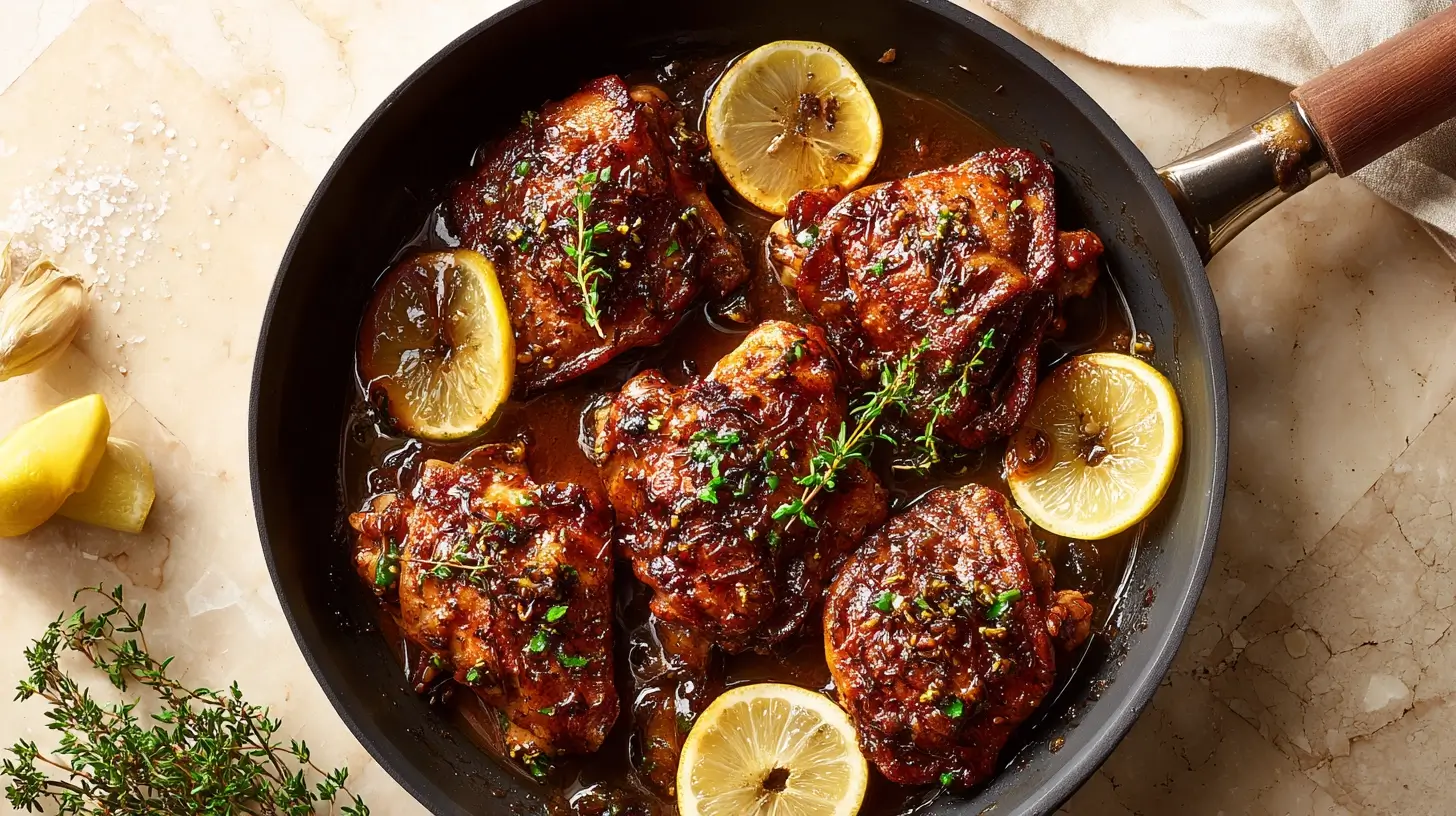

Balsamic Chicken Thighs
Ingredients
Equipment
Method
- Preheat oven to 400°F (204°C).
- Pat the chicken thighs dry with paper towels, then season both sides generously with kosher salt and black pepper.
- Heat olive oil in an ovenproof skillet over medium-high heat until shimmering.
- Add the chicken thighs in a single layer. Sear for 4-6 minutes without moving, until a deep golden crust forms.
- Flip the chicken and sear the second side for 2 minutes.
- Reduce heat to medium. Add minced garlic and cook for 30-45 seconds, until fragrant but not browned.
- Pour in balsamic vinegar and chicken broth, scraping up the browned bits from the bottom of the skillet.
- Stir in honey, Dijon mustard if using, thyme if using, and red pepper flakes if using.
- Simmer the glaze for 2-3 minutes, until slightly reduced and glossy.
- Return the chicken fully to the skillet and spoon some glaze over each piece.
- Transfer the skillet to the oven and bake for 10-12 minutes, or until the internal temperature reaches 165°F (74°C).
- Optional: For a thicker glaze, stir in the cornstarch slurry until the sauce reaches the desired consistency.
- Transfer the chicken to a plate and rest for 5 minutes.
- Stir butter into the glaze off heat if using, then spoon the glossy sauce over the chicken.
- Garnish with chopped parsley and serve with lemon wedges if desired.
Notes

Elizabeth Morgan
Easy & Delicious Recipes
Follow for quick family-friendly recipes, baking inspiration, and comfort food favorites.
Follow on Pinterest