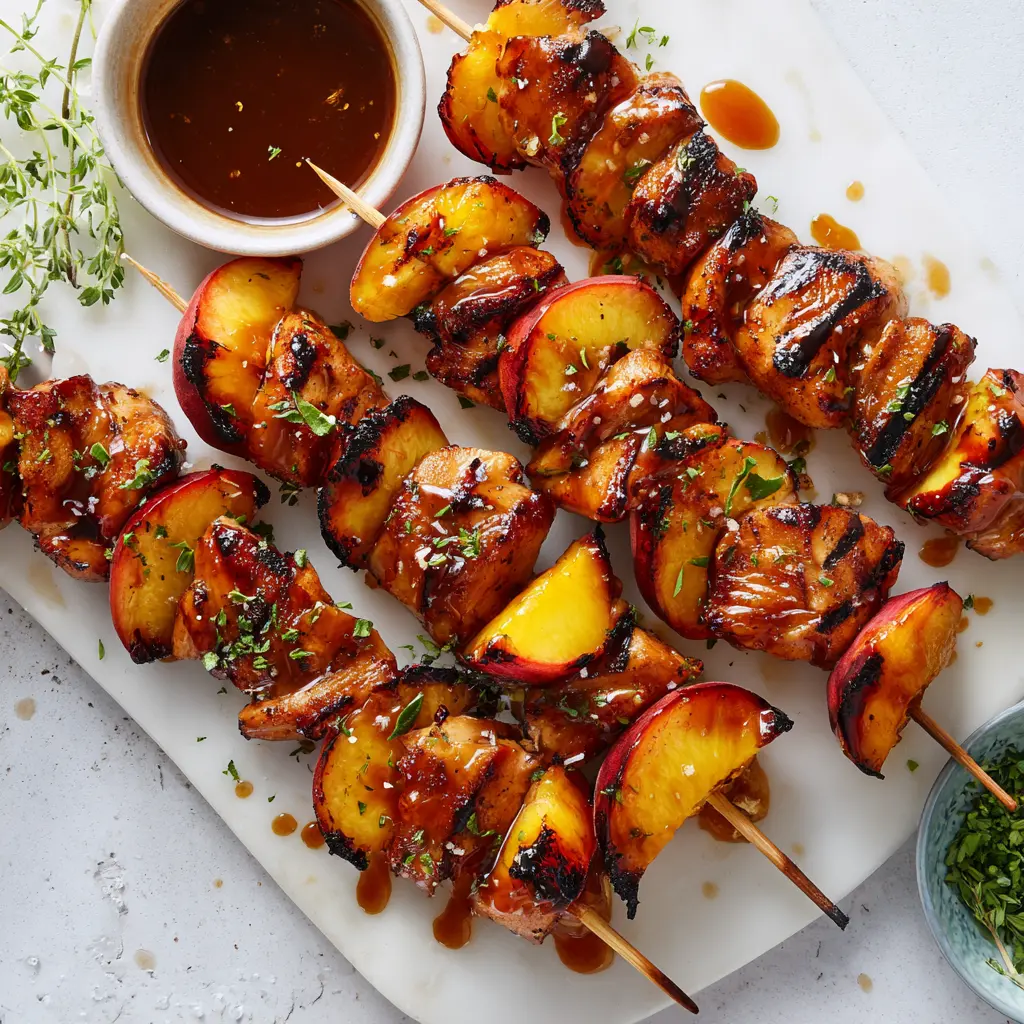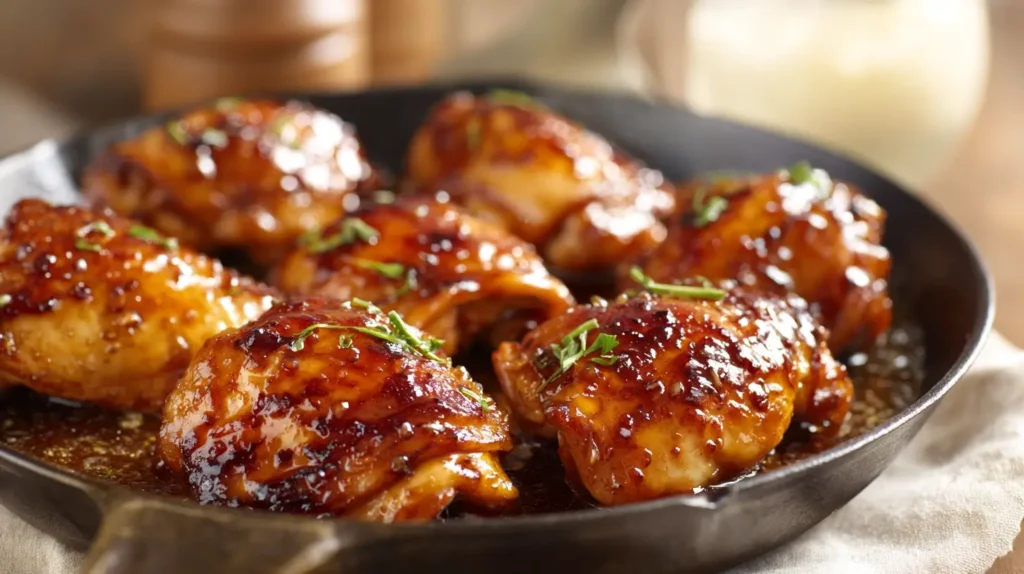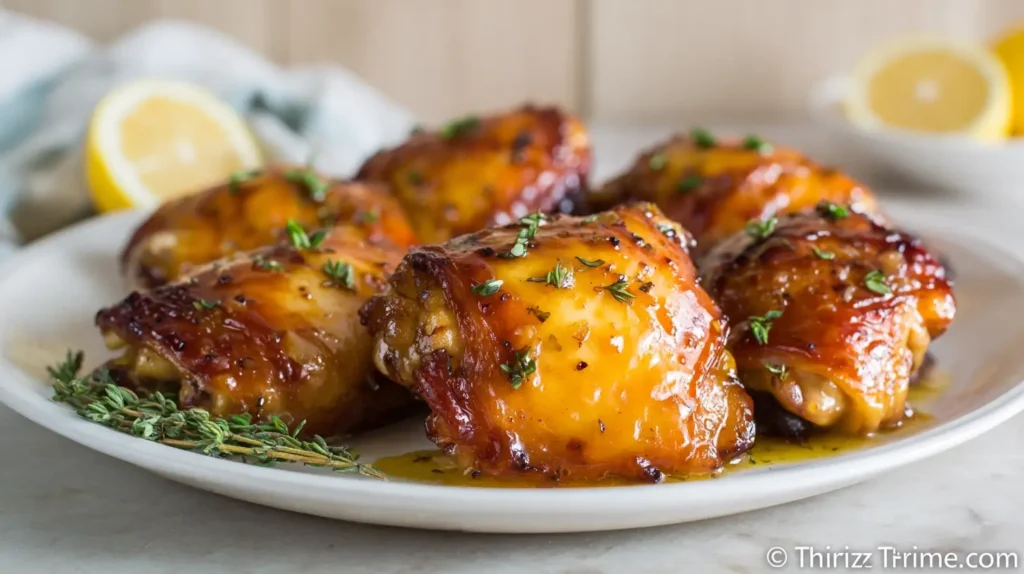
Discover the Ultimate Honey Garlic Chicken Skewers Recipe!
- Quick Weeknight Dinners
 Elizabeth
- 0
- 43 minutes read
I still remember the first time I caramelized honey and garlic over a hot grill — the sweet, savory steam that rose up felt like summer on a stick. These Honey Garlic Chicken Skewers have become my go-to for backyard dinners, easy weeknight meals, and kid-friendly gatherings. They hit that sweet-and-salty balance with sticky, slightly charred edges and tender, juicy meat that keeps everyone coming back for one more bite. In this post I’ll walk you through every step — from a fail-proof marinade to grilling tips — so your skewers turn out delicious every time.
Why You’ll Love This Honey Garlic Chicken Skewers
Honey Garlic Chicken Skewers are a quick, family-friendly dinner solution with sticky, caramelized flavor and tender chicken that grills up in minutes.
You’ll love this recipe because:
- Flavor: The honey and garlic create a glossy, caramelized glaze that’s sweet, savory, and garlicky without being overpowering.
- Texture: Using chicken thighs gives tender, juicy meat and crisp, charred edges that hold up well on skewers.
- Convenience: Marinate in the morning or the night before; they grill fast — perfect for quick weeknight dinners.
- Family appeal: Kids adore the sweet glaze, and adults will appreciate the depth from soy and a touch of acid.
- Seasonal fit: Great all summer for grilling, yet easy to broil or pan-sear any time of year.
- Meal-prep value: Make extra, keep in the fridge for lunches, or double the batch for a party.
What Is Honey Garlic Chicken Skewers?
Honey Garlic Chicken Skewers are bite-sized pieces of marinated chicken threaded on skewers, grilled or broiled until sticky and lightly charred.
This dish blends simple pantry ingredients — honey, garlic, soy, and a splash of vinegar — into a marinade that becomes a glossy glaze. It’s served as a main alongside rice or grilled vegetables and works well for weeknight dinners, potlucks, or lazy weekend grilling. The version here focuses on juicy chicken thighs and a quick, safe glaze technique so you get maximum flavor with minimal fuss.
Ingredients You’ll Need
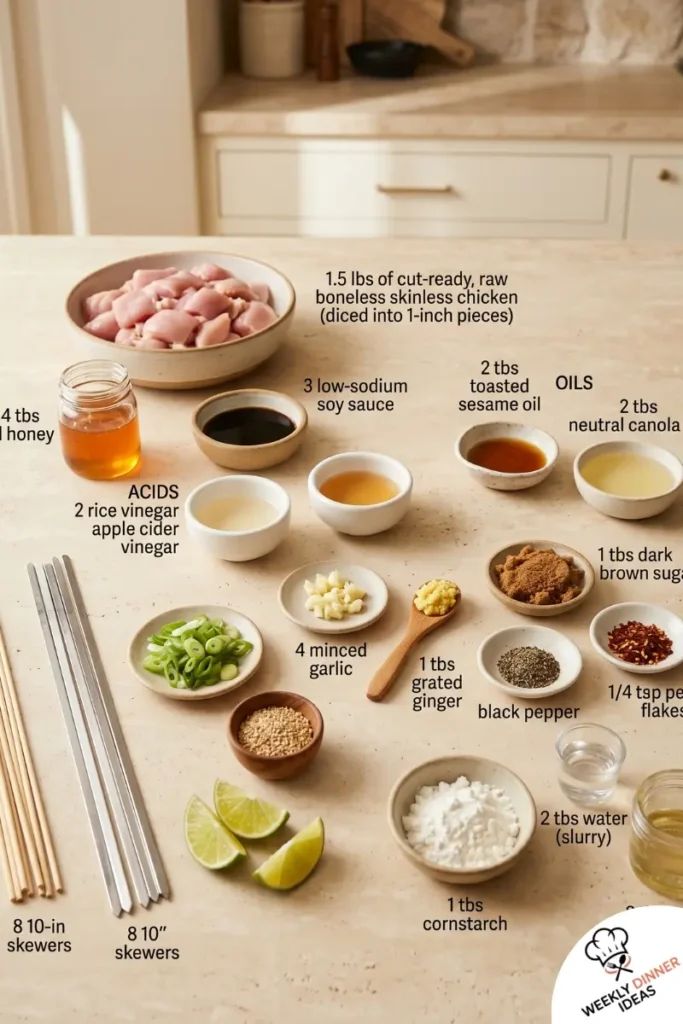
- 1 1/2 pounds boneless skinless chicken thighs, trimmed and cut into 1-inch pieces (about 6–8 thighs)
- 4 tablespoons honey (mild floral honey works well)
- 3 tablespoons low-sodium soy sauce
- 2 tablespoons rice vinegar (or apple cider vinegar)
- 2 tablespoons toasted sesame oil or neutral oil
- 4 garlic cloves, minced (about 2 tablespoons)
- 1 tablespoon freshly grated ginger (optional, but recommended)
- 1 tablespoon brown sugar (optional, for deeper caramelization)
- 1/4 teaspoon black pepper
- 1/4 teaspoon red pepper flakes (optional for heat)
- 1 tablespoon cornstarch + 2 tablespoons water (optional, to thicken glaze)
- 2 tablespoons neutral oil for the grill or pan
- Garnish: sliced scallions and toasted sesame seeds
- Lime wedges for serving (optional)
- Wooden or metal skewers (if using wooden, soak 30 minutes)
Notes on key ingredients:
- Chicken thighs deliver juiciness and flavor; they resist drying out on the grill better than breasts.
- Low-sodium soy lets you control salt; you can always add more at the table.
- Honey provides the sticky caramel — choose a flavor you enjoy because it influences the final taste.
- Grated ginger and sesame oil are optional but add authentic depth. Cornstarch slurry is only needed if you want a thicker glaze to brush during the last minutes.
Tools You Need
- Grill (gas or charcoal) or grill pan / cast-iron skillet (paid link)
- Metal or wooden skewers (paid link)
- Mixing bowls (one for marinade, one for cornstarch slurry) (paid link)
- Whisk or fork (paid link)
- Tongs for turning skewers (paid link)
- Instant-read thermometer (paid link)
- Basting brush (paid link)
- Cutting board and sharp knife (paid link)
- Aluminum foil or sheet tray for resting (paid link)
Ingredient Substitutions and Additions
Best substitutions
- Chicken breasts: Use 1 1/2 to 2 pounds boneless skinless breasts, cut into 1-inch pieces; watch cooking time to avoid drying.
- Tamari or coconut aminos: Use in place of soy sauce for gluten-free option.
- Honey substitute: Maple syrup works, though it’s thinner and gives a slightly different flavor.
Flavor additions
- Add 1–2 teaspoons toasted sesame seeds to the glaze for texture.
- A splash of orange juice or zest gives brightness and a citrus note.
- Swap brown sugar for dark molasses (1 teaspoon) for deeper caramel flavor.
- Add 1 teaspoon sriracha or gochujang for a spicy-sweet kick.
Dietary swaps
- Gluten-free: Use tamari or coconut aminos and ensure sesame oil is uncontaminated.
- Lower-sugar: Reduce honey to 2 tablespoons and add 1 tablespoon rice vinegar for balance.
- Paleo: Replace soy with coconut aminos and the brown sugar with a touch of coconut sugar or increase honey slightly.
How to Make Honey Garlic Chicken Skewers
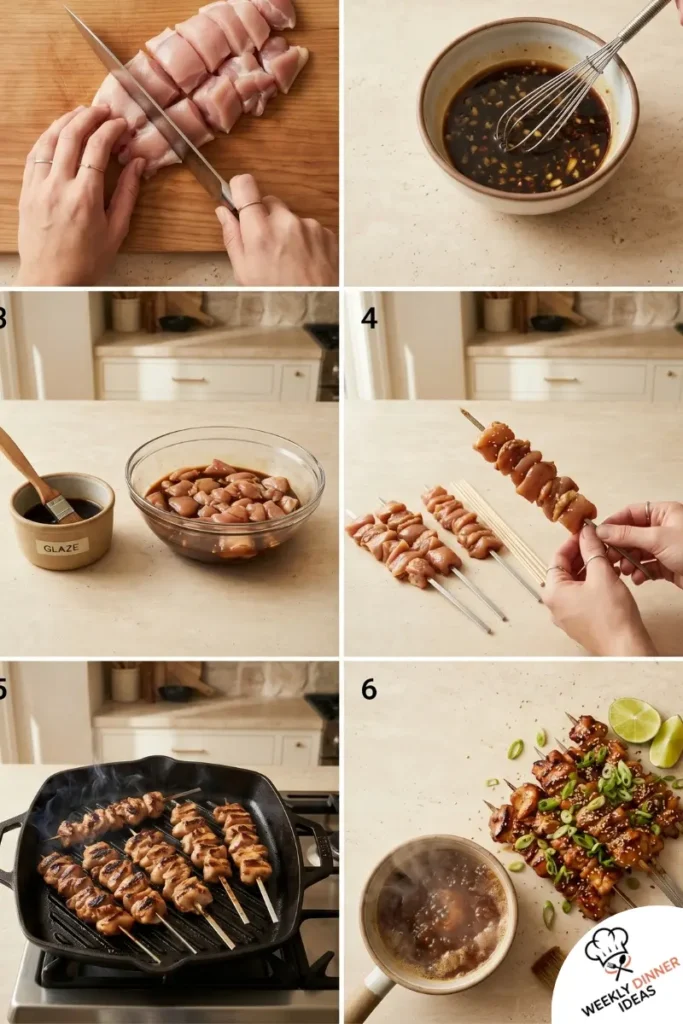
A concise how-to: Marinate cubed chicken thighs in a honey-garlic mixture, thread onto skewers, grill until charred and cooked through, and finish with a quick thickened glaze for glossy, sticky perfection.
Step 1: Trim, cube, and marinate
Cut the chicken into even 1-inch pieces so they cook uniformly. In a bowl whisk together honey, soy sauce, rice vinegar, sesame oil, minced garlic, grated ginger (if using), brown sugar, black pepper, and red pepper flakes. Reserve about 1/4 cup of the marinade (do not mix with raw chicken). Place chicken and the remaining marinade into a resealable bag or bowl, massaging so each piece is coated. Marinate at least 30 minutes at room temperature or up to overnight in the fridge. Longer marinating deepens flavor but avoid more than 24 hours which can start to change texture.
What to look for: Chicken pieces should be glossy and evenly coated. If marinating more than 2 hours, refrigerate. If short on time, even 20–30 minutes still adds flavor.
Practical advice: Pat chicken dry slightly before threading to help the glaze adhere and encourage browning.
Step 2: Prep skewers and preheat
If using wooden skewers, soak them for at least 30 minutes to prevent burning. Preheat your grill to medium-high (about 375–425°F), or heat a grill pan or cast-iron skillet until very hot. Brush the grates or pan with a thin film of oil to prevent sticking.
What to look for: A hot surface is key — you want immediate sizzle when the chicken hits the grill so the exterior sears and caramelizes.
Practical advice: If using a charcoal grill, let the coals burn down to a steady medium heat for even cooking.
Step 3: Thread the chicken
Thread the chicken onto skewers in a single layer, leaving small gaps so heat circulates and pieces cook evenly. Don’t pack them tightly — crowding steams instead of chars.
What to look for: Uniform spacing and size. If pieces vary, move them to different skewers so each skewer finishes at the same time.
Practical advice: Alternate with small vegetable pieces (bell pepper, red onion) only if you want a mixed skewer; vegetables tend to cook faster than thigh meat.
Step 4: Grill and baste
Place skewers on the preheated grill. Cook for about 3–5 minutes per side, turning once or twice, until well browned and internal temperature reads 165°F for chicken. In the last 2–3 minutes, baste with the reserved marinade — but first bring that reserved portion to a boil in a small saucepan for 2 minutes to kill any raw juices, then simmer 1–2 minutes until slightly thickened, or mix with the cornstarch slurry to glaze.
What to look for: The glaze should bubble and cling, forming sticky edges and glossy sheen. Watch closely — honey can burn if left over direct heat too long.
Practical advice: Use tongs to turn; avoid piercing meat with a fork which releases juices. If charring too quickly, move skewers to a cooler part of the grill to finish cooking through.
Step 5: Rest and garnish
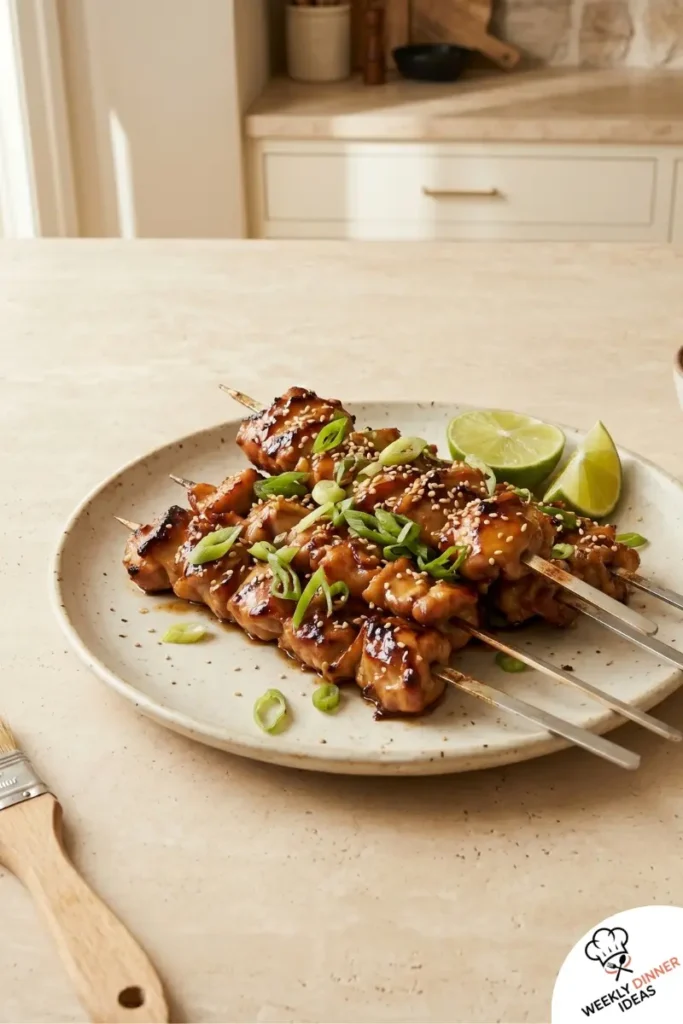
Remove skewers from heat and let rest on a sheet tray for 3–5 minutes. Resting locks in juices and cools the surface a touch so the glaze sets. Sprinkle with sliced scallions and toasted sesame seeds, and squeeze a wedge of lime over the top if desired.
What to look for: Juices should run clear and meat should be glossy but not slick with raw marinade. Texture should be tender and slicing with a fork should reveal succulent fibers.
Practical advice: If serving indoors, finish under the broiler for 30–45 seconds to add final caramelization, watching carefully to prevent burning.
Pro Tips for the Best Honey Garlic Chicken Skewers
Use a hot surface, even pieces, and a boiled glaze to keep things safe and delicious.
- Don’t skip the thighs: They forgive higher heat and stay juicy. If you must use breasts, reduce grilling time and watch closely.
- Boil the reserved marinade: Never brush raw marinade on cooked meat without bringing it to a boil first. That reserved portion becomes your safe, sticky glaze.
- Uniform pieces = even cook: Cut chicken into equal 1-inch cubes. If pieces are uneven, the smaller ones will dry before larger ones are done.
- Oil the grill, not the chicken: Lightly oil grill grates to prevent sticking while avoiding flare-ups from excess oil on the meat.
- Control the burn: If the glaze starts to blacken, move skewers to indirect heat to finish cooking — charred is fine, burned is not.
- Make-ahead: Marinate overnight for deeper flavor. You can also assemble skewers and keep them covered in the fridge up to 12 hours before grilling.
- Doubling the batch: Grill in batches, and keep cooked skewers covered loosely with foil while finishing others so they stay warm without steaming.
- Resting matters: Let skewers sit 3–5 minutes after grilling so the juices redistribute; it makes a noticeable difference in tenderness.
What to Serve with Honey Garlic Chicken Skewers
These skewers pair beautifully with simple, colorful sides that soak up the glaze. Try jasmine rice, coconut rice, or a quick cucumber salad. For a fuller weeknight plate, serve alongside roasted sweet potatoes or a crisp Asian slaw.
- Serve with fluffy white rice or brown rice for a classic pairing.
- Complement with quick sides like cucumber salad or an easy coleslaw to cut the sweetness.
- For a sheet-pan dinner, roast broccoli and cherry tomatoes and serve skewers on top — check my one-pan recipes for inspiration .
- Looking for more chicken ideas? My chicken recipe collection has plenty of weeknight-friendly options .
- If you want balanced meals, explore healthy dinner options .
- Need quick ideas? These skewers fit perfectly among other fast dinners .
Storage, Freezing, and Reheating
Store cooked skewers in an airtight container in the fridge for 3–4 days; freeze for up to 2–3 months. Reheat gently in the oven or air fryer to preserve texture.
Fridge storage: Place cooled skewers in a shallow container and refrigerate within two hours. They’ll keep well for 3–4 days; use them in salads, rice bowls, or wraps.
Freezer storage: Freeze cooked skewers on a sheet tray until firm, then transfer to a freezer bag or container. Thaw overnight in the fridge before reheating.
Reheating: For best results, reheat in a 350°F oven covered loosely with foil for 10–15 minutes, or use an air fryer at 350°F for 4–6 minutes to crisp the edges. Avoid microwaving if possible — it makes the glaze soggy and can dry the meat.
Texture changes: Cooked-and-reheated chicken may be slightly drier than freshly grilled, so consider a quick brush of warmed glaze or a drizzle of soy-honey sauce when reheating.
About This Recipe and Why It Works
I’m Elizabeth Morgan, and this recipe reflects the small kitchen lessons I learned early on: balance, timing, and simplicity. I trained in a professional kitchen, but at home I favor dishes that deliver big flavor without complicated technique. Honey Garlic Chicken Skewers are a perfect example — a few quality ingredients, a short marinade, and a hot grill produce something that tastes more elevated than the effort required.
Why this version works: the combination of honey, soy, and a touch of acid hits multiple flavor checkpoints — sweet, salty, tangy — while the garlic and optional ginger add aromatic depth. Choosing thighs keeps the texture forgiving during high-heat grilling. Reserving and boiling the marinade protects against food-safety risks while allowing you to achieve that irresistible sticky finish. I’ve served these to picky eaters and friends who love bold flavors; it’s a reliable winner that fits the Weekly Dinner Ideas philosophy: approachable, flavorful, and adaptable.
Frequently Asked Questions
Can I use chicken breasts instead of thighs?
Yes. Chicken breasts can be used, but they cook faster and can dry out if overcooked. Use 1 1/2 to 2 pounds of cubed boneless chicken breast and reduce grilling time; aim for an internal temperature of 165°F. Marinate no longer than a few hours for best texture. If you choose breasts, keep the grill a touch cooler and check frequently. Brushing with glaze late in cooking helps maintain moisture.
How long should I marinate the chicken?
Marinate for at least 30 minutes and up to 24 hours in the refrigerator. Thirty minutes gives good flavor; 2–12 hours deepens the taste. Avoid marinating beyond 24 hours as the acid and salt can break down the meat and change its texture. If short on time, even a quick 20–30 minute soak is better than nothing. For the most convenient prep, marinate overnight.
Is it safe to use the marinade as a glaze?
Only if you reserve a portion before it touches raw chicken, then bring that reserved portion to a boil for at least 1–2 minutes to kill bacteria. If you want to use the actual marinade that raw chicken sat in, it must be boiled thoroughly first. I always reserve some marinade before adding raw chicken and simmer it into a glaze — it’s safer and delivers the same glossy finish.
How do I know when the chicken is done?
The safest and most reliable method is an instant-read thermometer; chicken should reach 165°F in the thickest part. Visually, juices should run clear and meat should no longer be pink inside. Avoid relying solely on time — grill temperatures and piece size vary. Temperature is the consistent indicator.
Can I make these in the oven or on a stovetop?
Yes. Broil skewers on high for similar charring — place them 4–6 inches from the heat and watch closely, rotating for even color. Or cook in a hot cast-iron skillet on the stovetop, searing each side and finishing in a 400°F oven until 165°F. If broiling indoors, finish with the boiled glaze to get the same sticky sheen.
How do I prevent the honey from burning?
Honey caramelizes quickly, so baste only in the final few minutes of cooking; if flare-ups occur, move skewers to indirect heat. You can also thin the glaze slightly with a splash of water or vinegar to reduce immediate burning. Another trick: cook to near-doneness, then increase heat briefly to caramelize the glaze at the end.
Can I freeze raw marinated chicken skewers?
You can freeze raw marinated chicken on skewers, but be cautious — the marinade’s acid can subtly change texture if frozen long-term. Freeze on a tray until firm, then transfer to a bag. Thaw in the fridge overnight before grilling and pat dry to encourage browning. For reliability, I usually freeze cooked skewers instead; they reheat more consistently.
Final Thoughts
These Honey Garlic Chicken Skewers are my go-to when I want something that feels special but comes together without drama. They marry sticky-sweet honey with savory soy and garlicky warmth, and the result is flavorful, family-friendly, and fast. If you’re in a hurry, marinate for 30 minutes; if you have a little time, let them sit overnight — either way, you’ll end up with juicy, caramelized bites.
If you enjoyed this recipe, you might like other weeknight chicken ideas in my chicken recipes collection or quick dinners in my quick weeknight dinners section. For balanced plates, check out the healthy dinner recipes category, and for easy sheet-pan inspiration see one-pan and sheet pan meals.
I’d love to hear how your skewers turn out — leave a comment, rate the recipe, and don’t forget to save it to Pinterest for later at my profile. Happy grilling!
Quick Recipe Summary
15–20 minutes (plus 30 minutes to overnight marinating)
10–14 minutes (grill)
45 minutes (with short marinate) to overnight
4
Easy
Weeknight dinners, casual gatherings, meal prep
Sweet, savory, garlicky, slightly tangy with charred notes
Nutrition Information
| Nutrient | Per Serving |
|---|---|
| Calories | Approx. 470 |
| Protein | Approx. 34 g |
| Carbohydrates | Approx. 22 g |
| Dietary Fiber | Approx. 0.5 g |
| Fat | Approx. 26 g |
These nutrition values are estimates based on typical ingredient amounts and portion sizes; exact values will vary depending on ingredient brands, portioning, and whether you use thighs or breasts.
—
Thanks for cooking along with me — I hope these Honey Garlic Chicken Skewers find a permanent spot in your weeknight rotation. If you try them, tell me what you paired them with; I always love swapping side ideas and tweaks.

Honey Garlic Chicken Skewers
Ingredients
Equipment
Method
- Cut the chicken thighs into even 1-inch pieces so they cook evenly on the skewers.
- In a mixing bowl, whisk together honey, low-sodium soy sauce, rice vinegar or apple cider vinegar, sesame oil, minced garlic, grated ginger if using, brown sugar if using, black pepper, and red pepper flakes if using.
- Reserve about 1/4 cup of the marinade before adding raw chicken. This reserved portion will be cooked into a safe glaze later.
- Add the chicken pieces to the remaining marinade and toss until every piece is evenly coated.
- Marinate for at least 30 minutes at room temperature, or refrigerate for 2-12 hours for deeper flavor. Do not marinate longer than 24 hours.
- If using wooden skewers, soak them in water for at least 30 minutes before grilling to help prevent burning.
- Preheat the grill, grill pan, or cast-iron skillet to medium-high heat, about 375-425°F. Lightly oil the grates or pan.
- Thread the chicken pieces onto skewers, leaving small gaps between pieces so heat can circulate and the edges can caramelize.
- Place skewers on the hot grill or pan and cook for 10-14 minutes total, turning every few minutes, until browned and lightly charred.
- While the chicken cooks, pour the reserved marinade into a small saucepan. Bring to a boil for 1-2 minutes, then simmer until slightly reduced.
- Optional: Whisk cornstarch with water to make a slurry, then stir it into the simmering glaze. Cook until glossy and thick enough to coat a spoon.
- Brush the skewers with the honey garlic glaze during the final 2-3 minutes of cooking, watching closely so the honey does not burn.
- Cook until an instant-read thermometer inserted into the thickest chicken piece reaches 165°F (74°C).
- Transfer the skewers to a sheet tray or plate and rest for 3-5 minutes so the juices redistribute and the glaze sets.
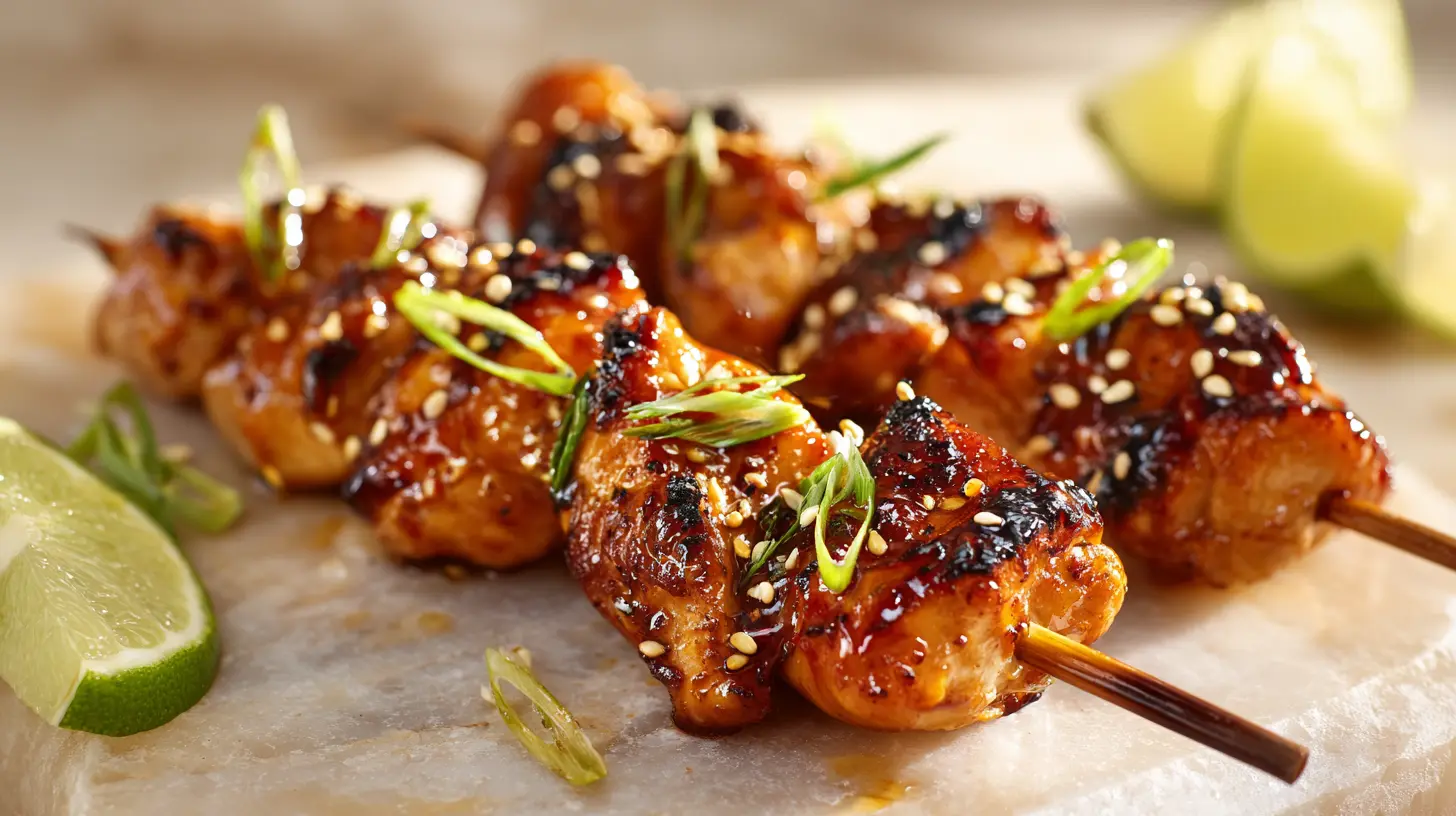
- Garnish with sliced scallions and toasted sesame seeds. Serve with lime wedges if desired.
Notes

Elizabeth Morgan
Easy & Delicious Recipes
Follow for quick family-friendly recipes, baking inspiration, and comfort food favorites.
Follow on Pinterest