
Easy Hawaiian Shoyu Chicken Thighs: A Delicious Dinner in 30 Minutes!
- Chicken Recipes
 Elizabeth
- 0
- 41 minutes read
I still remember the first time I blended salty shoyu with bright pineapple juice and warm brown sugar in my skillet—the aroma instantly transported me to a sunlit kitchen and made my whole house smell like a Hawaiian luau. Hawaiian Shoyu Chicken Thighs have become one of my go-to weeknight dinners because they deliver bold, balanced flavor with minimal effort. This version—juicy bone-in or boneless chicken thighs simmered in a sweet-savory shoyu glaze—comes together in about 30 minutes and feeds a hungry family without fuss. As a professionally trained chef who cooks for busy nights, I’ll walk you through every practical detail so your thighs come out sticky, caramelized, and irresistibly tender.
Why You’ll Love This Hawaiian Shoyu Chicken Thighs
Hawaiian Shoyu Chicken Thighs are a quick, flavorful meal with broad family appeal and easy weeknight-friendly prep.
You’ll love it because the sauce hits salty, sweet, and slightly tangy notes, the thighs stay succulent thanks to their higher fat content, and the method requires little hands-on time—perfect for busy evenings or casual dinner parties.
- Flavor: soy-forward umami balanced by brown sugar and pineapple for a tropical lift.
- Texture: crisped edges and glossy glaze outside, moist interior.
- Convenience: one skillet or pan; minimal marinating required.
- Family appeal: kids and adults usually enjoy the sweet-savory combo.
- Seasonal fit: bright pineapple keeps it feeling summery, but it works year-round.
- Meal-prep value: sauce doubles well for rice bowls or salads.
- Dietary flexibility: naturally gluten-containing unless you use gluten-free tamari; easy to adapt.
What Is Hawaiian Shoyu Chicken Thighs?
Hawaiian Shoyu Chicken Thighs are chicken thighs cooked in a shoyu-based (soy sauce) glaze, often sweetened with brown sugar and brightened with pineapple juice and aromatics.
This dish is commonly served as a home-style comfort meal in Hawaiian-influenced cooking—think glossy, caramelized chicken with a slightly sticky sauce. My version keeps things simple and reliable: sear the thighs, reduce a shoyu–pineapple glaze to a shiny finish, and finish with fresh scallions and sesame for contrast.
Ingredients You’ll Need
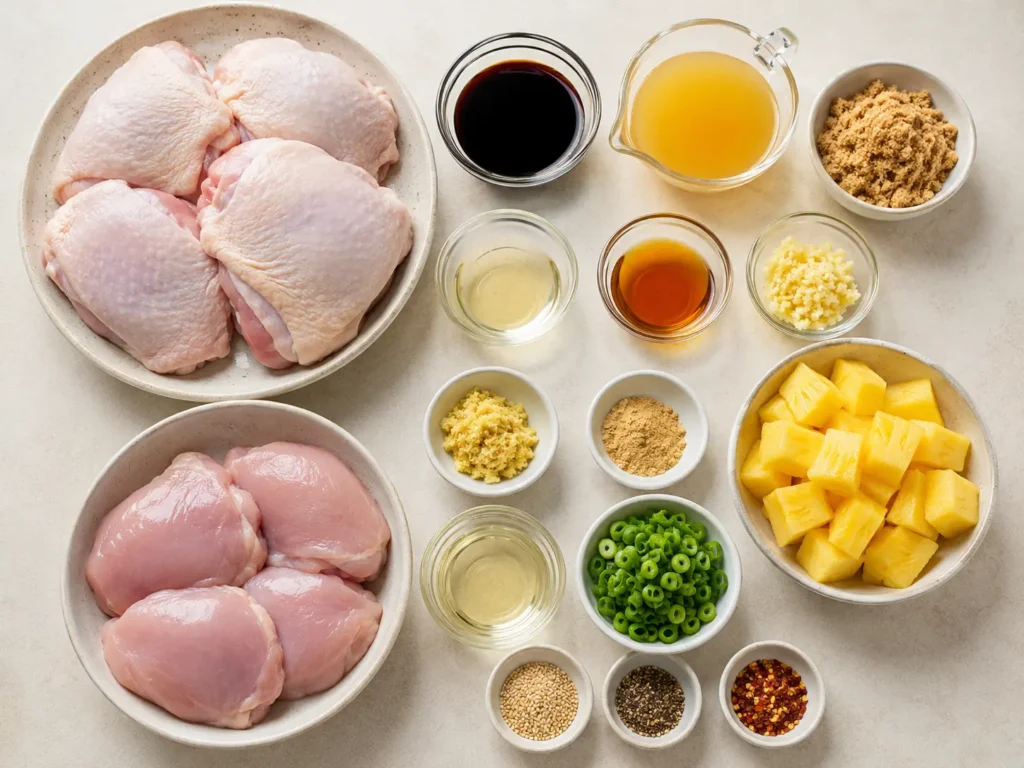
- 6 bone-in, skin-on chicken thighs (about 2 to 2 1/4 pounds) or 8 boneless skinless thighs (about 1 1/2–1 3/4 pounds)
- 1/2 cup shoyu (regular soy sauce) or low-sodium soy sauce
- 1/3 cup pineapple juice (from a can or fresh)
- 1/3 to 1/2 cup packed light brown sugar
- 2 tablespoons rice vinegar or mirin
- 1 tablespoon toasted sesame oil
- 3 cloves garlic, finely minced
- 1 teaspoon fresh ginger, grated (or 1/2 teaspoon ground ginger in a pinch)
- 1 tablespoon vegetable oil or neutral oil for searing
- 1 cup pineapple chunks (canned or fresh), drained if canned (optional)
- 2 green onions, thinly sliced for garnish
- 1 tablespoon sesame seeds (optional)
- Freshly ground black pepper, to taste
- Optional: crushed red pepper flakes for a little heat
After the list: The shoyu provides the salty umami backbone, brown sugar gives caramel and body, and pineapple juice cuts through with acidity and fruitiness that helps tenderize. Use good-quality shoyu (not artificially flavored) for the best depth. If using bone-in thighs, the extra fat and marrow add richness and keep the meat juicy during the quicker cooking method.
Tools You Need
- Heavy skillet (cast iron or stainless steel) or a 10–12 inch sauté pan (paid link)
- Tongs (paid link)
- Measuring cups and spoons (paid link)
- Grater or microplane for ginger (paid link)
- Small mixing bowl or liquid measuring cup for the marinade/glaze (paid link)
- Instant-read thermometer (recommended) (paid link)
- Spoon or small whisk for sauce (paid link)
- Plate and paper towels for resting the chicken (paid link)
Ingredient Substitutions and Additions
Best substitutions
- Tamari (gluten-free): Use tamari instead of shoyu to make the dish gluten-free. Flavor is slightly deeper and less salty.
- Dark brown sugar: Swap for light brown if you want a milder molasses note; white sugar plus a tablespoon of molasses also works.
- Chicken thighs: If you only have breasts, use them but reduce simmer time and watch for dryness; thighs are best for this glaze.
Flavor additions
- Ketchup or tomato paste (1–2 tablespoons): adds a glossy depth and acidity sometimes found in island-style recipes.
- Soy sauce + a splash of pineapple preserves: intensifies the tropical flavor.
- Fresh cilantro or Hawaiian-style furikake sprinkle for finishing.
Dietary swaps
- Lower sodium: Use low-sodium soy sauce and cut brown sugar slightly; add a splash more pineapple juice for brightness.
- Vegetarian option: Use firm tofu, pressed and seared, then simmer in the same sauce until glazed.
- Low-carb: Replace brown sugar with a monk fruit or erythritol equivalent and use fresh pineapple sparingly or omit.
How to Make Hawaiian Shoyu Chicken Thighs
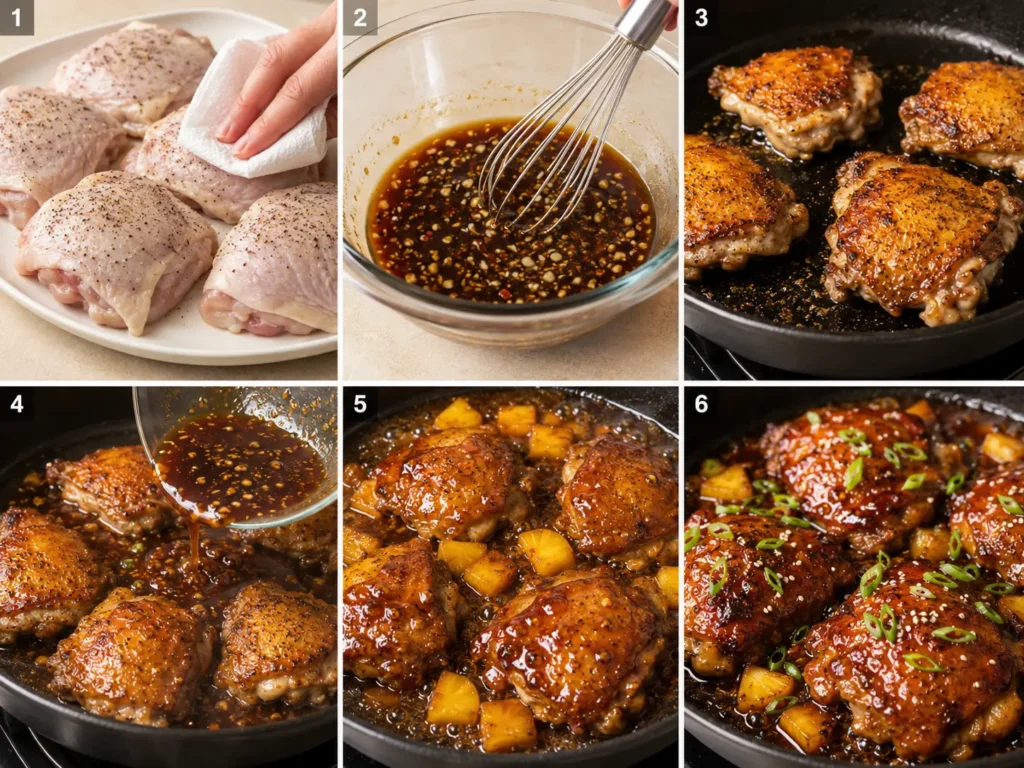
This recipe sears the thighs for color and then reduces the shoyu–pineapple sauce until glossy—about 30 minutes total from start to finish.
Step 1: Prep and season
Pat the chicken thighs dry with paper towels; moisture keeps the skin from crisping. Season lightly with black pepper. If using bone-in skin-on thighs, tuck any loose skin edges under so they sear evenly. Measure and combine the shoyu, pineapple juice, brown sugar, rice vinegar (or mirin), sesame oil, garlic, and ginger in a bowl or liquid measuring cup—stir until the sugar dissolves. The liquid should taste like a bold, slightly sweet soy—adjust sugar or pineapple to taste.
What to look for: Dry skin on the thighs and a well-blended but slightly sweet sauce.
Practical advice: Drying the chicken is the single best move to get a good sear; even a light pat makes a big difference.
Step 2: Sear the chicken
Heat the skillet over medium-high heat and add the vegetable oil. When the oil shimmers, place the thighs skin-side down (if skin-on); leave space between pieces. Press gently for even contact. Sear without moving for 4–6 minutes until the skin is deep golden-brown and releases easily from the pan. Flip and cook the second side 2–3 minutes.
What to look for: Deep mahogany color on the seared side; the pan will have fond (browned bits) that will flavor the sauce.
Practical advice: Don’t overcrowd the pan—work in batches if necessary. If using boneless skinless thighs, sear 3–4 minutes per side until nicely browned.
Step 3: Add the glaze and simmer
Pour the shoyu–pineapple mixture into the pan, then add pineapple chunks if using. Reduce heat to medium-low. Spoon some of the sauce over the thighs, and let the liquid come to a gentle simmer. Cook, uncovered, for 10–12 minutes, spooning the sauce over the thighs occasionally. If using bone-in thighs, cook a minute or two longer until internal temperature reaches 165°F (74°C).
What to look for: The sauce should thicken slightly and become glossy; it will cling to the back of a spoon when ready.
Practical advice: If the sauce reduces too quickly or looks like it might burn, add a splash of water or additional pineapple juice and lower the heat.
Step 4: Finish and caramelize
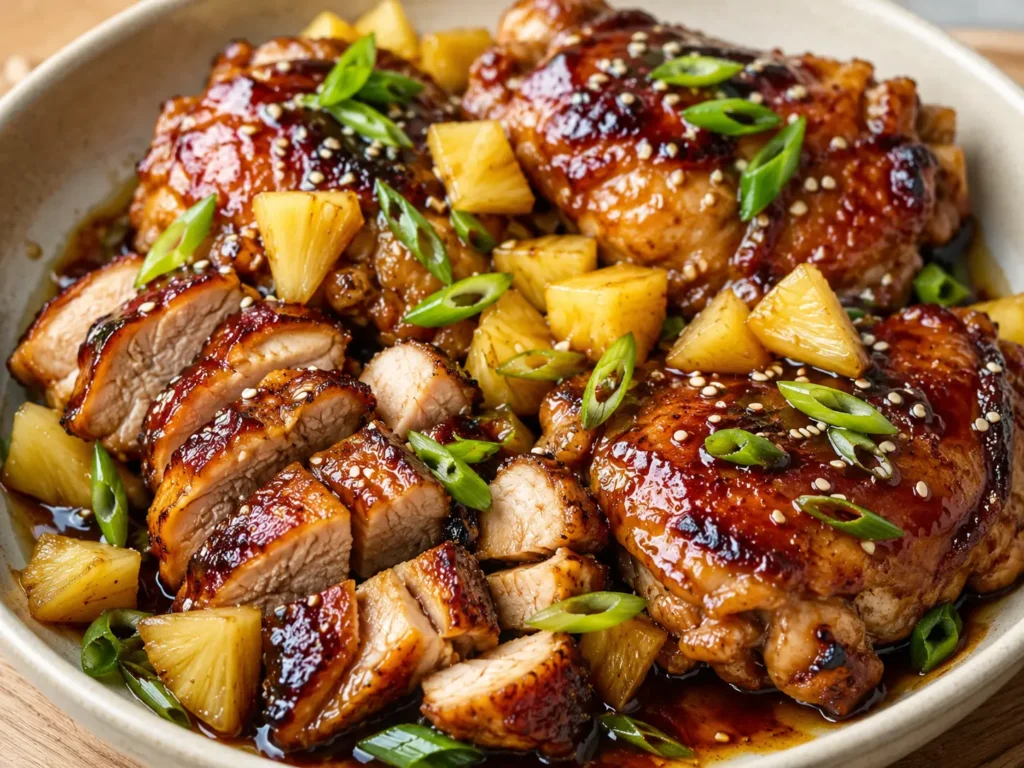
Once the thighs are cooked, increase the heat briefly to medium-high and spoon the sauce over the chicken to encourage caramelization—this will take 1–2 minutes but watch carefully so it doesn’t burn. Remove from heat and let the thighs rest for 3–5 minutes. Garnish with sliced green onions and sesame seeds before serving.
What to look for: A sticky, slightly thickened glaze and juicy meat that yields easily to a fork.
Practical advice: Resting ensures the juices redistribute, and the sauce will thicken as it cools slightly, giving you that glossy finish.
Pro Tips for the Best Hawaiian Shoyu Chicken Thighs
The key to great shoyu chicken is contrast—crisp exterior, tender inside, and a balanced glaze.
- Don’t skip drying the chicken. Even a little surface moisture prevents a proper sear.
- Control the heat. Medium-high for searing, then reduce to a gentle simmer to avoid burning the sugar.
- Taste the sauce before reducing. If it’s too salty, add a bit more pineapple juice or a small splash of water to balance.
- Use an instant-read thermometer for bone-in thighs; aim for 165°F (74°C) in the thickest part without touching bone.
- Double the sauce if you like extra glaze for rice bowls; it keeps well in the fridge for a few days.
- To make ahead: cook the thighs and cool, then refrigerate separately from the sauce; reheat together gently in a skillet to refresh the glaze.
- If the glaze crystallizes when cold, warm it slowly with a tablespoon of water to re-liquefy before serving.
What to Serve with Hawaiian Shoyu Chicken Thighs
This chicken pairs beautifully with simple, clean sides that soak up the sauce.
- Steamed white rice or coconut rice (linking to the broader healthy dinner recipes collection for side ideas) so the sauce becomes delicious “gravy.”
- A crisp cabbage slaw or quick cucumber salad adds fresh crunch—search the quick weeknight dinners category for salad sides that come together fast.
- Roasted broccoli or a sheet-pan of mixed vegetables complements the sweetness—see similar ideas under one-pan & sheet pan meals.
- For more chicken inspiration, check out my other recipes in the chicken recipes section—this honey-soy approach translates well across cuts.
- If you want a fuller Hawaiian plate, add macaroni salad or pickled vegetables for acidity.
Storage, Freezing, and Reheating
Store cooled chicken and sauce together in an airtight container in the refrigerator for up to 3–4 days; freeze for up to 3 months.
Reheat gently in a skillet over low heat with a splash of water or pineapple juice to loosen the glaze. Microwaving works in a pinch—cover loosely and reheat in 30–45 second intervals—but the skin or exterior won’t be as crisp. Frozen chicken is best thawed overnight in the fridge before reheating; texture will soften slightly after freezing but remains very usable for rice bowls and sandwiches.
About This Recipe and Why It Works
I developed this Hawaiian Shoyu Chicken Thighs recipe after testing a few versions with different balances of sugar, shoyu, and pineapple. I kept coming back to a simple formula: good sear, bold glaze, gentle simmer. That combination delivers texture (a caramelized exterior) while protecting the meat from drying out, especially when using thighs. My culinary training taught me to respect fond—the brown bits in the pan—and here, that fond gets married to the shoyu and pineapple juice to create real depth in a fast glaze.
This recipe is exactly the kind of dinner I love to recommend on Weekly Dinner Ideas: flavorful without being fussy, forgiving for home cooks, and flexible enough to scale. It’s also a great bridge between comfort food and something a little more adventurous—kids usually approve, and adults can sneak in extra ginger or a pinch of red pepper flakes for complexity.
Frequently Asked Questions
Can I use boneless skinless chicken thighs instead of bone-in?
Yes. Boneless skinless thighs cook faster—sear them 3–4 minutes per side and simmer 8–10 minutes until internal temperature reaches 165°F (74°C). They won’t have the same depth from bone and skin, but they’re quicker and still flavorful. If using boneless thighs, watch timing closely to avoid drying out.
Is this recipe gluten-free?
Not by default. Traditional shoyu (Japanese soy sauce) contains wheat. Substitute tamari or a certified gluten-free soy sauce to make it gluten-free. Taste the sauce and adjust brown sugar or pineapple as needed after swapping.
How long does the marinade/glaze need to sit?
No marinating time is required—this recipe is designed for a quick glaze made the same day. If you have time, marinate thighs for 30 minutes to a few hours to deepen flavor, but don’t exceed 8 hours with pineapple juice present as the acid can change texture.
Can I make this in the oven instead of the stovetop?
Yes. Sear thighs briefly on the stovetop for color, then transfer to a 400°F oven and roast for 18–25 minutes depending on size, basting once with the glaze. This method is great when cooking for a crowd.
Why did my sauce burn or get too thick?
Too-high heat or an empty pan causes the sugar to scorch. Reduce to medium-low once the glaze is added and add a splash of water or pineapple juice if it’s reducing too quickly. Cook gently until the sauce thickens to a glossy coating.
Can I freeze leftover chicken and sauce together?
Yes. Cool completely, then freeze in airtight containers for up to 3 months. Thaw overnight in the refrigerator before reheating gently on the stovetop.
How can I make this less sweet?
Reduce brown sugar by 1–2 tablespoons and add a squeeze of fresh lime juice or an extra tablespoon of rice vinegar to brighten and balance sweetness.
Final Thoughts
If you want a weeknight dinner that tastes like you put in twice the effort, Hawaiian Shoyu Chicken Thighs are a reliable winner. The glossy, sweet-savory sauce clings to every bite and sings with steamed rice or quick slaws. Try it the next time you need something that’s both comforting and a little bit festive.
If you liked this recipe, you might also enjoy other family-friendly chicken ideas in the chicken recipes section, quick one-pan dinners in one-pan & sheet pan meals, or simple weeknight menus in quick weeknight dinners. Save this recipe to your Pinterest boards for later at my profile and drop a comment below to tell me how yours turned out—I always read every note. (You can follow me on Pinterest here.)
Please leave a rating and let me know if you adapted it—those notes help other readers and me tweak the recipe for different kitchens.
Quick Recipe Summary
10 minutes
20 minutes
30 minutes
4–6
Easy
Weeknight dinners, casual family meals
Sweet, salty, tangy, umami, slightly tropical
Nutrition Information
| Nutrient | Per Serving |
|---|---|
| Calories | Approx. 420 |
| Protein | Approx. 28 g |
| Carbohydrates | Approx. 22 g |
| Dietary Fiber | Approx. 1 g |
| Fat | Approx. 26 g |
These values are estimates based on typical ingredient amounts and will vary with exact portion sizes and ingredient choices.
—
I hope this recipe becomes one of your quick rotation favorites. I love hearing about small swaps readers make—did you use tamari, go heavier on ginger, or try it with tofu? Tell me in the comments and don’t forget to pin it for later.
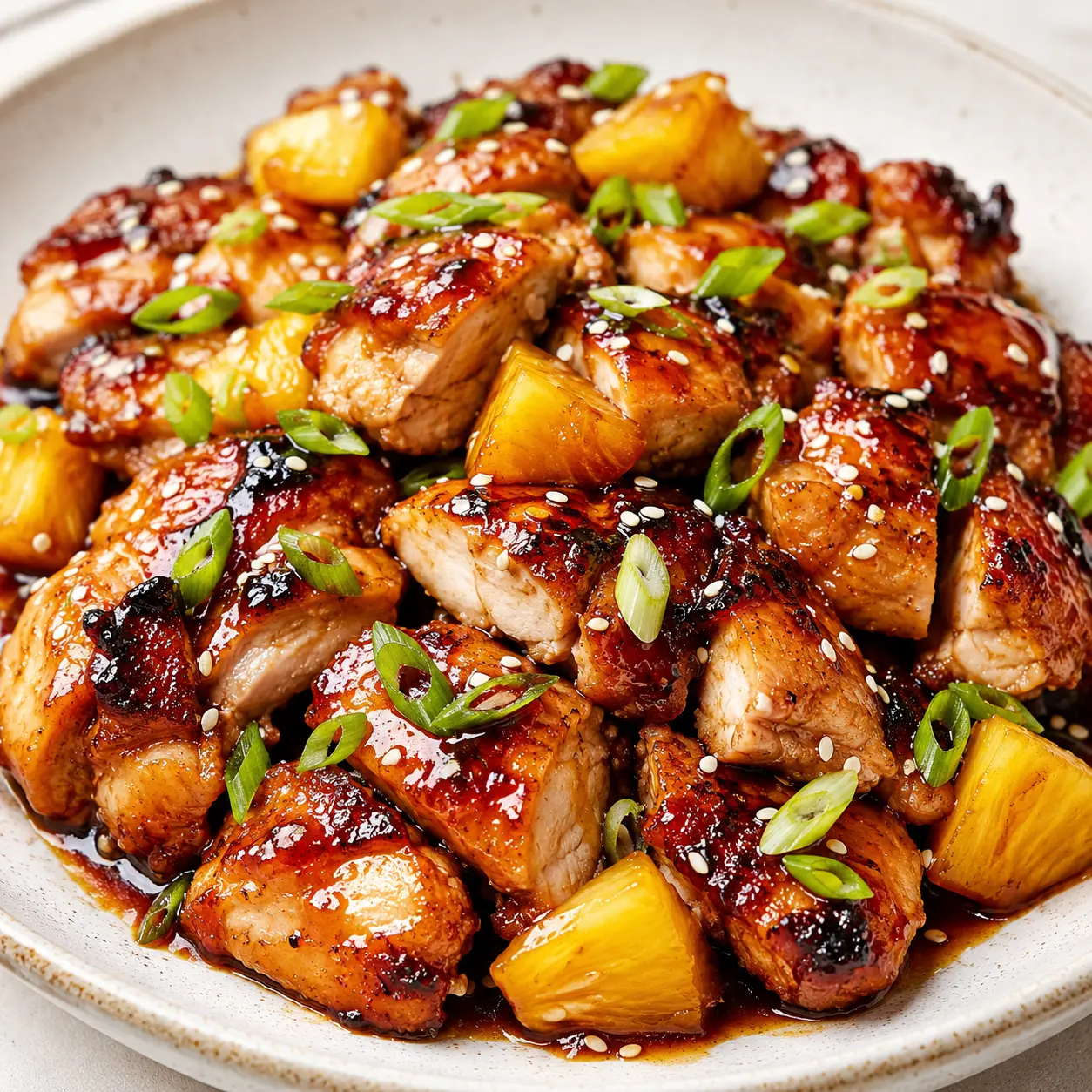

Hawaiian Shoyu Chicken Thighs
Ingredients
Equipment
Method
- Prep the chicken and sauce. Pat the chicken thighs dry with paper towels. Season lightly with freshly ground black pepper. If using bone-in skin-on thighs, tuck any loose skin edges under so they sear evenly. In a small bowl or liquid measuring cup, stir together the shoyu or soy sauce, pineapple juice, brown sugar, rice vinegar or mirin, toasted sesame oil, minced garlic, and grated ginger until the sugar dissolves.
- Sear the chicken. Heat a heavy skillet over medium-high heat and add the vegetable oil. When the oil shimmers, place the thighs skin-side down if using skin-on thighs. Leave space between pieces and work in batches if needed. Sear without moving for 4–6 minutes, until the skin is deep golden brown and releases easily from the pan.
- Flip and brown. Flip the thighs and cook the second side for 2–3 minutes. If using boneless skinless thighs, sear for 3–4 minutes per side until nicely browned.
- Add the glaze. Pour the shoyu pineapple mixture into the pan and add pineapple chunks if using. Reduce the heat to medium-low and bring the sauce to a gentle simmer, scraping up browned bits from the bottom of the pan.
- Simmer and baste. Spoon some of the sauce over the chicken and simmer uncovered for 10–12 minutes, basting occasionally, until the sauce thickens slightly and the chicken reaches 165°F in the thickest part. Bone-in thighs may need a few extra minutes.
- Caramelize the glaze. Once the chicken is cooked, briefly increase the heat to medium-high and spoon the sauce over the thighs for 1–2 minutes, until the glaze becomes sticky, glossy, and lightly caramelized. Watch closely so the sugar does not burn.
- Rest and serve. Remove from heat and let the thighs rest for 3–5 minutes so the juices redistribute and the glaze thickens slightly. Garnish with sliced green onions and sesame seeds before serving.
Notes

Elizabeth Morgan
Easy & Delicious Recipes
Follow for quick family-friendly recipes, baking inspiration, and comfort food favorites.
Follow on Pinterest