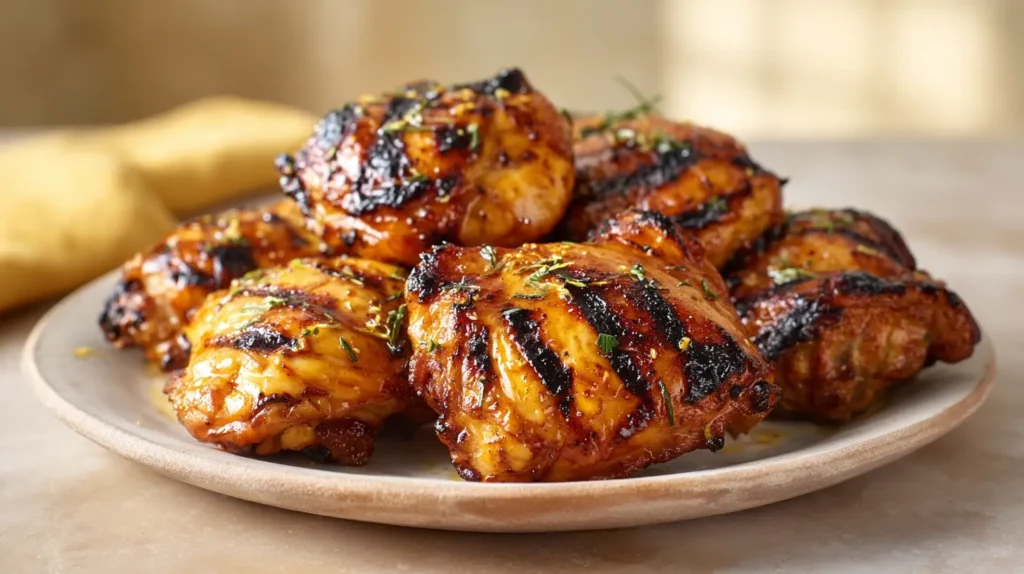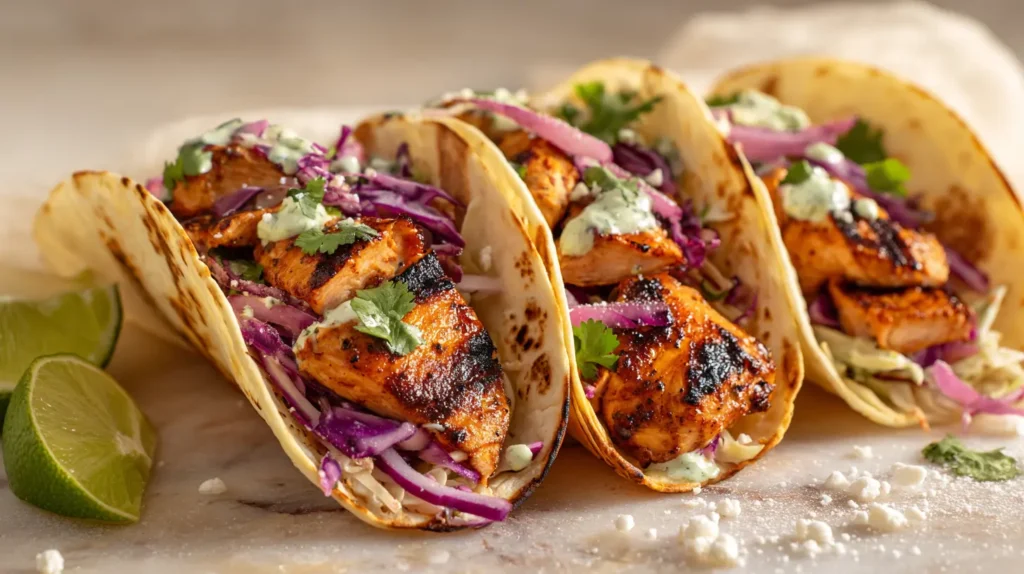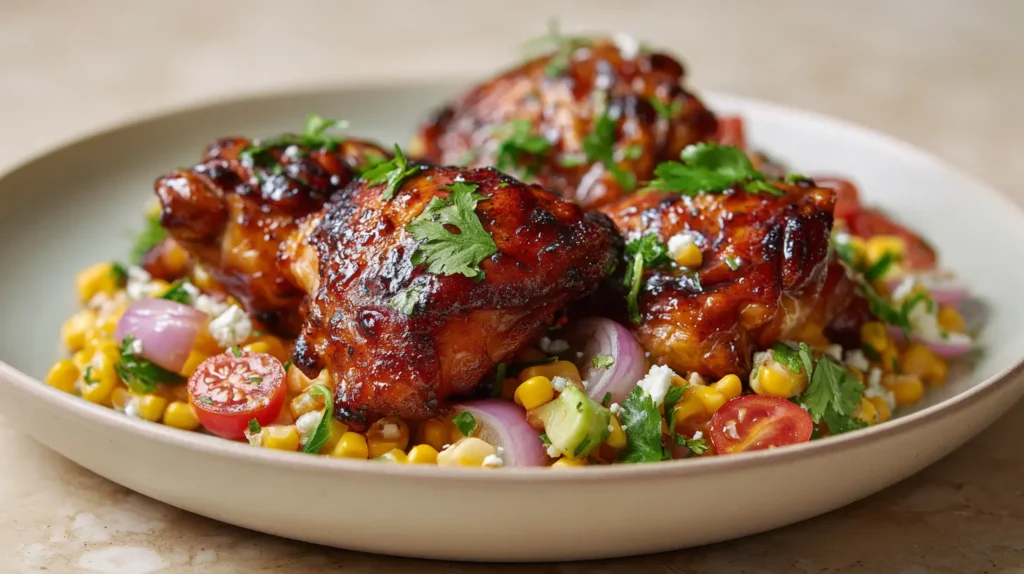
Discover the Ultimate Grilled Jerk Chicken Thighs for Irresistible Flavor!
- Chicken Recipes
 Elizabeth
- 0
- 43 minutes read
There’s something about the smell of smoky spices and a hint of citrus that instantly takes me back to long, lazy summer cookouts. Grilled Jerk Chicken Thighs have become one of those recipes I reach for when I want big flavor with minimal fuss—juicy, caramelized chicken, an aromatic punch from allspice and thyme, and the bright heat of Scotch bonnet or habanero. Grilled Jerk Chicken Thighs appears in the first 100 words here because it’s exactly what you’ll be making tonight—easy enough for a weeknight, special enough for guests. I’m Elizabeth Morgan, and I first learned to balance bold marinades in a busy restaurant kitchen; at home I favor straightforward techniques that deliver the same depth of flavor without the stress. Let me walk you through a tried-and-true method that results in tender, charred thighs and a sticky, spicy glaze that everyone will ask about.
Why You’ll Love Grilled Jerk Chicken Thighs
Grilled Jerk Chicken Thighs are a fast, flavorful way to bring Caribbean-inspired spice to your dinner table—juicy meat with a smoky crust and bright, complex marinade.
You’ll love these thighs because the marinade layers heat, sweet, and savory notes for multidimensional flavor; the thighs’ higher fat content keeps the meat succulent on the grill; it’s a convenient make-ahead meal for busy nights; the recipe scales well for family dinners or backyard parties; and it’s flexible for dietary swaps (skin-on, skin-off, bone-in, or boneless). It’s also a summer favorite—grill marks, sticky edges, and that fresh herb and citrus lift make it a seasonal crowd-pleaser. This recipe is built for home cooks who want big results without a long ingredient list.
What Is Grilled Jerk Chicken Thighs?
Grilled Jerk Chicken Thighs are chicken thighs marinated in a spicy-sweet, aromatic jerk paste and cooked on a hot grill until charred outside and tender inside.
This dish is rooted in Jamaican jerk technique: a blend of allspice, Scotch bonnet (or a substitute), thyme, garlic, and warm spices that create a lively, layered taste. Usually served with rice and beans, plantains, or a crisp salad, this version balances heat with touch of brown sugar and lime so the thighs caramelize beautifully on the grill while staying juicy within. My approach keeps the marinade bold but approachable for home kitchens.
Ingredients You’ll Need
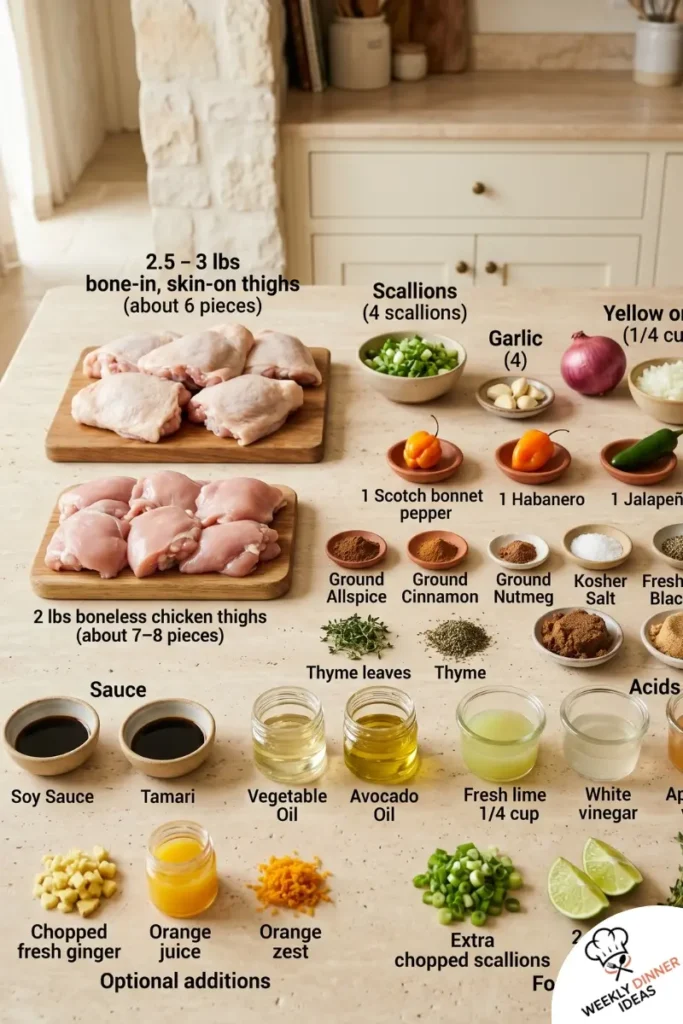
- 2½ to 3 pounds chicken thighs (about 8 bone-in, skin-on thighs) — or 2 pounds boneless thighs for quicker cooking
- 4 scallions (green onions), roughly chopped
- 3–4 cloves garlic, peeled
- 1 small red onion or 1/4 cup chopped yellow onion
- 1–2 Scotch bonnet or habanero peppers, seeded for less heat (or 1 jalapeño for milder)
- 2 tablespoons fresh thyme leaves (or 1 tablespoon dried thyme)
- 2 teaspoons ground allspice
- 1 teaspoon ground cinnamon
- 1/2 teaspoon ground nutmeg
- 1–2 teaspoons kosher salt (adjust to taste)
- 1 teaspoon freshly ground black pepper
- 2 tablespoons dark brown sugar or light brown sugar
- 2 tablespoons soy sauce or tamari
- 2 tablespoons vegetable oil (or avocado oil)
- 2 tablespoons fresh lime juice (about 1 lime)
- 1 tablespoon white vinegar or apple cider vinegar
- Optional: 1 tablespoon ginger, peeled and chopped
- Optional: 2 tablespoons orange juice or zest for a brighter profile
- Optional garnish: extra chopped scallions, lime wedges, fresh thyme sprigs
Key ingredient notes: Fresh herbs, fresh-pressed garlic, and a real Scotch bonnet or habanero give the marinade its authentic kick. If you can’t source Scotch bonnets, a habanero is a close substitute; for a milder version use jalapeño and add a bit more allspice to keep the flavor interesting. Brown sugar and soy sauce help the chicken glaze and caramelize on the grill; these small sugars are what give the thighs that sticky, lacquered finish.
Tools You Need
- Grill (charcoal or gas) — two-zone setup recommended (paid link)
- Food processor or blender (for the jerk paste) (paid link)
- Large mixing bowl or resealable plastic bag (for marinating) (paid link)
- Instant-read thermometer (paid link)
- Tongs (paid link)
- Paper towels (paid link)
- Baking sheet or tray (for resting before and after grilling) (paid link)
- Plastic wrap or foil (for marinating in the fridge) (paid link)
- Kitchen brush (optional, for basting) (paid link)
Ingredient Substitutions and Additions
Best substitutions
- Scotch bonnet or habanero: substitute jalapeño + 1/4 teaspoon cayenne for milder heat.
- Soy sauce: replace with coconut aminos for a gluten-free alternative.
- Brown sugar: swap with honey or maple syrup (use sparingly to avoid burning).
- Bone-in, skin-on thighs: use boneless, skinless thighs for a leaner, quicker option; reduce grill time accordingly.
Flavor additions
- Add 1 tablespoon rum or dark rum-flavored extract for a traditional Jamaican hint.
- Toss in 1/4 cup chopped fresh cilantro or parsley to the marinade for a brighter herbal note.
- Smoked paprika (1/2 teaspoon) can deepen the smokiness if you’re using a gas grill without charcoal.
Dietary swaps
- Lower-carb: omit brown sugar or use a small amount of monk fruit sweetener.
- Paleo / Whole30: use coconut aminos instead of soy sauce and maple syrup for sweetener.
- Gluten-free: ensure tamari or certified gluten-free soy sauce is used.
- Vegetarian alternative: apply the same marinade to firm tofu, portobello caps, or cauliflower steaks; grill gently to avoid drying.
How to Make Grilled Jerk Chicken Thighs
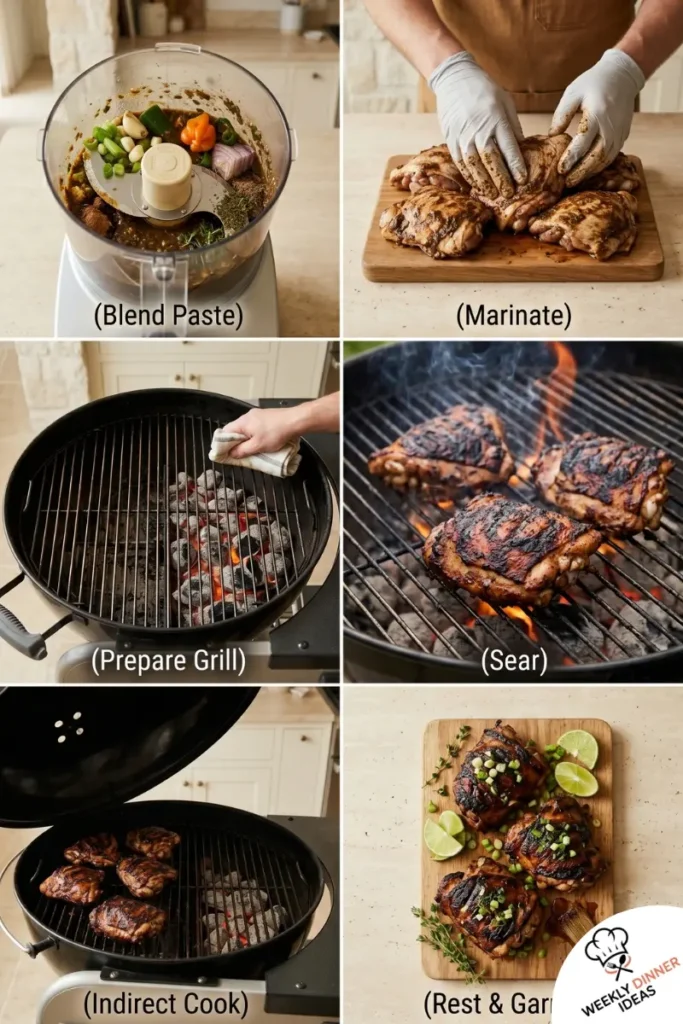
Grill-ready jerk thighs start with a vibrant marinade that’s pulsed to a coarse paste, then the chicken needs adequate marinating time and a two-zone cooking approach for caramelized char and perfectly cooked interior.
Step 1: Make the jerk marinade
Place scallions, garlic, onion, Scotch bonnet (or substitute), thyme, allspice, cinnamon, nutmeg, brown sugar, soy sauce, oil, lime juice, and vinegar in a food processor or blender. Pulse until you have a slightly chunky, spreadable paste. Taste carefully—if it needs salt or a touch more sugar to balance, adjust. The marinade should smell herbal and peppery with warm, sweet spices.
What to look for: The paste should hold together but not be completely liquified. It should smell bright from lime and scallion, with a warm undercurrent of allspice.
Practical advice: If you don’t have a food processor, finely mince everything and stir vigorously; the texture will be more rustic but still delicious.
Step 2: Marinate the chicken
Pat the thighs dry with paper towels to help the marinade adhere. Place the chicken in a large bowl or a zip-top bag and pour over the jerk marinade. Massage the paste into every surface of the thighs, making sure the meat under the skin (if skin-on) gets a smear of flavor. Cover tightly and refrigerate at least 2 hours, preferably overnight for deeper flavor. If short on time, 30–60 minutes will still add good flavor.
What to look for: The thighs should be evenly coated and slightly tacky from the sugar in the marinade.
Practical advice: For bone-in thighs, try to get some marinade under the skin without tearing it—this protects moisture and delivers flavor right to the meat.
Step 3: Prepare the grill (two-zone setup)
Set up your grill for two-zone cooking: one side with direct medium-high heat for searing, and the other side with lower or indirect heat for finishing. For a gas grill, light half the burners; for charcoal, bank coals to one side. Oil the grates lightly to prevent sticking.
What to look for: You should be able to hold your hand about 5 inches above the grill grate for 3–4 seconds over the searing side—this is roughly medium-high heat.
Practical advice: A little smoke is desirable for flavor—if using a gas grill, add soaked wood chips in a smoker box or on foil.
Step 4: Sear the thighs
Remove excess marinade (don’t drip too much; leave a thin coating). Place thighs skin-side down over the direct heat. Sear until you see good color and char—about 3–5 minutes per side depending on heat. Watch carefully; sugar in the marinade can char quickly.
What to look for: Deep golden-brown to dark mahogany color on the skin or surface and the edges beginning to caramelize.
Practical advice: Keep a spray bottle of water nearby to tame any flare-ups from the dripping oil or sugars.
Step 5: Finish over indirect heat
Move the thighs to the cooler side of the grill, skin-side up, and close the lid. Cook until the chicken reaches 165°F (75°C) internal temperature at the thickest part without touching bone—about 20–25 more minutes for bone-in thighs, 8–12 minutes for boneless, depending on your grill and size.
What to look for: Clear juices running when the thickest part is pierced and firm but slightly springy meat.
Practical advice: Check temperature early. Overcooking dries thighs out, so pull them at 165°F—the carryover will keep them moist.
Step 6: Rest and glaze (optional)
Transfer thighs to a tray, tent loosely with foil, and rest for 5–8 minutes. During resting, the juices redistribute. If you want extra shine, baste with a tablespoon of warmed reserved marinade (boiled 2 minutes to be safe) or a squeeze of fresh lime before serving.
What to look for: Skin will crisp slightly after resting, and the meat will be juicy and no longer steaming heavily.
Practical advice: Don’t skip resting—cutting into the thighs immediately loses precious juices.
Pro Tips for the Best Grilled Jerk Chicken Thighs
Marinate long enough, manage flare-ups, and cook to temp—those three will make the biggest difference.
- Use a two-zone grill: Sear first, then finish over indirect heat to avoid burning the sugars while fully cooking the meat.
- Don’t scrape off the marinade completely: Leave a thin glaze so the grill can caramelize it into that sticky, lacquered finish.
- Taste and adjust your marinade: If it’s missing brightness, add lime; missing depth, add soy sauce or a touch more allspice.
- Keep an instant-read thermometer handy: thighs are forgiving, but 165°F is the safe doneness target.
- Make ahead: The marinade keeps up to 24 hours—marinate overnight for deeper flavor and less active cooking time.
- Double the batch: This marinade scales well; reserve some un-used marinade if you plan to baste later (boil unused marinade if you plan to use it for a sauce).
- Control heat from peppers: Remove seeds and ribs to reduce heat, or use gloves when handling Scotch bonnets.
- Rest time matters: 5–8 minutes yields juicier meat; for parties, rest on a warm tray while finishing sides.
What to Serve with Grilled Jerk Chicken Thighs
For a complete plate, balance the heat and earthiness of the jerk with cooling, starchy, or bright sides. Serve with fluffy rice and peas—or try these ideas from the site for easy pairing:
- Coconut rice or classic rice and peas pairs beautifully; find similar inspiration in our chicken recipes category for complete meal ideas.
- Quick sautéed greens or a crisp cabbage slaw help cut the richness—see our healthy dinner recipes for simple vegetable sides.
- Roasted sweet potatoes or grilled plantains echo the dish’s sweet-spicy profile; try sheet-pan versions in our onepan_sheet_pan_meals if you want hands-off sides.
- For a weeknight solution, make a salad bowl with chopped thighs on top of mixed greens, mango, and avocado—perfect alongside recipes in quick_weeknight_dinners.
- Don’t forget garnishes: lime wedges, extra scallions, and a sprinkle of fresh thyme add color and freshness.
Storage, Freezing, and Reheating
Store leftover grilled jerk chicken thighs in an airtight container in the fridge for 3–4 days; freeze cooked pieces for up to 3 months and reheat gently to preserve moisture.
Fridge storage: Cool to room temperature (within two hours), then refrigerate. Freeze: Flash-freeze on a tray before transferring to freezer bags to avoid clumping. Reheating: For best texture, reheat in a 350°F oven on a baking sheet for 10–15 minutes (covered to keep moist, uncover to crisp skin), or reheat gently in a skillet over medium heat. Microwaving is okay for speed but will soften skin and reduce crispness. Expect a slight change in texture after freezing—still flavorful but less crisp.
About This Recipe and Why It Works
I built this jerk-thighs method from years of juggling bold flavors in busy kitchens and teaching home cooks how to simplify restaurant techniques. Chicken thighs are my go-to here because they tolerate high heat and aggressive marinades without drying out—fat equals forgiveness. The marinade itself borrows from classic Jamaican components (allspice, Scotch bonnet, thyme) but I balance them with brown sugar and soy for caramelization and depth suited to American grills.
In my own kitchen, I often double the marinade and set aside a small portion boiled into a sticky basting sauce for serving—this gives guests an extra hit of flavor without overexposing raw marinade. I also like to swap half the lime for orange when I have citrus on hand; it gives a mellower, fruitier lift that kids tend to enjoy. This recipe fits Weekly Dinner Ideas’ philosophy: approachably bold meals that busy families can make on weeknights and easily scale up for weekend guests.
Frequently Asked Questions
Can I use boneless, skinless chicken thighs instead of bone-in?
Yes. Boneless, skinless thighs cook faster and are leaner than bone-in, skin-on thighs; expect about 8–12 minutes total on the grill depending on thickness. The flavor will still be excellent, though you’ll miss a bit of the caramelized skin and the extra juiciness from bones. If you choose boneless thighs, flatten slightly for even thickness and watch internal temperature closely to avoid drying out. A final sear over direct heat for a minute per side adds color.
How long should I marinate the chicken?
Marinate a minimum of 2 hours, ideally overnight (8–24 hours) for the deepest flavor penetration without breaking down the meat texture. Short marinating (30–60 minutes) still adds surface flavor but won’t penetrate as deeply. Avoid marinating for more than 24 hours—too long in an acidic marinade can make the texture mushy.
What if I don’t have Scotch bonnet peppers?
Use habanero if available, or jalapeño for a milder profile. If you’re substituting for heat without changing flavor too much, add 1/4 teaspoon cayenne alongside a jalapeño. You can also seed the peppers to reduce their intensity. Always handle hot peppers with care—wear gloves and avoid touching your face. Taste the raw marinade cautiously to judge heat before adding to the chicken.
How do I know when the chicken is done?
The safest and most reliable method is an instant-read thermometer: remove the thighs when the thickest part reaches 165°F (75°C). Visually, the juices should run clear, and the meat should feel firm but springy. For bone-in thighs, check toward the bone, not the skin.
Can I make the marinade ahead and freeze it?
Yes. You can freeze the jerk marinade in an airtight container for up to 3 months. Thaw fully in the refrigerator before using. If you plan to reserve some for basting or a sauce, keep a small portion separate from the raw chicken and boil it for at least 2 minutes before using it as a glaze.
Is this recipe gluten-free?
It can be. Use tamari or a certified gluten-free soy sauce (or coconut aminos) in place of regular soy sauce. Check labels for any additives in brown sugar and other ingredients, and the dish will be gluten-free-friendly.
Can I bake or pan-sear these instead of grilling?
Absolutely. For oven baking, roast at 425°F on a wire rack over a sheet pan for 25–35 minutes for bone-in thighs, or 15–20 minutes for boneless, until 165°F internal temp. For pan-searing, use a cast-iron skillet: sear skin-side down, then finish in a 400°F oven until done. Grilling just adds that signature char and smoke.
Final Thoughts
If you want a simple way to bring Caribbean-inspired fire to family dinners, Grilled Jerk Chicken Thighs deliver: smoky char, bold spices, and juicy meat that holds up to sides and salads. Try them with coconut rice, a quick cabbage slaw from the healthy dinner recipes page, or sheet-pan roasted sweet potatoes from our onepan_sheet_pan_meals category for an effortless dinner everyone will notice. For more weeknight-friendly ideas, check our quick_weeknight_dinners collection or explore other flavorful mains in the chicken recipes category.
If you make this, please leave a comment and rate the recipe—tell me how hot you went with the peppers or what sides you paired it with. Save it on Pinterest for your next backyard cookout at my profile Chicken by Elizabeth on Pinterest and share a photo if you can—nothing makes my day like your dinner photos!
Quick Recipe Summary
15–20 minutes active (plus 2–24 hours marinating)
25–35 minutes (bone-in); 10–15 minutes (boneless)
2–24 hours including marinating; 40–60 minutes from start to finish day-of
4–6 (about 8 thighs)
Easy–Medium
Weeknight dinners, backyard grilling, meal prep
Spicy, smoky, slightly sweet, citrus-bright
Nutrition Information
If exact nutrition data is not available, the values below are estimates based on common ingredient amounts and typical portion sizes.
| Nutrient | Per Serving |
|---|---|
| Calories | Approx. 420 |
| Protein | Approx. 30g |
| Carbohydrates | Approx. 6g |
| Dietary Fiber | Approx. 1g |
| Fat | Approx. 28g |
Enjoy the bold flavors—and let me know how your grill turned out. If you have questions about adapting this recipe (less heat, leather-skinned grill, or how to use leftover thighs in salads), leave a note below and I’ll reply.

Grilled Jerk Chicken Thighs
Ingredients
Equipment
Method
- Add scallions, garlic, onion, Scotch bonnet or habanero pepper, thyme, allspice, cinnamon, nutmeg, kosher salt, black pepper, brown sugar, soy sauce or tamari, oil, lime juice, vinegar, ginger if using, and orange juice or zest if using to a food processor or blender.
- Pulse until the marinade becomes a slightly chunky, spreadable jerk paste. Taste carefully and adjust with more salt, lime, or brown sugar if needed.
- Pat the chicken thighs dry with paper towels so the marinade sticks well and the chicken grills properly.
- Place the chicken in a large bowl or resealable plastic bag. Pour the jerk marinade over the chicken and massage it over every surface.
- If using skin-on thighs, gently rub some marinade under the skin without tearing it.
- Cover tightly and refrigerate for at least 2 hours, or preferably overnight for deeper flavor.
- Prepare the grill for two-zone cooking: one side with direct medium-high heat for searing and one cooler side for indirect cooking. Lightly oil the grates.
- Remove excess dripping marinade from the chicken, leaving a thin coating for caramelization.
- Place the chicken thighs skin-side down over direct heat. Sear for 3-5 minutes per side, until deeply browned, lightly charred, and caramelized.
- Move the chicken to the cooler side of the grill, skin-side up. Close the lid and continue cooking over indirect heat.
- Cook bone-in thighs for about 20-25 minutes more, or until the thickest part reaches 165°F (75°C). Boneless thighs usually need about 8-12 minutes after searing.
- Transfer the grilled chicken to a tray and tent loosely with foil. Rest for 5-8 minutes so the juices redistribute.
- Optional: Brush with a small amount of reserved marinade that has been boiled for at least 2 minutes, or finish with a squeeze of fresh lime juice.
- Garnish with extra chopped scallions, fresh thyme, and lime wedges before serving.
Notes

Elizabeth Morgan
Easy & Delicious Recipes
Follow for quick family-friendly recipes, baking inspiration, and comfort food favorites.
Follow on Pinterest