
Discover the Ultimate Flavorful Grilled Chicken Thigh Marinade!
- Chicken Recipes
 Elizabeth
- 0
- 43 minutes read
I still remember the first summer I learned to coax deep, smoky flavor out of humble chicken thighs—my backyard smelled like garlic and lemon for days, and my family kept circling the grill like moths. This Flavorful Grilled Chicken Thigh Marinade is the result of that summer’s tinkering and years of testing in a busy home kitchen. It balances acid, fat, salt, and aromatics in a way that makes each bite moist, caramelized, and unmistakably satisfying. Whether you’re firing up the grill for a weeknight dinner or marinating ahead for meal prep, this recipe is built to be forgiving, flexible, and reliably delicious.
I’m Elizabeth Morgan, a professionally trained chef who loves making dinner uncomplicated but full of flavor. In this post I’ll walk you through the exact ingredients, practical tips, and step-by-step grilling method I use every time I want juicy, savory chicken thighs with that craveable char. Let’s get the grill going.
Why You’ll Love This Flavorful Grilled Chicken Thigh Marinade
This marinade gives you juicy, well-seasoned chicken with a sweet-savory char and bright citrus notes—fast enough for weeknights and versatile enough for meal prep.
You’ll love it because the marinade layers flavors that stand up to high heat: olive oil keeps the meat moist and helps the spices adhere; an acid like lemon or vinegar brightens the palate; a touch of sweet balances the savory elements and encourages caramelization; and garlic, smoked paprika, and herbs create a familiar, crowd-pleasing profile. It’s especially forgiving on thighs (they remain juicy unlike leaner breasts), works with bone-in or boneless cuts, and can be adapted to fit gluten-free or low-carb diets. Marinate for at least 30 minutes when pressed for time, or overnight for the best flavor penetration.
What Is Flavorful Grilled Chicken Thigh Marinade?
This marinade is a balanced blend of oil, acid, salt, aromatics, and a hint of sweet designed specifically to flavor and tenderize chicken thighs before grilling.
It’s a go-to mix for weeknight grilling and backyard gatherings: expect tangy lemon or vinegar, savory umami from soy or Worcestershire (optional), roasted garlic notes, and smoky paprika. The result is crisped edges and a juicy interior. This version focuses on accessible pantry staples and straightforward technique so anyone can get consistent results on a home grill or grill pan.
Ingredients You’ll Need

- 2 pounds boneless skinless chicken thighs (about 8 thighs)
- 1/4 cup extra-virgin olive oil
- 2 tablespoons fresh lemon juice (about 1 lemon) or 2 tablespoons apple cider vinegar
- 2 tablespoons low-sodium soy sauce or tamari (optional; skip for gluten-free if using tamari)
- 1 tablespoon honey or brown sugar
- 3 cloves garlic, finely minced
- 1 teaspoon smoked paprika
- 1/2 teaspoon ground cumin
- 1 teaspoon dried oregano or 1 tablespoon chopped fresh oregano
- 1 teaspoon kosher salt
- 1/2 teaspoon freshly ground black pepper
- 1/4 teaspoon crushed red pepper flakes (optional, for heat)
- Zest of 1 lemon (optional, for brightness)
- Fresh parsley or cilantro for finishing (optional)
These ingredients play specific roles: olive oil carries flavor and promotes browning, acid (lemon/ vinegar) tenderizes and adds lift, salt seasons through the meat, and honey helps with caramelization at high heat. Smoked paprika gives the grilled character even if you’re using a gas grill. If you use bone-in thighs, increase cook time and consider leaving the skin on for extra crisp texture.
Tools You Need
- Mixing bowl or large resealable plastic bag (paid link)
- Whisk and measuring spoons (paid link)
- Zester or microplane (if using lemon zest) (paid link)
- Tongs (paid link)
- Instant-read thermometer (paid link)
- Grill (gas, charcoal) or grill pan / cast-iron skillet (paid link)
- Baking sheet or platter for resting (paid link)
- Aluminum foil (optional, for resting or covering) (paid link)
Ingredient Substitutions and Additions
best substitutions
- Olive oil → Avocado oil or neutral vegetable oil for higher smoke point.
- Lemon juice → 2 tablespoons apple cider vinegar or white wine vinegar.
- Soy sauce → Coconut aminos or low-sodium Worcestershire for a different umami profile.
- Honey → Maple syrup or agave syrup for vegan option.
- Smoked paprika → Regular paprika plus a tiny pinch of liquid smoke (very small amount).
flavor additions
- Fresh ginger (1 teaspoon grated) for an Asian-leaning profile.
- Dijon mustard (1 teaspoon) to add tang and emulsify the marinade.
- Fresh chopped rosemary for a piney herb note—works especially well with bone-in thighs.
- Orange zest and juice instead of lemon for a sweeter citrus flavor.
dietary swaps
- Gluten-free: Use tamari or coconut aminos instead of soy sauce.
- Low-carb: Replace honey with a pinch of monk fruit or reduce sweetener; the marinade still caramelizes with just lemon and oil.
- Whole30/Paleo: Omit soy and honey; sub with coconut aminos and a little mashed date or leave out sweetener.
How to Make Flavorful Grilled Chicken Thigh Marinade
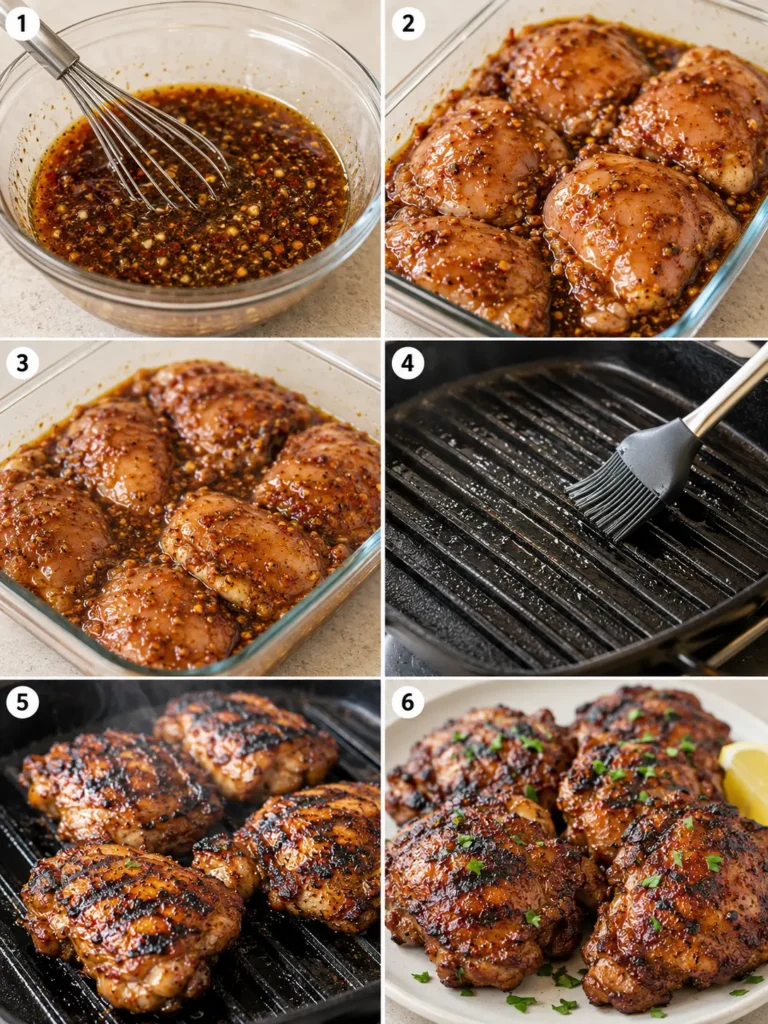
Summary: Combine the marinade ingredients, toss the chicken to coat, refrigerate to let flavors penetrate (30 minutes–overnight), then grill over medium-high heat until the thighs reach 165°F and have a nicely charred exterior. Rest before serving.
Step 1: Whisk the Marinade
Pour the olive oil into a medium bowl, add lemon juice (or vinegar), soy sauce or tamari (if using), honey, minced garlic, smoked paprika, cumin, oregano, salt, and pepper. Whisk until the honey is fully dissolved and the mixture looks glossy. If you’re using lemon zest, stir it in now so the oils release into the marinade.
What to look for: The marinade should be cohesive—oil and acid should appear emulsified. You should smell a bright lemon-garlic aroma with a hint of sweet and smoke.
Practical advice: Using a bowl lets you taste and adjust seasoning. If you prefer an earthy, less sharp acid, reduce lemon to 1 tablespoon and add 1 tablespoon vinegar.
Step 2: Marinate the Chicken
Place the boneless chicken thighs in a large resealable bag or shallow dish. Pour the marinade over the thighs and press out excess air from the bag, or turn the dish to coat evenly. Massage the marinade into each piece gently so the spices make contact with the meat.
What to look for: Each thigh should be well-coated; marinade should cling to the surface. You’ll notice the chicken takes on a slightly deeper color from the paprika and soy.
Practical advice: For quick meals, marinate at room temperature for 20–30 minutes, but never leave raw poultry out for longer than two hours. For best depth of flavor, refrigerate and marinate 4–12 hours; overnight is fine if you’re not using a very acidic mix (keep to 24 hours if using a lot of lemon).
Step 3: Preheat and Oil the Grill
Preheat your grill to medium-high—aim for roughly 400–450°F over the cooking zone you’ll sear on. Clean the grates with a grill brush, then oil them by dipping a folded paper towel in oil and using tongs to rub the grates—this prevents sticking and encourages even searing.
What to look for: The grates should be hot and shimmering when you hover your hand above them (be cautious!). You should see even heat distribution.
Practical advice: If you’re using a grill pan, heat it until it’s nearly smoking and brush with a little oil just before adding the chicken.
Step 4: Grill the Thighs
Shake off excess marinade (let it drip for a moment—too much will flare up on the grill). Place thighs on the hottest part of the grill. For boneless thighs, cook about 5–7 minutes per side, flipping once. For bone-in thighs, expect closer to 10–12 minutes per side. Use an instant-read thermometer inserted into the thickest part without touching bone; pull at 165°F.
What to look for: Look for good grill marks and deep golden-brown color with bits of char. The meat should feel slightly firm but springy when pressed—no slippery or gelatinous texture.
Practical advice: If flare-ups happen, move pieces to indirect heat briefly; don’t char the entire surface. Because thighs are forgiving, you can cook to a few degrees higher than 165°F without drying, but avoid overcooking.
Step 5: Rest and Finish
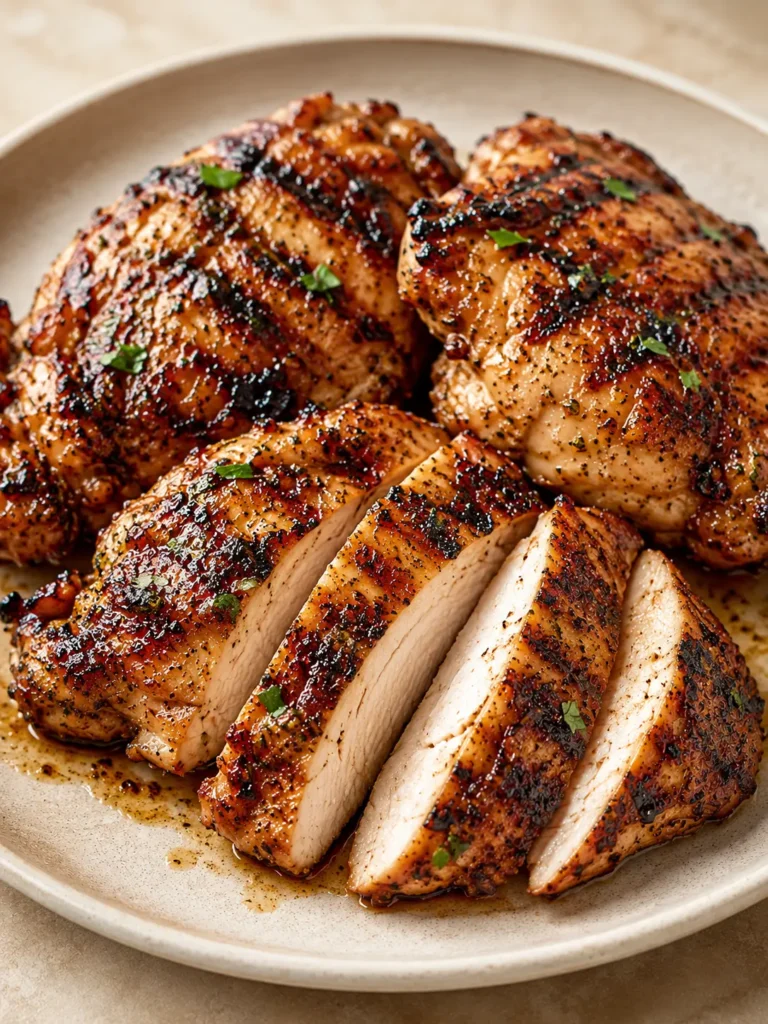
Transfer the grilled thighs to a platter and tent loosely with foil. Rest 5–8 minutes—this redistributes juices and makes the meat more tender. Finish with a squeeze of lemon and a sprinkle of chopped parsley or cilantro.
What to look for: The juices should run clear and the meat should be glossy but not wet. A final zest or citrus squeeze brightens the palate and balances any sweetness from caramelization.
Practical advice: Slice one thigh to check doneness before serving the whole batch. If you want a glaze, reserve 2 tablespoons of the marinade before adding raw chicken and brush it on in the final minute of grilling, brought to a boil in a small saucepan.
Pro Tips for the Best Flavorful Grilled Chicken Thigh Marinade
Start here: Give the chicken time to absorb the marinade—30 minutes is the minimum, 4–12 hours is ideal, but avoid beyond 24 hours for highly acidic mixes.
- Don’t over-marinate with a high-acid recipe. Too much lemon or vinegar for too long can give the meat a mushy texture.
- Pat the thighs dry before they hit the grill. Wet surfaces steam instead of sear and won’t get that satisfying char.
- Use an instant-read thermometer. Visual cues can mislead—165°F ensures safe, juicy chicken.
- If cooking bone-in thighs, consider a two-zone grill: sear over direct heat then move to indirect heat to finish without burning.
- Double the batch: marinade scales linearly—just keep the same ratios and use a larger container. Marinate in two bags to ensure even coating if needed.
- Make-ahead: Marinated, raw thighs will keep up to 24 hours in the fridge. Cooked, cooled thighs refrigerate up to 4 days and are great for salads or wraps.
- For smoky flavor without charcoal, add a pinch of smoked paprika and a drop of liquid smoke, or throw a soaked wood chip pouch on a gas grill.
What to Serve with Flavorful Grilled Chicken Thigh Marinade
This grilled chicken pairs beautifully with bright, simple sides that let the marinade sing. A crisp citrusy salad, herb-studded rice, or charred vegetables are all excellent.
- Serve alongside grilled asparagus or a summer vegetable medley for a quick, seasonal plate.
- For weeknight bowls, slice the chicken and add to brown rice, roasted sweet potatoes, and a dollop of Greek yogurt.
- Try it with a fresh tomato-cucumber salad and warm pita for a light Mediterranean-style dinner.
If you’re collecting ideas, I often recommend pairing grilled chicken with recipes from the site’s categories like chicken recipes, or keep the weeknight flow going with options from quick weeknight dinners. For one-pan simplicity, serving this with a tray of roasted veggies from onepan sheet pan meals is a favorite around my house. For lighter meal plans, check out ideas in healthy dinner recipes.
Storage, Freezing, and Reheating
Store cooked chicken in the fridge for up to 4 days; freeze for up to 3 months. Reheat gently to preserve juiciness.
Refrigeration: Cool the chicken to room temperature (no more than two hours), then store in an airtight container for up to 4 days. Sliced chicken keeps well for salads and wraps.
Freezing: Wrap cooled cooked thighs tightly in foil and place in a freezer-safe bag; label and freeze up to 3 months. Thaw in the fridge overnight before reheating.
Reheating: For best texture, reheat in a 350°F oven covered with foil for 10–12 minutes, or in a skillet with a splash of water over medium-low heat until warmed through. Microwave works in a pinch—cover and use short bursts to avoid drying.
Texture changes: Reheated chicken will be slightly drier than fresh from the grill. Slice thin and serve with a sauce, yogurt, or a citrus vinaigrette to refresh the bite.
About This Recipe and Why It Works
I developed this marinade out of a desire to get reliable, weeknight-friendly flavor while using pantry-friendly ingredients. As a chef, I lean toward simple formulas where each ingredient has purpose: oil for mouthfeel and browning, acid to brighten, salt to amplify, and aromatics to create the personality. Thighs are my go-to because they tolerate heat and time—if you accidentally leave them a minute too long, they still stay moist.
This recipe reflects how I cook at home: practical, flavor-forward, and forgiving. I envision moms and busy cooks being able to prep the marinade in the morning or the night before, then toss the chicken on the grill with minimal fuss. It’s the kind of recipe that shows up on warm-weather nights, feeds a crowd, or gets chopped for lunches all week—consistent, tasty, and adaptable to what’s in your pantry.
Frequently Asked Questions
How long should I marinate chicken thighs?
Marinate for at least 30 minutes to allow flavors to penetrate; 4–12 hours gives deeper flavor, and overnight (up to 24 hours) is fine if acid is moderate. Avoid marinating longer than 24 hours to prevent texture breakdown. Long marination improves flavor but too much acid can start to denature the meat. If your marinade has a lot of lemon or vinegar, stick closer to 2–6 hours. For milder mixes, overnight is safe.
Can I use bone-in, skin-on thighs instead of boneless?
Yes—bone-in, skin-on thighs work beautifully but need longer cook time and benefit from two-zone grilling: sear then move to indirect heat. Skin-on thighs develop crisp, flavorful skin; plan for roughly 10–12 minutes per side depending on thickness, and use an instant-read thermometer to reach 165°F at the thickest part without touching bone.
Is this marinade gluten-free?
The base recipe can be gluten-free if you swap soy sauce for tamari or coconut aminos and confirm that any added Worcestershire sauce is gluten-free. Always check labels. If you want to avoid soy, use coconut aminos for a similar umami profile. The rest of the ingredients—olive oil, lemon, garlic, herbs—are naturally gluten-free.
Can I grill this on a gas grill, charcoal, or indoors?
Yes. Gas grills, charcoal grills, and indoor grill pans or cast-iron skillets all work. Charcoal gives the most smoke depth; gas is convenient; a hot grill pan will happily produce good sear marks. Adjust cooking zones and temperatures accordingly. With indoor pans, you may miss some smoky flavor—introduce smoked paprika or a drop of liquid smoke for that charred note.
What temperature should chicken thighs reach?
Cook until the thickest part reads 165°F on an instant-read thermometer. Pull them off the grill at 165°F and rest 5–8 minutes—the internal temp can rise a couple of degrees during resting. Trust the thermometer over timing—thigh thickness varies. Resting is crucial: it lets juices redistribute so slices stay moist.
Can I make the marinade ahead and freeze it?
You can freeze the marinade without raw chicken for up to 3 months, or freeze marinated raw thighs in a sealed bag for the same timeframe and thaw overnight in the fridge before grilling. If freezing with raw chicken, use heavy-duty freezer bags and label with the date. Thaw slowly—in the refrigerator—before cooking.
Will the sugars in the marinade cause flare-ups?
Yes, honey or brown sugar can cause occasional flare-ups as they caramelize; manage flare-ups by moving pieces briefly to indirect heat and trimming excess marinade off before grilling. To minimize flare-ups, shake off excess marinade and brush on reserved marinade in the last minute of cooking after boiling it first. Keep a spray bottle with water handy for larger flames.
Final Thoughts
This Flavorful Grilled Chicken Thigh Marinade is a dependable, adaptable formula I go back to again and again. It’s simple enough for a busy weeknight and flavorful enough for guests. Try marinating overnight for meal prep lunches, or halve the recipe for a smaller family dinner—either way, you’ll get juicy, savory thighs with a lively finish.
If you want side ideas, check the onepan sheet pan meals page for easy roasted veggies, or browse our chicken recipes for more ways to use leftover thighs. For quick weeknight inspiration, the quick weeknight dinners collection is a great place to start. I also save my favorite plating and meal-prep tricks on Pinterest—follow along at my profile.
Please leave a comment if you make this, rate the recipe, and save it to come back to—I love hearing how you adapt it in your kitchen.
Quick Recipe Summary
10–15 minutes (plus marinating time)
10–15 minutes (boneless) / 20–25 minutes (bone-in)
30 minutes–overnight marinating (active time 25–40 minutes)
4 (about 2 lbs chicken)
Easy
Weeknight dinners, backyard grilling, meal prep
Tangy, savory, mildly sweet, smoky
Nutrition Information
| Nutrient | Per Serving |
|---|---|
| Calories | Approx. 320 |
| Protein | Approx. 32 g |
| Carbohydrates | Approx. 6 g |
| Dietary Fiber | Approx. 0.5 g |
| Fat | Approx. 18 g |
These nutrition values are estimates and will vary based on exact ingredient brands and portion sizes.
—
I hope this recipe becomes one of those dependable, well-loved weeknight go-tos in your kitchen. If you try it, tell me how you seasoned yours or what side you paired it with—I read every comment.

Flavorful Grilled Chicken Thigh Marinade
Ingredients
Equipment
Method
- Whisk the marinade. In a medium bowl, whisk together the olive oil, lemon juice or vinegar, soy sauce or tamari, honey or brown sugar, minced garlic, smoked paprika, cumin, oregano, kosher salt, black pepper, red pepper flakes if using, and lemon zest if using. The marinade should look glossy and smell bright, garlicky, smoky, and lightly sweet.
- Coat the chicken. Place the boneless chicken thighs in a large resealable bag or shallow dish. Pour the marinade over the thighs and turn each piece until well coated. Massage gently so the spices and aromatics make contact with the meat.
- Marinate. Seal the bag or cover the dish and refrigerate for at least 30 minutes. For deeper flavor, marinate for 4–12 hours. Avoid marinating longer than 24 hours, especially with a high-acid marinade.
- Preheat the grill. Preheat the grill to medium-high heat, about 400–450°F. Clean the grates well, then lightly oil them to help prevent sticking and encourage even searing.
- Grill the thighs. Remove the chicken from the marinade and let excess marinade drip off. Place thighs on the hottest part of the grill. For boneless thighs, grill for 5–7 minutes per side, flipping once, until deep golden with light char.
- Check doneness. Insert an instant-read thermometer into the thickest part of the chicken. The thighs are done when they reach 165°F. If flare-ups happen, move the chicken briefly to indirect heat.
- Rest and finish. Transfer the grilled thighs to a platter and tent loosely with foil. Rest for 5–8 minutes so the juices redistribute. Finish with a squeeze of lemon and chopped parsley or cilantro if desired.
Notes

Elizabeth Morgan
Easy & Delicious Recipes
Follow for quick family-friendly recipes, baking inspiration, and comfort food favorites.
Follow on Pinterest