
Easy Balsamic Apricot Glazed Chicken Thighs Ready in 30 Minutes!
- Healthy Dinner Recipes
 Elizabeth
- 0
- 42 minutes read
I’m so glad you stopped by—this recipe for Balsamic Apricot Glazed Chicken Thighs is one I lean on when I need a fast, flavorful dinner that still feels a little special. Balsamic Apricot Glazed Chicken Thighs deliver sweet-tangy caramelized sauce, tender juicy meat, and a sticky finish that kids and grown-ups both fight over. As someone who trained in a professional kitchen and now cooks for a busy family, I built this version to be achievable on a weeknight without sacrificing depth of flavor. Read on and you’ll find clear steps, smart swaps, and tips from my own kitchen experiments to make this glaze sing — all in about 30 minutes.
Why You’ll Love This Balsamic Apricot Glazed Chicken Thighs
Balsamic Apricot Glazed Chicken Thighs are a quick, crowd-pleasing dish that balances sweet apricot jam with the bright acidity of balsamic vinegar for a glossy, sticky finish.
You’ll love this recipe because:
- Flavor: The combination of apricot preserves and aged balsamic creates a jammy, tangy glaze with savory depth from garlic and Dijon.
- Texture: Searing gives the thighs a slightly crisp edge while the glaze keeps the interior juicy.
- Convenience: Uses pantry staples (apricot jam, balsamic, Dijon) and cooks fast — perfect for weeknights.
- Family appeal: Sweet and savory flavors appeal to picky eaters; you can spoon extra glaze over rice or veggies.
- Meal-prep value: Leftovers reheat well and make excellent salads or wraps the next day.
- Dietary flexibility: Easily made gluten-free (use tamari or skip soy) and lower-carb by serving with cauliflower rice.
What Is Balsamic Apricot Glazed Chicken Thighs?
Balsamic Apricot Glazed Chicken Thighs are pan-seared chicken thighs coated with a glossy glaze made from apricot preserves and balsamic vinegar, finished on the stovetop until the sauce clings to the meat. This dish is commonly served as a weeknight main with rice, roasted vegetables, or a crisp salad and tastes like a restaurant dish with minimal fuss.
This version is built for speed: I use boneless chicken thighs for quick, even cooking and a concentrated glaze that caramelizes without burning. The apricot adds a gentle fruity sweetness while balsamic lends a syrupy acidity that balances the dish.
Ingredients You’ll Need
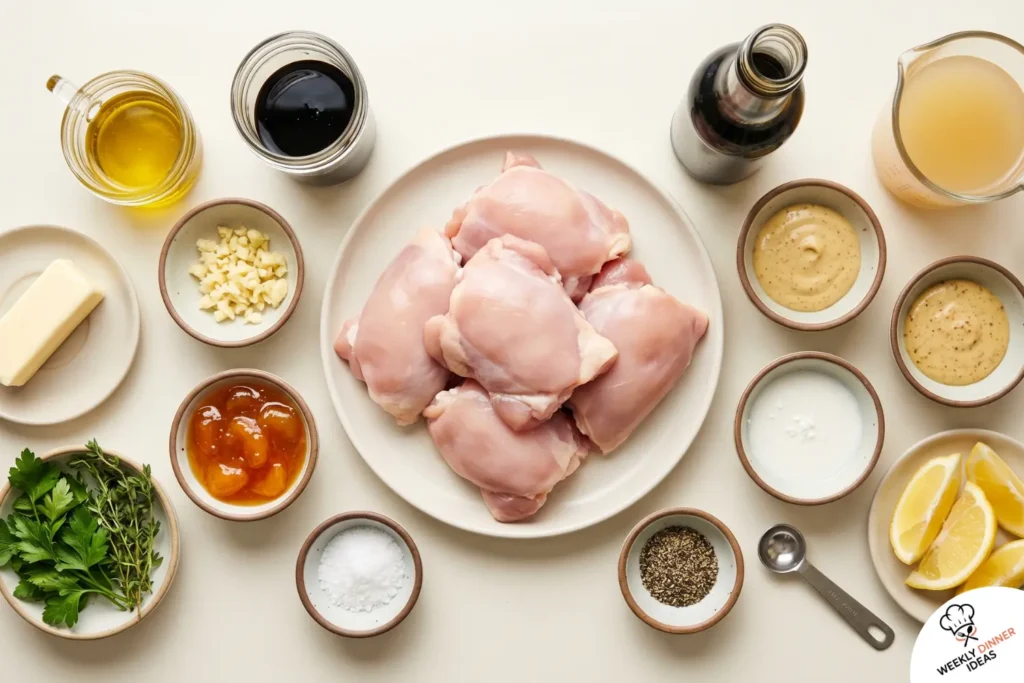
- 1 1/2 pounds boneless, skinless chicken thighs (about 6 thighs)
- Salt and freshly ground black pepper
- 1 tablespoon olive oil
- 2 cloves garlic, minced
- 1/2 cup apricot preserves (or jam)
- 1/4 cup balsamic vinegar
- 1 tablespoon Dijon mustard
- 1 tablespoon low-sodium soy sauce or tamari (optional for depth; see substitutions)
- 2 tablespoons chicken broth or water (to loosen sauce if needed)
- 1 teaspoon cornstarch mixed with 1 tablespoon cold water (optional thickener)
- 1 tablespoon unsalted butter (optional, for glossy finish)
- Fresh herbs for garnish (parsley or thyme) and lemon wedges (optional)
Key ingredient notes: Use a high-quality aged balsamic if you can—its natural sweetness and complexity make the glaze sing. Apricot preserves are easier than chopping fresh fruit: they melt into a silky gloss. I prefer boneless skinless thighs here for a fast 30-minute total time, but see substitutions below if you want bone-in or skin-on.
Tools You Need
- Heavy skillet (cast iron or stainless steel preferred) (paid link)
- Tongs (paid link)
- Measuring cups and spoons (paid link)
- Small bowl for cornstarch slurry (optional) (paid link)
- Instant-read thermometer (paid link)
- Wooden spoon or silicone spatula (paid link)
- Cutting board and chef’s knife (paid link)
Ingredient Substitutions and Additions
Best substitutions
- Boneless, skinless chicken thighs → Use bone-in, skin-on thighs if you have time; increase cook time and finish in the oven. Or use boneless skinless chicken breasts but watch for quicker drying.
- Apricot preserves → Peach or apricot jam; orange marmalade for a brighter citrus note.
- Balsamic vinegar → Red wine vinegar plus a teaspoon of honey (less syrupy) in a pinch.
Flavor additions
- Add a teaspoon of smoked paprika or 1/4 teaspoon red pepper flakes for warmth.
- A splash of soy sauce (already in the base) or 1 teaspoon Worcestershire sauce deepens umami.
- Stir in 1–2 teaspoons fresh lemon juice at the end to brighten the glaze.
- Top with toasted sesame seeds or sliced almonds for texture.
Dietary swaps
- Gluten-free: Use tamari instead of soy sauce.
- Lower sugar: Use 2 tablespoons apricot preserves and add 1–2 teaspoons of low-calorie sweetener plus a pinch of salt to balance (glaze will be less jammy).
- Paleo: Use coconut aminos instead of soy and ensure jam is free of refined sugar or use mashed fresh apricots with a bit of honey.
How to Make Balsamic Apricot Glazed Chicken Thighs
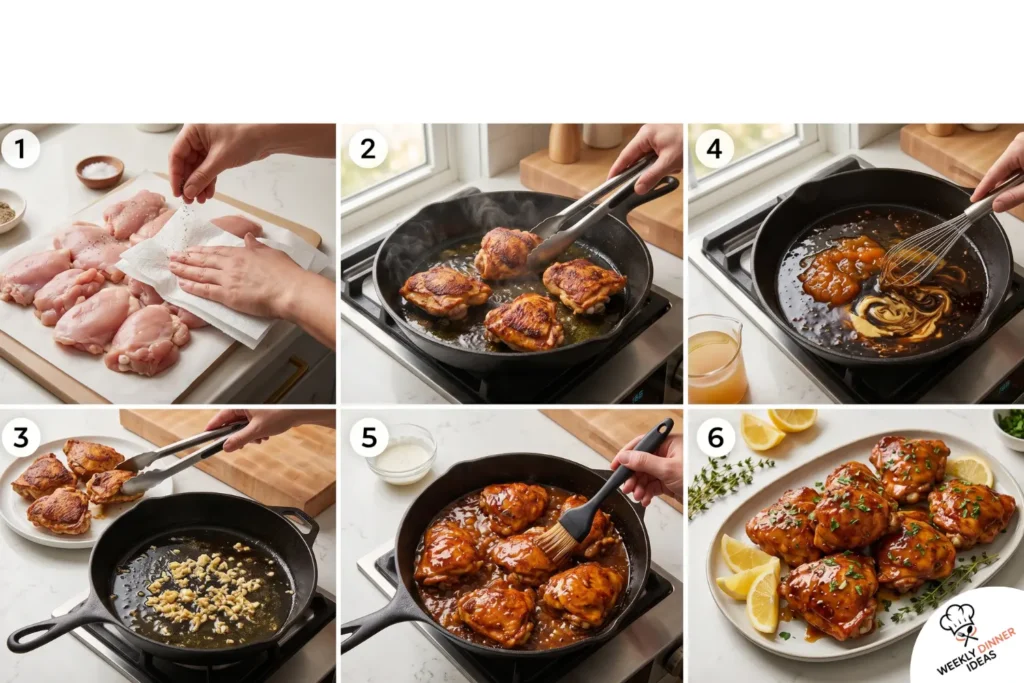
Start with a quick summary: Sear seasoned boneless chicken thighs until golden, make a simple glaze from apricot preserves and balsamic in the same pan, return chicken to coat and finish until cooked to 165°F. Serve with extra glaze spooned over.
Step 1: Season and prep the chicken
Pat the chicken thighs dry with paper towels—this is important to get a good sear. Season both sides liberally with salt and pepper. Let them sit for 5–10 minutes while you gather the other ingredients; this helps the salt start to penetrate and improves flavor.
What to look for: The thighs should be dry to the touch (not damp), which helps prevent steaming in the pan.
Practical advice: If your thighs are uneven in thickness, press them gently with the heel of your hand or butterfly thicker sections so they cook uniformly.
Step 2: Sear the chicken
Heat 1 tablespoon olive oil in a large skillet over medium-high heat until shimmering but not smoking. Add the thighs in a single layer without crowding—work in two batches if needed. Sear for 4–5 minutes without moving them, until the undersides are deep golden brown and release easily from the pan. Flip and sear the second side for 3–4 minutes.
What to look for: You want a rich mahogany color; if it’s pale, increase heat slightly next time. If it blacks, the pan was too hot—reduce heat and deglaze promptly.
Practical advice: Use tongs and resist the urge to press the chicken down; that squeezes out juices.
Step 3: Remove chicken and make the glaze
Transfer the seared thighs to a plate and lower the heat to medium. Add the minced garlic to the skillet and sauté briefly—about 20–30 seconds—until fragrant but not brown. Add the apricot preserves, balsamic vinegar, Dijon mustard, and soy sauce. Stir to combine, scraping up browned bits (these add flavor). Let the sauce bubble gently for 2–3 minutes to meld and reduce.
What to look for: The glaze should become glossy and start to thicken slightly. If it’s too thick, stir in up to 2 tablespoons chicken broth or water to reach a spoonable consistency.
Practical advice: Taste and adjust—if the glaze is too sharp from the balsamic, add a pinch of salt or a dash more jam. If it’s too sweet, add a teaspoon of lemon juice or a splash more vinegar.
Step 4: Return chicken and finish cooking
Return the chicken thighs to the pan, spooning sauce over each piece. Reduce heat to medium-low and simmer gently for 3–6 minutes, turning once, until the internal temperature reads 165°F on an instant-read thermometer. If you like a thicker glaze, stir a cornstarch slurry (1 tsp cornstarch + 1 Tbsp cold water) into the sauce and simmer 1–2 minutes until glossy.
What to look for: The glaze should cling to the chicken and form a sticky coating. Avoid boiling hard; you want a gentle simmer to prevent burning the sugars.
Practical advice: For the shiniest finish, stir in 1 tablespoon cold butter off heat and swirl to emulsify just before plating.
Step 5: Rest and serve
Transfer thighs to a platter, spoon any pan juices over them, and rest for 3–4 minutes. Garnish with chopped parsley or thyme and serve with lemon wedges if desired.
What to look for: Resting lets juices redistribute and the glaze set slightly so it won’t slide off the meat when you slice.
Practical advice: If serving over rice or greens, spoon extra glaze from the pan over the serving for depth.
Pro Tips for the Best Balsamic Apricot Glazed Chicken Thighs
Use a quick answer first: Sear dry chicken, don’t scorch the glaze, and finish with butter for shine.
1. Dry the chicken thoroughly — moisture prevents browning. I always pat my thighs twice.
2. Control heat during glaze stage — sugar in jam can burn quickly; keep a gentle simmer.
3. Use an instant-read thermometer — thighs should reach 165°F. Trust the temp over timing.
4. Don’t skip deglazing — those brown bits (fond) in the pan are flavor gold. Scrape them into the glaze.
5. Make-ahead: Cook the thighs and store sauce separately; gently reheat and combine when ready. Sauce can intensify overnight.
6. Double the glaze if you like extra sauce — it keeps well in the fridge and is great on sandwiches.
7. If you prefer skin-on thighs, sear skin-side down longer to render fat, then finish in a 400°F oven for 8–10 minutes.
8. If glaze gets too sticky on reheating, loosen with a splash of water or broth and warm gently.
What to Serve with Balsamic Apricot Glazed Chicken Thighs
This chicken pairs beautifully with simple sides. For a weeknight plate, serve it over fluffy rice, mashed potatoes, or with roasted vegetables. If you want lighter options, a crisp green salad or sautéed green beans is lovely.
- For rice bowls and one-pan simplicity, see my collection of one-pan and sheet pan meals.
- Serve with roasted broccoli or carrots alongside recipes from the healthy dinner recipes category.
- For quick weeknight pairings and easy sides, check the quick weeknight dinners page for ideas that complement this glaze.
- If you want more chicken inspiration, browse the chicken recipes section for mains that pair well with leftover glaze flavors.
Natural pairings I reach for at home: jasmine rice to soak up the glaze, a simple herbed couscous, or lemon-roasted Brussels sprouts for contrast. A wedge salad with a tangy vinaigrette refreshes the palate between bites of sticky chicken.
Storage, Freezing, and Reheating
Store leftovers in an airtight container and refrigerate for up to 3–4 days. Freeze cooled portions in a freezer-safe container for up to 3 months.
To reheat: Thaw overnight if frozen. Warm gently in a skillet over low heat with a splash of water or broth to loosen the glaze, or reheat in a 325°F oven until warmed through. Microwave in short bursts, stirring and adding a tablespoon of water if the glaze tightens too much.
Texture note: Refrigerated chicken will firm up and the glaze may stiffen; gentle reheating restores moisture but a slight texture change is normal. Leftover slices are excellent cold on salads or in sandwiches.
About This Recipe and Why It Works
I developed this recipe from a blend of weeknight practicality and restaurant techniques I learned in culinary school. The logic is simple: use the concentrated sweetness of jam for quick caramelization, anchor it with balsamic’s acid, and build savory base notes with mustard and a touch of soy. Choosing boneless thighs keeps cook time short and forgiving—thigh meat tolerates higher heat and remains moist even if you’re juggling kids’ baths and backpacks.
This recipe fits right into Weekly Dinner Ideas’ philosophy: approachable, flavorful meals that don’t require culinary wizardry. I make this glaze often when I want something that tastes “made” but can come together with pantry staples. Over the years I’ve learned not to rush the sear, to watch the glaze’s sugar carefully, and to always finish with a tiny knob of butter for that glossy, restaurant-style sheen. Those small steps make dinner feel elevated without extra stress.
Frequently Asked Questions
Can I use bone-in, skin-on thighs?
Yes. Bone-in, skin-on thighs will be juicier and more flavorful but need longer cooking. Sear skin-side down until the fat renders and the skin is crisp, then finish in a 400°F oven for 8–12 minutes until internal temperature reaches 165°F. In practice: After searing both sides, transfer the skillet to the oven or move thighs to a baking sheet. Keep an eye on the glaze stage to prevent burning; you may need to reduce glaze volume slightly.
Can I make the glaze ahead of time?
Yes. The apricot-balsamic glaze can be made up to 3 days ahead and refrigerated in a jar. Rewarm gently before tossing with the chicken. Tip: If the glaze firms in the fridge, warm it over low heat with a splash of water or broth and stir until spoonable.
How do I know when the chicken is done without a thermometer?
Cook until juices run clear and the thickest part feels springy, but I strongly recommend an instant-read thermometer for accuracy—165°F is the safe target for chicken thighs. Relying on timing alone can lead to undercooking or drying.
Can I reduce the sugar in the glaze?
Yes, reduce apricot preserves to 2 tablespoons and add 1–2 teaspoons of honey or your preferred sweetener if needed. The texture will be less jammy; you can thicken with a tiny cornstarch slurry if desired. Note: Reducing sugar changes caramelization behavior, so watch the glaze closely as it simmers.
Is this recipe gluten-free?
It can be. Use tamari or coconut aminos instead of soy sauce to make the glaze gluten-free. Confirm your apricot jam doesn’t include gluten-containing additives.
How do I double the recipe?
Double all ingredients and cook in two batches to avoid overcrowding the pan. Overcrowding lowers pan temperature and prevents a proper sear, resulting in steamed rather than caramelized chicken.
What if my glaze is too thin or too thick?
Too thin: simmer a bit longer uncovered or add a cornstarch slurry (1 tsp cornstarch + 1 Tbsp water). Too thick: stir in 1–2 tablespoons chicken broth or water until you reach a spoonable consistency.
Final Thoughts
This Balsamic Apricot Glazed Chicken Thighs recipe is one of my favorite go-tos when I want a quick meal that looks and tastes like it took longer than it did. The sticky, glossy glaze and juicy thighs are reliably satisfying, and the method is flexible whether you’re feeding a family or cooking for two. If you want more quick chicken dinners, check the chicken recipes collection or browse quick weeknight dinners for complementary ideas. For healthy side ideas that pair well, my healthy dinner recipes page has options that are simple to pull together.
If you try this, I’d love to hear how it turned out—leave a comment, rate the recipe, and save it to your Pinterest boards for later using my profile, Chicken by Elizabeth on Pinterest. Happy cooking!
Quick Recipe Summary
10 minutes
18 minutes
28 minutes
4
Easy
Weeknight dinners, easy entertaining, meal prep
Sweet-tangy, savory, slightly sticky and caramelized
Nutrition Information
| Nutrient | Per Serving |
|---|---|
| Calories | Approx. 380 |
| Protein | Approx. 30 g |
| Carbohydrates | Approx. 18 g |
| Dietary Fiber | Approx. 0.5 g |
| Fat | Approx. 18 g |
These values are estimates based on typical ingredient amounts and a 4-serving yield.
—
If you’d like, I can convert this into a printable recipe card, adjust it for bone-in thighs with oven timing, or create a low-sugar version. Just tell me how you plan to cook it (pan, oven, grill) and I’ll tailor the instructions.

Balsamic Apricot Glazed Chicken Thighs
Ingredients
Equipment
Method
- Season and prep the chicken. Pat the chicken thighs dry with paper towels. Season both sides generously with salt and freshly ground black pepper. Let the chicken sit for 5–10 minutes while you gather the other ingredients. If thighs are uneven, press or butterfly thicker sections so they cook evenly.
- Sear the chicken. Heat olive oil in a large skillet over medium-high heat until shimmering but not smoking. Add the thighs in a single layer without crowding. Sear for 4–5 minutes without moving, until the undersides are deep golden brown and release easily from the pan.
- Flip and remove. Flip the chicken and sear the second side for 3–4 minutes. Transfer the seared thighs to a plate and lower the heat to medium.
- Start the glaze. Add the minced garlic to the skillet and cook for 20–30 seconds, stirring constantly, until fragrant but not browned. Add the apricot preserves, balsamic vinegar, Dijon mustard, and soy sauce or tamari if using.
- Reduce the glaze. Stir to combine, scraping up the browned bits from the bottom of the pan. Let the sauce bubble gently for 2–3 minutes, until glossy and slightly thickened. If it is too thick, stir in chicken broth or water until spoonable.
- Finish the chicken. Return the chicken thighs to the pan and spoon the glaze over each piece. Simmer gently for 3–6 minutes, turning once, until the chicken reaches 165°F and the glaze clings to the meat.
- Thicken and gloss if desired. If you want a thicker glaze, stir in the cornstarch slurry and simmer for 1–2 minutes. For a shiny restaurant-style finish, remove from heat and swirl in the butter until smooth.
- Rest and serve. Transfer the thighs to a platter and spoon pan juices over the top. Rest for 3–4 minutes, then garnish with chopped parsley or thyme and serve with lemon wedges if desired.
Notes

Elizabeth Morgan
Easy & Delicious Recipes
Follow for quick family-friendly recipes, baking inspiration, and comfort food favorites.
Follow on Pinterest