Easy Maple Dijon Chicken Thighs Ready in Under 30 Minutes!
- One-Pan & Sheet Pan Meals
 Elizabeth
- 0
- 42 minutes read
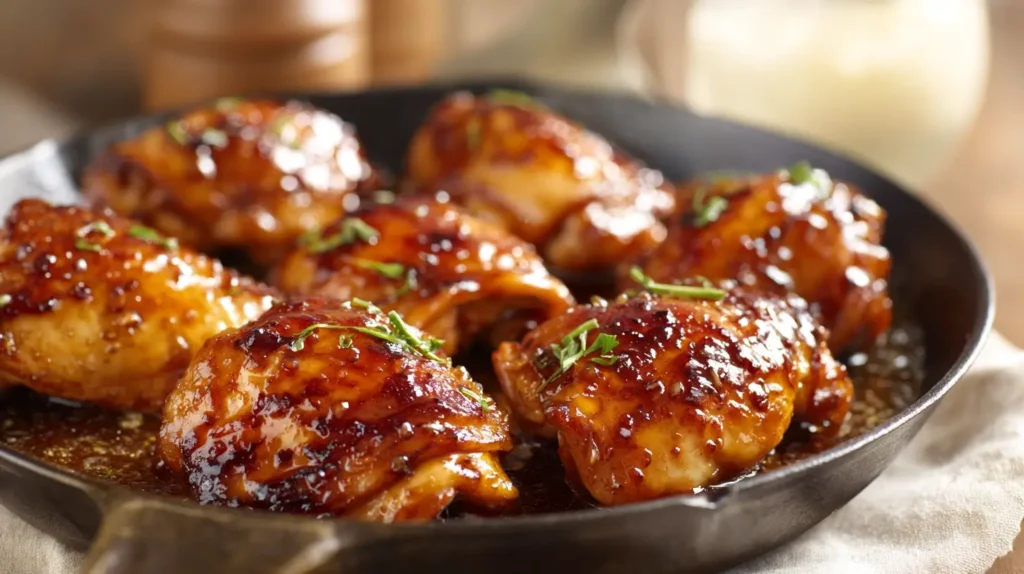
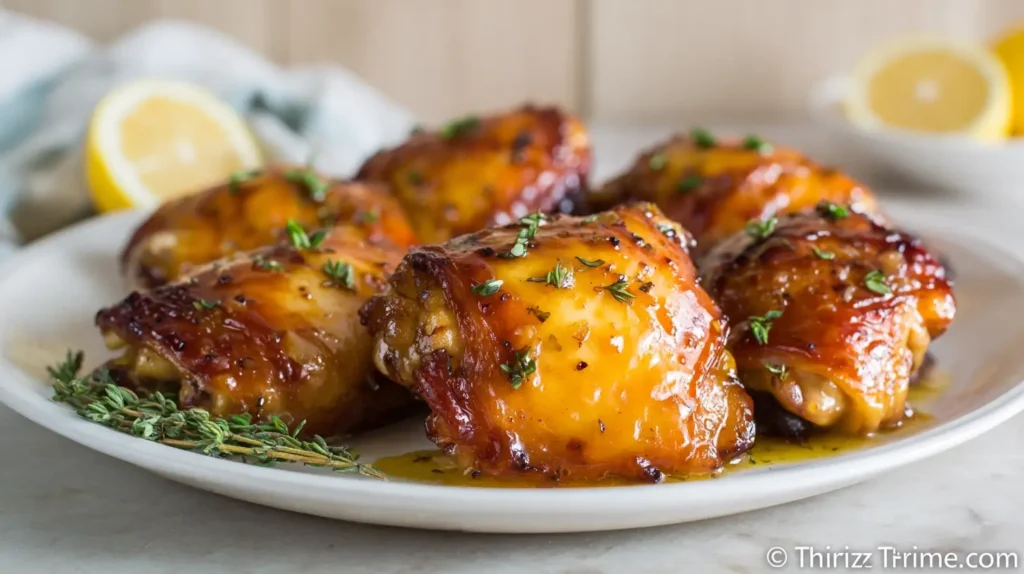
There’s something about a sticky, tangy glaze that makes weeknight dinners feel special without requiring a lot of fuss. Maple Dijon Chicken Thighs are one of my go-to quick dinners when I want something cozy, saucy, and reliably family-friendly. This version uses boneless chicken thighs seared until golden, then finished in a simple maple–Dijon pan sauce that clings to the meat. It’s quick (under 30 minutes), forgiving, and full of sweet-savory flavor—perfect for busy weeknights, leftover lunches, or a low-stress dinner with friends.
I’m Elizabeth Morgan — trained in the kitchen and always chasing the balance between bold flavor and easy technique. In this recipe I’ll walk you through the exact ingredients, the little tricks I use to get a glossy glaze and juicy thighs, plus sensible substitutions and serving ideas so you can make this your new family staple. Let’s get cooking.
Why You’ll Love These Maple Dijon Chicken Thighs
Maple Dijon Chicken Thighs deliver a fast, high-impact weeknight meal with minimal fuss, bold sweet-and-tangy flavor, and juicy, caramelized chicken every time.
You’ll love this recipe because:
- Flavor: The marriage of pure maple syrup and tangy Dijon creates a deep, layered glaze that’s sweet without being cloying.
- Texture: Searing the thighs gives a lightly crisp exterior while the pan sauce keeps the inside tender and juicy.
- Convenience: Boneless thighs cook fast and the one-pan method keeps cleanup easy—great for busy evenings.
- Family appeal: Kids often like the sweet-savory profile and adults appreciate the bright mustard note.
- Meal prep: Leftovers reheat well and make excellent sandwich or salad toppings.
- Dietary flexibility: Naturally gluten-free if you use gluten-free Dijon and soy-free if you skip soy sauce or use coconut aminos.
What Is Maple Dijon Chicken Thighs?
Maple Dijon Chicken Thighs are boneless chicken thighs pan-seared and finished in a maple syrup and Dijon mustard glaze for a quick, sweet-tangy dinner.
This dish is a weeknight-friendly skillet meal where the maple syrup brings sweetness, Dijon adds tang and depth, and a splash of acid (vinegar or lemon) balances everything. It’s commonly served with rice, mashed potatoes, or roasted vegetables and stands out for its glossy sauce and easy pantry-ingredient profile.
Ingredients You’ll Need
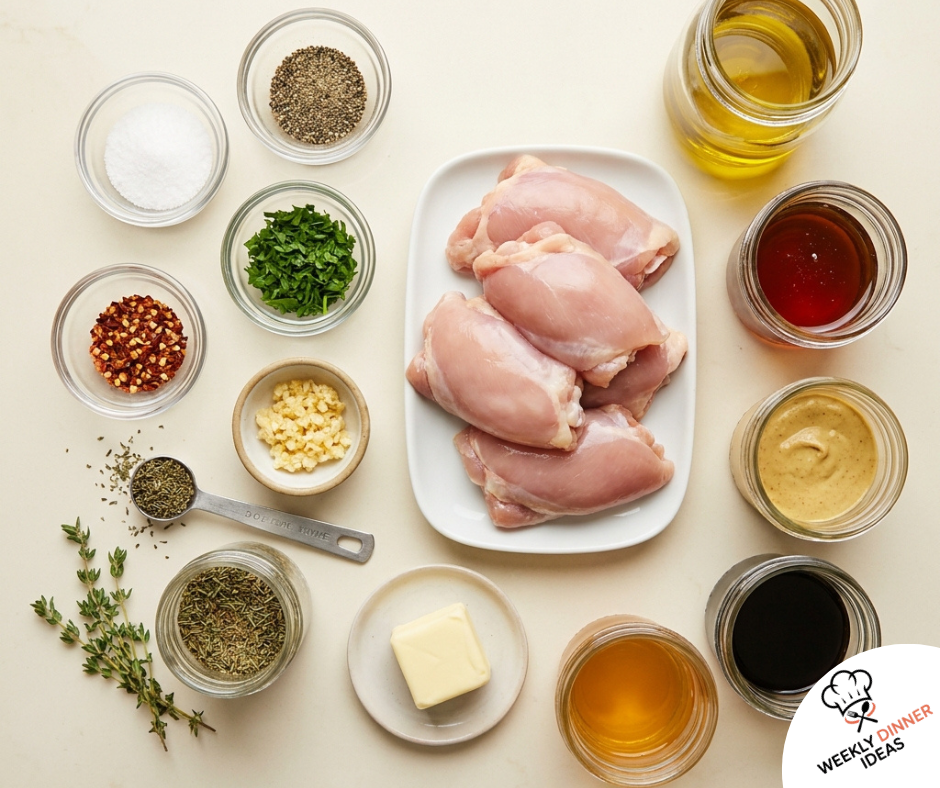
- 1 1/2 pounds boneless, skinless chicken thighs (about 6–8 thighs)
- Kosher salt and freshly ground black pepper
- 1–2 tablespoons olive oil (or neutral oil like avocado)
- 2 tablespoons unsalted butter (optional, for extra gloss)
- 3 tablespoons pure maple syrup (grade A)
- 3 tablespoons Dijon mustard
- 1 tablespoon apple cider vinegar (or lemon juice)
- 1 tablespoon low-sodium soy sauce or coconut aminos (optional, adds umami)
- 2 medium garlic cloves, minced
- 1/2 teaspoon dried thyme or 1 teaspoon fresh thyme leaves (optional)
- Pinch of red pepper flakes (optional, for heat)
- Chopped parsley for garnish (optional)
Notes on ingredients and quality:
- Choose pure maple syrup (not pancake syrup) for a clean, caramel flavor. It’s the simplest way to get real maple depth.
- Dijon mustard provides the dish’s tangy backbone. A coarse-grain mustard adds texture if you like a little bite.
- Boneless thighs are my pick for juicy, fast-cooking meat; they stay moist and take to the glaze beautifully.
Tools You Need
- Heavy-bottomed skillet or large nonstick pan (paid link)
- Tongs (paid link)
- Small bowl or measuring cup for sauce mix (paid link)
- Instant-read thermometer (recommended) (paid link)
- Wooden spoon or spatula (paid link)
- Cutting board and chef’s knife (paid link)
- Measuring spoons (paid link)
Ingredient Substitutions and Additions
Best substitutions
- Chicken: You can use boneless, skin-on chicken thighs (add 2–3 extra minutes per side) or boneless chicken breasts (reduce final simmer time and watch for dryness).
- Maple syrup: Honey works in a pinch but changes flavor—use the same quantity.
- Dijon mustard: Yellow mustard will give more sweetness and less tang; use 1–2 tablespoons and taste.
Flavor additions
- Add 1 teaspoon whole-grain mustard to the sauce for texture.
- Stir in a teaspoon of fresh rosemary or a splash of balsamic vinegar for complexity.
- For a smoky note, add 1/4 teaspoon smoked paprika to the seasoning.
Dietary swaps
- Gluten-free: Use gluten-free soy sauce or coconut aminos and confirm your Dijon is gluten-free.
- Low-sugar: Reduce maple syrup to 2 tablespoons and add 1 tablespoon chicken broth plus a bit more vinegar for balance.
- Low-sodium: Omit soy sauce and salt to taste at the end.
How to Make Maple Dijon Chicken Thighs
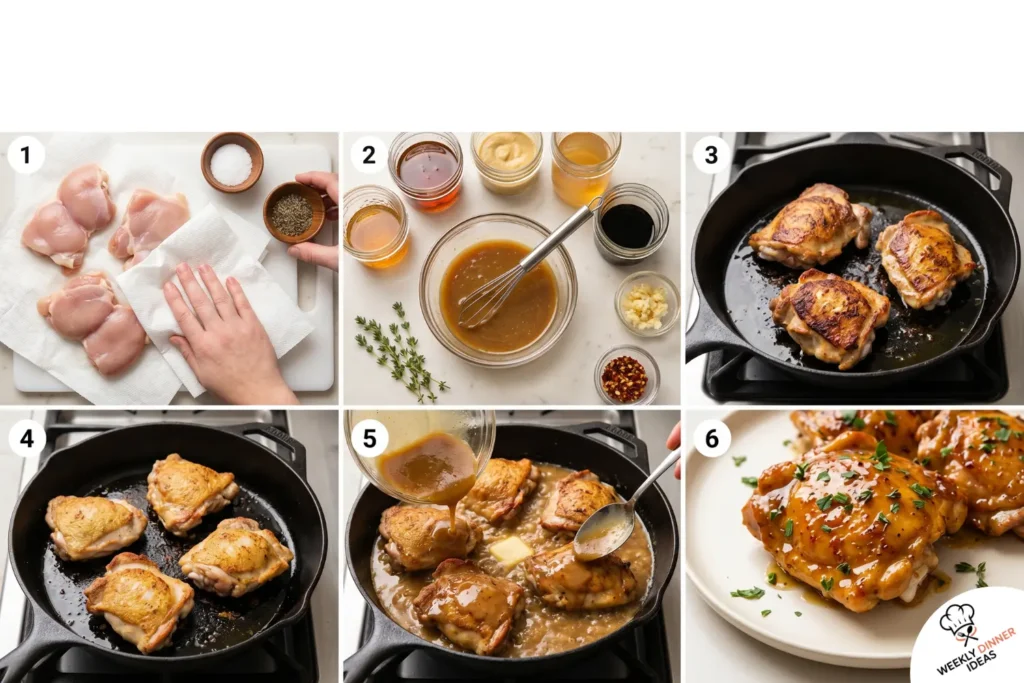
Maple Dijon Chicken Thighs cook quickly: sear the thighs to build color, whisk a small sauce with maple and mustard, then simmer briefly until the glaze thickens and the chicken reaches 165°F.
Step 1: Prep the chicken
Pat the thighs dry with paper towels and season both sides with kosher salt and freshly ground pepper. Drying the surface is essential; a damp surface steams instead of browns, and you lose that lovely sear. If your thighs vary in thickness, press them lightly to even them out for consistent cooking.
What to look for: Dry surface and even thickness. The smell should be clean—no off odors.
Kitchen tip: Bring the chicken to room temperature for 10–15 minutes before cooking if you have it prepared ahead. That short rest reduces shock in the pan and promotes even browning.
Step 2: Make the sauce mix
In a small bowl, whisk together the maple syrup, Dijon mustard, apple cider vinegar (or lemon), soy sauce (if using), minced garlic, and thyme. Taste it briefly: it should be bright and slightly sweet—more mustard will increase tang, more maple ups the sweetness. Adjust now rather than later.
What to look for: A balanced blend—don’t worry if it tastes a little sharp; the cooking will round the flavors.
Step 3: Sear the chicken
Heat a heavy skillet over medium-high heat until shimmering. Add 1 tablespoon olive oil and swirl. Place the thighs in the pan in a single layer—don’t crowd the pan. Let them cook undisturbed 4–5 minutes until the underside is golden-brown and releases easily. Flip and sear the other side 3–4 minutes.
Sensory cues: You should hear a steady sizzle and see deep golden-brown color under the thighs when you peek. That color is flavor.
Common mistakes: Moving the chicken too soon prevents a proper crust. If it sticks, give it 30–60 seconds more.
Step 4: Add the sauce and finish
Reduce heat to medium-low. Push the chicken to the edges and add the butter (if using) to the pan; swirl to melt. Pour the maple–Dijon mixture into the center and let it bubble gently, spooning the sauce over the thighs. Simmer 3–5 minutes until the sauce thickens slightly and coats the back of a spoon. Use an instant-read thermometer to check for 165°F in the thickest part.
What to look for: The sauce will go from loose to glossy and slightly syrupy. If it’s boiling furiously, lower the heat—the sugars can burn.
Practical advice: Tilt the pan and spoon the glaze over the thighs often. If the glaze reduces too far, add 2 tablespoons water or chicken broth to loosen it while still cooking to temperature.
Step 5: Rest and serve
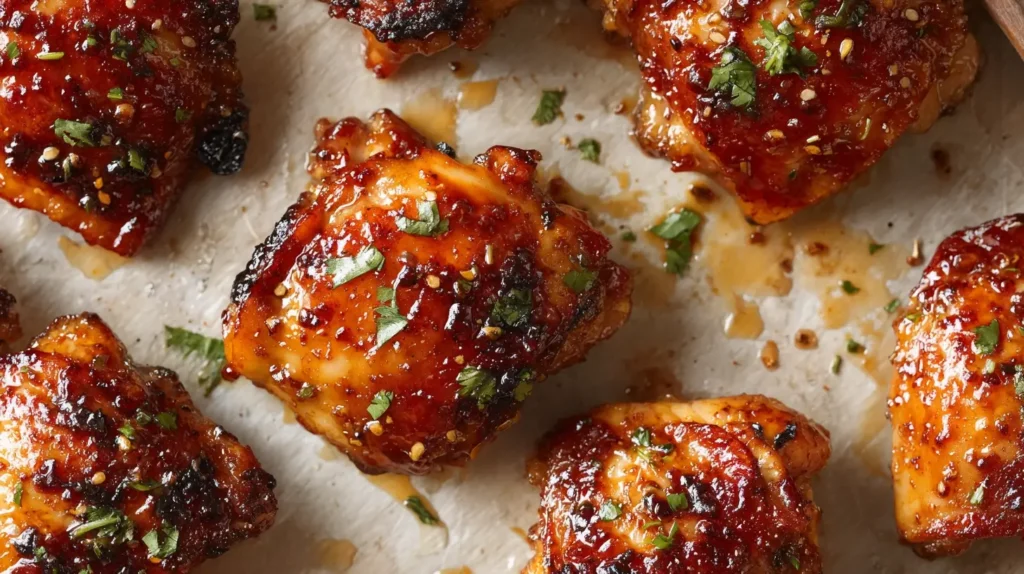
Transfer the chicken to a plate and let rest 3–4 minutes; the glaze will settle and the juices redistribute. Spoon remaining glaze from the pan over the thighs and garnish with chopped parsley or extra thyme.
Sensory cues: The final chicken should be glossy, with a sticky-sweet surface and a bright mustard aroma. Juices should run clear, and the thermometer should read 165°F.
Pro Tips for the Best Maple Dijon Chicken Thighs
A quick searing-and-glaze method makes this recipe straightforward; follow these pointers for reliably delicious results.
- Don’t overcrowd the pan: Searing needs space. Work in batches if needed so each thigh browns properly.
- Dry the chicken well: Moisture is the enemy of browning—patting dry makes a big visual and flavor difference.
- Temper the heat: High heat sears; medium-low finishes. If the sauce looks like it’s burning, reduce the heat immediately and add a splash of water or broth.
- Use an instant-read thermometer: Visual cues are helpful but temperature is reliable—165°F is safe for poultry.
- Adjust sweetness to taste: Start with the recipe ratio, then reduce maple syrup by a tablespoon if you prefer less sweet.
- Make-ahead shortcut: Whisk the glaze and store it in the fridge up to 3 days; when ready to cook, sear the chicken and add the chilled glaze—allow a minute extra to come back up to temperature.
- Doubling the recipe: Cook in two pans or in batches so you still get a good sear. If using the oven, you can transfer seared thighs to a 400°F oven for about 8–10 minutes and finish the glaze in the pan.
- Prevent burning: If you’re using maple and high heat, watch closely. The sugars caramelize quickly and can go from golden to bitter.
What to Serve with Maple Dijon Chicken Thighs
Maple Dijon Chicken Thighs pair beautifully with simple starches and bright vegetables. Here are ideas that work well and link to relevant pages on Weekly Dinner Ideas:
- Creamy mashed potatoes or buttery mashed cauliflower for a low-carb swap.
- Steamed rice or herbed quinoa to soak up the sauce; this chicken also complements the whole-grain sides found in our Healthy Dinner Recipes.
- Pan-roasted Brussels sprouts or roasted root vegetables—if you enjoy one-pan dinners, try pairing this with a sheet-pan veggie recipe from our One Pan & Sheet Pan Meals collection.
- A crisp green salad with lemon vinaigrette balances the glaze’s sweetness; check our Quick Weeknight Dinners for fast side ideas.
- For a chicken-forward meal plan, explore more ideas in the Chicken Recipes category on Weekly Dinner Ideas.
Mix and match these to suit your family’s tastes—this chicken plays well with many pantry staples.
Storage, Freezing, and Reheating
Store cooked Maple Dijon Chicken Thighs in an airtight container in the refrigerator for up to 3–4 days; for longer storage, freeze for up to 3 months. Reheat gently to preserve texture.
Fridge storage: Let the chicken cool slightly, then refrigerate within two hours. Keep sauce in the same container so the meat stays moist.
Freezer storage: Place cooled thighs in a freezer-safe container or bag with extra sauce to prevent freezer burn. Thaw overnight in the refrigerator before reheating.
Reheating best practices: Reheat in a skillet over low heat with a splash of water or broth to loosen the glaze, or in a 325°F oven covered with foil until warmed through. Avoid the microwave if you want to retain texture—the glaze may become syrupy and unevenly hot.
Note on texture: Reheated thighs will be perfectly acceptable for leftovers but may be slightly less glossy than freshly made; finish with a small knob of butter or a quick re-reduction of the reserved glaze for shine.
About This Recipe and Why It Works
I’ve always loved recipes that deliver maximum flavor with minimal complexity—this Maple Dijon Chicken Thighs recipe grew from that kitchen philosophy. In culinary school I learned how much depth can come from a few simple techniques: dry the protein, sear to create Maillard flavor, and build a small pan sauce to finish. The combination of maple and Dijon is classic because the sugar in the maple caramelizes for sweetness and color while the mustard brings acidity and bite, so the two balance beautifully.
At home, I rely on this recipe when I want something comforting but not heavy. It’s forgiving—thighs stay juicy even if slightly overcooked—and versatile. I’ll sometimes add a little soy sauce for backbone or a splash of apple cider vinegar for brightness. The dish reflects the Weekly Dinner Ideas mission: simple steps, real flavor, and recipes you can trust to feed your family without stress.
Frequently Asked Questions
Can I make this recipe with bone-in thighs?
Yes. Bone-in thighs will develop excellent flavor but require a bit more time—plan on about 6–7 minutes per side to sear and then 10–12 minutes of gentle simmering or finishing in a 375°F oven until the internal temperature near the bone reaches 165°F. Use a thermometer to ensure even doneness. Additional note: Bone-in pieces yield more depth but won’t be as fast as the boneless version.
Can I use chicken breasts instead of thighs?
You can, but breasts cook faster and can dry out. Use thin-cut or pound them to even thickness, sear 3–4 minutes per side, and finish in the sauce for 2–3 minutes until 165°F. Reduce maple syrup slightly if you prefer less sweetness with the leaner breast meat.
How do I prevent the glaze from burning?
Lower the heat as soon as you add the maple syrup—sugars burn quickly on high. Keep the sauce at a gentle simmer and stir frequently. If it thickens too fast, add a tablespoon or two of water or chicken broth and continue to simmer until the chicken reaches temperature.
Is this recipe gluten-free?
It can be. Use gluten-free Dijon mustard and substitute soy sauce with tamari or coconut aminos to avoid gluten. Check labels to be certain. The rest of the ingredients—chicken, maple syrup, vinegar—are naturally gluten-free.
How do I know when the chicken is done?
The most reliable method is an instant-read thermometer inserted into the thickest part of the thigh; it should read 165°F. Visually, juices will run clear and the meat will no longer be pink in the center, but temperature is the safest guide.
Can I prepare the sauce ahead of time?
Yes. Mix the maple–Dijon sauce and store it in the refrigerator for up to 3 days. When ready to cook, sear the chicken and add the chilled sauce, allowing an extra minute or two for the sauce to warm and reduce to the right thickness.
How do I make the sauce less sweet?
Reduce maple syrup to 2 tablespoons and increase the Dijon by 1/2–1 tablespoon or add an extra teaspoon of vinegar or a squeeze of lemon. Taste and adjust until the sweet-tang balance suits you.
Final Thoughts
Maple Dijon Chicken Thighs hit that sweet spot between accessible and special. They’re quick enough for a busy night, friendly enough for kids, and flavorful enough to serve guests without stress. If you’re building a weeknight rotation, this recipe is worth keeping in your back pocket.
For more easy chicken dinners and pairing ideas, explore the Chicken Recipes and Quick Weeknight Dinners collections on Weekly Dinner Ideas. If you like one-pan solutions, don’t miss the One Pan & Sheet Pan Meals category. And if you try this, pin it for later on my Pinterest board: Chicken by Elizabeth.
Leave a comment below to tell me how you adjusted the glaze or what you served with it—I love hearing small kitchen victories. If you make it, please rate the recipe and save it for another busy weeknight.
Quick Recipe Summary
10 minutes
15–18 minutes
25–28 minutes
4
Easy
Quick weeknight dinners, meal prep, family meals
Sweet, tangy, slightly savory with a glossy maple–mustard glaze
Nutrition Information
| Nutrient | Per Serving |
|---|---|
| Calories | Approx. 380 |
| Protein | Approx. 34 g |
| Carbohydrates | Approx. 12 g |
| Dietary Fiber | Approx. 0.5 g |
| Fat | Approx. 20 g |
These values are estimates based on common ingredient quantities and may vary depending on the exact product brands and portion sizes you use.
—
Recipe adapted for home cooks by Elizabeth Morgan at Weekly Dinner Ideas. If you found this helpful, pin this recipe on Pinterest: Chicken by Elizabeth.

Maple Dijon Chicken Thighs
Ingredients
Equipment
Method
- Prep the chicken. Pat the chicken thighs dry with paper towels and season both sides with kosher salt and freshly ground black pepper. If the thighs vary in thickness, press them lightly to even them out for consistent cooking.
- Mix the sauce. In a small bowl, whisk together the maple syrup, Dijon mustard, apple cider vinegar or lemon juice, soy sauce or coconut aminos if using, minced garlic, thyme if using, and red pepper flakes if using. The sauce should taste bright, tangy, and lightly sweet.
- Sear the first side. Heat a heavy skillet over medium-high heat until hot. Add 1 tablespoon oil and swirl to coat. Add the chicken thighs in a single layer without crowding. Sear undisturbed for 4–5 minutes, until the underside is golden brown and releases easily.
- Flip and brown. Flip the thighs and sear the second side for 3–4 minutes, until browned. Work in batches if needed so the chicken browns instead of steaming.
- Add the glaze. Reduce the heat to medium-low. Push the chicken slightly to the edges of the pan and add the butter if using. Pour the maple Dijon mixture into the center and let it bubble gently.
- Finish cooking. Spoon the sauce over the thighs and simmer for 3–5 minutes, until the glaze becomes glossy and slightly syrupy and the chicken reaches 165°F in the thickest part. If the glaze reduces too much, loosen it with 1–2 tablespoons water or chicken broth.
- Rest and serve. Transfer the chicken to a plate and let it rest for 3–4 minutes. Spoon the remaining glaze from the pan over the thighs and garnish with chopped parsley or extra thyme if desired.
Notes

Elizabeth Morgan
Easy & Delicious Recipes
Follow for quick family-friendly recipes, baking inspiration, and comfort food favorites.
Follow on Pinterest