
Experience the Irresistible Flavors of Greek Chicken and Potato Bowl!
- Healthy Dinner Recipes
 Elizabeth
- 0
- 40 minutes read
I love recipes that feel like a warm hug on a busy weeknight — and this Greek Chicken and Potato Bowl is exactly that. Bright lemon, fragrant oregano, and garlicky chicken meet crispy, golden potatoes and a cool spoonful of tzatziki for a bowl that’s at once comforting and fresh. As a professionally trained chef, I’ve cooked variations of this bowl dozens of times, tuning the marinade and roast times until the chicken stays juicy and the potatoes crisp without fuss. If you’re searching for a simple dinner that doubles as meal-prep magic, this Greek Chicken and Potato Bowl delivers. Let’s walk through how to make it reliably delicious.
Why You’ll Love This Greek Chicken and Potato Bowl
This recipe is an easy, flavorful weeknight bowl that balances bright citrus, warm roasted potatoes, and savory chicken for a satisfying meal everyone will eat.
You’ll love this Greek Chicken and Potato Bowl because it hits a lot of marks at once: vibrant lemon and garlic lift the chicken, oregano and olive oil tie it to the potatoes, and creamy tzatziki cools each bite. The textures — crisped potato edges, tender chicken, crunchy cucumber and red onion — make every mouthful interesting. It comes together with straightforward pantry ingredients, scales well for meal prep, and is forgiving if your timing isn’t perfect. It’s a great midweek option for busy families, and it adapts easily for lighter or heartier appetites.
What Is Greek Chicken and Potato Bowl?
Greek Chicken and Potato Bowl is a composed dish of marinated, roasted or pan-seared chicken served with lemon-roasted potatoes and Mediterranean-style toppings like cucumber, tomato, red onion, olives, feta, and tzatziki.
This bowl is essentially a deconstructed Greek platter—think chicken souvlaki meets Greek roasted potatoes—assembled into a portable, fork-and-spoon meal. It’s commonly served for casual dinners, lunches, or packed lunches. The flavor profile is lemon-forward and herbaceous, with a creamy, tangy counterpoint from yogurt-based sauce. What makes this version special is the balance between ease and authentic flavors: a quick marinade, high-heat roasting for crisp edges, and simple fresh toppings that make the bowl feel lively rather than heavy.
Ingredients You’ll Need
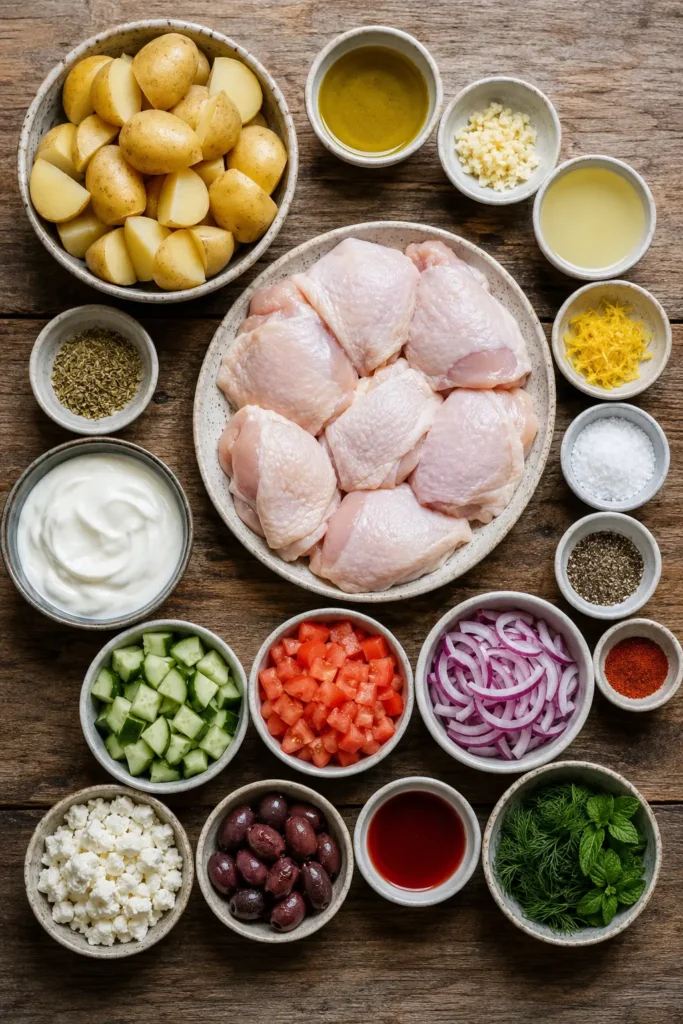
- 1 1/2 to 2 pounds boneless, skin-on chicken thighs (or boneless, skinless thighs)
- 1 1/2 pounds baby potatoes or Yukon Gold, halved or quartered
- 3 tablespoons extra-virgin olive oil, divided
- 3 cloves garlic, minced
- 2 tablespoons fresh lemon juice (about 1 lemon)
- 1 tablespoon lemon zest
- 1 tablespoon dried oregano (or 1 1/2 tablespoons fresh, chopped)
- 1 teaspoon kosher salt (adjust to taste)
- 1/2 teaspoon freshly ground black pepper
- 1/2 teaspoon smoked paprika (optional, for color and subtle warmth)
- 1/2 cup plain Greek yogurt (for tzatziki base or use store-bought)
- 1/2 cucumber, seeded and diced (for topping and tzatziki)
- 1 small tomato, diced
- 1/4 red onion, thinly sliced
- 1/4 cup crumbled feta cheese
- 1/4 cup kalamata or black olives, pitted and halved (optional)
- 1 tablespoon red wine vinegar or white wine vinegar (for quick pickling onions, optional)
- 1 tablespoon chopped fresh dill or mint (optional, for tzatziki)
- Salt and pepper to taste
Notes on quantities: This list serves 4 as a main bowl. If you prefer more sauce or extra vegetables, increase the cucumber, yogurt, and tomatoes. For a lighter version, substitute chicken breast and reduce the olive oil slightly.
Key ingredients explained: The lemons brighten both chicken and potatoes and help the skin crisp when roasted. Oregano and garlic are essential to the “Greek” flavor profile; dried oregano is convenient and concentrated while fresh oregano is more aromatic. Greek yogurt keeps the bowl cool and creamy—choose full-fat yogurt for richness or low-fat for a lighter bowl. Good-quality olive oil and fresh lemon juice will noticeably improve the flavor.
Tools You Need
- Baking sheet or rimmed sheet pan (paid link)
- Mixing bowls (large and small) (paid link)
- Measuring spoons and cups (paid link)
- Sharp knife and cutting board (paid link)
- Whisk or fork for mixing the marinade (paid link)
- Tongs (paid link)
- Instant-read thermometer (helpful for precise doneness) (paid link)
- Spoon or small bowl for tzatziki (paid link)
Ingredient Substitutions and Additions
Best substitutions
- Chicken thighs → boneless, skinless chicken breasts (reduce cooking time and watch for dryness)
- Baby potatoes → russet potatoes or sweet potatoes (adjust roast time; sweet potatoes caramelize faster)
- Greek yogurt → dairy-free plain coconut or cashew yogurt (flavor will change; add lemon and garlic)
- Dried oregano → herbes de Provence or a mix of thyme and marjoram (different but compatible)
Flavor additions
- Add a pinch of crushed red pepper to the marinade if you like heat.
- Stir 1 teaspoon sumac into the finished bowl for tangy, citrusy depth.
- Roast a few lemon halves alongside the potatoes to squeeze over at the end for a burst of caramelized lemon flavor.
- Fold chopped fresh dill into the tzatziki for more herbal brightness.
Dietary swaps
- Make it low-carb: skip potatoes and serve chicken over a bed of mixed greens or cauliflower rice.
- Make it gluten-free: the recipe is naturally gluten-free as written—just verify yogurt and any store-bought sauces.
- Make it dairy-free: omit feta and use a dairy-free yogurt; finish with a drizzle of extra-virgin olive oil.
How to Make Greek Chicken and Potato Bowl
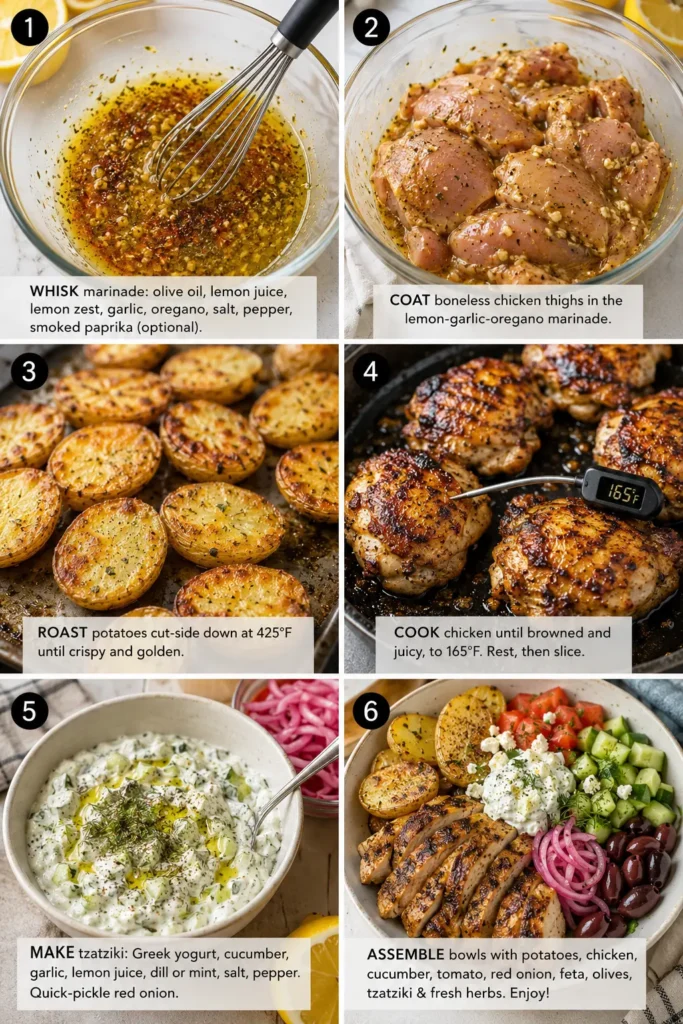
A short overview: Marinate the chicken briefly while you toss and roast the potatoes at high heat, then roast or pan-sear the chicken until golden and cooked through. Assemble bowls with fresh vegetables, feta, olives, and a creamy tzatziki-style yogurt.
Step 1: Prep and marinate
Pat the chicken thighs dry with paper towels—this helps the skin crisp. In a large bowl, whisk together 2 tablespoons olive oil, the lemon juice, lemon zest, minced garlic, oregano, paprika (if using), salt, and pepper. Add the chicken and turn to coat. If you have at least 30 minutes, let the chicken marinate in the fridge; if not, even a 10–15 minute rest will help the flavors adhere. Bring the chicken back to room temperature for about 15 minutes before cooking if marinated longer than 30 minutes.
What to look for: The marinade should cling to the chicken and smell bright and lemony. Don’t over-marinate for hours with salt and lemon; prolonged acid exposure can start to cure the meat and change texture.
Practical advice: Use skin-on thighs if you like crisped edges — the skin renders fat and adds flavor. If using breasts, reduce cooking time and check with a thermometer.
Step 2: Roast the potatoes
Preheat the oven to 425°F (220°C). Toss halved potatoes with 1 tablespoon olive oil, a pinch of salt, pepper, and a little dried oregano and minced garlic if you like. Spread them cut-side down on a rimmed baking sheet and roast for 25–35 minutes, turning once halfway through, until edges are browned and interiors are tender when pierced with a fork.
What to look for: The exterior should be deeply golden and slightly blistered; the inside should be soft. If small potatoes roast faster than larger chunks, cut them consistently so they finish at the same time.
Practical advice: Give the potatoes space on the pan—crowding reduces crispness. If you want extra-crisp edges, finish under the broiler for a minute, watching closely.
Step 3: Cook the chicken
If roasting: Arrange marinated thighs on a second sheet pan or on a rack over a pan and roast at 425°F (220°C) for about 20–28 minutes, depending on thickness, until the internal temperature reaches 165°F (74°C) at the thickest point. For skin-on thighs, the skin should be golden and slightly blistered.
If pan-searing then finishing: Heat a large skillet over medium-high heat with 1 tablespoon olive oil. Sear thighs skin-side down (if applicable) for 4–6 minutes until the skin is deeply golden, then flip and transfer the pan to a preheated 400°F oven for another 8–12 minutes to finish. Use an instant-read thermometer for accuracy.
What to look for: Juices should run clear and the meat should feel firm but springy. The exterior should be browned; avoid overcooking which leads to dryness.
Practical advice: Let the chicken rest for 5–8 minutes after cooking. Resting helps juices redistribute so the meat stays moist when cut.
Step 4: Make the tzatziki and quick pickles (optional)
For tzatziki: Grate or finely dice half a cucumber, squeeze out excess moisture with a towel, and mix into 1/2 cup Greek yogurt with 1 clove minced garlic, 1 tablespoon lemon juice, 1 tablespoon chopped dill or mint (optional), salt, and pepper. Chill at least 10 minutes to let flavors meld.
For quick-pickled onions: Thinly slice 1/4 red onion and toss with 1 tablespoon vinegar and a pinch of salt. Let sit 10–15 minutes. This softens the bite and adds brightness.
What to look for: Tzatziki should be creamy, slightly tangy, and not watery. If it seems loose, strain the cucumber earlier or add a spoonful more yogurt.
Practical advice: Making tzatziki while the potatoes roast saves time. If you want a chunkier sauce, leave cucumber more coarsely chopped; for a silkier sauce, finely grate it.
Step 5: Assemble the bowls
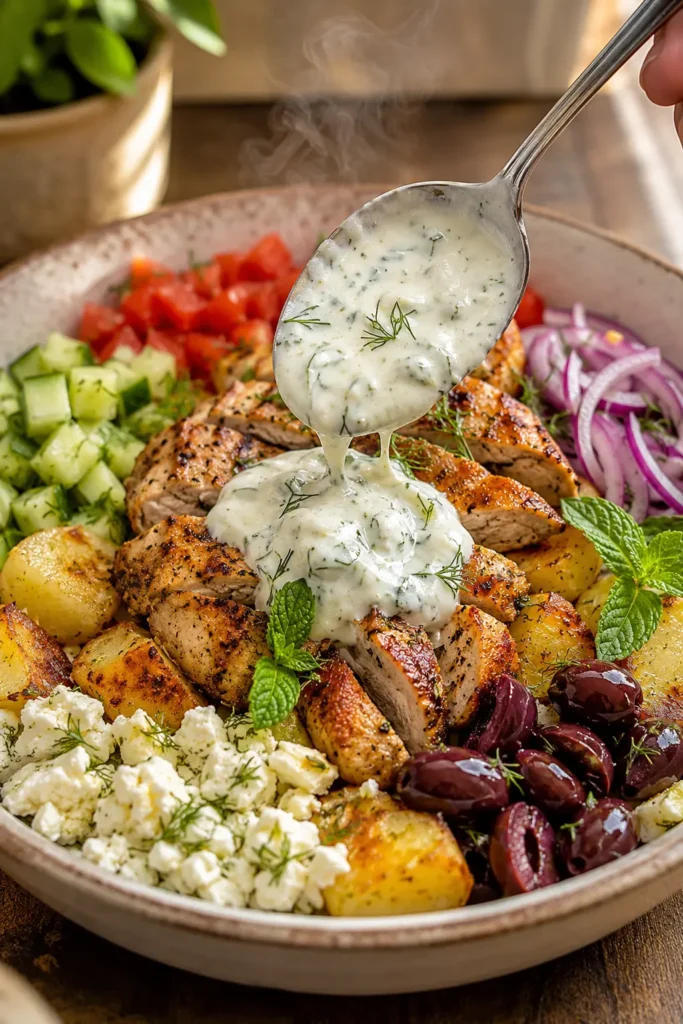
Layer bowls with a base of roasted potatoes and sliced chicken. Add diced tomatoes, cucumber, quick-pickled onions, olives, and a generous spoonful of tzatziki. Finish with crumbled feta and a drizzle of olive oil and an extra squeeze of lemon.
What to look for: Aim for a balance of textures on each spoon—creamy yogurt, salty feta, crisp cucumber, and a mix of warm and cool ingredients.
Practical advice: For meal prep, keep the sauce and fresh vegetables separate from warm proteins and potatoes to prevent sogginess. Add fresh herbs right before serving for a bright finish.
Pro Tips for the Best Greek Chicken and Potato Bowl
Focus on marinade balance, high heat for good roast color, and resting the chicken to keep it juicy.
- Don’t skip drying the chicken: Patting it dry before marinating and before searing helps the skin crisp and the marinade adhere.
- Use high oven heat for potatoes: 425°F gives the best color and crisp edges without overcooking interiors.
- Watch the acid: Lemon is key for flavor but don’t over-marinate chicken for more than 2–3 hours; too much acid changes texture.
- Make tzatziki early and chill: It tastes better after some time; straining the cucumber prevents watery sauce.
- Double up for leftovers: This recipe scales well—double the potatoes and sauces for meal prep. Store components separately.
- Use an instant-read thermometer: Chicken thighs are done at 165°F; checking prevents overcooking while ensuring safety.
- Crisp reheating trick: Reheat chicken and potatoes in a hot oven (400°F) for a few minutes to revive crispness instead of microwaving.
What to Serve with Greek Chicken and Potato Bowl
This bowl is a complete meal on its own, but it’s delightful alongside light sides or simple additions. A lemony green salad or a crisp Greek salad complements the flavors without overloading the plate. If you want more grains, spoon the bowl over couscous or orzo to make it heartier.
For related recipes and sides, you might enjoy browsing the site’s collection of chicken recipes or pairing this bowl with ideas from our healthy dinner recipes. If you prefer a one-pan approach, check our one-pan sheet pan meals for inspiration and for quick weeknight ideas, see our quick weeknight dinners.
Storage, Freezing, and Reheating
Store cooked components separately in the fridge for up to 3–4 days; freeze cooked chicken and potatoes for up to 3 months in airtight containers.
In the fridge: Keep tzatziki and fresh veggies separate from chicken and potatoes to avoid sogginess. Use airtight containers and place the sauce on top or in a separate small container.
Freezer: Lay cooked, cooled chicken and potatoes on a sheet until frozen, then transfer to freezer bags to avoid sticking. Thaw overnight in the refrigerator before reheating.
Reheating best practices: Reheat chicken and potatoes in a 400°F oven for 8–12 minutes to restore texture. Avoid microwaving for long stretches; if using a microwave, reheat briefly and finish under the broiler or in a hot skillet to regain crispness. Tzatziki should be served cold and not frozen; if it thins after refrigeration, stir in a spoonful of yogurt to re-thicken.
Texture note: Refrigerated potatoes soften a bit and absorb flavors—re-crisping in the oven brings back the edges but won’t fully mimic fresh-roasted texture. Chicken held too long can dry; reheat gently and consider adding a splash of olive oil or lemon juice.
About This Recipe and Why It Works
As someone who learned to cook alongside a father who loved bold, straightforward flavors, I return again and again to meals that feel both uncomplicated and welcoming. This Greek Chicken and Potato Bowl reflects that philosophy: simple technique, dependable ingredients, and a few small touches that make a big difference—like squeezing lemon over roasted potatoes or letting garlic mellow in yogurt. I test recipes to make sure busy cooks can reproduce them without fuss; that means realistic cook times, clear tips for texture, and flexible elements so you can use what’s on hand.
This recipe sits comfortably on Weekly Dinner Ideas because it’s approachable for families, adaptable for picky eaters, and forgiving when the week goes sideways. You can double it for leftovers, swap in a grain for variety, or turn it into a lighter salad bowl. It’s the kind of dinner I make when I want something bright and homey without spending hours in the kitchen.
Frequently Asked Questions
Can I use chicken breast instead of thighs?
Yes. Chicken breasts will work but cook faster and can dry out if overcooked. Reduce oven time and check for doneness early—breasts typically reach 165°F after 12–18 minutes at 425°F depending on thickness. Consider butterflying thicker breasts for even cooking. Additional tip: Brine quick-cut chicken breasts (saltwater soak for 15–30 minutes) to help them stay juicy, then pat dry and use the same marinade.
How long should I marinate the chicken?
Marinate 15 minutes to 2 hours for best flavor. Short marination (15–30 minutes) gives a good surface flavor; 1–2 hours allows deeper seasoning without denaturing the meat. Avoid marinating more than 6 hours when using a lemon-heavy marinade to prevent texture changes from the acid.
Can I make this gluten-free or dairy-free?
This bowl is naturally gluten-free if you use plain yogurt without additives. For dairy-free, substitute dairy-free yogurt and omit the feta or use a dairy-free cheese alternative. Flavor will shift slightly but remain bright and satisfying.
Why are my potatoes not crisping?
Crowding the pan is the most common culprit. Spread potatoes in a single layer with space between pieces so hot air circulates. Using a high oven temperature (425°F) and tossing them cut-side down helps create a golden crust. Another tip: give the potatoes a short parboil (3–5 minutes) and shake them in a colander to rough up the surface before roasting; this produces extra-crispy edges.
How can I make this recipe faster on a weeknight?
Chunk the potatoes smaller so they roast faster, or par-cook them in the microwave for a few minutes before roasting. Sear the chicken in a hot skillet while the oven finishes the potatoes, or roast chicken and potatoes together on the same pan if using similar size pieces (watch timing). For a truly fast route, use pre-cooked rotisserie chicken and focus on roasting or heating the potatoes and assembling fresh toppings.
Is it okay to assemble bowls ahead for meal prep?
Yes, but keep wet and fresh components separate. Store chicken and potatoes together in one container and tzatziki and fresh veggies in separate containers. Assemble just before eating to keep textures bright. Stored this way, components will last 3–4 days in the fridge.
How can I scale this recipe up or down?
Scale proportionally: roughly 3–4 ounces of chicken and 3/4 to 1 cup of potatoes per person as a guide. Marinade amounts may be rounded—ensure enough oil and acid to coat the protein lightly. When doubling, use two sheet pans to avoid crowding, which affects crispness and even cooking.
Final Thoughts
This Greek Chicken and Potato Bowl is a dependable weeknight winner: straightforward to prepare, full of bright flavors, and easy to personalize. If you’re already exploring family-friendly chicken dinners, check more ideas in our chicken recipes and find lighter choices in healthy dinner recipes. For nights when you want minimal cleanup, the one-pan sheet pan meals collection pairs nicely with this style of cooking, and if you’re short on time, our quick weeknight dinners page is full of go-to plans.
If you make this bowl, I’d love to hear how you tweaked it. Save it to Pinterest at my profile, Chicken by Elizabeth, leave a comment below with your adjustments, and rate the recipe so others can find it easily. Happy cooking — there’s something special about a meal that feels both familiar and a little bright with each bite.
Quick Recipe Summary
15–25 minutes (plus marinating time if desired)
25–35 minutes (potatoes) and 20–28 minutes (chicken)
45–60 minutes (including short marinate)
4
Easy
Weeknight dinners, meal prep, family meals
Lemon-forward, garlicky, herbaceous, creamy from tzatziki
Nutrition Information
| Nutrient | Per Serving |
|---|---|
| Calories | Approx. 520 |
| Protein | Approx. 35 g |
| Carbohydrates | Approx. 35 g |
| Dietary Fiber | Approx. 4 g |
| Fat | Approx. 24 g |
These values are estimates based on typical ingredient amounts and will vary depending on portion sizes and specific products used.
I hope this recipe becomes a reliable favorite on your rotation. If you liked this bowl, try it with extra herbs or swap the potatoes for roasted sweet potatoes for a seasonal twist. Don’t forget to pin your version at Chicken by Elizabeth and come back to tell me how it turned out.

Greek Chicken and Potato Bowl
Ingredients
Equipment
Method
- Pat chicken thighs dry.
- Mix olive oil, lemon juice, lemon zest, garlic, oregano, paprika, salt, and pepper.
- Coat chicken with marinade and rest 10–15 minutes, or refrigerate up to 2 hours.
- Preheat oven to 425°F.
- Toss potatoes with olive oil, salt, pepper, oregano, and garlic.
- Roast potatoes cut-side down for 25–35 minutes, turning halfway.
- Roast chicken separately at 425°F for 20–28 minutes, or sear and finish in oven until internal temperature reaches 165°F.
- Rest chicken 5–8 minutes, then slice.
- Make tzatziki with Greek yogurt, cucumber, garlic, lemon juice, dill or mint, salt, and pepper.
- Quick-pickle red onion with vinegar and salt if desired.
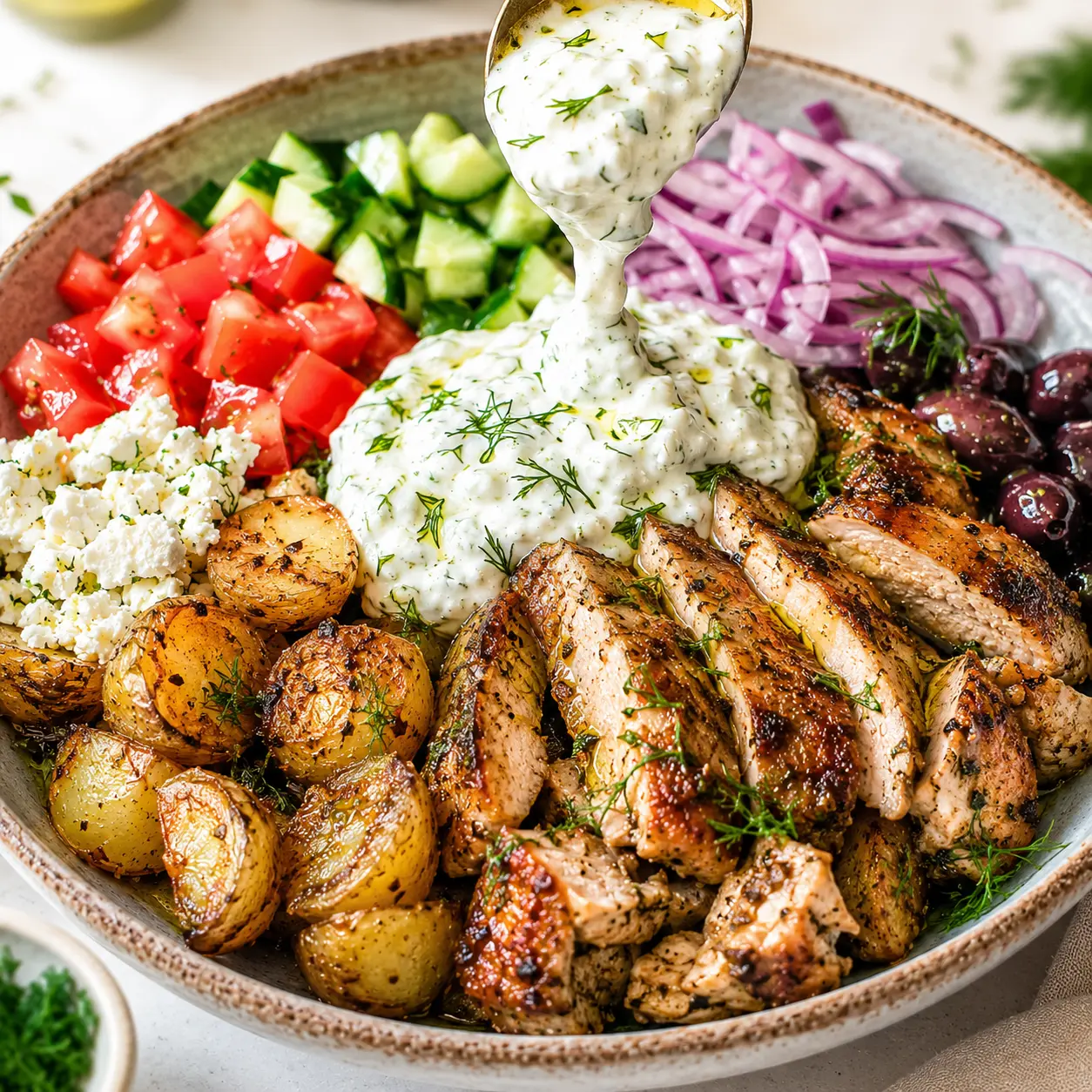
- Assemble bowls with potatoes, chicken, cucumber, tomato, onion, olives, feta, and tzatziki.
- Finish with olive oil and extra lemon.
Notes

Elizabeth Morgan
Easy & Delicious Recipes
Follow for quick family-friendly recipes, baking inspiration, and comfort food favorites.
Follow on Pinterest