
Indulge in Irresistible Flavor with Island-Style Jerk Chicken Thigh Marinade
- Chicken Recipes
 Elizabeth
- 0
- 46 minutes read
I still remember the first time I chased a true jerk flavor — the moment that briny, spicy-sweet, and aromatic hit of allspice and Scotch bonnet met sticky, charred chicken felt like a small culinary revelation. If you’re after that bold, island-forward profile at home, this Island-Style Jerk Chicken Thigh Marinade is my go-to: simple to blend, flexible, and forgiving enough for weeknights or weekend grilling. As a professionally trained chef who grew up cooking with my family, I’ve tweaked this toward everyday kitchens: accessible ingredients, clear technique, and the kind of aroma that fills the house the way a Sunday dinner should. Let’s get into how to make it, why it works, and a few chef’s tricks I use when I’m short on time.
Why You’ll Love This Island-Style Jerk Chicken Thigh Marinade
This marinade is a bright, spicy-sweet blend that soaks into dark meat, then caramelizes and chars beautifully when grilled or baked — giving you a crunchy, sticky exterior and juicy interior every time.
You’ll love this recipe because:
- Flavor: It balances fruity heat (Scotch bonnet or habanero), warm allspice, fresh herbs, and citrus for depth.
- Texture: The natural fat in chicken thighs keeps the meat tender while the sugar and oil in the marinade help form a caramelized crust.
- Convenience: Blend, marinate, and either grill or roast. Minimal hands-on time, big payoff.
- Family appeal: Adjust the heat and serve with cooling sides for kids or guests who prefer mild spice.
- Seasonal fit: Great on summer grills but equally comforting roasted in cooler months.
- Meal-prep value: Marinated thighs hold well in the fridge — cook extra for sandwiches, salads, or quick dinners.
- Dietary flexibility: Easy to adapt gluten-free (use tamari or coconut aminos) or lighter by baking instead of grilling.
What Is Island-Style Jerk Chicken Thigh Marinade?
Island-Style Jerk Chicken Thigh Marinade is a robust, herb-forward marinade made from hot peppers (traditionally Scotch bonnet), scallions, garlic, ginger, allspice, citrus, and a touch of sweet and savory to create the signature jerk profile.
This marinade is most often used on chicken thighs — the dark meat soaks up flavor and stays moist under high heat. The result tastes smoky, tangy, and spicy with warm baking-spice notes from pimento (allspice) and a hint of sweetness to balance the heat. My version is adapted for home kitchens: easy-to-find ingredients, simple blender prep, and clear cook options for both grill and oven.
Ingredients You’ll Need
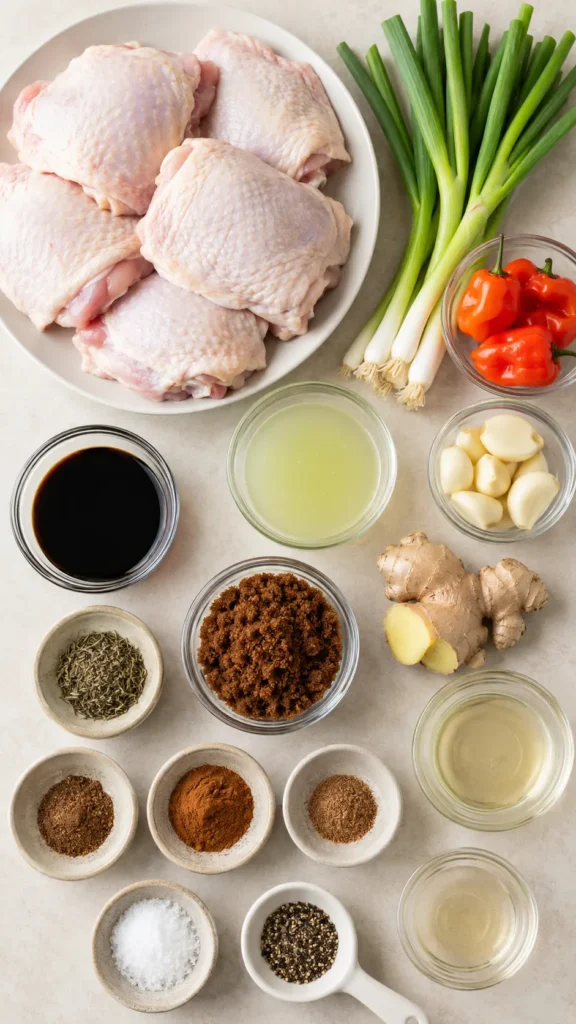
- 2 pounds bone-in, skin-on chicken thighs (about 6–8 thighs)
- 3 to 4 scallions (green onions), chopped
- 2 fresh Scotch bonnet peppers, seeded for milder heat (or 1 habanero) — wear gloves
- 3 garlic cloves, smashed
- 1-inch piece fresh ginger, peeled and chopped
- 2 tablespoons fresh lime juice (about 1 large lime)
- 2 tablespoons soy sauce or tamari (use tamari for gluten-free)
- 3 tablespoons olive oil or neutral oil (grapeseed)
- 2 tablespoons dark brown sugar or muscovado
- 1 tablespoon fresh thyme leaves (or 1 teaspoon dried thyme)
- 1 teaspoon ground allspice (pimento)
- 1/2 teaspoon ground cinnamon
- 1/4 teaspoon ground nutmeg
- 1 teaspoon kosher salt (adjust to taste)
- 1/2 teaspoon freshly ground black pepper
- Optional: 1 tablespoon white vinegar or apple cider vinegar for brightness
This ingredient list gives the marinade its backbone: citrus and vinegar for tang, brown sugar and oil for caramelization, and pimento/allspice with warming spices for that unmistakable jerk character. Fresh thyme and scallions lend green, herbaceous notes. If you can find Scotch bonnet peppers, they’re traditional — but habanero or even a mix of jalapeño and a pinch of cayenne (if you’re sensitive) will work.
Tools You Need
- Blender or food processor (paid link)
- Measuring spoons and cups (paid link)
- Mixing bowl or zip-top bag for marinating (paid link)
- Tongs (paid link)
- Grill or oven with a rimmed baking sheet (paid link)
- Instant-read thermometer (paid link)
- Wire rack (optional, for roasting) (paid link)
- Gloves for handling hot peppers (recommended) (paid link)
Ingredient Substitutions and Additions
Best substitutions
- Scotch bonnet pepper: substitute 1 habanero (similar heat) or 2 jalapeños for milder flavor. Remove seeds and membranes to reduce heat.
- Soy sauce: use tamari or coconut aminos for a gluten-free option.
- Brown sugar: swap with maple syrup or honey (use less honey if very sweet); adjust caramelization timing to prevent burning.
- Fresh thyme: 1 teaspoon dried thyme equals 1 tablespoon fresh.
Flavor additions
- Add 1 small shallot for an extra layer of sweetness and aroma.
- A splash (1 tsp) of rum in the marinade adds an authentic Caribbean hint; optional and use sparingly.
- Smoked paprika (1/2 tsp) adds smoky depth if you’re not grilling.
- Use a tablespoon of orange juice instead of lime for a fruitier note.
Dietary swaps
- Low-sodium: reduce soy sauce to 1 tablespoon and increase lime juice to maintain brightness.
- Low-sugar: omit brown sugar and add 1 tablespoon of grated pineapple or a splash of orange juice as natural sweeteners.
- Vegetarian option: use this marinade on portobello mushrooms or firm tofu to approximate jerk flavors.
How to Make Island-Style Jerk Chicken Thigh Marinade
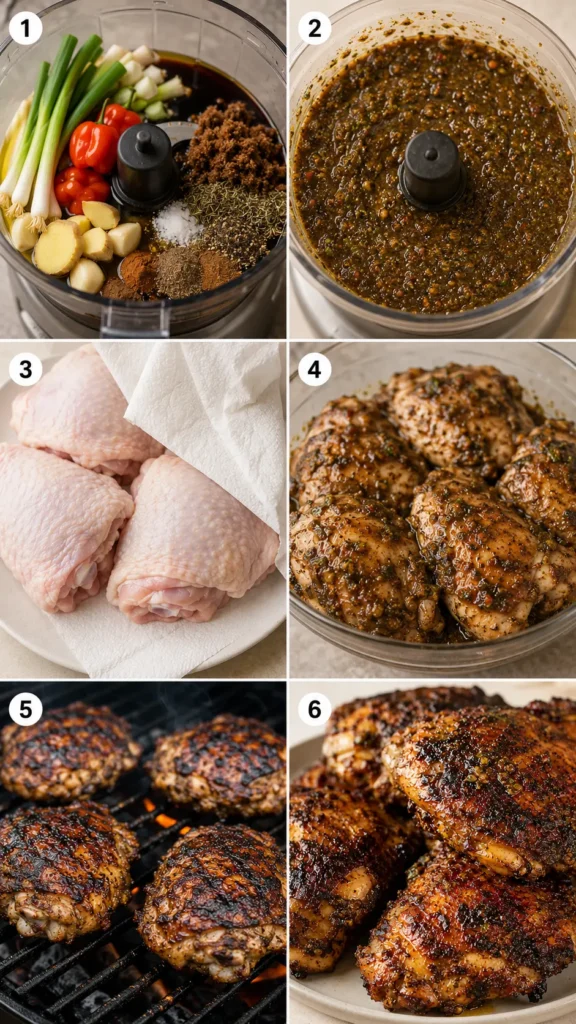
This marinade is blended until smooth, massaged into the thighs, and allowed to rest long enough for flavors to penetrate before cooking. Marinating time is flexible — the longer, the deeper the flavor.
Step 1: Prep and blend the marinade
Place the scallions, peppers (start with one pepper if you’re unsure), garlic, ginger, lime juice, soy sauce, oil, brown sugar, thyme, allspice, cinnamon, nutmeg, salt, and pepper into a blender or food processor. Pulse and then blend until you have a smooth, spoonable paste. Taste and adjust: add more lime for brightness, a pinch more sugar for balance, or another pepper if you want more heat.
What to look for: the marinade should be cohesive and glossy, not too watery. If it’s runny, add another scallion or a teaspoon of brown sugar to thicken. Aroma will be pungent and warmly spiced; that first whiff tells you you’re on the right track.
Practical tip: If you’re sensitive to heat, remove all visible seeds and membranes from the pepper and start with half the pepper, blending more in as desired.
Step 2: Marinate the chicken
Pat the chicken thighs dry with paper towels — dry skin helps with browning. Spoon or pour about two-thirds of the marinade over the thighs in a bowl or zip-top bag. Reserve the remaining third for basting during cooking or for finishing sauce (keep it refrigerated and never baste with marinade that has touched raw meat unless you boil it first).
Massage the marinade into the chicken, making sure to get under the skin where possible. For best results, pop the marinated thighs into the refrigerator for at least 2 hours; overnight (8–24 hours) yields the deepest flavor.
What to look for: the skin should look evenly coated and slightly tacky. If the thighs are clumped together in the bowl, rearrange them so every piece gets contact with the marinade.
Practical tip: If short on time, marinate at room temperature for 30 minutes, but don’t leave raw chicken out longer than two hours.
Step 3: Bring to room temperature before cooking
Remove the chicken from the fridge 20–30 minutes before cooking so it loses the chill — this promotes even cooking. If you’re grilling, have your grill preheated; if you’re roasting, preheat the oven.
What to look for: the marinade will have relaxed into the meat and the kitchen will smell like citrus and warm spices — a good sign!
Practical tip: Letting cold meat hit a hot grill can lead to uneven cooking; a short rest at room temp narrows that gap.
Step 4: Grill option — charred and sticky
Preheat your grill to medium-high, aiming for roughly 400–450°F cooking surface. Oil the grates lightly. Place thighs skin-side down and cook 6–10 minutes per side, depending on thickness and whether they’re bone-in; adjust until an instant-read thermometer reads 165°F at the thickest part (avoid touching bone). Watch for flare-ups: trim big drips of excess marinade off the skin if it causes heavy flames.
What to look for: the skin should blister, darken, and develop sticky caramelized patches. The scent will be smoky and sweet.
Practical tip: If the skin begins to char too quickly (sugars burning), move the pieces to a cooler zone and finish with indirect heat.
Step 5: Oven method — hands-off roasting
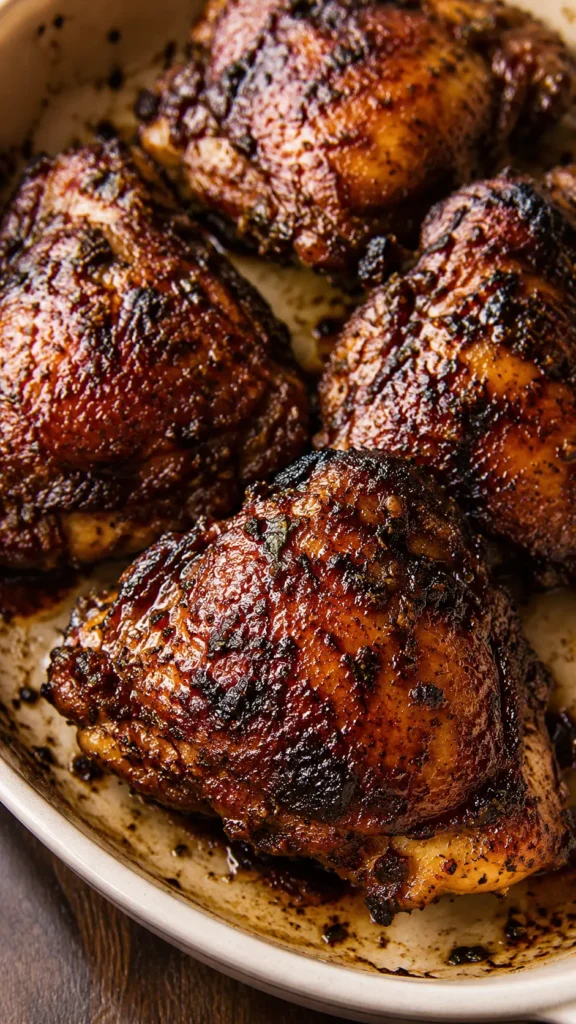
Preheat oven to 400°F. Line a rimmed baking sheet with foil and set a wire rack on top. Arrange thighs skin-side up with space between pieces. Roast for 35–45 minutes for bone-in thighs, until the internal temperature hits 165°F and juices run clear. For extra crispness, broil 2–3 minutes at the end, watching carefully to avoid burning.
What to look for: skin should be deep golden-brown with sticky edges. Juices should be clear when pierced.
Practical tip: Using a wire rack lifts the chicken and lets hot air circulate, giving a crisper skin without flipping.
Step 6: Rest, glaze, and serve
Remove thighs when they reach 165°F. Tent loosely with foil and rest 5–10 minutes — this is critical for juicy meat. While resting, warm the reserved marinade in a small saucepan and bring to a boil for at least 2 minutes if you want to use it as a finishing glaze (boiling renders it safe from raw contamination). Brush lightly over the thighs or serve on the side.
What to look for: the meat will feel slightly springy, juices will redistribute, and the skin will maintain crispness.
Practical tip: Don’t skip the resting step — cutting too soon lets precious juices escape and yields drier meat.
Pro Tips for the Best Island-Style Jerk Chicken Thigh Marinade
Use the right peppers, control the sugar on high heat, rest the meat, and use a thermometer.
- Don’t skip gloves for hot peppers: Scotch bonnets and habaneros pack a punch. Wear gloves and avoid touching your face.
- Control flare-ups: sugars cause charring. If grilling, keep a cooler zone for indirect heat and move thighs away from high flames once nicely browned.
- Use an instant-read thermometer: cook to 165°F for safety, then rest. This prevents overcooking thighs into dry pockets.
- Reserve some marinade: save a portion for basting or finishing (boil it first if it contacted raw chicken).
- Double the batch as a sauce: the marinade freezes well in an airtight container and also makes a great sauce once reduced.
- Make-ahead: marinate up to 24 hours. If you want to prep earlier, freeze raw marinated thighs for up to 3 months; thaw overnight in the fridge before cooking.
- Don’t overcrowd the pan: give thighs room to sear. Crowding steals heat and leads to steaming instead of caramelizing.
- Taste and tweak: before marinating, taste the blended marinade with a tiny smear on a cracker — adjust lime, salt, or sugar to match your preference.
What to Serve with Island-Style Jerk Chicken Thigh Marinade
Pair this spicy, aromatic chicken with sides that cool, soak up juices, or echo Caribbean flavors. Try grilled pineapple and mango salsa, cilantro-lime rice, or a simple cabbage slaw. For easy weeknight pairings, serve with roasted sweet potatoes and a crisp green salad.
On Weekly Dinner Ideas, you’ll find great companion recipes: browse our chicken recipes for more poultry ideas, or check one-pan sheet pan meals for quick vegetable sides that roast while the chicken cooks. If you want a lighter plate, the healthy dinner recipes section has salads and grain bowls that match perfectly, and for fast, kid-friendly options visit quick weeknight dinners.
Storage, Freezing, and Reheating
Store cooked jerk chicken thighs in the fridge for 3–4 days in an airtight container; freeze up to 3 months. Reheat gently in a 325°F oven until warmed through (about 15–20 minutes), or slice and sauté in a skillet with a splash of water to rehydrate the meat and revive the glaze.
Fridge storage: place cooled chicken in a shallow container to chill quickly and maintain texture. Freeze raw marinated chicken on a sheet tray until firm, then transfer to a freezer bag to save space and for easy thawing.
Freezer storage: raw marinated thighs freeze well — label with the date and use within 3 months. Thaw in the refrigerator overnight before cooking.
Reheating best practices: avoid high, fast reheats that dry the meat. Add a tablespoon of stock or water and cover to steam gently if reheating on the stovetop. For oven reheating, tent with foil to preserve moisture and re-crisp skin briefly under the broiler if needed.
Texture changes: reheated chicken may lose some crispness, but a quick broil or skillet finish will bring back caramelized edges.
About This Recipe and Why It Works
I love recipes that bridge authenticity and home practicality. Growing up in California, we didn’t always have access to every Caribbean pantry item, so I learned to translate classic profiles into ingredients my kitchen could reliably source. This Island-Style Jerk Chicken Thigh Marinade leans on pimento/allspice, lime, and thyme — the backbone of jerk — while using pantry-friendly items like soy sauce and brown sugar to layer umami and caramelization.
Chicken thighs are my preferred cut here because of their forgiving nature: they tolerate higher heat without drying out and carry the marinade into the center. Blending the marinade creates an emulsion that both seasons and protects the meat, helping sugars and oil form that sticky crust. The method — a short rest, careful high-heat searing or a moderate roast — is deliberate but not fussy, which matches my weeknight cooking philosophy: make bold flavor accessible without complex technique.
Frequently Asked Questions
Can I use chicken breasts instead of thighs?
Yes. Chicken breasts work, but they cook faster and can dry out. Cook boneless breasts over medium-high heat for 4–6 minutes per side depending on thickness and pull at 160–162°F, resting to 165°F. Marinate for a shorter period (1–4 hours) to avoid an overly soft texture from acid. Breasts have less fat and will not achieve the same caramelized juice as thighs, so watch timing carefully and consider brining briefly (10–20 minutes) before marinating to help retain moisture.
How long should I marinate the chicken?
Marinate at least 2 hours for noticeable flavor; overnight (8–24 hours) gives the best depth. Acid in the marinade (lime juice, vinegar) begins to break down proteins, so keep it under 24 hours to avoid a mushy texture. If you’re short on time, a quick 30–60 minute room-temperature marinade will still add flavor, but longer gives full penetration and more complex aroma.
What if I don’t have Scotch bonnet peppers?
Substitute with habanero for similar heat, or use serrano/jalapeño for milder results. Remove seeds and ribs to reduce heat. Another option is to use a mix of jalapeño with a pinch of cayenne to approximate the fruity heat of Scotch bonnet. If you use a hotter pepper, reduce quantity and taste cautiously; remember the heat intensifies slightly during cooking.
Is this recipe gluten-free?
It can be. Replace soy sauce with tamari or coconut aminos to make the marinade gluten-free. Also confirm that any brown sugar and spices you use are processed in gluten-free facilities if you’re strictly avoiding contamination.
Can I make the marinade ahead and freeze it?
Yes — the blended marinade freezes well for up to 3 months. Thaw in the fridge and use as-is to marinate, or reserve some before adding to raw chicken if you want to use it as a cooked glaze later. Freezing saves time and is handy for spontaneous grilling nights.
How do I prevent the sugar from burning on the grill?
Caramelization is desirable, but sugar burns quickly over direct flame. To prevent this, start thighs skin-side down to get a sear, then move them to indirect heat to finish. Keep a cooler zone on the grill and lower the flame if flare-ups occur. You can also reduce the final brush-on of sauce during the last few minutes rather than the beginning.
Can I use this marinade on other proteins or vegetables?
Absolutely. It’s excellent on bone-in chicken parts, pork shoulder for tacos, firm tofu, or sturdy vegetables like eggplant and portobello mushrooms. Adjust cook times accordingly and watch sugars on high heat.
Final Thoughts
This Island-Style Jerk Chicken Thigh Marinade is the sort of recipe that keeps surprising me — simple prep, big flavor, and so many ways to serve it. Whether you’re firing up the grill for a backyard night or roasting in the oven for a weeknight family dinner, the combination of heat, tang, and warm spices hits that satisfying sweet-heat spot everyone asks about. If you love bold chicken recipes, explore more in our chicken recipes collection or find quick sides in quick weeknight dinners. For lighter plates that pair well with this chicken, check out healthy dinner recipes and the one-pan meals pages for easy roasting ideas.
I’d love to know how you serve yours — leave a comment, rate the recipe, or pin it to your boards. Find more of my kitchen adventures and recipe collections on Pinterest at my profile.
Quick Recipe Summary
15–20 minutes (plus marinating)
20–45 minutes (depending on method and cut)
2 hours (including minimum marinating) to overnight for deepest flavor
4–6 (based on 2 pounds of thighs)
Easy–Intermediate
Weeknight dinners, backyard grilling, meal prep
Spicy, tangy, warm-spiced, slightly sweet, aromatic
Nutrition Information
| Nutrient | Per Serving |
|---|---|
| Calories | Approx. 380 |
| Protein | Approx. 28 g |
| Carbohydrates | Approx. 6 g |
| Dietary Fiber | Approx. 0.5 g |
| Fat | Approx. 26 g |
These nutrition values are estimates based on typical ingredients and serving sizes. Exact values vary with the cut of chicken, amount of skin, and any side dishes served.
—
If you try this Island-Style Jerk Chicken Thigh Marinade, tell me one small change you made — I always love hearing kitchen tweaks. Enjoy the char, the heat, and the little burst of island flavor at home.
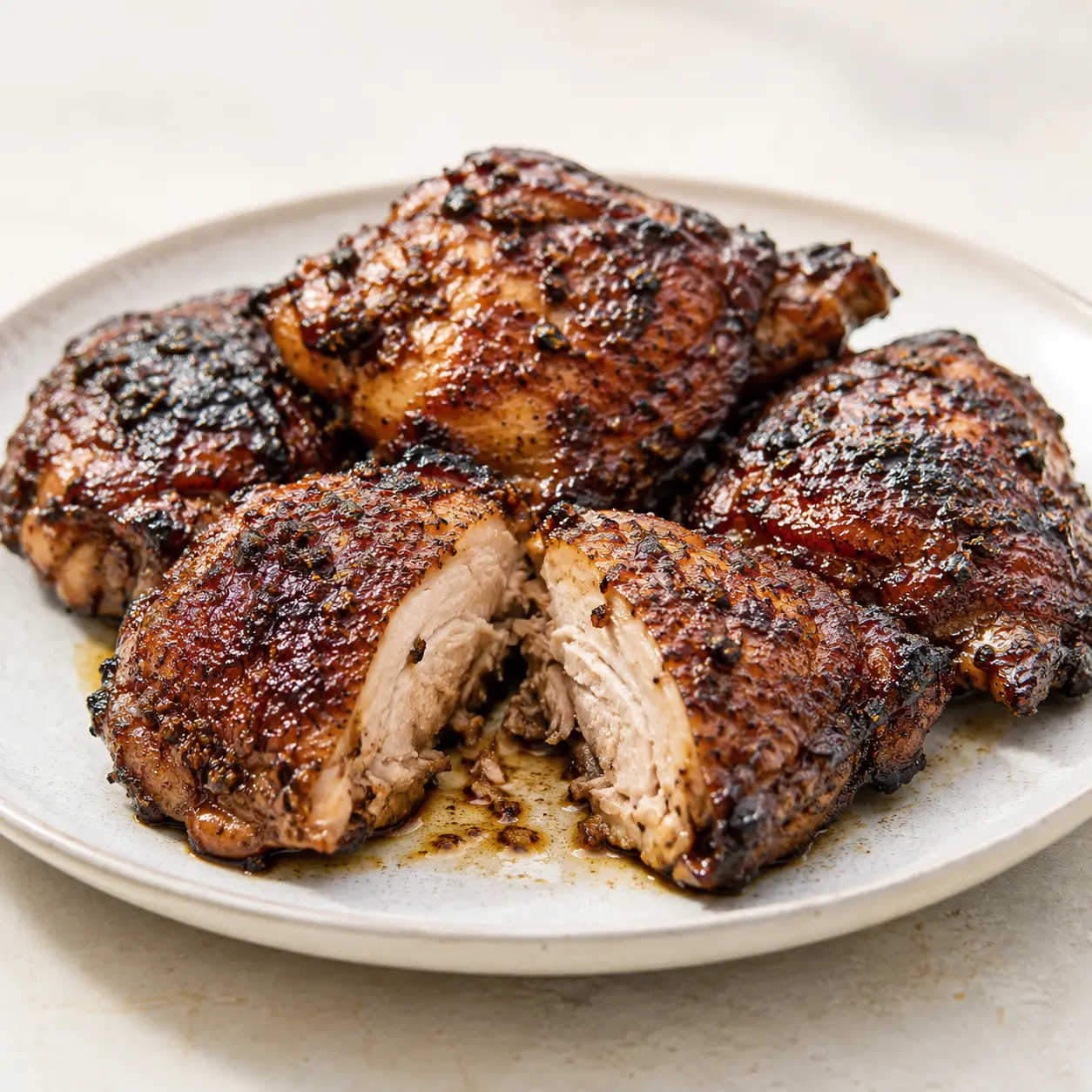

Island-Style Jerk Chicken Thigh Marinade
Ingredients
Equipment
Method
- Blend the marinade. Add the scallions, Scotch bonnet peppers or habanero, garlic, ginger, lime juice, soy sauce or tamari, oil, brown sugar, thyme, allspice, cinnamon, nutmeg, salt, black pepper, and vinegar if using to a blender or food processor. Pulse, then blend until smooth, glossy, cohesive, and spoonable.
- Taste and adjust. Taste a tiny amount of the marinade before adding raw chicken. Add more lime juice for brightness, more sugar for balance, more salt for depth, or extra pepper if you want more heat. If the marinade is too thin, blend in another scallion or a small pinch of brown sugar.
- Coat the chicken. Pat the chicken thighs dry with paper towels. Place them in a mixing bowl or zip-top bag. Pour about two-thirds of the marinade over the thighs and massage it into the meat and under the skin where possible.
- Reserve marinade safely. Keep the remaining marinade refrigerated for basting or finishing. Do not use marinade that touched raw chicken unless it is boiled for at least 2 minutes first.
- Marinate. Cover and refrigerate for at least 2 hours. For deeper island-style jerk flavor, marinate 8–24 hours. If short on time, marinate at room temperature for 30 minutes, but do not leave raw chicken out for more than 2 hours.
- Bring closer to room temperature. Remove the chicken from the refrigerator 20–30 minutes before cooking so it cooks more evenly. Preheat your grill or oven during this time.
- Grill method. Preheat the grill to medium-high heat, about 400–450°F, and lightly oil the grates. Place the thighs skin-side down and grill for 6–10 minutes per side, depending on thickness. Move to indirect heat if the sugars begin to char too quickly. Cook until the thickest part reaches 165°F.
- Oven method. Preheat the oven to 400°F. Line a rimmed baking sheet with foil and place a wire rack on top if using. Arrange the thighs skin-side up with space between pieces. Roast for 35–45 minutes, until the chicken reaches 165°F and the skin is deep golden with sticky edges. Broil for 2–3 minutes at the end for extra crispness, watching closely.
- Rest and finish. Remove the chicken from the heat and tent loosely with foil. Rest for 5–10 minutes so the juices redistribute. If using reserved marinade as a glaze, bring it to a boil for at least 2 minutes, then brush lightly over the cooked thighs or serve on the side.
Notes

Elizabeth Morgan
Easy & Delicious Recipes
Follow for quick family-friendly recipes, baking inspiration, and comfort food favorites.
Follow on Pinterest